Why Is My RO Purifier Producing Less Water Than It Used To?
22, Oct 2026
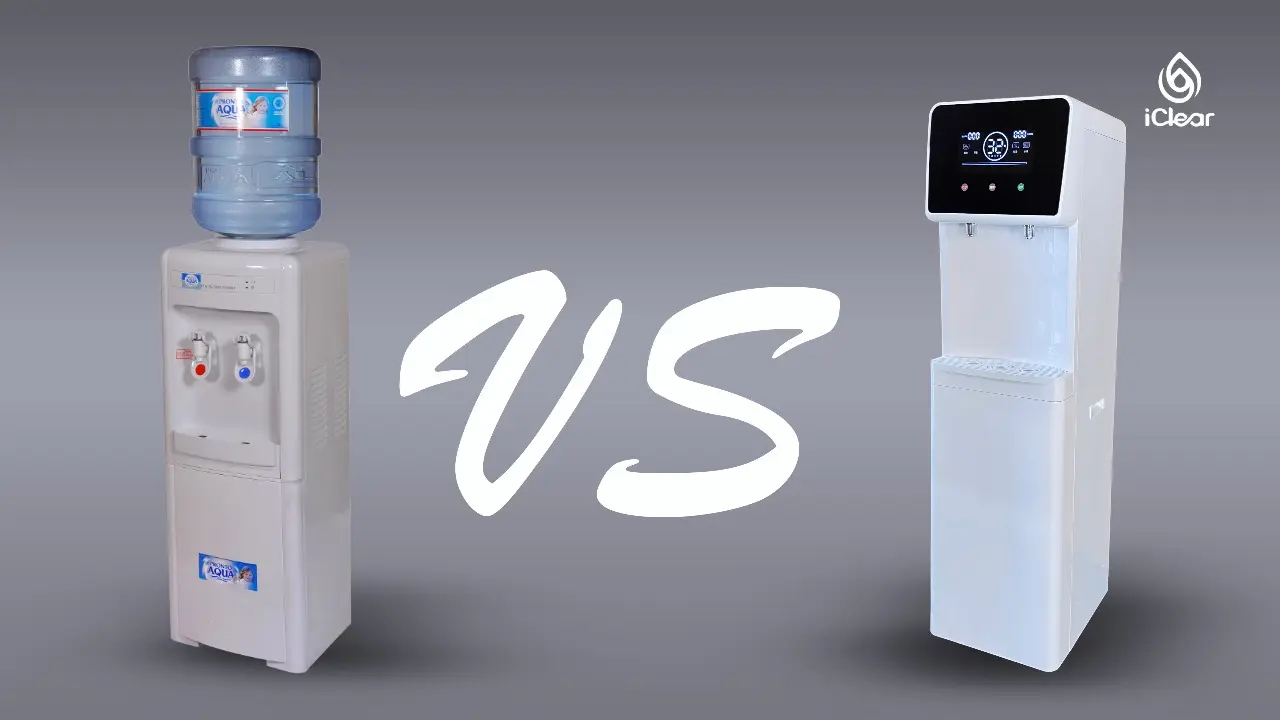
When it comes to ensuring clean and safe drinking water, many people often find themselves choosing between a water dispenser and a water purifier. While both serve important roles, they are not the same. At iClear, we specialize in RO water purifiers that guarantee pure, healthy water for homes and offices. In this article, we’ll break down the key differences, advantages, and disadvantages of dispensers and water purifiers so you can make the best choice for your needs.
A water dispenser does not purify water. It only stores and dispenses water that has already been filtered or bottled elsewhere.
A water purifier cleans water at the source, removing impurities, bacteria, heavy metals, and chemicals using technologies like Reverse Osmosis (RO).
If water quality is your priority, a water purifier is the better and safer option.
A water dispenser is a machine that stores and dispenses water either cold, hot, or room temperature. It’s commonly used in offices, hospitals, and some homes for its ease of access and convenience. However, one major limitation is that a dispenser does not purify water. It simply delivers water that has already been filtered or bottled elsewhere. If the source water is not clean, the dispenser does nothing to improve its quality. This makes it heavily reliant on external bottled water, which can be costly in the long run and adds to plastic waste.
The advantages of a water dispenser lie in its convenience. It’s easy to set up, doesn’t always require plumbing, and delivers hot or cold water instantly. However, it has clear disadvantages too: it does not filter the water, depends on bottled refills, and can become expensive and environmentally unfriendly due to plastic use.
A water purifier, particularly an RO (Reverse Osmosis) purifier like the ones offered by iClear, is designed to clean and purify your tap water by removing impurities, chemicals, heavy metals, bacteria, and viruses. RO technology works by forcing water through a semi-permeable membrane that filters out harmful contaminants, leaving you with fresh, clean, and safe drinking water straight from your tap. Unlike dispensers, water purifiers provide a continuous supply of purified water, making them more sustainable and cost-effective over time.
The advantages of a water purifier especially an RO purifier are numerous. It provides healthier drinking water, reduces reliance on plastic bottles, and lowers your monthly water costs over time. It’s ideal for families and offices that care about both health and sustainability. The only disadvantages might be the initial installation cost and the need for occasional maintenance, such as filter replacement. However, these are minor compared to the long-term benefits.
Another key difference is in usage. Water dispensers are often placed in high-traffic areas where convenience is a priority. But if your main concern is the quality of water, especially in areas with poor tap water, a water purifier is the smarter investment. At iClear, we’ve seen more businesses and homes switch to RO water purifiers because they combine safety, efficiency, and affordability in the long run.
If you’re still unsure which one to go for, here’s a simple rule: Choose a water dispenser if you already have access to clean, bottled water and just want the convenience of hot or cold water on demand. But if you want to ensure your water is safe, filtered, and cost-effective, then a high-quality RO water purifier from iClear is the best option.
At iClear, we’re committed to helping homes and businesses across Kenya enjoy access to clean, purified water. Our RO water purifiers are built with advanced technology to meet today’s water challenges so you never have to second-guess what’s in your glass.
Make the switch today. Choose purity. Choose health. Choose iClear.
| Feature | Water Dispenser | Water Purifier |
|---|---|---|
| Purifies Water | No | Yes |
| Uses Bottled Water | Yes | No |
| Removes Bacteria & Chemicals | No | Yes (RO) |
| Long-Term Cost | Higher | Lower |
No. A water dispenser does not purify water. It only dispenses water that has already been filtered or bottled elsewhere. If the water source is contaminated, a dispenser will not improve its quality.
Yes, if water safety is your priority. A water purifier removes bacteria, chemicals, heavy metals, and other impurities, making it a healthier long-term solution compared to a dispenser.
Most traditional water dispensers rely on bottled water. Without bottles, they cannot function unless combined with a built-in filtration system, which is uncommon.
Yes. RO (Reverse Osmosis) water is safe and recommended for daily drinking, especially in areas where tap water quality is uncertain. It removes harmful contaminants while providing clean, safe water.
A water purifier is more cost-effective in the long run. While it has an initial installation cost, it eliminates the recurring expense of bottled water and reduces plastic waste.
Yes. Water purifiers, especially RO systems, are ideal for homes in Kenya where water quality can vary. They provide consistent access to safe drinking water directly from the tap.

Water Purification & Treatment Specialists
David Ochieng, a water purification specialist at iClear Wellife Services Ltd, has extensive experience delivering safe and reliable water treatment solutions for homes and offices across Kenya.