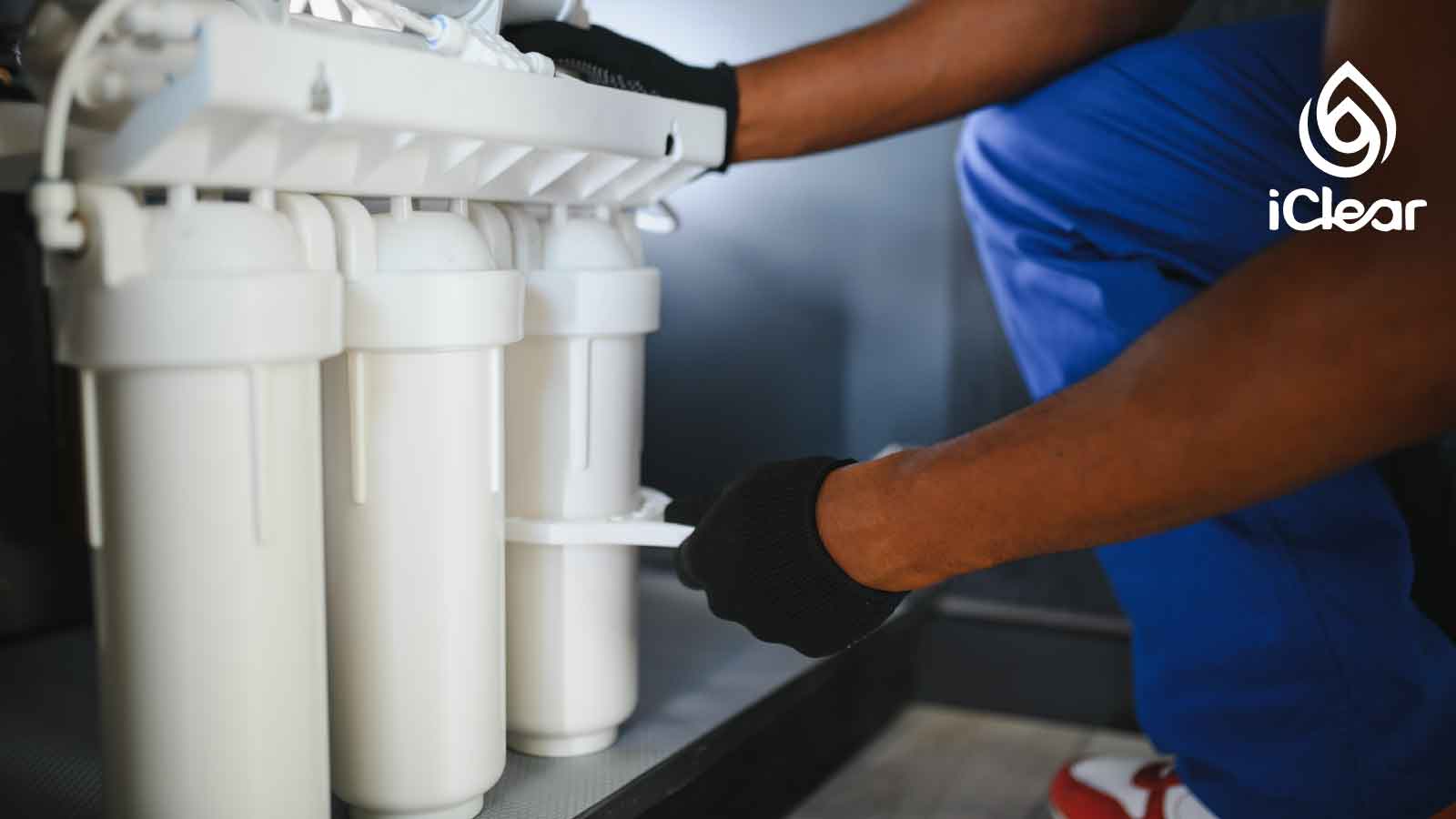
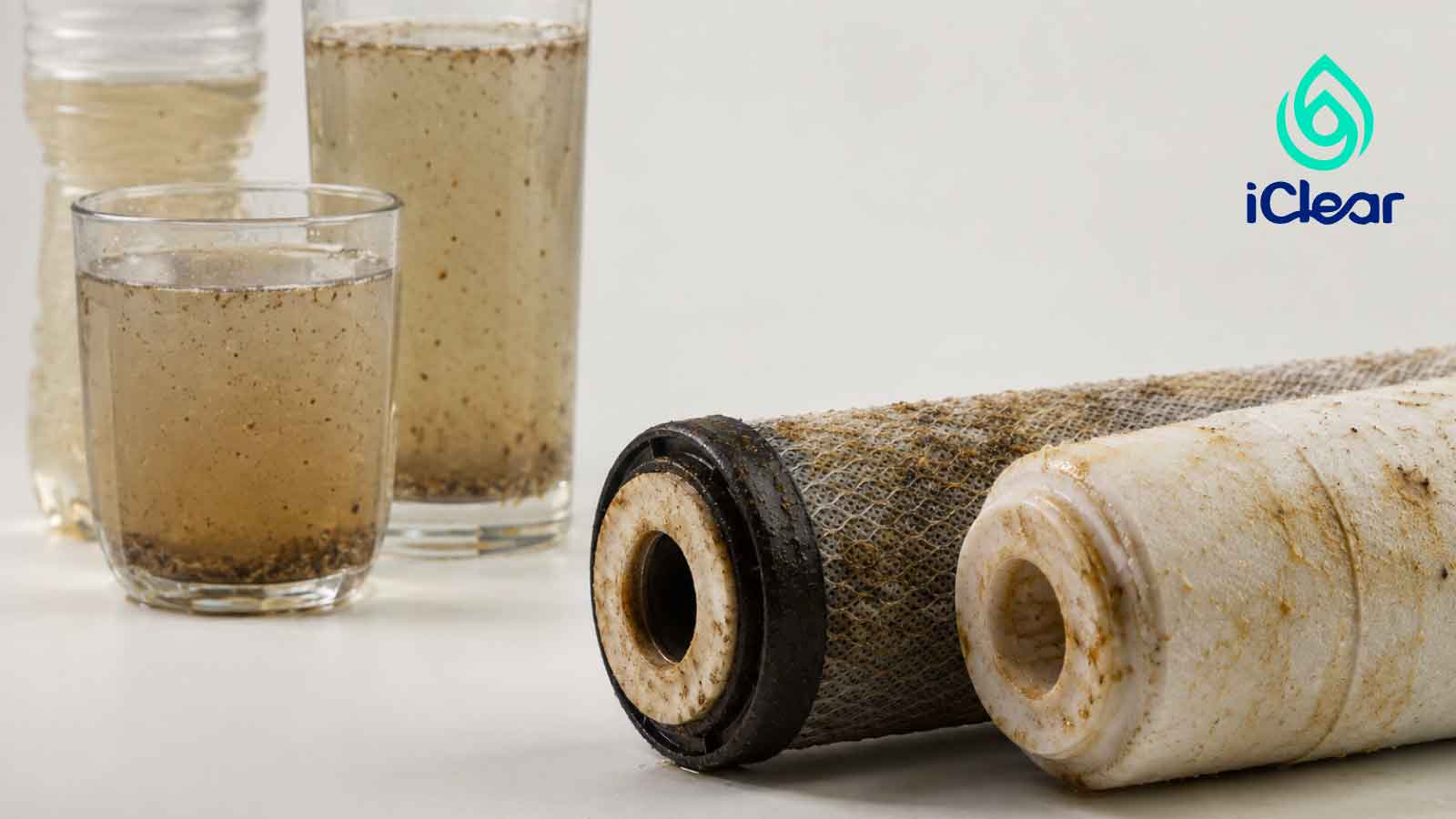
Installing a water purifier is an ongoing commitment to maintenance. As filtration components capture physical debris and absorb dissolved pollutants, they gradually clog and lose operational efficiency. Understanding replacement schedules and budgeting accurately ensures your family continues to receive clean drinking water without unexpected equipment failures. iClear Standard Replacement Schedule & Cost Breakdown Maintaining a home system like the iClear Standard requires adhering to a predictable servicing timeline: Component Function Replacement Frequency Estimated Cost Filter 1 (Sediment) Traps dirt, sand, rust, and suspended solids Every 6 months KSh 1,000 RO Membrane Removes dissolved salts, heavy metals, and minerals Every 12 months KSh 4,000 Filter 3 (Carbon/Post) Eliminates odors, bad taste, and residual chemicals Every 12 months KSh 1,000 Service Fee Comprehensive system check and technical maintenance As required KSh 1,000 Total Estimated Annual Maintenance: ~KSh 10,000 (roughly KSh 833 per month). Key Factors Influencing Filter Lifespan While manufacturers provide baseline schedules, individual replacement intervals vary based on five key variables: Source Water Quality: Heavily contaminated or salty borehole water wears down pre-filters faster than municipal tap water. Household Consumption: Larger families processing higher daily volumes reach filter capacity limits sooner. Pre-Filter Care: Replacing first-stage sediment filters on schedule prevents abrasive particles from destroying the higher-cost RO membrane prematurely. Water Pressure & Usage: Fluctuating supply pressures impact membrane throughput and strain system seals. The Consequences of Neglecting Replacement Delaying filter changes beyond recommended lifespans leads to severe operational problems: Reduced Water Flow: Clogged sediment cartridges restrict output pressure. Foul Odors & Off-Tastes: Saturated carbon filters stop absorbing organic compounds. Membrane Rupture: Unfiltered particles bypass damaged pre-filters, permanently ruining the RO membrane. Higher Overall Repair Bills: Neglected systems experience unnecessary pump strain and component failure. Managing Total Ownership Costs The initial purchase price of a system—such as the iClear Standard at KSh 25,000 (which includes a 1-year warranty and free installation in Nairobi, its environs, and Nakuru)—is only part of the equation. Budgeting for scheduled maintenance and using genuine replacement parts keeps system performance reliable and long-term costs completely predictable. KEYWORDS: water filter replacement Kenya, water purifier filter replacement Kenya, water purifier maintenance Kenya, RO membrane replacement Kenya, water filter cost Kenya, iClear Kenya, Reverse Osmosis filter Kenya, water purifier Kenya
Borehole water is one of the most reliable water sources across Kenyan homes, schools, and businesses—especially where municipal supplies are inconsistent. However, access to groundwater is not the same as access to safe drinking water. Ground aquifers collect heavy minerals, salts, and microorganisms as water seeps through soil layers, producing water that appears crystal-clear while holding invisible health risks. Why Underground Water Needs Purification & Testing Untreated borehole water frequently contains fluoride, iron, manganese, high Total Dissolved Solids (TDS), nitrates, and coliform bacteria. Because single filters only target specific impurities, treatment must match your exact water composition. Before purchasing equipment, conduct a comprehensive water test to measure: Physical & Chemical Parameters: pH, turbidity, TDS, hardness, and salinity. Specific Contaminants: Fluoride, iron, manganese, nitrates, chlorides, and sulphates. Biological Risks: Coliform bacteria and E. coli. The Limits of Boiling Water While boiling neutralizes microbiological threats like bacteria, it does not remove dissolved solids, heavy metals, fluoride, or salts. In fact, prolonged boiling evaporates pure water, increasing the concentration of dissolved chemical contaminants. Chemically complex water requires engineered physical filtration. Multi-Stage Treatment Breakdown Proper purification relies on sequential treatment stages: Sediment Filtration: Captures physical particles like sand, rust, and silt to protect downstream filters. Activated Carbon Filtration: Absorbs chlorine, organic compounds, and bad odors while improving taste. Reverse Osmosis (RO): Forces water through a semi-permeable membrane to eliminate dissolved salts, heavy metals, and fluoride. UV Disinfection: Uses ultraviolet light to neutralize bacteria and viruses without chemical additives. The iClear Borehole Solution The iClear Standard RO Water Purifier (priced at KSh 25,000) is tailored for Kenyan households dealing with salty or high-mineral borehole water. System Specs: Combines sediment, carbon, and RO filtration with a 4,000-liter capacity—ideal for households of 3 to 5 people. Water Compatibility: Designed for transparent borehole water with a TDS reading below 750. Service Coverage: Includes nationwide delivery and free professional installation in Nairobi, its environs, and Nakuru. Warning Signs Your Water Needs Immediate Treatment Do not wait for water to turn dirty. Seek immediate testing and purification if you notice: A salty, metallic, or chemical taste Scaling and white mineral crusting on kettles, taps, and appliances Yellow, brown, or cloudy discoloration Sudden changes in local groundwater quality or surrounding environment
No, a water dispenser does not purify water. This is one of the most common misconceptions in Kenyan households. A dispenser only stores and serves water at different temperatures, it has no mechanism to remove bacteria, dissolved salts, or fluoride. Below, we separate the myths from the reality. Myth 1: "It's a water machine, so it must clean the water" Reality: The word "dispenser" describes exactly what the machine does, it dispenses. It takes water that already exists in a bottle or tank and delivers it hot, cold, or at room temperature. Nothing about that process filters or purifies anything. If the water going in carries bacteria, dissolved salts, or fluoride, the water coming out carries the same. Myth 2: "The water looks clean, so the dispenser is doing its job" Reality: Clarity has nothing to do with purification. A dispenser can serve water that looks perfectly clear while it is high in dissolved salts or fluoride, both of which are invisible to the eye. Looking clean and being purified are two different things, and a dispenser's appearance tells you nothing about what it has or hasn't done to the water. Myth 3: "If the dispenser is clean, the water must be safe" Reality: A clean-looking exterior says nothing about the interior. The reservoir, internal tubing, and taps of a dispenser can accumulate bacteria and biofilm over weeks of use if not sanitised regularly. In some cases, an unmaintained dispenser can make water worse than what went in, not better. Myth 4: "Hot water from the dispenser is automatically sterilised" Reality: Dispensers typically heat water to a level suited for tea or coffee, not to a rolling boil sustained long enough to kill bacteria. Even where the heating element does reach higher temperatures, dispensers are not designed or tested as sterilisation devices. The heating function exists for convenience and taste, not water safety. Myth 5: "Bottled water in a dispenser is safer than tap water in a dispenser" Reality: A dispenser doesn't discriminate between what it dispenses. Whether the source is a bottle or a tank filled from the tap, the dispenser performs the same non-purifying function either way. The safety of the water depends entirely on what happened before it reached the dispenser, not on the dispenser itself. So what does purify water? Purification requires a process that actively removes contaminants, not one that simply stores and serves. Reverse Osmosis is the method built for this, it forces water through a membrane fine enough to block bacteria, dissolved salts, fluoride, and sediment. The water that comes out is measurably different from the water that went in, which is the one thing a dispenser can never claim. The iClear Desktop purifies water through Reverse Osmosis and then dispenses it hot or cold, combining both functions in a single unit with no plumbing required. For a whole household, the iClear Standard delivers the same purification from a dedicated tap under the sink. Frequently Asked Questions Does a water dispenser purify water? No. A dispenser stores and serves water at a chosen temperature but has no mechanism to remove contaminants. Whatever is in the water going in is still there coming out. Does heating water in a dispenser make it safe to drink? Not reliably. Dispensers heat water for taste and convenience, not to a sustained boil, and are not designed as sterilisation devices. Is bottled water in a dispenser safer than borehole water in a dispenser? The dispenser itself makes no difference either way. Safety depends on how the water was treated before it reached the dispenser, not on the dispenser's function. Keywords: does water dispenser purify water, water dispenser myths, dispenser water safe, water dispenser vs purifier, iClear Kenya
Before iClear was a company, it was a question we kept running into on the ground, in homes across Kenya, that nobody seemed to have a good answer for: is the water actually safe to drink? iClear on the Tech Trends podcast Our co-founder, Zhong Yanxiong, spent six years working across African markets before he ever thought about water. He was Tecno's country manager, first in Uganda, then Nigeria, Rwanda, and eventually Kenya, and the job took him well beyond boardrooms. It took him into homes, rural and urban, doing the kind of everyday research that most companies skip: understanding not just how people used their phones, but how they actually lived. “We did not just try to understand everything relevant to mobile. We tried to understand everyday life. And we found water was an issue.” Zhong Yanxiong reflecting on the years of fieldwork across African markets that led him to founding iClear. That single observation became the seed of everything we do today. Across large parts of Kenya, access to water didn't mean access to safe water, and there was no reliable way for an ordinary family to know the difference. The Gap We Set Out to Close When we started looking closely at the market in 2022, we found something familiar: most water purifier sellers operated the way any appliance retailer does. A customer would buy a unit, pay at the till, and leave. What happened after the sale was, too often, someone else's problem. We had visited enough households to hear the same complaint repeated: people had bought water treatment devices before, and the supplier simply disappeared once the sale was made. No maintenance. No filter replacement. No one to call when something went wrong. “People drink water every day. We didn't want the purchase of our product to become a once-off action for the customer.” That's the gap we built iClear to close, not just selling a machine, but standing behind it for as long as a family needs clean water, which is to say, indefinitely. Why Fluoride Kept Coming Up As Nairobi has grown faster than its municipal water infrastructure, more new buildings and estates have turned to private boreholes rather than piped supply. But borehole water varies enormously depending on where you are, and in several regions, including areas around Naivasha and Nakuru, fluoride levels run high enough to cause visible dental fluorosis over years of exposure. Most Kenyans already know this. Fluoride is taught in primary school. What we found, again and again, was that knowing about a water problem and being able to act on it are two very different things when rent, school fees, and medical bills are already stretching a household's budget. “Fluoride issue is not the first priority concern in their list. They know it, but not all of us are able to put it in our budget plan this month or this week.” That's exactly where we believe a company can make a real difference: by making safe water affordable and simple enough that it stops being a trade-off families have to make. How We Built iClear Differently We didn't want to be a machine center. We wanted to be a service company, and that distinction shapes everything about how we operate. For households, we sell full ownership. Our flagship iClear Standard is KSh 25,000, and that price includes delivery, professional installation, and a one-year warranty. Some of our very first customers from 2022 are still using their original units today, four years on, producing clean water every day. For offices, we run an annual service subscription instead. The hardware stays with iClear, and our own full-time technicians, never outsourced, handle scheduled filter changes, waterway disinfection, leak checks, and maintenance throughout the year. Almost every one of our office clients renews for a second year, which tells us the model is working the way we designed it to. Across both models, we try not to overwhelm customers with technical choice. Most people don't want a lecture on reverse osmosis. They want to tell us what they need, and have us come back with a solution that fits their budget. Engineered for Kenyan Water Our systems are manufactured in China using German-originated filtration technology, but they aren't a generic product dropped into a new market. We deliberately stripped away unnecessary features and reinforced the filtration stages specifically for Kenyan water conditions, because water here is simply different from what these systems were originally designed around. We're honest that we don't yet have a decade of Kenyan field data to prove a specific lifespan claim. iClear is four years old. What we can say is that units installed in 2022 remain in daily use today, and with proper filter maintenance, we're confident in a lifespan well beyond that early benchmark. Growing Through Word of Mouth Our most effective channel has never been advertising. It's our existing customers. Reverse osmosis and long-term service are hard to explain in the abstract, but once someone becomes a customer and understands what the water actually tastes and feels like, they tend to tell people. “Every week we have new customers who tell us: I went to my friend's home, saw the machine under the sink, tasted the water, and decided to call you myself.” That's the kind of growth we're proudest of, because it means the people using our systems every day are the ones recommending us. Where We Are Now, and Where We're Going We currently operate branches in Nairobi and Nakuru, with a new branch opening soon in Mombasa, extending our installation and service coverage to the coast. Beyond Kenya, we launched in Nigeria in 2024 through a franchise partnership, and a third country is already in the pipeline. We're also expanding what we offer beyond drinking water purification, toward whole-house filtration and water softeners, driven by direct customer demand rather than simply what's available to import. We test and survey what the market genuinely needs before we bring anything new to it. What We Believe Our mission is simple to state and hard to fully achieve: everyone should have access to clean water. We believe that's a right, not a privilege reserved for those who can afford it easily. We try to stay grounded about how we talk about that mission. We're a commercial company solving a real problem sustainably, not a campaign. We'd rather deliver than tell a story about delivering. If you're weighing whether now is the right time to switch from bottled or dispenser water, our honest answer is: it depends on your household and your budget, and there's no need to rush. If you can take on the upfront cost of a system, the long-term savings and water quality speak for themselves. If now isn't the right time, that's alright too. We'll be here when it is. Watch the full conversation: iClear on the Tech Trends podcast Four years in, over 10,000 customers across two countries, and a Mombasa branch on the way. We're still a young company, but we're building the kind of business we'd want to still be running in eighty years. Ready to know what's actually in your water? Free delivery and professional installation in Nairobi and Nakuru. See our systems. Keywords: iClear story, iClear founder, water purifier company kenya, reverse osmosis kenya, about iClear, Zhong Yanxiong
Domestic water purification machines in Kenya cost from KSh 25,000 to KSh 49,000 in 2026, with portable units at KSh 40,000 and office systems from KSh 90,000 per year. Commercial and industrial machines run much higher, typically from KSh 180,000 upward by capacity. The two markets, and why prices differ so much A domestic water purification machine treats the drinking and cooking water for one household. A commercial machine treats water at volume for an office, an institution, or a water-selling business. They are built to different scales and cost accordingly. Most people searching for a machine price want the domestic answer, so this guide leads with that and covers the commercial range for context. Domestic water purification machine prices (iClear, 2026) These are iClear's current, verified 2026 prices. Every one is a KEBS-certified Reverse Osmosis machine, and every domestic price includes free delivery and professional installation in Nairobi, its environs, and Nakuru, plus a 1-year warranty. Machine Price Best for iClear Standard KSh 25,000 Typical households; under-sink RO for borehole and municipal water iClear Desktop KSh 40,000 Renters and small homes; portable, no plumbing, instant hot water iClear Premier KSh 49,000 Large households of 8 to 15 people; high capacity, 7,200 litres per day iClear Office KSh 90,000 / year Offices of 20 to 30 staff; bottleless RO and UV, servicing included For most families the iClear Standard at KSh 25,000 is the right machine and the best value in the range. Renters and apartment dwellers who cannot install under-sink usually choose the portable iClear Desktop, and larger households step up to the iClear Premier. What the domestic price includes A common surprise in the Kenyan market is installation quoted separately from the machine, which makes a cheap-looking price rise sharply at the point of purchase. iClear's prices are all-inclusive: The machine itself, KEBS-certified. Free delivery to Nairobi, its environs, and Nakuru. Free professional installation by trained technicians, a standard install taking 30 to 45 minutes. A 1-year warranty. When comparing any two machine prices, always confirm what each includes. A KSh 20,000 machine with paid installation, unpriced filters, and no warranty can cost more within a year than a complete KSh 25,000 offer where everything is included. Commercial and industrial machine prices (market context) Beyond the household, commercial water purification machines are a different market with much higher prices set by capacity. As a general guide to what these cost in Kenya: Small commercial machines (around 150 to 250 litres per hour): typically from KSh 180,000 to KSh 330,000. Mid-size commercial systems: commonly KSh 350,000 to KSh 750,000 depending on output. Large industrial and water-vending machines (thousands of litres per hour): from around KSh 550,000 into the millions. Editor note: These commercial ranges are indicative market figures gathered from Kenyan suppliers during competitor research, not iClear prices. Present them as general context. For a business needing commercial capacity, the iClear Office system covers the office segment; larger industrial needs sit outside iClear's current range. For a business, the practical question is scale. A 20 to 30 person office is well served by the iClear Office system at KSh 90,000 per year, which includes installation and servicing. Genuinely industrial or water-vending operations are a separate equipment market with the higher prices above. How to choose the right machine for your price Know your water source: borehole water needs full RO to remove dissolved salts and fluoride; nothing cheaper does the job. Match capacity to household size: do not overpay for a Premier if a Standard fits, and do not under-size for a large family. Confirm certification: KEBS certification should be verifiable, not a verbal claim. Get the all-in price: delivery, installation, and warranty included, so the quoted price is the real price. FAQ Q: How much is a water purification machine in Kenya? A: Domestic RO machines cost KSh 25,000 (iClear Standard) to KSh 49,000 (iClear Premier), with a portable option at KSh 40,000 and office systems from KSh 90,000 per year. Commercial and industrial machines run much higher, typically from KSh 180,000 upward by capacity. Q: What is the cheapest genuine water purification machine in Kenya? A: The iClear Standard at KSh 25,000 is the entry point for a full KEBS-certified Reverse Osmosis machine, with free delivery and professional installation included. Cheaper units often exclude installation or are basic filters that do not remove dissolved contaminants. Q: Does the machine price include installation in Kenya? A: With iClear, yes. All domestic prices include free delivery and professional installation in Nairobi, its environs, and Nakuru, plus a 1-year warranty. Always confirm this with any supplier, since some quote installation separately. Q: Why do water purification machine prices vary so much? A: Because the term covers both household machines (KSh 25,000 to 49,000) and commercial or industrial machines (KSh 180,000 into the millions). The two are built for completely different volumes, so their prices are not comparable. See every iClear machine and its real price. Free delivery and professional installation in Nairobi and Nakuru. Visit the iClear shop. Keywords: water purification machine price kenya, water purifier machine price, water purification machine cost, ro machine price kenya, iClear Kenya, water purifier price
Water purifier filters need periodic replacement, and this ongoing cost is real. But even including filter changes, the total cost of owning an RO purifier over several years remains far below what a household spends on bottled or dispenser water in the same period. Why filters need replacing at all A purifier works by trapping and blocking contaminants. Over time the pre-filters fill with the sediment and particles they have caught, and the RO membrane and carbon stages gradually lose effectiveness. Replacing them on schedule is what keeps the water genuinely purified. A filter left in far too long stops protecting you and can itself become a problem, which is exactly why scheduled replacement is not an optional extra but part of how the system works. What the replacement actually involves An RO system has several stages, and they do not all need replacing at the same time. The sediment and carbon pre-filters are changed most often because they do the heavy lifting of catching particles. The RO membrane lasts considerably longer. Because the stages are on different schedules, the cost is spread out over time rather than landing all at once. The comparison that puts it in perspective Here is the context that matters. A household buying bottled or dispenser water spends roughly KSh 3,000 to 8,000 every month, which is KSh 36,000 to 96,000 a year, every year, forever. Against that, an RO purifier is a one-time purchase plus periodic filter changes. Even when you add the filter costs into the total, the yearly running cost of the purifier remains a small fraction of the bottled-water bill it replaces. This is why iClear's own estimate is that customers save up to 80% compared with buying water, filters included. The iClear Standard is KSh 25,000 to buy, with free installation, and its scheduled filter costs are modest and predictable. See the full five-year picture in our bottled water cost breakdown for Nairobi families. The honest way to judge filter costs is not on their own but against the alternative. Filters are a real cost. Bottled water is a much larger one, and it never stops. The purifier plus its filters is still the cheaper path by a wide margin. How iClear keeps this manageable Filter replacements are scheduled, so you are not guessing when they are due. The cost is spread across stages on different intervals, not a single large annual hit. iClear supports the replacements, so you are not sourcing parts alone. The predictability means you can budget for it, unlike a bottled-water bill that rises with usage. FAQ Q: How much do water purifier filters cost to replace in Kenya? A: Filter costs vary by stage and how often each is changed, with pre-filters replaced more often than the RO membrane. Even including replacements, the yearly running cost stays far below a household's bottled-water spend. Ask iClear for the current per-stage pricing and intervals. Q: How often do RO filters need changing? A: The sediment and carbon pre-filters are changed most frequently since they catch the most, while the RO membrane lasts considerably longer. Because the stages are on different schedules, the cost is spread out rather than landing all at once. Q: Is a water purifier still cheaper than bottled water after filter costs? A: Yes, by a wide margin. A household spends KSh 36,000 to 96,000 a year on bottled water. An RO purifier is a one-time purchase plus modest scheduled filter costs, keeping the total far below the bottled-water bill it replaces. See the real running cost, and the real saving. Free delivery and professional installation in Nairobi and Nakuru. Visit the iClear shop. Keywords: water purifier filter cost kenya, ro filter replacement cost, purifier running cost, filter replacement kenya, iClear Kenya, water purifier maintenance
Rongai relies heavily on borehole water, and its quality varies borehole to borehole. A TDS reading tells you how much dissolved material is in your water: below 300 ppm is excellent, above 600 ppm signals significant dissolved contamination that Reverse Osmosis can remove. What TDS actually measures TDS stands for Total Dissolved Solids: everything dissolved in your water, including salts, minerals, and metals. It is one of the most useful single indicators of water quality, because it captures what you cannot see. A rough guide: Below 300 ppm: generally excellent for drinking water. 300 to 600 ppm: acceptable, with rising concern toward the top of the range. Above 600 ppm: significant dissolved contamination, better treated. Above 1,000 ppm: not recommended for drinking without treatment. Why Rongai boreholes vary Borehole water is not uniform across an area. Two boreholes a short distance apart in Rongai can give different readings depending on depth, the local geology they draw from, and the age and condition of the borehole itself. This is why a general statement about Rongai water is less useful than testing your specific borehole. What is consistent is that borehole water tends to carry more dissolved material than treated municipal supply, so a reading worth checking is likely. Editor note: Insert measured TDS readings for Rongai boreholes from iClear's field data or from installations in the area. If specific Rongai figures are not yet recorded, note that they should be gathered, and reference the measured ranges from comparable nearby borehole areas rather than inventing a Rongai-specific number. What high TDS means for your family If your Rongai borehole reads high, it means your family is drinking and cooking with water carrying a heavy dissolved load: salts, minerals, and possibly fluoride, depending on the local geology. Over time, high-TDS water can taste mineral or salty, leave scale on kettles and appliances, and place a sustained load on the body. None of it is visible in a clear glass, which is exactly why the number matters more than the look. What to do about it If your reading is high, Reverse Osmosis is the household answer. It reduces TDS dramatically, commonly by 90% or more, taking a borehole reading of 600 ppm down below 50 ppm. The iClear Standard is designed for the borehole conditions common across Nairobi's growth areas, and installs under the sink with free professional installation. For renters in Rongai's many apartments, the portable iClear Desktop delivers the same RO purification without plumbing. The first step with any borehole is not to buy anything. It is to know your number. Once you know your TDS, the decision makes itself: a low reading is reassuring, and a high one has a clear, proven solution. FAQ Q: What is a good TDS level for drinking water? A: Below 300 ppm is generally excellent. From 300 to 600 ppm is acceptable with rising concern at the top of the range, and above 600 ppm signals significant dissolved contamination that is better treated. Above 1,000 ppm is not recommended without treatment. Q: How do I check my Rongai borehole water quality? A: Have the water tested for TDS and, ideally, specific contaminants like fluoride. A TDS reading is the quickest single indicator. iClear can measure this as part of assessing your water before recommending a solution. Q: How do I lower high TDS in borehole water? A: Reverse Osmosis reduces TDS dramatically, commonly by 90% or more. An RO system like the iClear Standard takes a high borehole reading down to a low, clean level. Boiling and basic filters do not reduce dissolved solids. Know your Rongai water number, then fix it. Free delivery and professional installation in Nairobi and Nakuru. Visit the iClear shop. Keywords: rongai borehole water, rongai water quality, tds borehole water kenya, rongai water purifier, borehole water testing, iClear Kenya
Many Westlands and Kilimani apartments have hard water, which leaves white limescale on kettles, taps, and appliances, and a film on glasses. Hard water is caused by dissolved minerals, and Reverse Osmosis removes them, protecting both your appliances and your drinking water. What hard water actually is Hard water is water with a high content of dissolved minerals, mainly calcium and magnesium. It is not dirty in the visible sense, and it is not unsafe to touch, but those dissolved minerals cause the effects residents notice. When hard water is heated or left to dry, the minerals are left behind as the white, chalky deposit called limescale. In an apartment relying on borehole or mixed supply, this mineral load can be significant. The signs in a Westlands or Kilimani apartment Limescale: white crust on kettles, taps, showerheads, and inside appliances. Spotting: white marks and film on glasses and dishes after washing. Appliance wear: kettles, irons, washing machines, and water heaters failing sooner as scale builds up inside them. Taste: a mineral or flat taste to drinking water. Why it matters beyond annoyance Limescale is not only unsightly. Inside a water heater or a kettle, scale acts as insulation, making the appliance work harder and wear out faster, which quietly raises electricity use and replacement costs. For drinking, high dissolved-mineral water carries the same sustained load on the body that any high-TDS water does. So hard water is both a household-cost problem and a water-quality one. Why RO is the switch residents are making Reverse Osmosis removes the dissolved minerals that cause hardness, along with the other contaminants in the supply. This is why apartment residents in these neighbourhoods are increasingly choosing RO for their drinking and cooking water: it ends the limescale and the film, and it protects both the appliances and the people. Because most apartment dwellers cannot alter building plumbing, the portable iClear Desktop is the popular choice here, delivering full RO purification with no installation. Where under-sink installation is possible, the iClear Standard covers the whole kitchen. Hard water in a Westlands or Kilimani apartment is a dissolved-mineral problem showing up as limescale and film. Reverse Osmosis removes the minerals at the source of your drinking water, which is why the switch has become common in exactly these high-density, apartment-heavy areas. FAQ Q: Why do Westlands and Kilimani apartments have hard water? A: Hard water comes from dissolved minerals, mainly calcium and magnesium, in the supply. Apartments drawing on borehole or mixed supply in these areas often carry a high mineral load, which shows up as limescale and film. Q: Does Reverse Osmosis remove hard water minerals? A: Yes. RO removes the dissolved calcium and magnesium that cause hardness, along with other contaminants, cutting TDS dramatically. This ends the limescale and film on your drinking and cooking water and protects appliances. Q: Can I fix hard water in an apartment I rent? A: Yes, for your drinking and cooking water. A portable RO purifier like the iClear Desktop needs no plumbing and removes the dissolved minerals, so renters can solve hard water at the tap they drink from without altering the building. End the limescale in your apartment water. Free delivery in Nairobi and Nakuru, no installation needed. Visit the iClear shop. Keywords: hard water westlands kilimani, limescale water nairobi, hard water apartment kenya, remove hard water minerals, apartment water purifier, iClear Kenya
Nakuru lies in Kenya's Rift Valley, where groundwater fluoride is naturally high. iClear has measured Rift Valley borehole fluoride above 8.75 mg/L, more than five times the WHO guideline of 1.5 mg/L. Boiling does not remove fluoride; Reverse Osmosis does. Why Nakuru has a fluoride problem Fluoride occurs naturally in groundwater across the Kenyan Rift Valley, and Nakuru sits squarely within that belt. It leaches into borehole water from the volcanic geology of the region. iClear's field team has measured Rift Valley borehole fluoride above 8.75 mg/L, more than five times the World Health Organization guideline value of 1.5 mg/L. Other high-fluoride areas in the belt include Naivasha, Gilgil, and Kajiado. Why fluoride matters Long-term consumption of high-fluoride water is linked to dental and skeletal fluorosis, a hardening and mottling of teeth and, over time, bones. Children are most affected because they absorb fluoride fastest during development. The World Health Organization sets its 1.5 mg/L guideline precisely because of these effects. When borehole water runs several times above that level, the exposure is significant and sustained, since it comes through daily drinking and cooking. Fluoride is invisible and tasteless at the levels that cause harm. A Nakuru household cannot tell high-fluoride water from safe water by looking or tasting. The only way to know is to measure, and the only way to fix it at home is to remove it. Why boiling and basic filters do not remove fluoride This is the crucial point for Nakuru families. Fluoride is dissolved at the molecular level, so the common methods do nothing: Boiling: does not remove fluoride, and by evaporating water can slightly concentrate it. Carbon and sediment filters: improve taste and clarity but leave fluoride in place. Ceramic and gravity filters: handle bacteria, not fluoride. What removes fluoride Reverse Osmosis removes fluoride by forcing water through a membrane fine enough to block the fluoride ions. It is the practical household method for the Rift Valley's fluoride problem, and it removes the dissolved salts and bacteria alongside it. The iClear Standard is built for these conditions and installs under the sink with free professional installation in Nakuru, and the iClear Premier serves larger households. For renters, the portable iClear Desktop removes fluoride with no plumbing. iClear delivers and installs across Nakuru. Nakuru's fluoride problem is documented, serious, and invisible, and it is exactly the problem Reverse Osmosis exists to solve. For families in the Rift Valley, fluoride removal is not an upgrade; it is the reason to purify in the first place. FAQ Q: Does Nakuru water have high fluoride? A: Nakuru sits in Kenya's Rift Valley, where groundwater fluoride is naturally high. iClear has measured Rift Valley borehole fluoride above 8.75 mg/L, more than five times the WHO guideline of 1.5 mg/L. Levels vary by borehole, so testing is worthwhile. Q: Can I remove fluoride from Nakuru water by boiling? A: No. Boiling does not remove fluoride, and by evaporating water it can slightly concentrate it. Carbon and ceramic filters also leave fluoride in place. Reverse Osmosis is the practical household method that removes it. Q: How do I remove fluoride from drinking water in Nakuru? A: A Reverse Osmosis system removes fluoride along with dissolved salts and bacteria. The iClear Standard installs under the sink with free installation in Nakuru, and the portable Desktop removes fluoride for renters with no plumbing. Remove Nakuru's fluoride from your family's water. Free delivery and professional installation in Nakuru. Visit the iClear shop. Keywords: nakuru fluoride water, fluoride nakuru drinking water, rift valley fluoride, remove fluoride kenya, nakuru water purifier, iClear Kenya
The water in Mombasa is affected by saline intrusion, seawater mixing into coastal aquifers, which gives much of the borehole and well water a salty, brackish taste and a high dissolved-salt load. Boiling and basic filters do not remove dissolved salts. Reverse Osmosis does, and iClear is now installing in Mombasa. Why Mombasa's water is different Every coastal city sits on the same geological challenge: its groundwater lies close to the sea, and seawater can migrate into the freshwater aquifer beneath it, a process called saline intrusion. Mombasa is no exception. Many boreholes and shallow wells across the coastal strip draw water carrying elevated salinity, along with the general hardness common to coastal limestone and coral-derived aquifers. The result is water that can taste brackish or salty straight from the tap, sometimes markedly more so during the dry season, when reduced freshwater recharge lets seawater intrude further inland. Residents on borehole or well water in parts of Mombasa commonly report a salty or metallic taste, scale build-up on kettles and shower fittings, and water that simply does not feel as clean as piped municipal supply. None of this is imagined. Dissolved salt does not need to be visible to be present, and a glass of coastal borehole water can look perfectly clear while carrying a heavy mineral and salt load. Why boiling and ordinary filters do not help This is the same principle that applies inland, and it matters just as much on the coast: - Boiling kills bacteria but does nothing to dissolved salts, and by evaporating water it can concentrate them further. - Carbon and sediment filters improve taste and clarity but do not remove salts dissolved at the molecular level. - Basic jug filters are built for chlorine and odour, not for a saline load. Saline intrusion is a dissolved-solids problem, and dissolved-solids problems need a technology that works at the molecular level. What actually works: Reverse Osmosis Reverse Osmosis forces water through a membrane fine enough to block dissolved salts, along with bacteria, sediment, and other contaminants. It is the same technology iClear has used to solve high-TDS borehole water inland, and it is directly suited to coastal salinity as well. The iClear Standard installs under the sink for households with plumbing access, and the portable iClear Desktop suits Mombasa's many rented apartments and flats, where tenants cannot alter a landlord's plumbing but still want genuinely purified water. iClear is now in Mombasa iClear is opening a branch in Mombasa, bringing the same KEBS-certified Reverse Osmosis systems, free professional installation, and after-sales service that families across Nairobi and Nakuru already rely on. For coastal households dealing with saline, brackish, or hard borehole water, this means local access to a proven solution, without needing to source or service equipment from Nairobi. FAQ Q: Why does Mombasa water taste salty? A: Mombasa's coastal groundwater is affected by saline intrusion, where seawater mixes into the freshwater aquifer, giving borehole and well water a salty or brackish taste. This is a well-documented feature of coastal geology, not a sign of dirty water. Q: Can boiling remove salt from Mombasa borehole water? A: No. Boiling kills bacteria but does not remove dissolved salts, and can concentrate them further as water evaporates. Only methods like Reverse Osmosis remove dissolved salt. Q: Does iClear install in Mombasa? A: Yes. iClear is opening a branch in Mombasa, bringing KEBS-certified Reverse Osmosis systems with free professional installation to coastal households and renters dealing with saline or hard water. Keywords: mombasa water quality, mombasa borehole water salty, saline water mombasa, water purifier mombasa, iClear Mombasa, coastal water kenya
Product Guides
Health & Wellness
Health & Wellness
Water Purification
Product Guides
Media & Press
Buying Guides & Tips
Water Purification
Product Guides