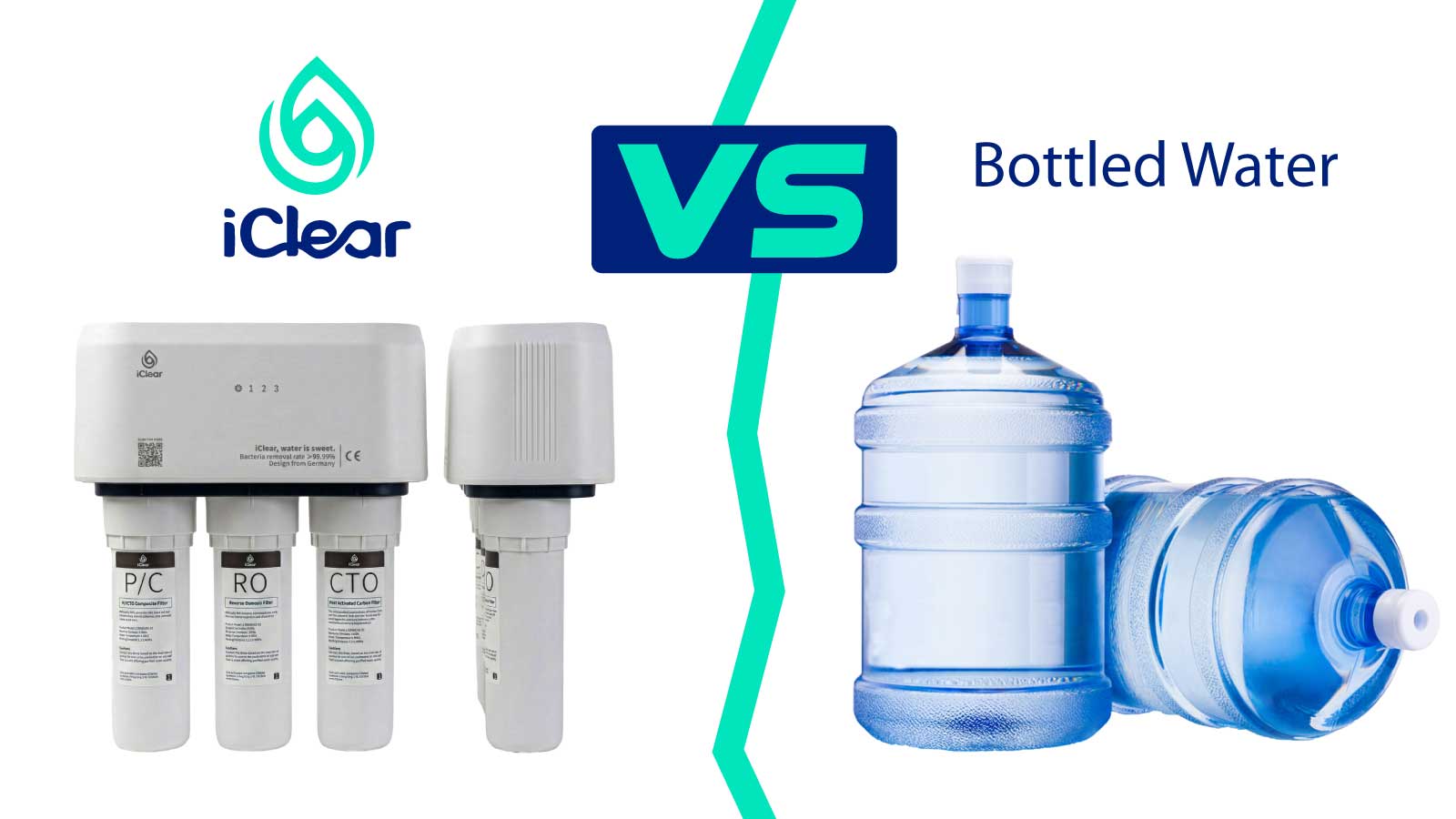

Ask a head teacher where their drinking water comes from and the answer is usually short: a borehole, a storage tank, or a connection to the municipal line that runs when it runs. Ask whether anyone has tested it recently and the answer is often a pause. That pause is the real problem. Water in schools is trusted because it has always been there, not because it has been checked. Why schools face a bigger water problem than homes A household with a contaminated source exposes a handful of people. A school with the same source exposes hundreds of children, five days a week, for years. Several things make schools more vulnerable than the average home. One source, many drinkers. A single borehole or tank often feeds every tap on the compound, so one problem reaches every pupil. Storage tanks that sit for long periods. Where municipal supply is intermittent, schools rely on large tanks. Sediment, biofilm and algae build up over time, and tanks are rarely cleaned on a schedule. Holiday stagnation. Water that sits in tanks and pipes during long school breaks can come back into use in poor condition when term opens. Shared, high-touch taps. Communal taps are handled by hundreds of hands a day, which makes tap hygiene as important as water quality. Tight budgets. Schools cannot easily absorb a large unplanned cost, so water is often treated as a problem to deal with only when something goes wrong. What can be in school water The risks depend on where the school is, and they are not only about germs. iClear's field measurements across Kenya show how much the dissolved load varies by area. iClear field TDS readings by town. A school's borehole can sit anywhere on this range, and the reading cannot be seen in a glass. Dissolved salts (TDS). Borehole readings of 450 to 600 ppm have been recorded in areas such as Kitengela and Kajiado, well above the 300 ppm level generally considered excellent. Fluoride. iClear has measured Rift Valley borehole fluoride above 8.75 mg/L, against the WHO guideline of 1.5 mg/L. Children are most affected because fluoride is taken up during tooth development. Bacteria and sediment from storage. Tank water can pick up contamination after it leaves the treatment plant or the borehole, so a clean source does not guarantee a clean tap. iClear's Rift Valley fluoride reading against the WHO guideline value. Why bottled water is not a school solution Some schools respond by asking parents to send bottled water, or by buying dispenser bottles for the staff room. Neither fixes the problem. Bottled water depends on every family's budget, so the children who most need safe water may be the ones least able to bring it. Dispenser bottles are costly at scale and add storage, handling and reservoir hygiene problems of their own. A shared treated supply treats every child the same. What an effective school water plan looks like There is no single product that fits every school, but the plan that works is consistent. It has five parts. 1. Test first. Measure TDS and, in Rift Valley and other high-risk areas, fluoride. A test turns a guess into a decision and gives the school a baseline to show parents and the board. 2. Treat at the point of use. Reverse Osmosis at the drinking points removes dissolved salts, fluoride, bacteria and sediment after the water has passed through the school's tank and pipes, which is where contamination often enters. 3. Size the system to enrolment. Daily drinking demand depends on the number of pupils and staff. iClear assesses this on site rather than guessing from a catalogue. 4. Service on a schedule. Filters need changing and the system needs checking. Aligning visits with the school calendar means the water is right before each term starts. 5. Look after the taps and tanks. Clean storage tanks, keep drinking taps sanitised, and flush lines after long breaks. Two iClear systems with storage tanks installed under a sink, from the Baobab school water donation. Editor note: Add the specific details of the Baobab school donation here (school name, location, date, system installed) once confirmed, so the photo above is tied to a named, verifiable project. The long-term case Children are especially vulnerable to fluoride during tooth development, and a school touches every child in its catchment over many years. A school that fixes its water source protects each cohort that passes through it, not just the pupils enrolled this term. It also removes a recurring cost and a recurring worry from the school's operations. For larger needs, iClear's Office system (annual service subscription, installation and servicing included) is the closest fit to institutional use, and our team can assess a school's enrolment, water source and layout before recommending anything. We would rather size it correctly than sell the biggest unit. What school administrators can do this term Ask when the water was last tested, and get a TDS reading taken if there is no answer. Find out when the storage tanks were last cleaned, and put it on the calendar. Map the drinking points and estimate how many pupils and staff each one serves. Request an on-site assessment so the options come with real numbers. FAQ Q: Is borehole water safe for school children to drink? A: It depends on the borehole. Water can look clear and still carry high dissolved salts or fluoride. In parts of the Rift Valley, iClear has measured fluoride above 8.75 mg/L against a WHO guideline of 1.5 mg/L. Testing is the only way to know. Q: Why not just buy bottled water for the school? A: It places the cost on families, adds storage and handling, and relies on dispensers that need regular cleaning. A single treated supply at the drinking points is more consistent and treats every child equally. Q: How is a school water system sized? A: By the number of pupils and staff and how much each drinks, plus the layout of drinking points. iClear assesses this on site before recommending a system. Q: Does the system need servicing? A: Yes. Filters are replaced on a schedule that depends on the source water, and servicing keeps the system performing. Visits can be timed around the school calendar. Talk to us about safe water for your school. Contact our team for an on-site assessment. Find out more. Keywords: school water purifier kenya, clean water schools kenya, borehole water schools, fluoride school children kenya, iClear Kenya
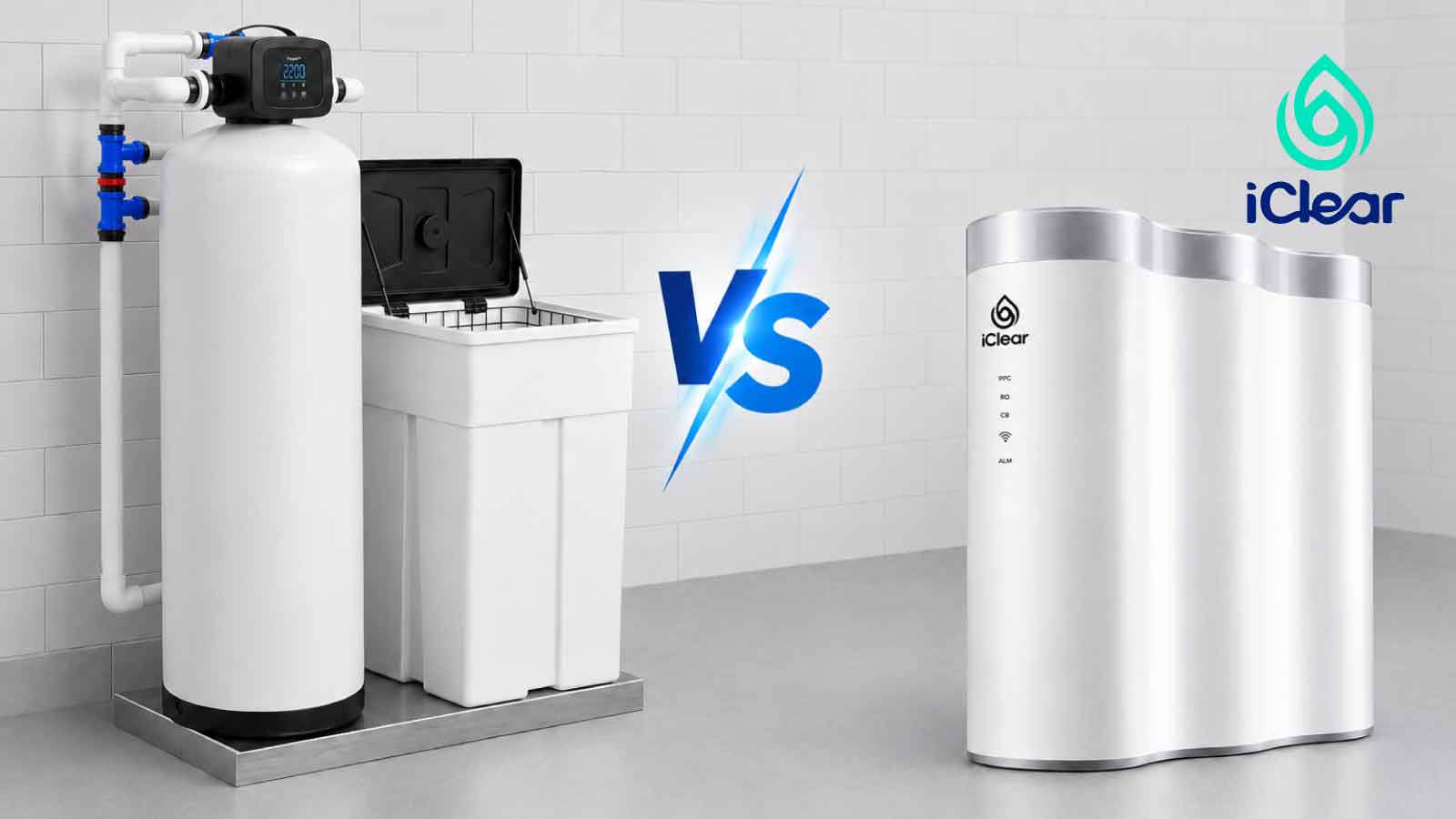
A water purifier removes contaminants like bacteria, fluoride, and dissolved salts from drinking water. A softener specifically targets hardness minerals across your whole water supply, protecting appliances and plumbing. Many households benefit from both. What a Purifier Does A Reverse Osmosis purifier treats your drinking and cooking water at the point of use, removing bacteria, fluoride, dissolved salts, and sediment. It's focused on what you consume. What a Softener Does A softener treats water hardness, calcium and magnesium, across your whole home supply, reducing limescale on kettles, showerheads, and plumbing. It doesn't purify drinking water to the same standard as RO. Do You Need Both? The iClear Premier, part of the expanding product line moving beyond drinking-water purification toward whole-house treatment. If your water is both high in TDS or fluoride and causing visible limescale, a purifier for drinking water plus a softener for the whole house addresses both problems at their source, rather than treating symptoms individually. Ask about iClear's expanding product range. Free delivery and professional installation in Nairobi, Nakuru, and Mombasa. Visit the iClear shop. Keywords: water softener vs purifier, hard water solution kenya, iClear Kenya
A composite Nairobi household spending KSh 5,000 a month on bottled water, replacing a kettle every few months, and never testing their borehole water, illustrates the hidden cost of treating water quality as someone else's problem. The Household Consider a household in a Nairobi estate on borehole water, four people, drinking bottled water for peace of mind while cooking and washing with untreated tap water. It's a common, reasonable-seeming setup. What It Actually Costs KSh 5,000 a month on bottled water, KSh 60,000 a year, unnoticed because it's paid in small amounts. A kettle replaced roughly every 8 months due to limescale buildup from hard water. An unexamined assumption that cooking and washing water, unlike drinking water, doesn't need attention. What a Test Would Have Shown Had this household tested their borehole water, they may have found TDS in the 300 to 600 ppm range common to many Nairobi-periphery boreholes, explaining both the kettle damage and a mineral taste they'd simply gotten used to. The Alternative The five-year picture: continued bottled water spend versus a one-time iClear Standard. A one-time iClear Standard purifier at KSh 25,000 would have ended both the bottled water spend and the appliance damage, paying for itself within months rather than continuing as an invisible ongoing cost. Stop the invisible cost. Free delivery and professional installation in Nairobi, Nakuru, and Mombasa. Visit the iClear shop. Keywords: cost of ignoring water quality, bottled water cost kenya, hard water damage kenya, iClear Kenya
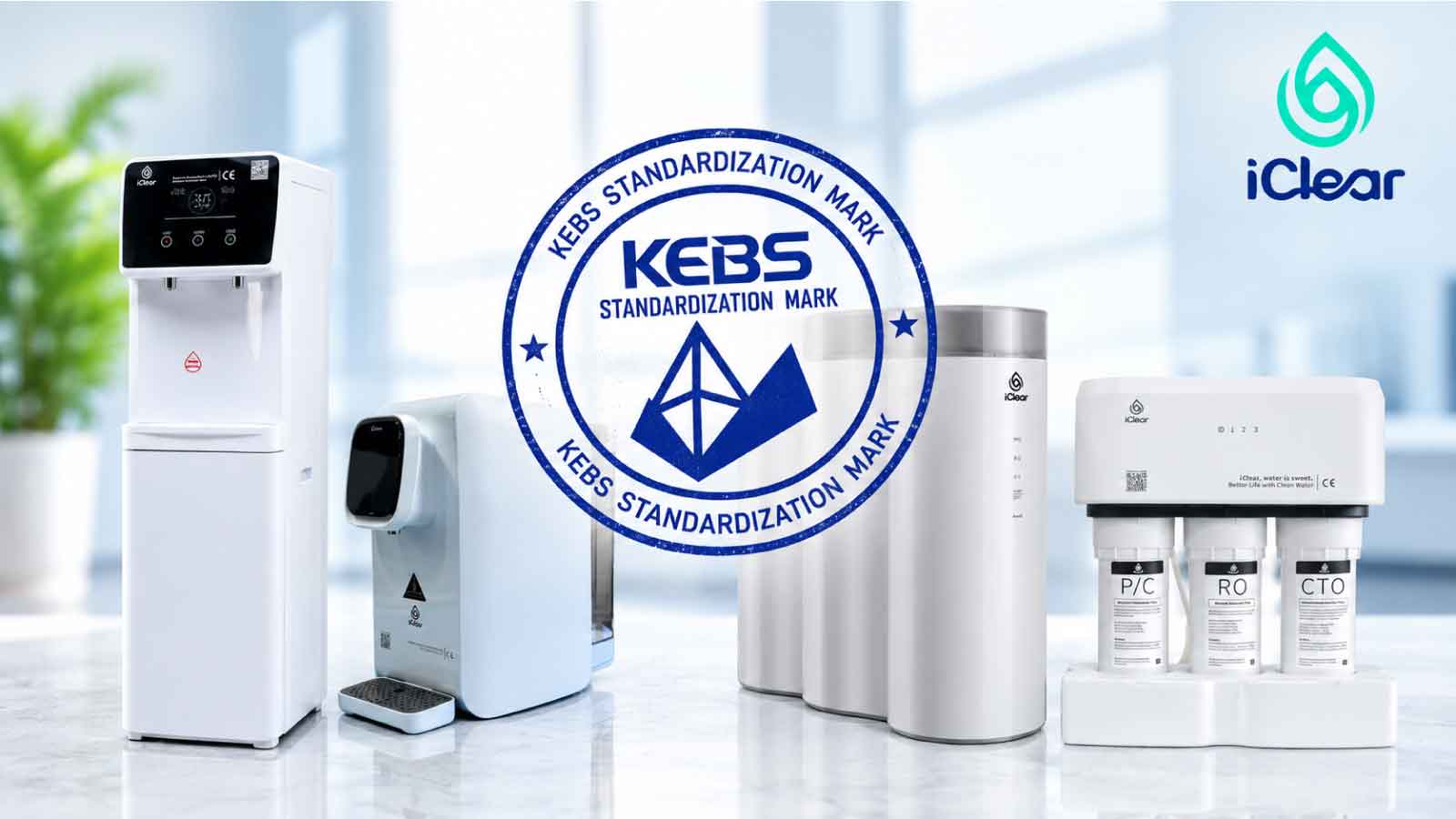
Many sellers claim KEBS certification without evidence a buyer can verify. Ask for the certificate directly and check it against the specific model you are buying, and be cautious of vague or unverifiable claims. Why This Matters KEBS certification means a product has been assessed against Kenya's own quality and safety standards, not a generic international benchmark. It's one of the few checkable facts a buyer has before purchase, and one of the easiest claims to make falsely. How to Verify a Certification Claim Ask the seller to show the certificate directly, not just state the claim verbally. Check that the certificate matches the specific model you are buying, not a different product in the same range. Be cautious of certification claims with no documentation offered on request. iClear's Position iClear's Office system, part of the KEBS-certified range available for verification on request. Every iClear system is KEBS-certified, and the certification is available on request. We'd rather a buyer verify this directly than take our word for it. Buy certified, buy verifiable. Free delivery and professional installation in Nairobi, Nakuru, and Mombasa. Visit the iClear shop. Keywords: KEBS certified water purifier, verify water purifier certification kenya, iClear Kenya
A generic water purifier is a standard import resold with minimal local adaptation and support ending at the sale. An original brand like iClear engineers for local water conditions and stays accountable through installation, service, and years of filter maintenance. What "Generic" Usually Means A generic purifier is typically built to a general international spec, resold with minimal adaptation. Support often ends at the point of sale, leaving customers without a reliable path back to the seller once something needs attention. What "Original Brand" Requires An original brand engineers specifically for the conditions it's sold into. For iClear, that means filtration stages reinforced for Kenyan water's distinct mineral and fluoride profile, and a company that installs, services, and answers for the system long after the sale. The iClear Office Purifer (Bottless Water Dispeser) iClear's field TDS readings across five Kenyan towns, the exact variation generic imports aren't engineered around. Where the Difference Shows Up Installation: full-time iClear technicians, not third-party contractors. Service continuity: warranty and scheduled filter maintenance built in, not an afterthought. Engineering fit: adjusted for local water, not sold as-is from a general catalogue. Traceability: one company responsible from sale through years of ownership. Choosing between generic and original isn't a choice about the machine. It's a choice about who is still accountable to you a year after the purchase. See the full iClear range. Free delivery and professional installation in Nairobi, Nakuru, and Mombasa. Visit the iClear shop. Keywords: iClear vs generic water purifier, original brand water purifier kenya, best water purifier company kenya, iClear Kenya
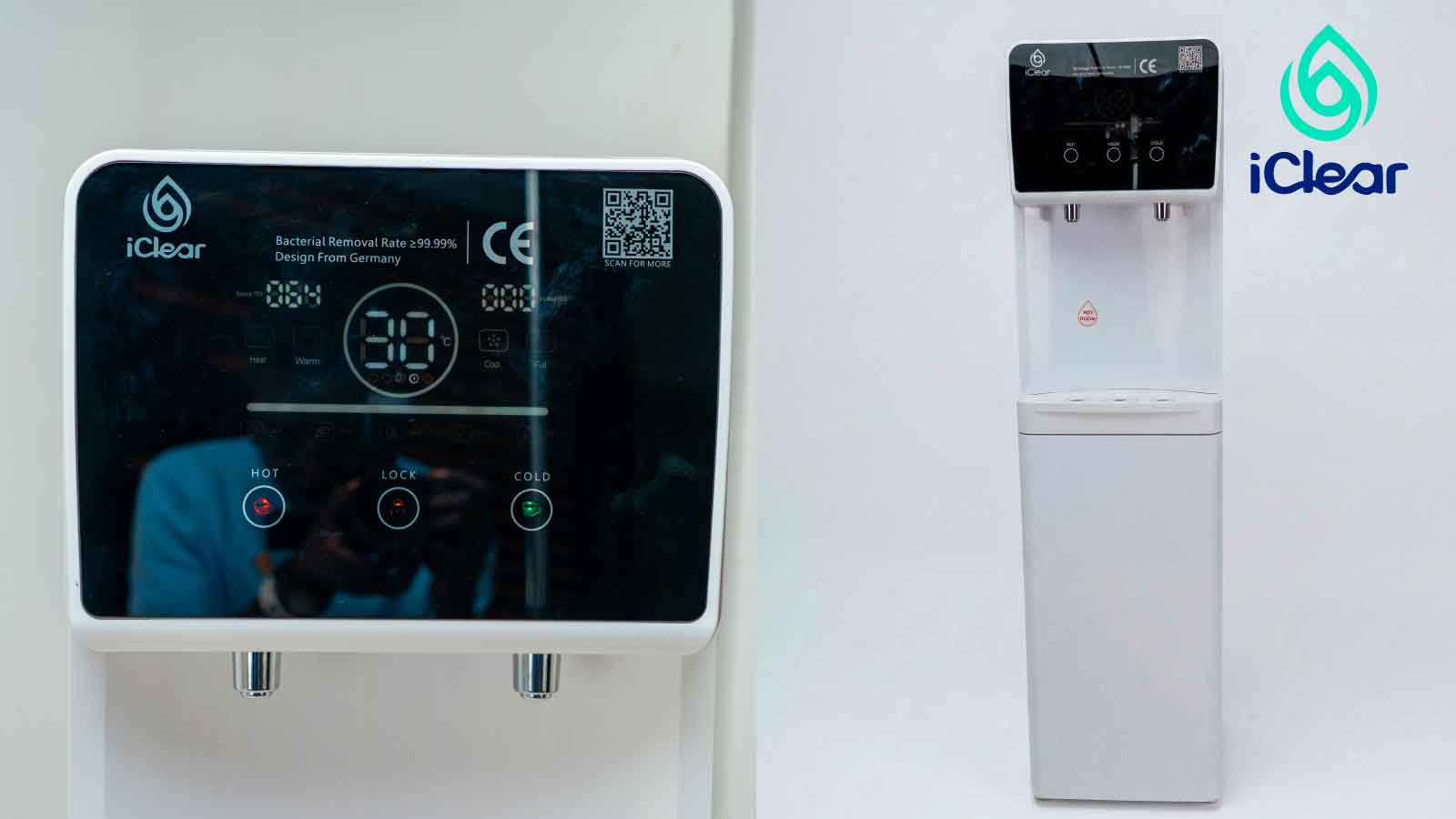
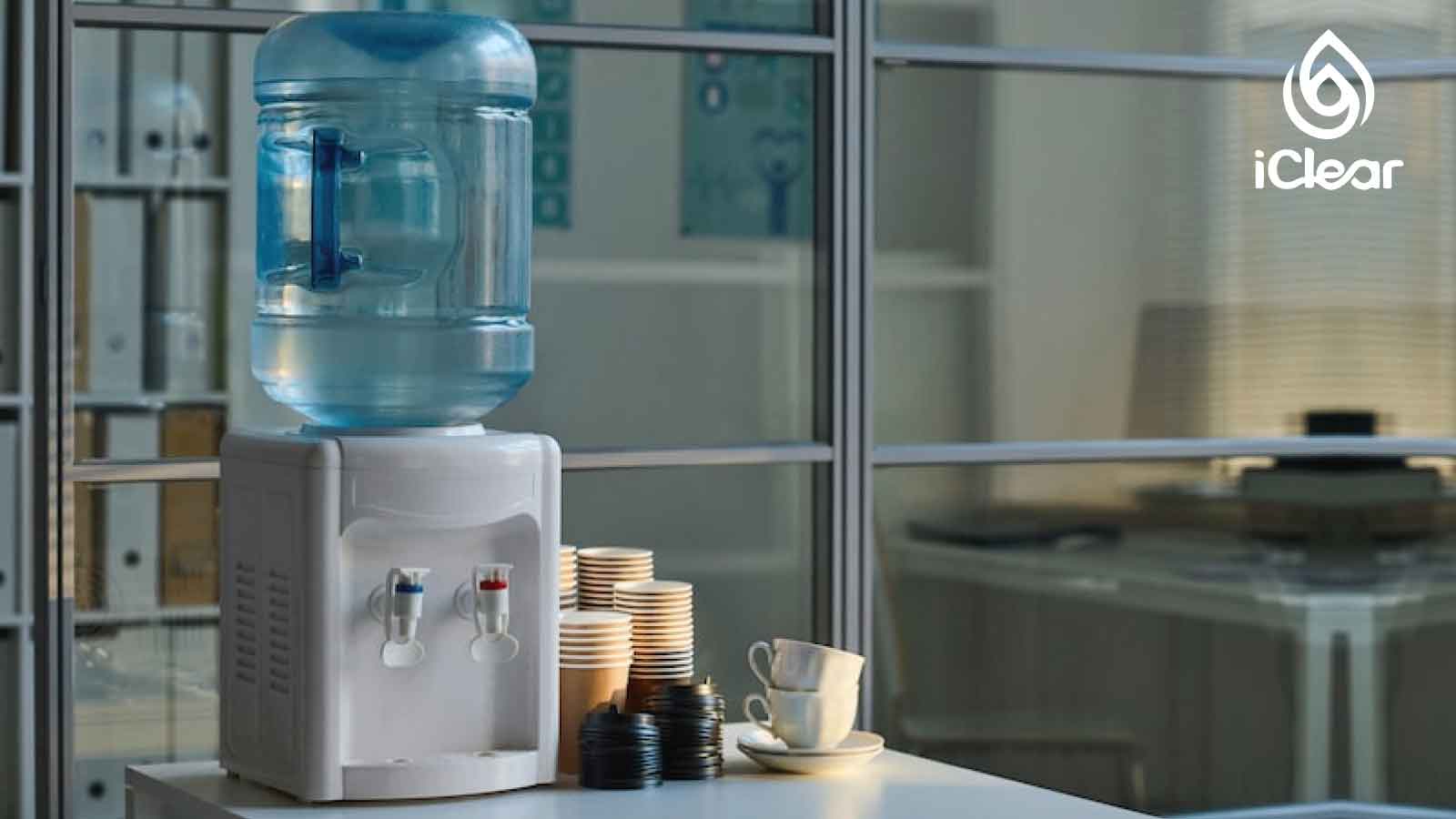
Managing clean drinking water in a busy workplace shouldn't feel like a logistical nightmare. For years, Kenyan offices have relied on heavy 20-liter plastic water jugs—dealing with unpredictable delivery schedules, cluttered storage rooms, heavy lifting, and fluctuating monthly bills. The iClear Bottleless Office Water Dispenser Subscription offers a modern alternative: a sleek, direct-piped water purification system designed to supply 20 to 30 staff members with continuous, ultra-pure drinking water at a predictable annual rate. What is a Bottleless Water Dispenser? Unlike traditional dispensers that rely on pre-filled plastic bottles, a bottleless water dispenser connects directly to your office's existing tap water supply. Inside the unit, an advanced multi-stage Reverse Osmosis (RO) filtration system purifies tap water on demand. It removes up to 99.99% of dissolved solids, chlorine, bacteria, heavy metals, and sediments, storing the purified water in a sterile internal tank. The result is fresh, clean water available whenever your team needs it. Clean, touch-friendly water dispensing for modern workspaces. Key Features of the iClear Office Water Purifier 1. Multi-Stage Reverse Osmosis Purification Tap water in urban areas like Nairobi often carries unwanted minerals, chlorine taste, or microbial risks. iClear’s integrated RO filtration system purifies water through multiple filtration stages, delivering crisp, bottled-quality water straight from the tap. 2. Instant Hot, Cold & Room Temperature Water Whether your team needs boiling water for morning tea, chilled water on a hot afternoon, or room-temperature water for quick hydration, the dispenser provides instant temperature selection at the touch of a button.  3. Sleek, Modern Design for Any Workspace The iClear dispenser features a minimalist, freestanding white design that blends seamlessly into modern office kitchens, reception areas, and breakrooms. It is engineered for medium-sized office environments, keeping up with peak morning coffee runs and afternoon hydration needs without running dry. Why Choose the Annual Service Subscription Model? Buying equipment is only half the battle—maintaining it is what keeps your workplace water safe. With iClear’s Annual Service Subscription, your office gets full operational peace of mind without hidden fees. Zero Upfront Purchase Costs: Enjoy enterprise-grade water purification without heavy capital investment. Scheduled Filter Replacements: iClear technicians track and execute timely filter changes so your water quality never drops. Full Technical Maintenance & Repairs: Any technical issues or wear-and-tear repairs are completely covered under the subscription. Predictable Budgeting: Pay a single, transparent annual fee instead of managing dozens of individual water invoice deliveries throughout the month. A professionally managed bottleless RO + UV water system Comparison: Traditional 20L Bottles vs. iClear Bottleless Subscription Feature Traditional 20L Water Bottles iClear Bottleless RO Subscription Water Supply Limited by bottle inventory Unlimited continuous supply Storage & Space Requires floor space for empty & full bottles Zero extra storage needed Physical Effort Staff must lift heavy 20kg bottles Hands-free / direct dispensing Cost Predictability Spikes with high consumption or hot weather Fixed annual subscription Plastic Footprint Heavy single-use & reusable plastic impact 100% plastic-bottle free Maintenance DIY cleaning & manual sanitization Full professional maintenance included Environmental Impact: Reduce Your Corporate Plastic Footprint Sustainability is no longer optional for modern organizations. Replacing 20-liter plastic jugs with an in-house bottleless purifier eliminates hundreds of plastic bottles from circulation every year. It also reduces carbon emissions tied to heavy delivery trucks navigating daily traffic. How to Get Started with iClear Upgrading your office hydration system is quick and straightforward: Site Assessment & Setup: iClear technicians evaluate your office plumbing and power setup. Professional Installation: The dispenser is cleanly integrated into your main water line. Enjoy Pure Water: Your team gets immediate access to safe, unlimited drinking water, with all routine service handled directly by iClear. Ready to transform your workplace hydration? Contact iClear Kenya today to request a quote or order your office drinking water subscription.
Many water purifier sellers in Kenya operate as one-time transactions: buy the unit, and after-sales support often disappears. iClear was built differently, as a long-term service company, with in-house technicians, scheduled maintenance, and systems engineered specifically for Kenyan water conditions. The problem with "add-to-cart" water purifier sellers A common pattern in this market: a customer buys a purifier, it gets installed, and support effectively ends there. When a filter needs replacing or something goes wrong, the original seller is difficult to reach or no longer offers service. The customer is left owning hardware they can't properly maintain. iClear Standard and full range in our shop. We solve for the customer's need, not just sell a spec sheet. Rather than presenting a long list of technical options, we ask what a household or office actually needs and recommend accordingly. iClear's Office system is engineered and serviced in-house, the same philosophy applied across every product in the range. Why this matters for you A water purifier is only as good as the support behind it. A system with no accessible after-sales service becomes a liability the moment a filter needs changing or a part needs repair. iClear's model exists specifically to close that gap, so that buying a system is the start of a relationship, not the end of one. FAQ Q: What makes iClear different from other water purifier companies in Kenya? A: iClear operates as a long-term service provider rather than a one-time equipment seller, with in-house technicians, scheduled maintenance, and systems engineered for Kenyan water conditions. Q: Does iClear outsource installation? A: No. All installation and service technicians are full-time iClear employees, ensuring consistent quality and accountability. Q: Is after-sales support included with an iClear purchase? A: Yes, every purchase includes a warranty, and ongoing service options are available for both households and offices. Experience water purification with support that doesn't disappear. Free delivery and professional installation in Nairobi and Nakuru. Visit the iClear shop. Keywords: iClear Kenya, best water purifier company kenya, water purifier after sales service, iClear vs competitors
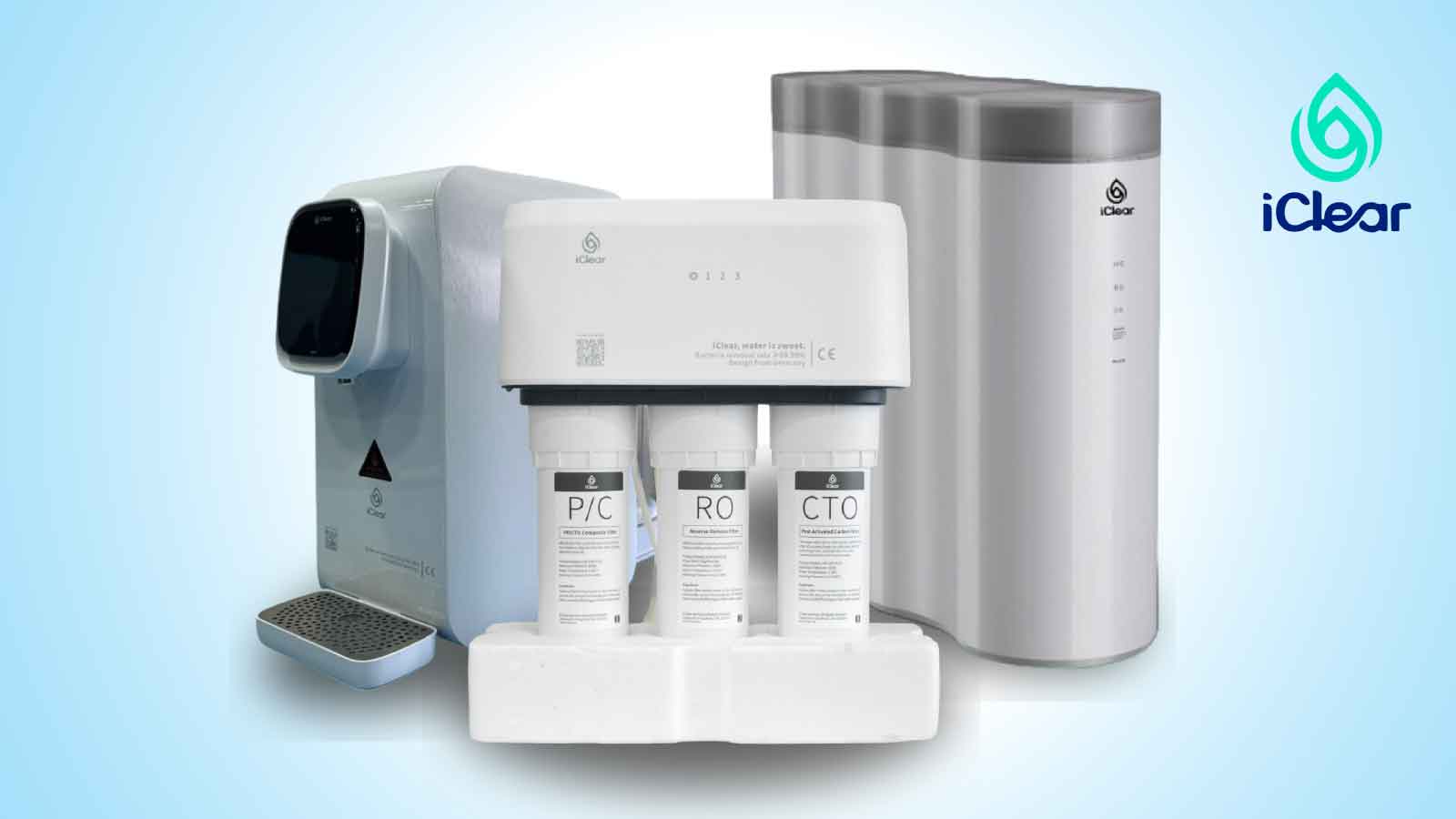
No, a water dispenser does not purify water. This is one of the most common misconceptions in Kenyan households. A dispenser only stores and serves water at different temperatures, it has no mechanism to remove bacteria, dissolved salts, or fluoride. Below, we separate the myths from the reality. Myth 1: "It's a water machine, so it must clean the water" Reality: The word "dispenser" describes exactly what the machine does, it dispenses. It takes water that already exists in a bottle or tank and delivers it hot, cold, or at room temperature. Nothing about that process filters or purifies anything. If the water going in carries bacteria, dissolved salts, or fluoride, the water coming out carries the same. Myth 2: "The water looks clean, so the dispenser is doing its job" Reality: Clarity has nothing to do with purification. A dispenser can serve water that looks perfectly clear while it is high in dissolved salts or fluoride, both of which are invisible to the eye. Looking clean and being purified are two different things, and a dispenser's appearance tells you nothing about what it has or hasn't done to the water. Myth 3: "If the dispenser is clean, the water must be safe" Reality: A clean-looking exterior says nothing about the interior. The reservoir, internal tubing, and taps of a dispenser can accumulate bacteria and biofilm over weeks of use if not sanitised regularly. In some cases, an unmaintained dispenser can make water worse than what went in, not better. Myth 4: "Hot water from the dispenser is automatically sterilised" Reality: Dispensers typically heat water to a level suited for tea or coffee, not to a rolling boil sustained long enough to kill bacteria. Even where the heating element does reach higher temperatures, dispensers are not designed or tested as sterilisation devices. The heating function exists for convenience and taste, not water safety. Myth 5: "Bottled water in a dispenser is safer than tap water in a dispenser" Reality: A dispenser doesn't discriminate between what it dispenses. Whether the source is a bottle or a tank filled from the tap, the dispenser performs the same non-purifying function either way. The safety of the water depends entirely on what happened before it reached the dispenser, not on the dispenser itself. So what does purify water? Purification requires a process that actively removes contaminants, not one that simply stores and serves. Reverse Osmosis is the method built for this, it forces water through a membrane fine enough to block bacteria, dissolved salts, fluoride, and sediment. The water that comes out is measurably different from the water that went in, which is the one thing a dispenser can never claim. The iClear Desktop purifies water through Reverse Osmosis and then dispenses it hot or cold, combining both functions in a single unit with no plumbing required. For a whole household, the iClear Standard delivers the same purification from a dedicated tap under the sink. Frequently Asked Questions Does a water dispenser purify water? No. A dispenser stores and serves water at a chosen temperature but has no mechanism to remove contaminants. Whatever is in the water going in is still there coming out. Does heating water in a dispenser make it safe to drink? Not reliably. Dispensers heat water for taste and convenience, not to a sustained boil, and are not designed as sterilisation devices. Is bottled water in a dispenser safer than borehole water in a dispenser? The dispenser itself makes no difference either way. Safety depends on how the water was treated before it reached the dispenser, not on the dispenser's function. Keywords: does water dispenser purify water, water dispenser myths, dispenser water safe, water dispenser vs purifier, iClear Kenya
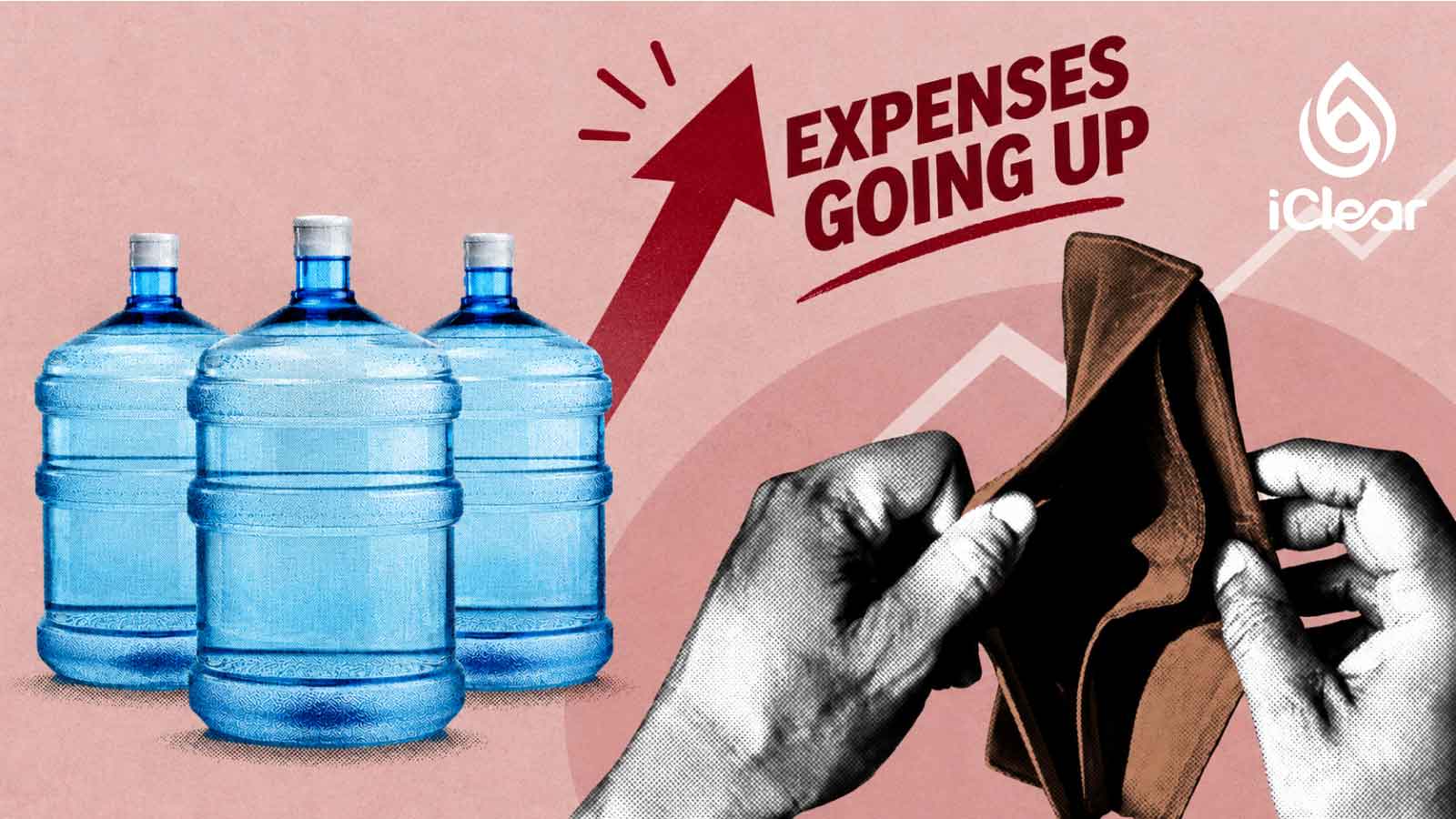
Over five years, a household buying bottled or dispenser water typically spends far more than the one-time cost of an RO system. At KSh 3,000 to 8,000 a month, bottled water reaches KSh 180,000 to 480,000 in five years against a one-time purifier cost. The monthly spend most families overlook A typical Kenyan household spending on bottled or dispenser water lands somewhere between KSh 3,000 and KSh 8,000 a month, depending on family size and how much is used for drinking and cooking. Because it is spent a little at a time, it rarely registers as a major cost. But it does not stop. It repeats every month, for as long as the household exists. The 5-year comparison Extended over five years, the monthly habit becomes a substantial figure: At KSh 3,000 a month: KSh 36,000 a year, and KSh 180,000 over five years. At KSh 8,000 a month: KSh 96,000 a year, and KSh 480,000 over five years. Against that, a one-time iClear Standard purifier is KSh 25,000, with free delivery and professional installation included in Nairobi and Nakuru. Even adding the modest, scheduled cost of replacement filters over the years, the total remains a small fraction of the bottled-water figure. The gap is not close. When an RO system pays for itself On these numbers, the purifier pays for itself in roughly four to eight months of what the household was already spending on bottled water. Everything after that point is money the family keeps. Over five years, the saving runs into the hundreds of thousands of shillings for most households, which is why iClear's own estimate is that customers save up to 80% compared with buying water. The honest way to judge a purifier's price is not against zero. It is against what you are already spending on water every month and will keep spending. Measured that way, the purifier is the cheaper option, not the expensive one. What the comparison leaves out To keep this fair, an RO system does carry ongoing costs: replacement filters on a schedule, and occasional servicing. These are real, and they are built into the small print of the comparison above rather than hidden. They are also modest and predictable, and iClear schedules and supports them. Even with these included, the five-year total for a purifier stays far below the bottled-water total. The comparison survives an honest accounting. The convenience factor, honestly weighed Bottled and dispenser water has one genuine advantage: someone else handles it. A purifier asks you to have it installed and its filters changed. But it also removes the recurring chores of buying, carrying, storing, and running out of water. Most households find the balance tips clearly toward the purifier once the money is on the table, because the convenience of never running out, and never buying again, outweighs the one-time setup. FAQ Q: Is a water purifier cheaper than buying bottled water in Kenya? A: Over time, yes, and by a wide margin. A household spending KSh 3,000 to 8,000 a month on bottled water spends KSh 180,000 to 480,000 over five years, against a one-time KSh 25,000 for an iClear Standard plus modest filter costs. Q: How long does it take for an RO system to pay for itself? A: Roughly four to eight months of what a household already spends on bottled water. After that point, the money previously spent on water is saved, adding up to hundreds of thousands of shillings over five years for most families. Q: What are the ongoing costs of an RO purifier? A: Scheduled replacement filters and occasional servicing, both modest and predictable, and both scheduled and supported by iClear. Even including these, the five-year cost stays far below buying bottled or dispenser water. Stop paying monthly for water you can own once. Free delivery and professional installation in Nairobi and Nakuru. Visit the iClear shop. Keywords: bottled water vs ro cost kenya, water purifier cost kenya, bottled water cost, ro system savings, iClear Kenya, water purifier price kenya
For a small Nairobi office of 10 to 50 people, a bottleless Reverse Osmosis system usually beats a bottled-water cooler on both cost and hygiene. It removes the monthly bottle spend, the delivery logistics, and the reservoir contamination risk of a conventional cooler. What the bottled cooler really costs a small office A small office gets through a surprising volume of water: staff drinking through the day, tea and coffee, visitors. The monthly bottle bill for a 10 to 50 person office adds up quickly, and the invoice is only part of the cost. There is the admin of ordering and receiving, the storage space for full and empty bottles, the productivity hit when the last bottle runs out before the delivery arrives, and the staff time spent changing heavy bottles. The hidden hygiene problem A bottled cooler is far less clean inside than it looks. The reservoir, the taps, and the drip tray accumulate bacteria and biofilm if not regularly sanitised, and most office coolers are never properly cleaned. Studies have found bacterial contamination in dispensers that looked spotless from outside. In a warm office, an uncleaned cooler becomes a steady low-level contamination source in every cup poured from it. What works better: a bottleless RO system The iClear Office system (KSh 90,000 per year) connects directly to the office water supply and delivers unlimited hot and cold purified water on demand. There are no bottles, no deliveries, no storage, and no standing reservoir to grow bacteria. It is a bottleless Reverse Osmosis and UV system sized for 20 to 30 staff, and it includes free professional installation and servicing every four months. For smaller teams, the iClear Premier or Desktop can cover the need at lower volume. The comparison for a small office Cost: the annual system cost typically lands below what an office spends on bottled water, and it stops rising with usage the way bottle orders do. Hygiene: no reservoir or bottle neck to contaminate; purified at the point of use. Logistics: no ordering, receiving, storing, or changing bottles. Reliability: no running out mid-week waiting for a delivery. The honest comparison for a small office is not the system against zero. It is the system against what the office already spends on bottled water, plus the admin and the hygiene risk. Measured that way, the bottleless system usually wins on all three. Why this suits SMEs specifically Large industrial water needs are a different market, served by different equipment. But the 10 to 50 person office, the cafe, the co-working space, the clinic, is exactly the size a system like this fits: big enough that bottled water is a real recurring cost, small enough that a single point-of-use system covers the whole team. This is the segment where switching makes the clearest sense. FAQ Q: What is the best water solution for a small office in Kenya? A: For a 10 to 50 person office, a bottleless Reverse Osmosis system usually beats a bottled cooler on cost and hygiene. The iClear Office system connects to the supply and gives unlimited hot and cold purified water with servicing included, removing bottle costs and delivery logistics. Q: Is a bottleless water system cheaper than bottled water for an office? A: Usually yes over a year. The annual system cost typically sits below an office's bottled-water spend, and unlike bottle orders it does not keep rising with usage. It also removes the admin and storage costs bottles carry. Q: Are office water coolers hygienic? A: Bottled coolers are less clean inside than they look. Reservoirs, taps, and drip trays grow bacteria if not regularly sanitised, and most are not. A bottleless point-of-use system has no standing reservoir to contaminate. Cut your office water bill and the bottle logistics. Free installation and servicing in Nairobi and Nakuru. Visit the iClear shop. Keywords: office water purifier nairobi, small office water solution, bottleless water cooler office, commercial water purifier kenya, iClear Office, iClear Kenya
Sustainability & Environment
Product Guides
Media & Press