

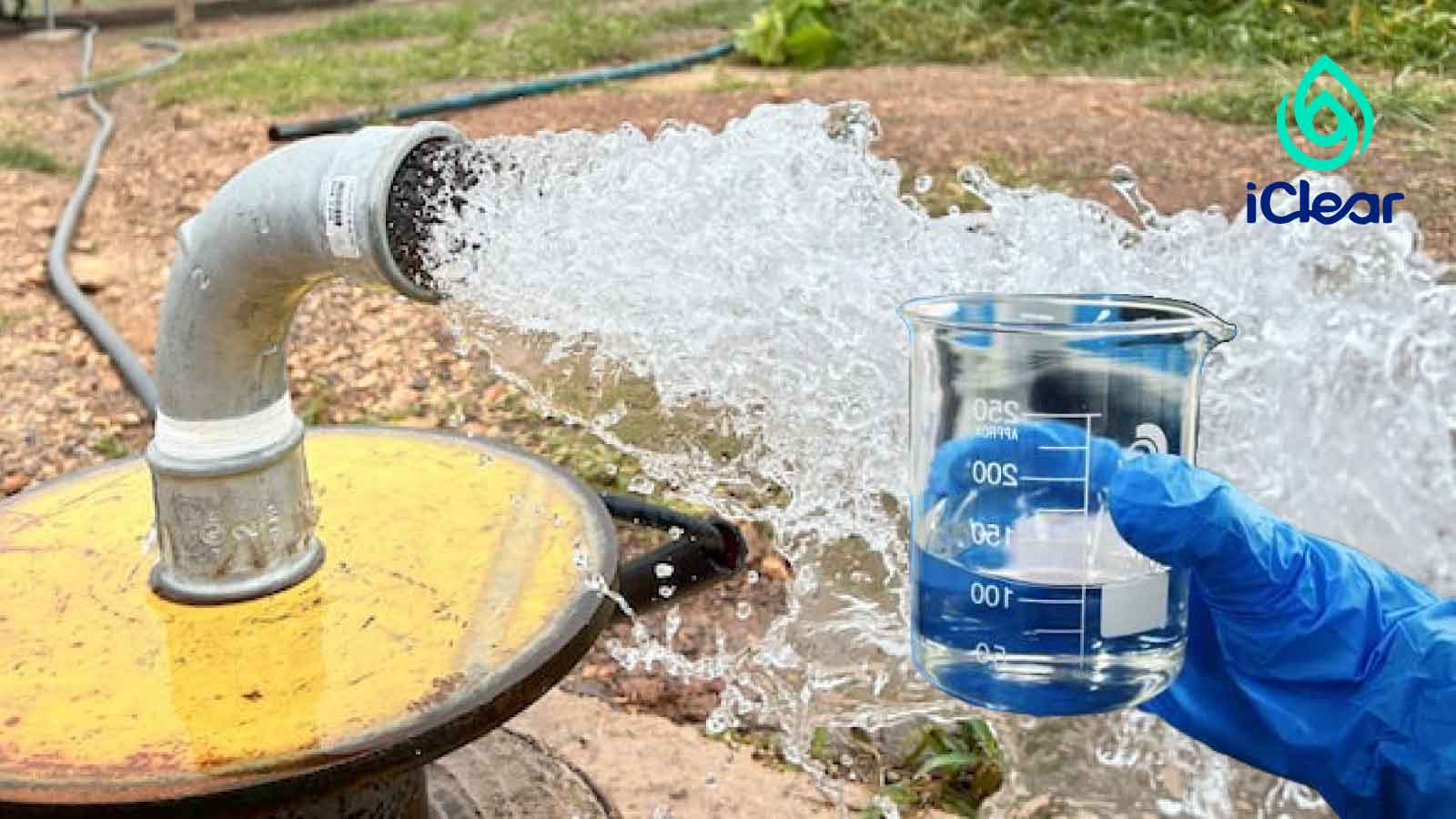
This month, iClear delivered and installed three Premier RO water purifiers at Baobab School and Baobab House. Together, these units bring clean, safe drinking water directly to 90+ children aged 4 to 6, along with the staff who care for them every day. Here is why this donation matters and what it changes in a place where every cup, every meal, and every hand-wash counts. The iClear team with staff and a young Baobab resident at the donation event. Who Baobab supports Baobab School and Baobab House work with children in some of the most vulnerable communities in Kenya. The school serves 90+ children between the ages of 4 and 6, offering early childhood education alongside a sponsorship programme and a feeding programme that ensures every child eats every day. Baobab House provides residential care to children who need more than daytime support. What ties everything together is the same principle: making sure the children under Baobab's care have the basics they need to thrive. Food. Learning. Safety. And, often overlooked, clean water. Why water was the missing piece In the communities Baobab serves, clean drinking water is not something families can take for granted. Households often rely on unfiltered tap water, water bought from vendors, or trucked-in supplies of uncertain quality. For a school and residential home feeding and caring for 90+ children daily, that means either accepting a real health risk or absorbing the cost of buying safe water at scale. Both options are unsustainable. Waterborne illness spreads quickly among young children, and every shilling spent on bottled or trucked water is a shilling not going toward the food, education, and care Baobab exists to provide. For a school feeding 90+ children every day, safe water is not an aspiration. It is a requirement of every meal, every drinking cup, and every hand-wash. It touches everything. Children at Baobab School during the iClear team's visit. What we installed The team installed three iClear Premier Water Purifiers, a multi-stage Reverse Osmosis system with pressure tanks and filter units, professionally installed under the sink and counter at both Baobab School and Baobab House. The Premier was chosen for a specific reason: it is designed for higher-demand environments and delivers 100 gallons of purified water per day, enough to serve the daily consumption, cooking, and hand-washing needs of a facility of this size. Each unit removes: Bacteria and viruses that cause waterborne illness Heavy metals from ageing pipes and storage tanks Fluoride, particularly relevant given how widely elevated fluoride affects Kenyan water Dissolved salts and sediment that compromise taste and long-term health Chlorine residues from municipal treatment The installation was carried out entirely by the iClear team at no cost to Baobab. From delivery to the moment the systems were tested and handed over, the process was managed by iClear's trained technicians on site. Two of the three iClear Premier units installed under the sink, complete with pressure tanks. Bringing the cost of clean water down Beyond the immediate health benefit, the installation dramatically reduces the ongoing cost of clean drinking water at both sites. Compared to the price of bottled or trucked water, the iClear Premier's cost per litre is a fraction of what Baobab had been absorbing. That saving translates directly into more resources for the children Baobab serves, better food, better learning materials, better care. This is one of the reasons iClear's model is built the way it is. Clean water at a genuinely affordable cost per litre is not just a household benefit. In institutional settings like Baobab, it is a multiplier for everything else the organisation is trying to do. Every shilling Baobab is no longer spending on bottled water is now free to spend on the food, learning, and care that make the biggest difference to a young child's life. The visit itself The iClear team travelled to Baobab in person to install the units and meet the children and staff. It is one thing to talk about clean water in a sales meeting. It is a different thing to install a system in a place where the water it produces will be poured into the cups of 90+ children the next day. What stood out during the visit was how quickly the children took to the moment. Curious, welcoming, and, as ever, more interested in the visiting team than in the equipment. The staff, meanwhile, walked us through what daily life looks like at Baobab: the meal schedule, the drinking water routines, the small, constant logistical work of caring for that many children well. A staff member tastes water from the newly installed system, moments after commissioning. Why iClear does this iClear was built on the idea that clean water should not be a privilege of neighbourhood or income. Four years in, we have installed systems across Karen, Runda, Naivasha, Kitengela, Nakuru, and dozens of other places in between. The reason for doing so is the same in every setting: the health and dignity of the people drinking the water. Baobab's mission sits directly alongside that idea. A school and home supporting 90 vulnerable children could not do its work without safe water. iClear is glad to be one of the pieces that makes the work possible. How you can help Baobab too If Baobab's work resonates with you, the school and house depend on sponsorship, donations, and community support to serve the children in their care. Even small contributions make a genuine difference at this scale. If you would like to learn more about Baobab or support their sponsorship or feeding programmes directly, we would be glad to connect you with the team there. This donation is one small step in a much larger effort. If you know a school, clinic, or community project that would benefit from clean water at scale, get in touch with iClear. We would like to hear about it. Support clean water for every Kenyan household and community. Free delivery and professional installation in Nairobi and Nakuru. Visit the iClear shop. Keywords: Baobab School Kenya, iClear water donation, iClear community impact Kenya, water purifier donation Kenya, iClear Kenya, iClear Premier, clean water Kenya schools, water purifier Kenya
Ask a Kenyan how they get their drinking water, and the answer will usually involve some combination of tap, borehole, bottled, or refilled twenty-litre dispensers. Ask them whether they trust it, and the answer becomes hesitant. Most people boil. Some filter. A growing number buy bottled water by the case. The shared instinct is that something is not quite right, even if nobody can say exactly what. That instinct is correct. Across Nairobi, Nakuru, and many other parts of the country, the water that arrives at the tap can carry contaminants that no amount of boiling will fix. Understanding what those contaminants are, and where they come from, is the first step to actually doing something about them. The contaminants nobody talks about Three issues stand out in the Kenyan context. The first is fluoride. In parts of the Rift Valley, naturally occurring fluoride in groundwater sits well above the safe limits set by the World Health Organization. Long-term exposure has been linked to dental fluorosis, where teeth stain and weaken, and skeletal fluorosis, where bones become brittle and painful. The second is heavy metals. Older pipes across Nairobi, especially in established estates with infrastructure dating back decades, can leach lead and other metals into water that was perfectly clean when it left the treatment plant. Lead is particularly dangerous for children, where even small amounts can affect brain development. The third is salinity and hardness. Borehole water across Nairobi, Kiambu, and surrounding areas often carries high dissolved mineral content. The water tastes off, leaves white stains on dishes, ruins kettles and washing machines, and over time damages the household appliances families spend good money on. Why this matters now Kenyan households are starting to take this seriously, and the conversation is becoming public. A recent Daily Nation feature on the growing demand for safe water documented how families across the country are moving away from temporary solutions like bottled water and toward long-term household purification systems. The shift is not driven by fashion. It is driven by parents watching their children get sick, couples worried about fertility, and ordinary Kenyans tired of paying for refills that never solve the underlying problem. What is changing is awareness. For decades, the assumption was that treated water meant safe water. That assumption no longer holds, and the families who have figured this out are quietly doing something about it. What you can do this week Three small actions make a real difference. First, find out where your water actually comes from. Is it municipal, borehole, or a tanker delivery? Each source carries different risks. Second, look at your kettle and your appliances. White scale, persistent staining, or appliances that fail faster than expected often point to hard water that needs addressing. Third, ask yourself the harder question. If your water carried a contaminant boiling cannot remove, would you know? Most Kenyan families have never been given the information to answer that last question. That is what needs to change. Find out what is actually in your water. Free delivery and professional installation in Nairobi and Nakuru. Visit the iClear shop.
Product Guides
Water Purification