
Among our rapidly expanding customer base, one professional demographic stands out: dental clinics and medical practitioners. Dentists and doctors are not installing iClear water purifiers because of marketing campaigns; they are doing so because they witness the physical consequences of Kenya's water problem in their patients every single day. When the health professionals responsible for treating body and tissue damage prioritize water purification, it is time to examine what they know. The Visible Damage: Dental Fluorosis Dentists in Kenya understand the groundwater crisis better than most because the evidence is written on their patients' teeth. Dental fluorosis, characterized by brown staining, pitting, mottling, and permanent enamel chalkiness, is endemic across many parts of the country. WHO Guidelines: The World Health Organization sets the maximum safe limit for fluoride in drinking water at 1.5 mg/L. Kenyan Reality: iClear's technical team consistently measures fluoride in Rift Valley boreholes (including Naivasha, Nakuru, Kajiado, Gilgil, and Kitengela) at levels exceeding 8.75 mg/L. Irreversible Harm: Children exposed to these high fluoride concentrations absorb the mineral rapidly into their developing enamel, causing permanent structural weakening before their adult teeth even emerge. The Invisible Strain: High TDS and Kidney Health General practitioners and medical specialists are equally concerned about Total Dissolved Solids (TDS). In areas like Kajiado and Kitengela, borehole water routinely measures between 450 and 600+ ppm TDS. Sustained consumption of water heavily laden with dissolved mineral salts, sodium, and heavy metals forces the kidneys to work continuously to filter out excess solutes. Over time, chronic intake of high-TDS water can contribute to renal strain, kidney stones, and systemic dehydration. Why Clinics Require Pure Water Beyond personal health, dental and medical facilities require purified water for clinical procedures: Infection Control: Autoclaves, surgical rinses, and ultrasonic scalers require water completely free of bacteria and sediment. Equipment Protection: High mineral content in unpurified water clogs delicate dental handpieces, leaves scale in sterilizers, and leads to costly equipment breakdowns. Patient Safety: Rinsing open oral wounds with unpurified tap or borehole water introduces unnecessary infection risks. Replicating Clinical Standards at Home Healthcare professionals know that boiling water does not remove fluoride or dissolved salts, and standard carbon pitchers offer zero protection against heavy metals. They rely on Reverse Osmosis because it is the only technology clinically proven to strip away dissolved fluoride ions and heavy metals. With an iClear Standard, iClear Premier, or iClear Office Water Purifier, you can bring the exact same KEBS-certified, clinical-grade Reverse Osmosis filtration used in medical offices directly into your family's home or workspace. Bring clinical-grade purified water to your family. Free delivery and professional installation in Nairobi and Nakuru. Visit the iClear shop or contact our health consultants today. Keywords: dental fluorosis Kenya, fluoride borehole water, water purifier dental clinic Kenya, high TDS water health effects, iClear Kenya, Rift Valley water problem

Ask the founder of iClear what the single biggest misconception about water in Kenya is, and the answer is immediate: it is the belief that clear water is safe water. Across four years of installations, water tests, and customer conversations, this one assumption has caused more hidden harm to families than any other. "If the water looks clear, it is safe to drink." That is the sentence our technical team hears, in some form, on almost every home visit. It is the reason households across Kenya have been drinking water that is genuinely compromised for years without realizing it. Why Your Eyes Are Misleading You Visible cloudiness, rust particles, or floating sediment are useful warning signs, but they only represent a tiny fraction of the contaminants present in Kenyan water sources. The most dangerous elements cannot be seen, tasted, or smelled. A glass of water can look perfectly crystal clear while carrying severe health risks: Fluoride: Completely invisible and odourless, fluoride has been measured by our team at levels over 5 times the World Health Organization (WHO) safe limit in parts of the Rift Valley. Heavy Metals: Lead, arsenic, iron, and manganese dissolve seamlessly into water without altering its clarity or taste in obvious ways. Dissolved Salts: High concentrations of dissolved minerals in coastal and arid-region boreholes blend completely into the liquid. Microbial Pathogens: Bacteria like coliforms and E. coli from uncleaned storage tanks are microscopic and invisible to the naked eye. Nitrates & Chemicals: Agricultural runoff and chlorine residues leave water looking clean while introducing long-term health hazards. What Our Field Tests Actually Reveal When iClear's field team conducts a professional water test on water that customers describe as "perfectly clear," the digital meters tell a completely different story: Naivasha Boreholes: Measure 300 to 600 ppm TDS, combined with dangerous fluoride concentrations. Kitengela Boreholes: Consistently range between 450 and 600 ppm TDS, frequently carrying elevated fluoride and dissolved salts. Kajiado: Yields TDS readings consistently above 450 ppm, forcing kidneys to work overtime. Karen & Runda: Deep borehole water carries heavy dissolved mineral loads that leave scale on appliances and dry out skin. Syokimau & Eastlands: Municipal supply becomes contaminated inside domestic storage tanks, introducing bacteria and biofilm. In every single one of these tests, the water looked acceptable in a glass. None of it was acceptable on a meter. Why Boiling Does Not Protect You When faced with water concerns, most Kenyan families resort to boiling. While boiling kills bacteria and viruses, it does nothing to remove chemical or dissolved contaminants. In fact, as water evaporates as steam during boiling, dissolved fluoride, heavy metals, and salts become more concentrated in the remaining liquid. The Solution: Molecular-Level Purification Clear water simply means visible floating particles have settled or been strained out; it says nothing about what is dissolved at the molecular level. That distinction, dissolved versus visible, is the exact reason Reverse Osmosis (RO) technology exists. Every system in the iClear range uses multi-stage Reverse Osmosis filtration to strip out contaminants that visual inspection will never reveal: iClear Standard: Designed for everyday household under-sink installation. iClear Premier: High-capacity RO system built for larger families and higher daily consumption. iClear Desktop: Provides portable, no-plumbing RO purification with instant hot water dispensing. All iClear systems are KEBS-certified. Stop trusting your eyes, and start trusting your data. Find out what is actually in your water. Free delivery and professional installation in Nairobi and Nakuru. Explore options at the iClear shop or contact our technical team today. Keywords: water purifier Kenya, clear water safe to drink, invisible water contaminants Kenya, iClear Kenya, water safety Kenya, Reverse Osmosis Kenya
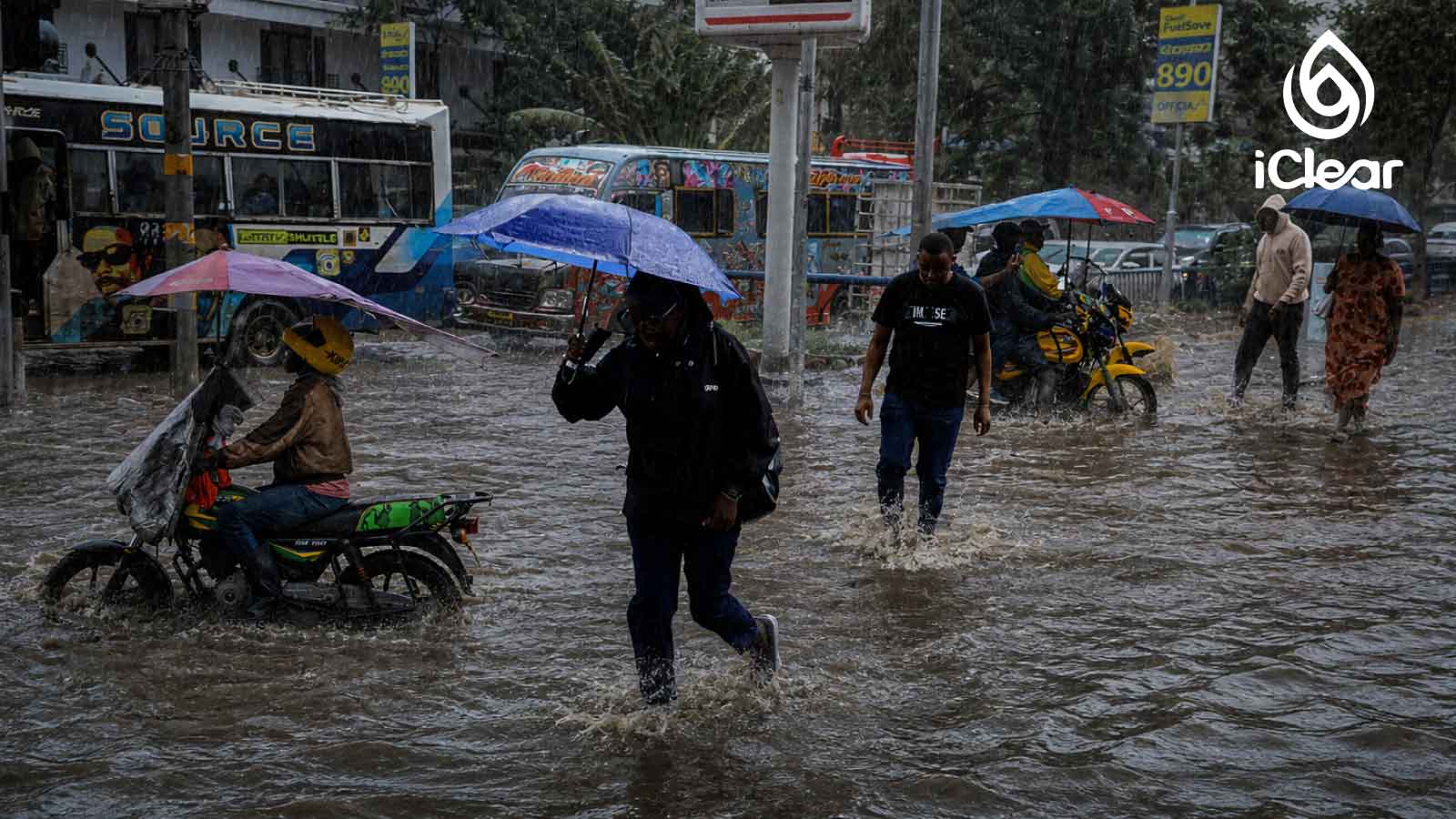
El Nino rains increase the risk of borehole and water-source contamination through flooding, runoff, and sewage overflow. Water that was previously reliable can carry new bacterial and sediment risks during and after heavy rains. Preparing your water treatment before the season starts is safer than reacting after symptoms appear. Why El Niño changes your water risk Heavy and prolonged rainfall does more than cause flooding. It can overwhelm drainage and sewage systems, wash surface contaminants into shallow boreholes and wells, and stir up sediment in water sources that are normally stable. A borehole that has tested clean in the past can see a real, temporary shift in quality during a heavy rain season. What tends to go wrong during heavy rains Surface runoff entering shallow boreholes: contaminants from the surface can seep in faster than usual. Sewage and drainage overflow: in areas with strained infrastructure, this can reach nearby water sources. Increased sediment and turbidity: water can turn cloudier, straining basic filters faster than usual. Municipal supply interruptions: heavy rains can affect treatment plants and distribution, sometimes leading to inconsistent treatment during peak strain. A multi-stage RO system removes sediment, bacteria, and dissolved contaminants, exactly the risks that spike during heavy rains. How to prepare before the rains Test your water now, before the season starts, so you have a clean baseline to compare against. Check that any existing filtration is in good condition; a filter already near the end of its life will struggle more under increased contamination load. Consider a Reverse Osmosis system if you don't already have one. The iClear Standard removes bacteria and sediment more reliably than basic filtration, which matters most exactly when source water quality becomes unpredictable. Have a maintenance check done on existing systems before the season, not after a problem appears. Visit the iClear shop. Keywords: el nino kenya water, prepare water for rainy season kenya, borehole contamination flooding, iClear Kenya
Many Westlands and Kilimani apartments have hard water, which leaves white limescale on kettles, taps, and appliances, and a film on glasses. Hard water is caused by dissolved minerals, and Reverse Osmosis removes them, protecting both your appliances and your drinking water. What hard water actually is Hard water is water with a high content of dissolved minerals, mainly calcium and magnesium. It is not dirty in the visible sense, and it is not unsafe to touch, but those dissolved minerals cause the effects residents notice. When hard water is heated or left to dry, the minerals are left behind as the white, chalky deposit called limescale. In an apartment relying on borehole or mixed supply, this mineral load can be significant. The signs in a Westlands or Kilimani apartment Limescale: white crust on kettles, taps, showerheads, and inside appliances. Spotting: white marks and film on glasses and dishes after washing. Appliance wear: kettles, irons, washing machines, and water heaters failing sooner as scale builds up inside them. Taste: a mineral or flat taste to drinking water. Why it matters beyond annoyance Limescale is not only unsightly. Inside a water heater or a kettle, scale acts as insulation, making the appliance work harder and wear out faster, which quietly raises electricity use and replacement costs. For drinking, high dissolved-mineral water carries the same sustained load on the body that any high-TDS water does. So hard water is both a household-cost problem and a water-quality one. Why RO is the switch residents are making Reverse Osmosis removes the dissolved minerals that cause hardness, along with the other contaminants in the supply. This is why apartment residents in these neighbourhoods are increasingly choosing RO for their drinking and cooking water: it ends the limescale and the film, and it protects both the appliances and the people. Because most apartment dwellers cannot alter building plumbing, the portable iClear Desktop is the popular choice here, delivering full RO purification with no installation. Where under-sink installation is possible, the iClear Standard covers the whole kitchen. Hard water in a Westlands or Kilimani apartment is a dissolved-mineral problem showing up as limescale and film. Reverse Osmosis removes the minerals at the source of your drinking water, which is why the switch has become common in exactly these high-density, apartment-heavy areas. FAQ Q: Why do Westlands and Kilimani apartments have hard water? A: Hard water comes from dissolved minerals, mainly calcium and magnesium, in the supply. Apartments drawing on borehole or mixed supply in these areas often carry a high mineral load, which shows up as limescale and film. Q: Does Reverse Osmosis remove hard water minerals? A: Yes. RO removes the dissolved calcium and magnesium that cause hardness, along with other contaminants, cutting TDS dramatically. This ends the limescale and film on your drinking and cooking water and protects appliances. Q: Can I fix hard water in an apartment I rent? A: Yes, for your drinking and cooking water. A portable RO purifier like the iClear Desktop needs no plumbing and removes the dissolved minerals, so renters can solve hard water at the tap they drink from without altering the building. End the limescale in your apartment water. Free delivery in Nairobi and Nakuru, no installation needed. Visit the iClear shop. Keywords: hard water westlands kilimani, limescale water nairobi, hard water apartment kenya, remove hard water minerals, apartment water purifier, iClear Kenya
Nakuru lies in Kenya's Rift Valley, where groundwater fluoride is naturally high. iClear has measured Rift Valley borehole fluoride above 8.75 mg/L, more than five times the WHO guideline of 1.5 mg/L. Boiling does not remove fluoride; Reverse Osmosis does. Why Nakuru has a fluoride problem Fluoride occurs naturally in groundwater across the Kenyan Rift Valley, and Nakuru sits squarely within that belt. It leaches into borehole water from the volcanic geology of the region. iClear's field team has measured Rift Valley borehole fluoride above 8.75 mg/L, more than five times the World Health Organization guideline value of 1.5 mg/L. Other high-fluoride areas in the belt include Naivasha, Gilgil, and Kajiado. Why fluoride matters Long-term consumption of high-fluoride water is linked to dental and skeletal fluorosis, a hardening and mottling of teeth and, over time, bones. Children are most affected because they absorb fluoride fastest during development. The World Health Organization sets its 1.5 mg/L guideline precisely because of these effects. When borehole water runs several times above that level, the exposure is significant and sustained, since it comes through daily drinking and cooking. Fluoride is invisible and tasteless at the levels that cause harm. A Nakuru household cannot tell high-fluoride water from safe water by looking or tasting. The only way to know is to measure, and the only way to fix it at home is to remove it. Why boiling and basic filters do not remove fluoride This is the crucial point for Nakuru families. Fluoride is dissolved at the molecular level, so the common methods do nothing: Boiling: does not remove fluoride, and by evaporating water can slightly concentrate it. Carbon and sediment filters: improve taste and clarity but leave fluoride in place. Ceramic and gravity filters: handle bacteria, not fluoride. What removes fluoride Reverse Osmosis removes fluoride by forcing water through a membrane fine enough to block the fluoride ions. It is the practical household method for the Rift Valley's fluoride problem, and it removes the dissolved salts and bacteria alongside it. The iClear Standard is built for these conditions and installs under the sink with free professional installation in Nakuru, and the iClear Premier serves larger households. For renters, the portable iClear Desktop removes fluoride with no plumbing. iClear delivers and installs across Nakuru. Nakuru's fluoride problem is documented, serious, and invisible, and it is exactly the problem Reverse Osmosis exists to solve. For families in the Rift Valley, fluoride removal is not an upgrade; it is the reason to purify in the first place. FAQ Q: Does Nakuru water have high fluoride? A: Nakuru sits in Kenya's Rift Valley, where groundwater fluoride is naturally high. iClear has measured Rift Valley borehole fluoride above 8.75 mg/L, more than five times the WHO guideline of 1.5 mg/L. Levels vary by borehole, so testing is worthwhile. Q: Can I remove fluoride from Nakuru water by boiling? A: No. Boiling does not remove fluoride, and by evaporating water it can slightly concentrate it. Carbon and ceramic filters also leave fluoride in place. Reverse Osmosis is the practical household method that removes it. Q: How do I remove fluoride from drinking water in Nakuru? A: A Reverse Osmosis system removes fluoride along with dissolved salts and bacteria. The iClear Standard installs under the sink with free installation in Nakuru, and the portable Desktop removes fluoride for renters with no plumbing. Remove Nakuru's fluoride from your family's water. Free delivery and professional installation in Nakuru. Visit the iClear shop. Keywords: nakuru fluoride water, fluoride nakuru drinking water, rift valley fluoride, remove fluoride kenya, nakuru water purifier, iClear Kenya
A water dispenser and a water purifier are not the same. A dispenser stores and serves water at different temperatures but does not clean it. A purifier removes contaminants. Only a purifier changes what is in the water. The one-line difference A dispenser changes the temperature of your water. A purifier changes what is in it. That is the whole distinction, and everything else follows from it. If your only need is hot or cold water on demand, a dispenser does that. If you need the water to actually be cleaner, a dispenser does nothing for you, and only a purifier will. What a dispenser actually does A water dispenser stores water, from a bottle or a tank, and serves it hot, cold, or at room temperature. It is a convenience appliance. It does not filter, and it does not purify. Whatever quality of water you put into it is the quality of water it gives back, at your chosen temperature. Its own reservoir and taps, if not regularly cleaned, can even add contamination over time rather than remove any. What a purifier actually does A water purifier removes contaminants from the water. A Reverse Osmosis purifier, the type built for Kenyan conditions, removes bacteria, dissolved salts, fluoride, heavy metals, and sediment by forcing water through a membrane fine enough to block them. The water that comes out is genuinely different from the water that went in. Every iClear system is a purifier in this sense, and the iClear Desktop combines both jobs, purifying the water and then dispensing it hot or cold, so you are not choosing between clean and convenient. Where the confusion comes from The confusion is understandable. Both machines sit on a counter, both give you water, and marketing often blurs the line. Some dispensers are described in ways that imply they clean the water when they only cool or heat it. The test is simple: ask whether the machine removes anything from the water. If it only changes the temperature, it is a dispenser, whatever it is called. If a machine only makes your water hotter or colder, it is a dispenser. If it removes what is in the water, it is a purifier. A single unit can do both, but temperature control alone is never purification. Which one your home needs If your water is already genuinely clean and you only want it hot or cold, a dispenser suffices. For most Kenyan homes, where borehole and stored water carry dissolved salts, fluoride, or contamination that the eye cannot see, a purifier is what actually addresses the problem. And if you want both clean water and the convenience of instant hot and cold, a combined purifier-dispenser gives you the whole thing in one machine, which is why it is the option many households settle on. FAQ Q: What is the difference between a water dispenser and a water purifier? A: A dispenser stores and serves water at hot or cold temperatures but does not clean it. A purifier removes contaminants such as bacteria, dissolved salts, and fluoride. Only a purifier changes what is in the water. Q: Do I need a dispenser or a purifier? A: If your water is already clean and you only want it hot or cold, a dispenser is enough. If you want the water to be genuinely cleaner, you need a purifier. A combined purifier-dispenser does both in one unit. Q: Can one machine both purify and dispense water? A: Yes. A combined purifier-dispenser, such as the iClear Desktop, purifies water through Reverse Osmosis and then dispenses it hot, cold, or at room temperature, so you get clean water and convenience together. Get clean water and convenience in one machine. Free delivery and professional installation in Nairobi and Nakuru. Visit the iClear shop. Keywords: water dispenser vs water purifier, difference dispenser purifier, water purifier or dispenser, iClear Kenya, water purifier kenya
If you rent, a plumbed water purifier is usually not an option, since it needs a permanent connection you cannot make in someone else's property. The iClear Desktop solves this: it is a full Reverse Osmosis purifier that needs no plumbing and no installation, and it moves with you when you move. The renter's problem with most purifiers A standard under-sink purifier is a permanent fixture. It connects to your water line, mounts inside a cabinet, and installs a dedicated tap through your counter. For a homeowner that is ideal. For a tenant it is a non-starter: you cannot modify a landlord's plumbing, you would leave the investment behind when you move, and many leases forbid exactly this kind of alteration. So renters often fall back on bottled water or a dispenser, and pay for it monthly forever. Why the Desktop is built for exactly this The iClear Desktop (KSh 40,000) is a countertop Reverse Osmosis purifier. It needs no plumbing at all. You fill its built-in tank, plug it into a normal socket, and it purifies on demand, removing bacteria, dissolved salts, fluoride, and sediment the same way a plumbed RO system does. There is no installation, no hole in the counter, no connection to the landlord's pipes, and nothing left behind when your lease ends. It simply comes with you. What you actually get Full multi-stage RO purification, the same technology as the under-sink systems, in a portable body. Instant hot water in about 3 seconds at six temperature settings, so it replaces a kettle too. Cold and ambient water on demand. No plumbing, no installation appointment, no permanent fixture. Portability: it moves house as easily as a microwave. For a renter, the Desktop turns clean water from a homeowner privilege into a plug-in appliance. You get the purification of an under-sink system without the one thing you cannot give it: a permanent connection. The cost comparison that matters for renters A renter buying bottled or dispenser water spends KSh 3,000 to 8,000 a month, and keeps spending it in every flat they ever live in. The Desktop is a one-time KSh 40,000 that follows them from flat to flat. Over even two or three tenancies, the machine you carry with you costs a fraction of the water you would otherwise keep buying, and you never arrive in a new place wondering about its water again. Who the Desktop suits best Renters and apartment dwellers who cannot modify plumbing. People who move often and want their clean-water setup to move with them. Smaller households of one to three regular users, matched to the tank size. Anyone who wants instant hot purified water without a separate kettle. FAQ Q: Can I use a water purifier if I rent? A: Yes. A portable Reverse Osmosis purifier like the iClear Desktop needs no plumbing or installation, so it works in a rented flat and moves with you when you leave. Plumbed under-sink systems are the ones that are impractical for tenants. Q: Does the iClear Desktop need installation? A: No. You fill its built-in tank, plug it into a normal socket, and it works. There is no plumbing connection and nothing permanent fitted to the property, which is what makes it suited to renters. Q: Is a portable purifier as good as an under-sink one? A: For purification, yes. The Desktop uses the same multi-stage Reverse Osmosis process, removing bacteria, dissolved salts, and fluoride. The difference is capacity and format, not purifying power, and it adds instant hot water that under-sink units do not have. Take clean water with you, flat to flat. Free delivery in Nairobi and Nakuru, no installation needed. Visit the iClear shop. Keywords: water purifier for renters, portable water purifier nairobi, apartment water purifier, no plumbing water purifier, iClear Desktop, iClear Kenya
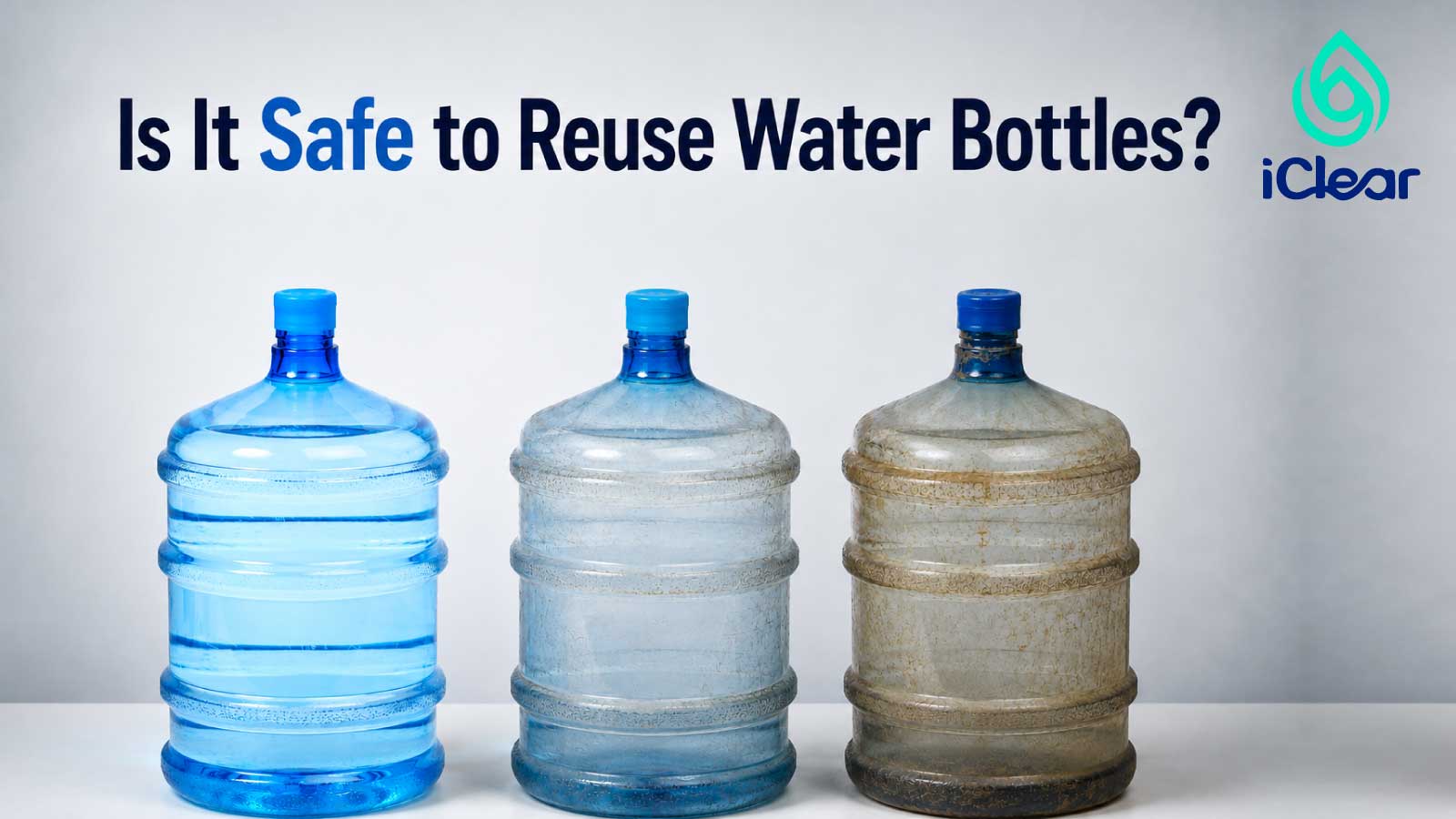
Reusing water bottles is safe only with proper cleaning. Bacteria multiply quickly in bottles reused without washing, and single-use plastic bottles degrade with repeated reuse and heat, which is why regular sanitising or a purified source matters. What grows in a reused bottle A water bottle is a warm, moist, enclosed space that your mouth touches many times a day. That is close to ideal for bacteria. Research examining used drinking bottles has found substantial bacterial growth in bottles that were reused without regular, thorough washing, with the mouthpiece and cap among the most affected areas. The bacteria come from your mouth, your hands, and the environment, and they multiply between refills. This does not mean reusing a bottle is dangerous by nature. It means an unwashed reused bottle is very different from a clean one, and the difference is invisible. Bottle ageing: what repeated reuse does to plastic The second issue is the bottle itself. Single-use plastic bottles were designed to be used once. With repeated reuse, washing, refilling, and exposure to heat, the plastic degrades physically: it develops fine scratches and wear that are harder to clean and give bacteria more places to lodge. Reusable bottles made for the purpose hold up far better, but even they age and eventually need replacing. The rule of thumb worth remembering: single-use bottles are for single use, and reusable bottles are only as safe as their last proper wash. Neither is a set-and-forget solution. Single-use vs reusable: the real difference A purpose-built reusable bottle, made from durable materials and cleaned regularly, is a genuinely good choice. A thin single-use bottle refilled for a week is not the same thing, even though both hold water and both look fine. The materials, the durability, and the cleanability are what separate them, not the fact that both can technically be refilled. How to reuse bottles safely Wash reusable bottles daily with warm soapy water, reaching the base and the cap. Sanitise more deeply every few days, and let the bottle dry fully between uses. Replace single-use bottles rather than reusing them for long periods. Replace any bottle that is scratched, cloudy, cracked, or holds a smell after washing. The better question There is a question underneath all of this that matters more than the bottle: is the water you are refilling with actually clean? A perfectly washed bottle filled with water that carries dissolved contaminants still gives you contaminated water. Purifying at the point of use solves the input side of the problem. The portable iClear Desktop gives you genuinely purified water to fill from, and the iClear Standard does the same for the whole household. A clean bottle filled with unclean water is still unclean water. The bottle is only half the question; the water you put in it is the other half. FAQ Q: Is it safe to reuse plastic water bottles? A: Only with proper cleaning, and single-use bottles are not designed for long-term reuse. Bacteria build up quickly in unwashed bottles, and single-use plastic degrades with repeated use and heat. Purpose-made reusable bottles, cleaned daily, are the safer choice. Q: How often should I wash a reusable water bottle? A: Daily, with warm soapy water, reaching the base and cap, plus a deeper sanitising every few days. Let it dry fully between uses, and replace it if it becomes scratched, cloudy, or holds a smell. Q: Do old water bottles become unsafe? A: Ageing plastic develops scratches and wear that harbour bacteria and are harder to clean, so old and degraded bottles are harder to keep safe. Replace bottles that are scratched, cracked, cloudy, or smelly. Fill from genuinely purified water. Free delivery and professional installation in Nairobi and Nakuru. Visit the iClear shop. Keywords: is it safe to reuse water bottles, reusable water bottle bacteria, bottle reuse, water bottle ageing, refill water bottle safe, iClear Kenya
A water dispenser should be sanitised every 4 to 6 weeks, and more often in warm conditions. The reservoir, taps, and drip tray accumulate bacteria and biofilm over time, so dispensing alone does not keep the water clean. How often to clean a dispenser The practical answer for most Kenyan homes and offices is to sanitise the dispenser thoroughly every 4 to 6 weeks. In warm conditions, or where the dispenser is in heavy daily use, lean toward the shorter end. This is separate from the simple daily wipe of the taps and drip tray, which helps but does not reach the parts that matter most. What builds up inside Three areas accumulate the problems, and none of them is visible during normal use: The reservoir: the internal tank where water sits between dispensing. Standing water plus warmth is exactly the condition in which bacteria multiply. The taps and spigots: handled constantly, rarely cleaned, and in direct contact with the water you drink. The drip tray: stagnant water collects here and can grow mould and bacteria that sit just below the dispensing point. Studies of water dispensers have found bacterial contamination, including coliform bacteria, in units that looked perfectly clean from the outside. Visual cleanliness of a dispenser does not reflect what is growing inside it. Photo to commission: A close-up of a dispenser reservoir or tap interior showing real buildup, ideally from an actual serviced unit, would make this section far more powerful than any stock image. Commission from the field team on the next dispenser service call. Why warm climates accelerate the problem Bacteria multiply faster in warmth. A dispenser standing in a warm Kenyan room provides an ideal environment for growth in the reservoir and taps, which means the safe interval between cleanings is shorter here than the generic advice printed for cooler climates. If your dispenser is in a sunny room or an un-air-conditioned office, treat 4 weeks as the maximum, not the target. How to sanitise a dispenser properly A proper clean reaches the parts a wipe cannot: Unplug the unit and drain all remaining water. Remove and wash the drip tray and any removable parts in warm soapy water. Clean the reservoir with a sanitising solution suitable for food-contact surfaces, following the maker's guidance, then rinse thoroughly. Clean the taps and spigots, which are handled most and cleaned least. Rinse until no cleaning solution remains, then refill. What cleaning cannot fix Here is the limit worth being honest about: sanitising the dispenser keeps the machine clean, but it does nothing about the quality of the water going into it. If the water you pour in carries dissolved salts, fluoride, or contamination from its source, a spotless dispenser still dispenses those. The way to solve both problems at once is to purify the water at the point of use. The iClear Desktop purifies through Reverse Osmosis and dispenses in one unit, with no separate reservoir sitting and waiting to be contaminated. A clean dispenser and clean water are two different things. Sanitising handles the first. Only purification handles the second. FAQ Q: How often should I clean my water dispenser? A: Sanitise it thoroughly every 4 to 6 weeks, and more often in warm conditions or heavy use. Wipe the taps and drip tray more frequently. The internal reservoir is the part that matters most and is most often missed. Q: What happens if you never clean a water dispenser? A: The reservoir, taps, and drip tray accumulate bacteria and biofilm over time, which then enter the water you drink. Research has found bacterial contamination in dispensers that looked clean externally. Q: Does cleaning a dispenser make the water safe? A: It keeps the machine from adding contamination, but it does not purify the water going in. If that water carries dissolved salts, fluoride, or source contamination, a clean dispenser still dispenses them. Purify and dispense in one clean unit. Free delivery and professional installation in Nairobi and Nakuru. Visit the iClear shop. Keywords: how often clean water dispenser, water dispenser bacteria, clean water dispenser, dispenser hygiene kenya, sanitise water dispenser, iClear Kenya
Quick Answer Your gut is the first organ your drinking water meets. Water carrying bacteria, coliforms from storage tanks, or heavy dissolved loads is a direct and recurring irritant to the digestive system, and in Kenyan homes it is a common hidden cause of repeated stomach upsets that get blamed on food. Purifying water at the point of use with Reverse Osmosis removes the microbial and chemical load at once. The most common thing families tell iClear after switching: the recurring stomach problems quietly stopped. The connection most households miss When stomach problems keep returning in a household, the usual suspects get cycled through: food hygiene, a change of diet, the season. Water is often last on the list, partly because it looks clean. But water that looks clear can still carry coliform bacteria from storage tanks, low-level contamination from ageing pipes, and dissolved loads that stress the digestive system over time. The gut deals with all of it, every day, several glasses at a time. For adults, chronic low-level exposure often produces recurring, unexplained upsets. For children, whose gut flora and immune systems are still developing, the same exposure hits harder and more often. Key Finding: A recurring pattern in iClear's customer base: families arrive describing children with repeated stomach issues that nothing seemed to explain. After installation, in the family's own words, things settle. "We should have done this earlier" is the sentence the team hears most. What in Kenyan water actually irritates the gut Bacteria and coliforms: the direct cause of gastroenteritis and recurring upsets. Storage tanks are a major under-recognised source; water that arrives acceptable can leave your own tank contaminated. High dissolved loads: water at the 450 to 600 ppm TDS our team measures in Kitengela and Kajiado boreholes carries salts and minerals at levels that can disturb digestion and strain the kidneys over sustained consumption. Nitrates: from agricultural runoff and pit latrines near boreholes, dangerous for infants in particular. Chlorine residues: municipal disinfection byproducts that can disturb the gut's own bacterial balance with long-term intake. Boiling addresses only the first item on this list, and it concentrates the dissolved ones. A household boiling its water against stomach problems may be removing the bacteria while strengthening everything else. What changes with point-of-use purification Reverse Osmosis at the point of use removes the microbial load, the dissolved load, the nitrates, and the chlorine in one pass, after the water has already been through your tank and pipes, which is the only place removal can be complete. iClear installations typically cut TDS by 90% or more, and the taste difference customers report immediately is the sensory version of that measurement. For families, the iClear Standard (KSh 25,000, installed free in Nairobi and Nakuru) covers everyday household consumption. The Desktop (KSh 40,000) adds instantly heated purified water at six temperatures, including settings suited to baby formula, one of the places water quality and gut health intersect most sharply. Sensible expectations Clean water is not a treatment for any medical condition, and persistent digestive problems deserve a doctor's attention. What clean water does is remove one large, constant, and fixable input from the picture. In a country where our field team measures what it measures in household water, that input is worth removing first, not last. FAQ Q: Can bad water cause stomach problems? A: Yes. Bacteria and coliforms in water, including contamination picked up in home storage tanks, are a direct cause of gastroenteritis and recurring stomach upsets. High dissolved mineral loads and nitrates add further digestive stress with sustained intake. Q: Does purified water help gut health? A: Purified water removes the waterborne bacteria, nitrates, chlorine residues, and heavy dissolved loads that irritate the digestive system, taking a constant negative input out of the equation. Families switching to iClear systems most commonly report that recurring, unexplained stomach issues subside. Q: Is boiled water enough to protect my family's stomachs? A: Only partially. Boiling kills bacteria but leaves nitrates, salts, and fluoride behind, and concentrates them as water evaporates. Reverse Osmosis removes both the microbial and dissolved threats together. Take water off the list of suspects. Free delivery and professional installation in Nairobi and Nakuru. Visit the iClear shop. Keywords: gut health water, water and stomach problems, clean water health Kenya, waterborne illness Kenya, iClear Kenya, water purifier Kenya, safe drinking water family
Health & Wellness
 Water Quality Insights
Health & Wellness
Water Quality Insights
Health & Wellness