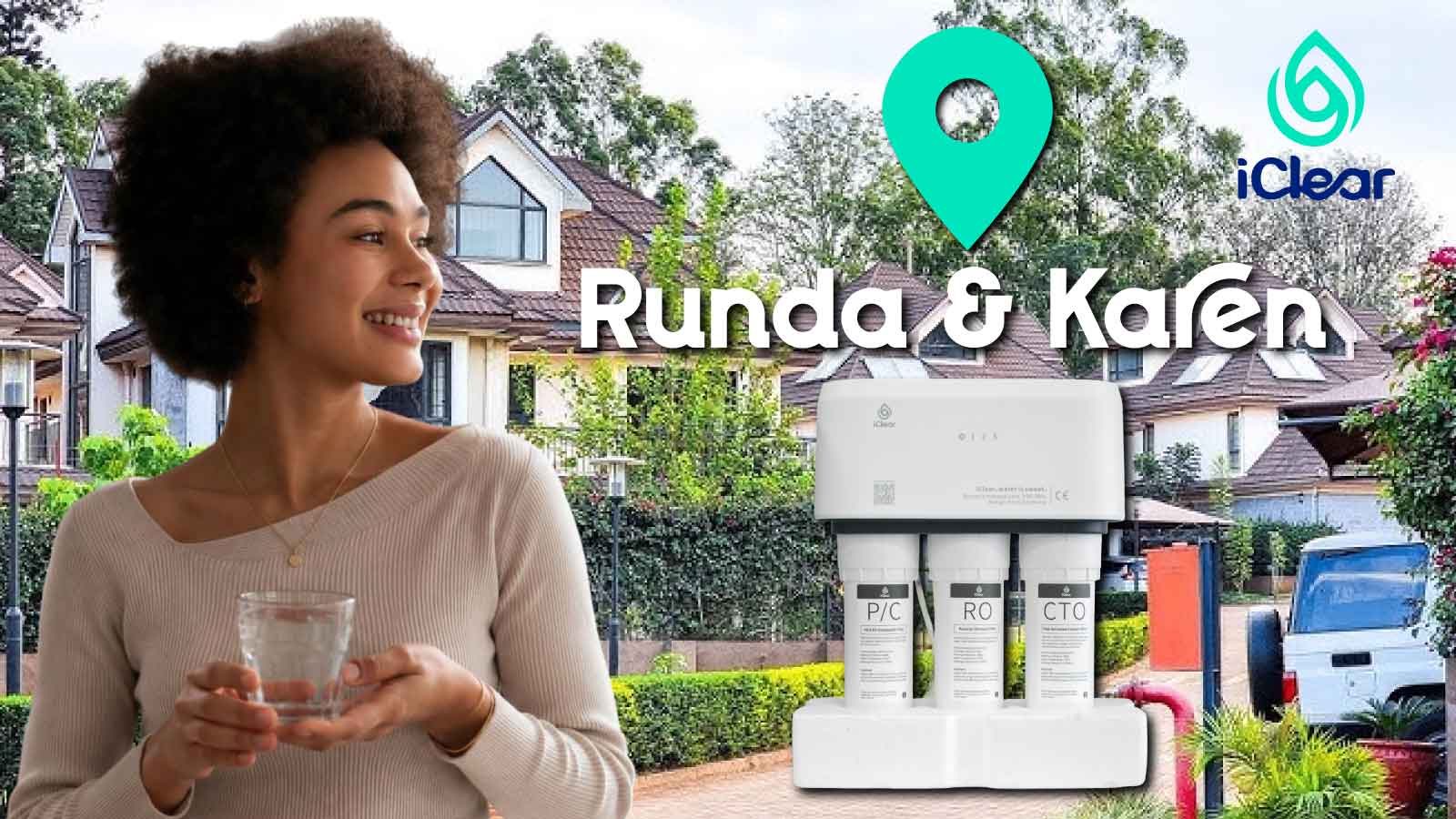
Karen and Runda are among Nairobi's most desirable neighbourhoods, with mature gardens, generous plots, and reputations for setting the standard in Kenyan residential living. They also share something less often discussed: significant reliance on boreholes, and the dissolved mineral content that comes with them. Here is what our field team actually finds when we test water in these areas. The reputation versus the reading There is a quiet assumption that goes with high-end Kenyan addresses: that the water, like everything else in the area, must be cleaner. The data shows that assumption does not hold up consistently. Karen TDS readings, in our regular testing, sit between 150 and 180 ppm. That is the cleanest range in iClear's internal field data, lower than Naivasha, Kitengela, or Kajiado. But Karen also relies heavily on boreholes, and boreholes carry their own profile of dissolved minerals and elements that municipal supply does not. Runda is similar. The properties are large, the boreholes deep, and the assumption is that the water arriving in the kitchen tap is fine. In our installations across Runda, we routinely find borehole water with elevated mineral content that benefits significantly from Reverse Osmosis filtration. Lavington's municipal water tends to be cleaner overall, but even there our field team finds occasional sediment and benefits clear enough that residents installing iClear systems consistently report improvements in taste and visible water quality. What "elevated minerals" actually means in Karen and Runda The phrase covers a range of dissolved contaminants that, while not as immediately alarming as fluoride or arsenic, still affect health, appliances, and daily life: Higher levels of dissolved calcium and magnesium, contributing to hard water and scale buildup Iron and manganese, which can stain laundry and fixtures and affect taste Dissolved salts, common in deep boreholes Occasional sediment from older borehole infrastructure In some cases, fluoride at moderate levels None of these is necessarily visible. The water can look perfectly clear and still carry enough dissolved mineral content to leave visible scale on kettles, dry out skin and hair, and contribute to the slow long-term effects of mineral overconsumption. Why high-end addresses are not exempt The shared lesson across Karen and Runda installations is straightforward. Premium real estate does not exempt a property from Kenya's water reality. Borehole water is borehole water, regardless of the postcode. The geology underneath Karen is the same geology that produces dissolved mineral content elsewhere in the country. What is different in these areas is that residents are typically more aware of water quality, more informed about purification, and more likely to take action once they understand what their borehole is actually delivering. iClear's customer base in Karen and Runda skews toward families and households who have already done some research before they call. What iClear typically installs in Karen and Runda Most Karen and Runda installations are the iClear Standard for typical households or the iClear Premier for larger families with eight or more occupants. Both are full Reverse Osmosis systems, KEBS-certified, and designed for the kind of dissolved mineral content commonly found in the area's boreholes. The iClear Desktop is also popular as a secondary unit in studies, kitchens, or guest houses on the same property. Every iClear installation in Karen and Runda includes free professional installation, with iClear's technicians handling integration with existing borehole pumps, pressure systems, and storage configurations. No other water purifier brand in Kenya currently offers this level of installation support as standard. A premium address does not deliver premium water. Karen and Runda households increasingly recognise this, which is why iClear's installation base in these areas continues to grow. If you live in either area and rely on borehole water, the question is not whether your water needs filtration. The question is what level of RO purification matches your household size. Bring iClear purification to your Karen or Runda home. Free delivery and professional installation in Nairobi and Nakuru. Visit the iClear shop. Keywords: Karen water Kenya, Runda water Kenya, Lavington water, borehole water Nairobi, water purifier Karen, water purifier Runda, iClear Kenya, Reverse Osmosis Kenya
There is a sentence we at iClear hear, in some form, after almost every installation. It is not engineered marketing copy. It is what customers say in the kitchen, the office, the moment after the first filter change reveals what their water has actually been carrying. Across four years of installations, these are the things Kenyan families say. Before installation In the first conversation with our sales team, customers usually describe a small concrete worry rather than a sweeping concern about water quality. The most common opening sentences are: "My water tastes funny." "My borehole water is too salty." "I want safe drinking water for my family." These are not technical statements. They are the lived experience of someone who has been drinking water that does not feel quite right but has not been able to name what is wrong. The job in those early conversations is not to convince anyone of anything. It is to help them understand what their water actually contains. The objections that come next Once a household understands they have a real water quality issue, the conversation shifts to practical concerns. The five worries our team hears most are: Cost Maintenance Electricity usage Filter replacement costs Whether the system genuinely works These are reasonable concerns. iClear's response to each one is concrete: the cost is offset by what families stop spending on bottled water, maintenance is straightforward and supported, electricity usage is low across the range, filter replacements are scheduled and predictable, and every iClear system is KEBS-certified, with independent verification of its performance. After installation This is where the language changes. On installation day, customers see what comes out of their water during the first filter change. The reactions are remarkably consistent across hundreds of installations: "The water tastes completely different." "I didn't know our water was this dirty." "We should have done this earlier." That last one comes up so often it has become an internal phrase at iClear. It is the moment a family realises that something they had been worried about, vaguely, for years, was both real and easily solved. The regret in those words is usually about time, not money. The most common reaction iClear's team hears after installation is not gratitude. It is regret. Regret that the family waited as long as they did to take their water seriously. What happens next Across iClear's customer base, the strongest single driver of new business is referrals. Customers who have installed an iClear system tend to tell other people about it, particularly other parents, other borehole owners, and people who have been quietly worrying about their own water in the same way. The phrase that comes back most often from these referrers is some version of: "My neighbour saw the system and wanted one too." Young families, tenants in borehole-fed estates, landlords, offices, and dental clinics are the customer types most likely to refer others. They have all reached the same conclusion through different paths: that clean water is not a luxury, that delay is its own cost, and that the only regret about installing the system is not having installed it sooner. What this says about Kenya's water reality The consistency of these reactions tells us something important. Kenya's water problem is not a marketing construction. It is a lived experience, recognised by families on the ground, expressed in the same language across very different households and regions. The job of iClear's work is not to invent the concern. It is to provide a solution that matches what customers already know in their guts to be true. The same sentence comes up across hundreds of installations, from Karen to Naivasha, from young families to office managers. "We should have done this earlier." Whatever conclusion that points you to, do not let your household become the next one saying it. Stop waiting on what you already know. Free delivery and professional installation in Nairobi and Nakuru. Visit the iClear shop. Keywords: iClear customer reviews, iClear water purifier reviews, water purifier Kenya reviews, iClear Kenya, water purifier customer feedback Kenya, iClear water

This month, iClear delivered and installed three Premier RO water purifiers at Baobab School and Baobab House. Together, these units bring clean, safe drinking water directly to 90+ children aged 4 to 6, along with the staff who care for them every day. Here is why this donation matters and what it changes in a place where every cup, every meal, and every hand-wash counts. The iClear team with staff and a young Baobab resident at the donation event. Who Baobab supports Baobab School and Baobab House work with children in some of the most vulnerable communities in Kenya. The school serves 90+ children between the ages of 4 and 6, offering early childhood education alongside a sponsorship programme and a feeding programme that ensures every child eats every day. Baobab House provides residential care to children who need more than daytime support. What ties everything together is the same principle: making sure the children under Baobab's care have the basics they need to thrive. Food. Learning. Safety. And, often overlooked, clean water. Why water was the missing piece In the communities Baobab serves, clean drinking water is not something families can take for granted. Households often rely on unfiltered tap water, water bought from vendors, or trucked-in supplies of uncertain quality. For a school and residential home feeding and caring for 90+ children daily, that means either accepting a real health risk or absorbing the cost of buying safe water at scale. Both options are unsustainable. Waterborne illness spreads quickly among young children, and every shilling spent on bottled or trucked water is a shilling not going toward the food, education, and care Baobab exists to provide. For a school feeding 90+ children every day, safe water is not an aspiration. It is a requirement of every meal, every drinking cup, and every hand-wash. It touches everything. Children at Baobab School during the iClear team's visit. What we installed The team installed three iClear Premier Water Purifiers, a multi-stage Reverse Osmosis system with pressure tanks and filter units, professionally installed under the sink and counter at both Baobab School and Baobab House. The Premier was chosen for a specific reason: it is designed for higher-demand environments and delivers 100 gallons of purified water per day, enough to serve the daily consumption, cooking, and hand-washing needs of a facility of this size. Each unit removes: Bacteria and viruses that cause waterborne illness Heavy metals from ageing pipes and storage tanks Fluoride, particularly relevant given how widely elevated fluoride affects Kenyan water Dissolved salts and sediment that compromise taste and long-term health Chlorine residues from municipal treatment The installation was carried out entirely by the iClear team at no cost to Baobab. From delivery to the moment the systems were tested and handed over, the process was managed by iClear's trained technicians on site. Two of the three iClear Premier units installed under the sink, complete with pressure tanks. Bringing the cost of clean water down Beyond the immediate health benefit, the installation dramatically reduces the ongoing cost of clean drinking water at both sites. Compared to the price of bottled or trucked water, the iClear Premier's cost per litre is a fraction of what Baobab had been absorbing. That saving translates directly into more resources for the children Baobab serves, better food, better learning materials, better care. This is one of the reasons iClear's model is built the way it is. Clean water at a genuinely affordable cost per litre is not just a household benefit. In institutional settings like Baobab, it is a multiplier for everything else the organisation is trying to do. Every shilling Baobab is no longer spending on bottled water is now free to spend on the food, learning, and care that make the biggest difference to a young child's life. The visit itself The iClear team travelled to Baobab in person to install the units and meet the children and staff. It is one thing to talk about clean water in a sales meeting. It is a different thing to install a system in a place where the water it produces will be poured into the cups of 90+ children the next day. What stood out during the visit was how quickly the children took to the moment. Curious, welcoming, and, as ever, more interested in the visiting team than in the equipment. The staff, meanwhile, walked us through what daily life looks like at Baobab: the meal schedule, the drinking water routines, the small, constant logistical work of caring for that many children well. A staff member tastes water from the newly installed system, moments after commissioning. Why iClear does this iClear was built on the idea that clean water should not be a privilege of neighbourhood or income. Four years in, we have installed systems across Karen, Runda, Naivasha, Kitengela, Nakuru, and dozens of other places in between. The reason for doing so is the same in every setting: the health and dignity of the people drinking the water. Baobab's mission sits directly alongside that idea. A school and home supporting 90 vulnerable children could not do its work without safe water. iClear is glad to be one of the pieces that makes the work possible. How you can help Baobab too If Baobab's work resonates with you, the school and house depend on sponsorship, donations, and community support to serve the children in their care. Even small contributions make a genuine difference at this scale. If you would like to learn more about Baobab or support their sponsorship or feeding programmes directly, we would be glad to connect you with the team there. This donation is one small step in a much larger effort. If you know a school, clinic, or community project that would benefit from clean water at scale, get in touch with iClear. We would like to hear about it. Support clean water for every Kenyan household and community. Free delivery and professional installation in Nairobi and Nakuru. Visit the iClear shop. Keywords: Baobab School Kenya, iClear water donation, iClear community impact Kenya, water purifier donation Kenya, iClear Kenya, iClear Premier, clean water Kenya schools, water purifier Kenya
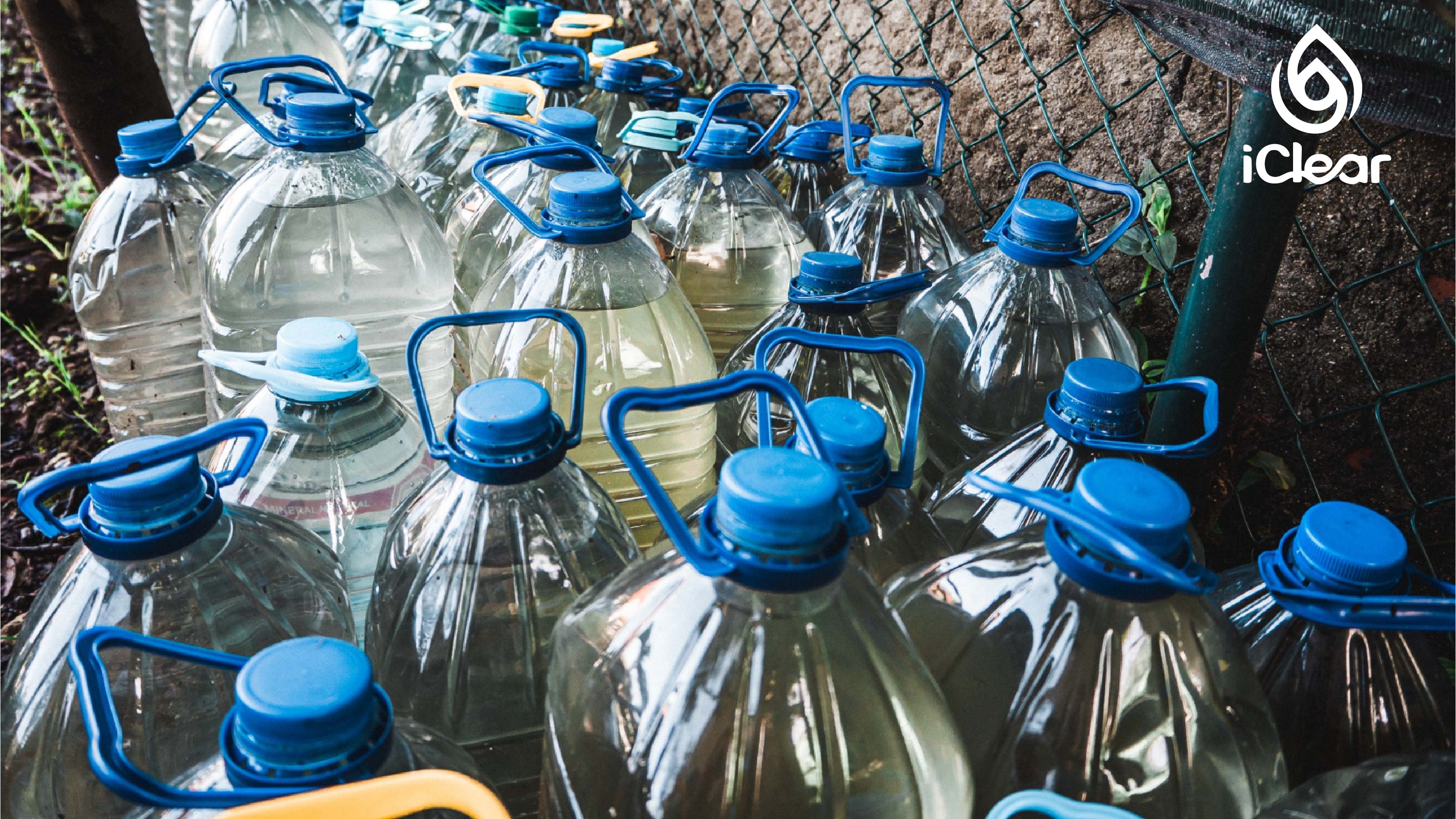
Bottled water has become a routine household expense for many Nairobi families. It feels manageable. A few hundred shillings here, a case there. The water is sealed, the brand is familiar, and it gets the family through the week. Until you actually add it up. The real annual cost Take a typical Nairobi family of four. Conservative estimate: two 20-litre dispensers per week, refilled at around 250 to 350 shillings each depending on the brand. Add in occasional smaller bottles for trips, lunch boxes, and visitors. Most families end up spending between 600 and 1,200 shillings per week on water. Annualise that. The low end is roughly 31,000 shillings a year. The high end is closer to 62,000. The average Nairobi family on bottled water is spending somewhere between 35,000 and 50,000 shillings every year just to drink water that should have been clean from the tap in the first place. Over five years, that is between 175,000 and 250,000 shillings. For a temporary solution. The other costs nobody adds up Beyond the cash, bottled water carries hidden costs. The time spent ordering, picking up, and storing it. The plastic waste, which Kenya banned at scale years ago and is still trying to clean up. The reliance on suppliers whose quality can vary. The inconvenience of running out at the wrong moment and scrambling for backup. There is also the false security. Many families assume bottled water means safe water. The reality is that the quality of bottled water depends entirely on the source and the producer. KEBS-certified brands are reliable. Unregulated refill stations less so. Yet the same family is often mixing both without realising it. What an alternative actually costs A KEBS-certified Reverse Osmosis system installed in your home is a one-time purchase. Prices range from around 25,000 shillings for the smaller home unit up to 49,000 for a larger system suitable for bigger households. Add periodic filter changes, which run a few thousand shillings a year. Compare that to 35,000 to 50,000 a year on bottled water, every year, indefinitely. The RO system pays for itself within twelve to eighteen months. Everything after that is pure savings, plus the benefit of cleaner water than most bottled brands actually deliver. Why the shift is happening now Kenyan families have done the math, and the conclusion is becoming hard to ignore. As the Daily Nation recently reported, more households are walking away from bottled water and refill dispensers in favour of permanent household purification systems. The decision is partly about cost. It is also about not wanting to depend on someone else's quality control for something as basic as drinking water. How to decide for your family Run the numbers. Track your bottled water spending for one month. Multiply by twelve. Compare against the upfront cost of a certified RO system plus filter changes. If your bottled water spend is over 25,000 shillings a year, the math will almost certainly favour the switch. If you are not sure where to start, request a home consultation from a certified provider. They will assess your water source, recommend the right system size for your household, and give you a transparent breakdown of total cost over five years. CALL TO ACTION Calculate what your family actually spends on bottled water each year. Then WhatsApp the iClear team and find out what a permanent solution would cost.
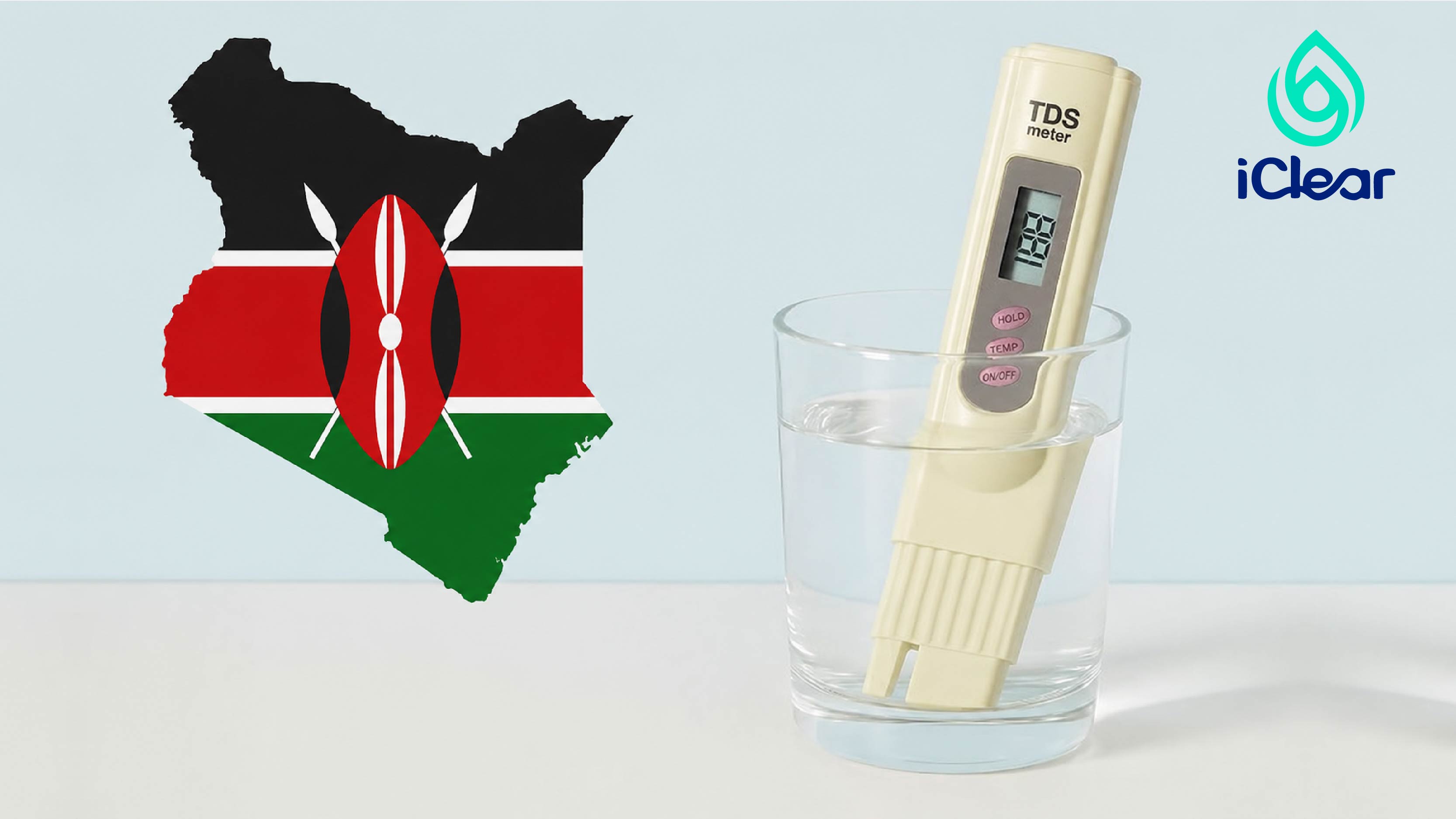
There is no shortage of opinions about Kenyan water quality. What there is a shortage of is data. Across the towns where iClear's technical team has tested water this year, we have collected real Total Dissolved Solids readings from real boreholes, taps, and storage tanks. Here is what those numbers show. What TDS means and why it matters Total Dissolved Solids, or TDS, is a measure of everything dissolved in your water, including salts, minerals, metals, and other substances. It is one of the most useful single indicators of overall water quality, because it captures the contaminants that visual inspection misses entirely. As a general guide: Below 300 ppm is generally considered excellent for drinking water 300 to 600 ppm is acceptable, with rising concerns at the higher end Above 600 ppm typically signals significant dissolved contamination Above 1,000 ppm is generally not recommended for drinking without treatment These are general benchmarks. The specific composition of the TDS, fluoride, salts, metals, also matters significantly for health. What our field team has actually measured Here are the typical TDS readings from iClear's field testing across Kenyan towns this year: Karen: Typical range: 150 to 180 ppm. The lowest TDS in our regular testing. Reflects Karen's mix of newer infrastructure and relatively well-maintained boreholes. Ruiru: Typical range: 220 to 300 ppm. Within acceptable drinking water range but worth filtering, particularly for dissolved minerals. Naivasha: Typical range: 300 to 600 ppm. The upper end is borderline. Naivasha is also a high-fluoride area, which compounds the TDS concern. Kitengela: Typical range: 450 to 600 ppm. Consistently elevated. Boreholes in this area frequently combine high TDS with elevated fluoride. Kajiado: Typical range: 450 to 600 ppm. The highest TDS readings our team has consistently recorded. Kajiado County contains some of the most challenging borehole water in our service area. The numbers vary by source, by season, and by individual borehole. What is consistent is that without testing, most households have no idea where their water sits on this scale. What these numbers tell you If you live in Karen or Lavington on municipal supply, your TDS is probably acceptable, though it does not capture chlorine, bacteria from storage tanks, or other concerns. If you live in Kitengela or Kajiado on a borehole, your TDS is almost certainly elevated, and likely paired with elevated fluoride or other dissolved contaminants. In every case, the only way to know your specific reading is to test your specific water source. The figures here are typical ranges from our field experience. Your individual borehole or tank may sit at the higher or lower end. What an iClear system does to these numbers A Reverse Osmosis system reduces TDS dramatically, typically by 90% or more. A borehole reading of 600 ppm before treatment will commonly come out below 50 ppm after RO. That is the difference between water that is borderline and water that is genuinely pure. The iClear Standard and iClear Premier are designed specifically for the kinds of TDS levels our field team encounters across Kenya, including the high-end Kitengela and Kajiado readings. The honest TDS map of Kenya is not one of clean tap water and dirty rivers. It is one of dramatically different readings town by town, borehole by borehole, with most households having no idea where they sit on the scale. The first step is knowing your number. The second is doing something about it. Find out where your water sits on the TDS map. Free delivery and professional installation in Nairobi and Nakuru. Visit the iClear shop. Tags: TDS Kenya, TDS borehole water, Kitengela water, Kajiado water, Naivasha water, Karen water, Ruiru water, water purifier Kenya, iClear Kenya
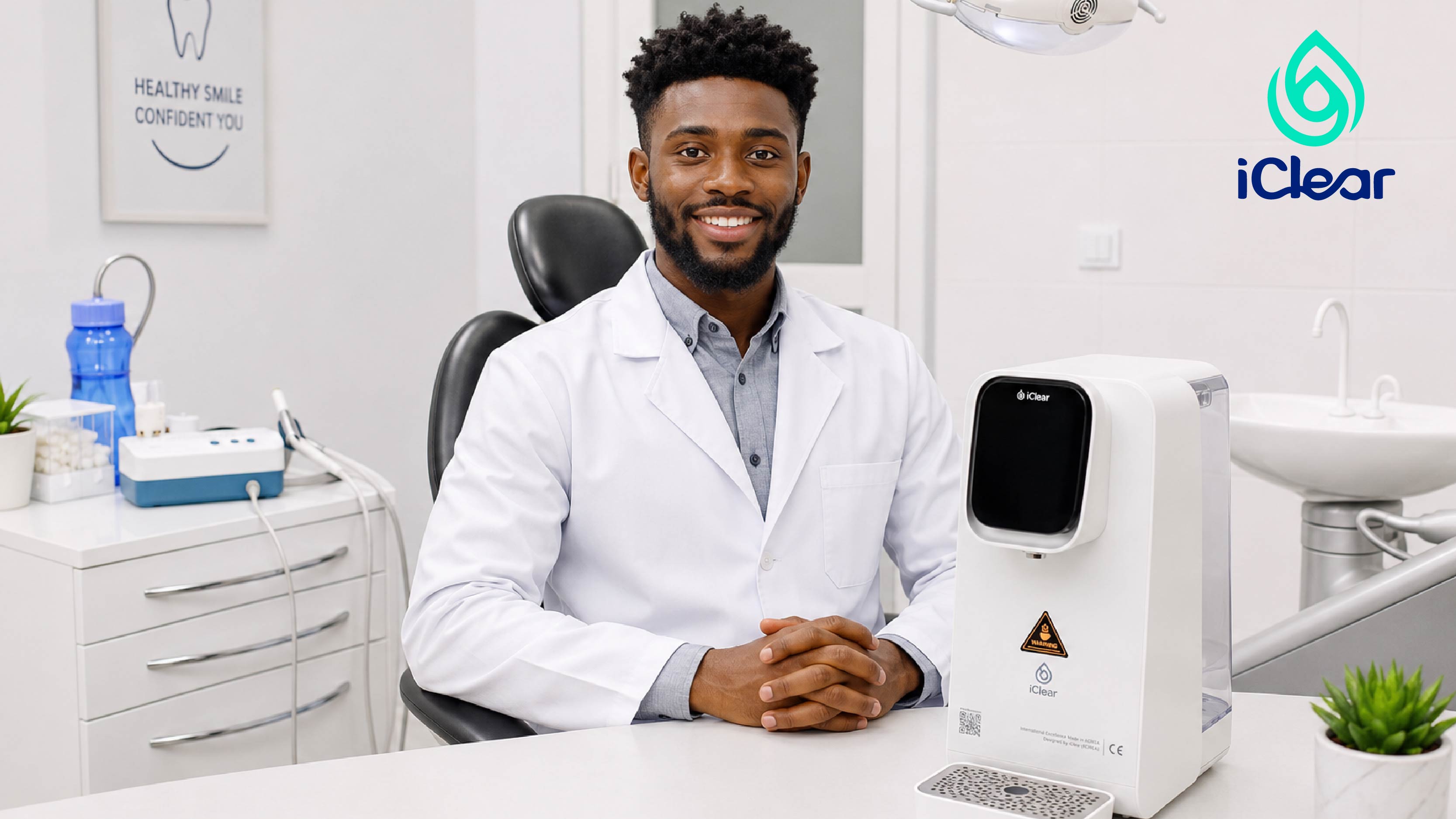
Within the growing customer base of iClear, one customer segment stands out for a particular reason: dental clinics. The dentists installing iClear systems are not making a casual decision. They see the consequences of Kenya's water problem every day in their patients' mouths. When the people whose job is to treat dental damage choose iClear, it is worth paying attention to why. Who understands Kenya's water problem better than dentists? Dental fluorosis, the brown staining, mottling, and weakening of tooth enamel caused by long-term fluoride exposure, is one of the most visible consequences of Kenya's borehole water problem. In fluoride-affected parts of the country, dentists see it across patients of every age. Children with permanently discoloured teeth before they have lost their first set. Adults with weakened enamel that no amount of treatment can fully restore. Dentists know what fluoride does. They also know what the WHO safe limit is, 1.5 mg/L, and how routinely Kenyan borehole water exceeds it. Our field team has measured fluoride above 8.75 mg/L in parts of the Rift Valley, more than five times the safe limit. For a dental professional, that number is not abstract. Dentists are the people who see Kenya's fluoride problem written into the bodies of their patients. When they install water purifiers in their own clinics and homes, they are acting on knowledge most Kenyans never see. Why a dental clinic specifically needs purified water Beyond the personal awareness, dental clinics have practical reasons to install water purification. Dentistry involves water in nearly every procedure: rinsing, cleaning, cooling instruments, irrigating treatment sites. The quality of that water matters clinically. Contaminated water exposes patients during procedures Dental equipment is sensitive to mineral buildup and sediment Patient confidence depends on visible cleanliness and trust Staff drinking water throughout the day is a workplace health issue A clinic that takes water seriously is signalling something to its patients about the standard of care it provides. Many of the dental clinics installing iClear systems do so as much for the visible commitment to hygiene as for the technical benefit. What dental professionals know that most Kenyans do not Talk to a dentist in Naivasha, Nakuru, or Kajiado, and they will tell you the same thing iClear's technical team has been measuring. Fluoride in local boreholes is consistently high. Patients arrive with visible fluorosis. The damage is permanent. And the only way to prevent it for future generations is to stop drinking water with elevated fluoride levels. Most household filters do not remove fluoride. Boiling does not remove fluoride. The only reliable technology for fluoride removal in domestic and clinical settings is Reverse Osmosis. This is one of the reasons dental clinics are choosing iClear specifically. How iClear serves dental clinics and similar settings For dental clinics, the iClear Office Water Purifier provides continuous high-quality purified water suitable for both patient-facing work and staff use. The bottleless RO and UV system connects directly to the supply, eliminates bottled water logistics, and includes free professional servicing every four months as part of an annual agreement. For smaller practices, the iClear Standard and iClear Desktop provide the same KEBS-certified RO purification at a scale suited to lower daily volumes. Every iClear installation includes free delivery and professional installation in Nairobi, its environs, and Nakuru. When the people who treat the consequences of bad water choose to install water purifiers, it is not a coincidence. It is a signal. Dental clinics in Kenya are not buying iClear systems because of clever marketing. They are buying them because they see, every day, what happens to people who do not have one. Bring clinical-grade purified water to your practice. Free delivery and professional installation in Nairobi and Nakuru. Visit the iClear shop. Tags: dental clinic water purifier Kenya, fluoride teeth Kenya, dental fluorosis, water purifier Kenya, office water purifier Kenya, iClear Kenya, Rift Valley water
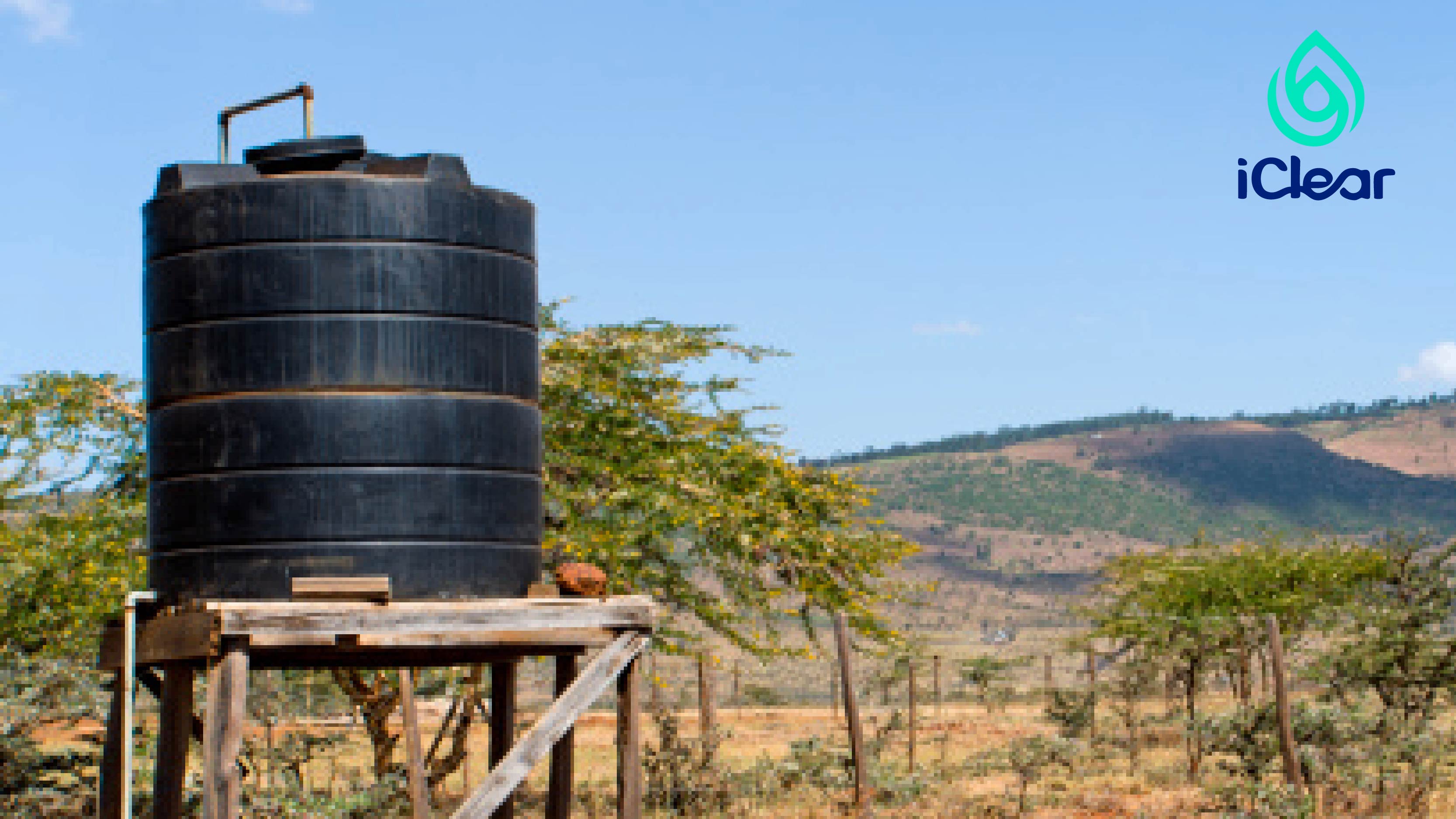
Across all iClear installations in Nairobi and beyond, one issue keeps appearing in the field reports: water that arrives at the property reasonably clean and becomes contaminated inside the customer's own storage tank. It is one of the most overlooked water safety problems in Kenya, and it is happening in homes across the country right now. The problem nobody warns you about Most Kenyan households depend on water storage tanks, either roof-mounted or ground-level, to manage intermittent municipal supply. The assumption is that if you fill your tank with reasonably clean water, what comes out of your tap will be reasonably clean too. Our field data tells a different story. When iClear's team tests water before installation, the difference between what enters a home and what reaches the kitchen tap can be significant. Tanks that have not been properly cleaned and maintained for months or years act as breeding grounds for sediment, biofilm, bacteria, and rust. In Syokimau, our team finds that water quality is often more compromised by storage tank contamination than by the municipal supply itself. The water arriving at the property may be acceptable. The water reaching the tap is not. What our team actually finds in old storage tanks Across installations where the existing tank has not been recently cleaned, the contents typically include some combination of: Sediment accumulation at the base of the tank Rust particles from older tanks or aged plumbing connections Biofilm, a layer of bacteria embedded in a protective matrix on internal surfaces Algae growth, particularly in tanks exposed to sunlight Insects, dust, and debris from unsealed or poorly sealed tank lids Stagnant water in tanks that drain slowly or unevenly None of this is visible from the outside of the tank. The water can look completely clear when poured into a glass and still carry the bacterial and chemical contamination accumulated in the tank. Why this matters more in Kenya than people think Kenya's water supply patterns make storage tanks more central to daily life than in many other countries. With intermittent municipal supply, most households rely on tank storage for days at a time. That means the water sitting in your tank has more opportunity to deteriorate than water that flows directly from supply to tap. And in Kenya's warm climate, bacterial growth accelerates. Water that might stay reasonably clean for a few days in a cooler climate can become a microbial concern in significantly less time inside a sun-warmed roof tank. Storage tank contamination is one of the most invisible water safety problems in Kenyan homes. The supply pipe is not the only point of contamination. Your own tank often is. How iClear addresses this An iClear water purifier is installed downstream of your storage tank, treating water at the point of use rather than at the point of supply. This means it removes contamination introduced inside your tank, not just contamination that arrived from outside. Whether your home uses the iClear Standard, the iClear Premier, or the iClear Desktop, the purification happens after the water has passed through your tank and your pipework. That is the only point where you can be certain of removing what your tank has added. Every iClear installation also begins with a check of your existing setup. Our field team frequently flags storage tank issues that customers were unaware of, and recommends tank cleaning or treatment alongside the new system where needed. Filtering the water that arrives at your property is only useful if your own tank is not the contamination source. Point-of-use purification, after the tank and right before you drink, is the only way to be certain. That is exactly what an iClear system delivers. Make sure your tank is not contaminating your water. Free delivery and professional installation in Nairobi and Nakuru. Visit the iClear shop. Tags: storage tank water contamination Kenya, water tank contamination Nairobi, point of use water purification, iClear Kenya, water purifier Kenya, Syokimau water, water tank cleaning Kenya
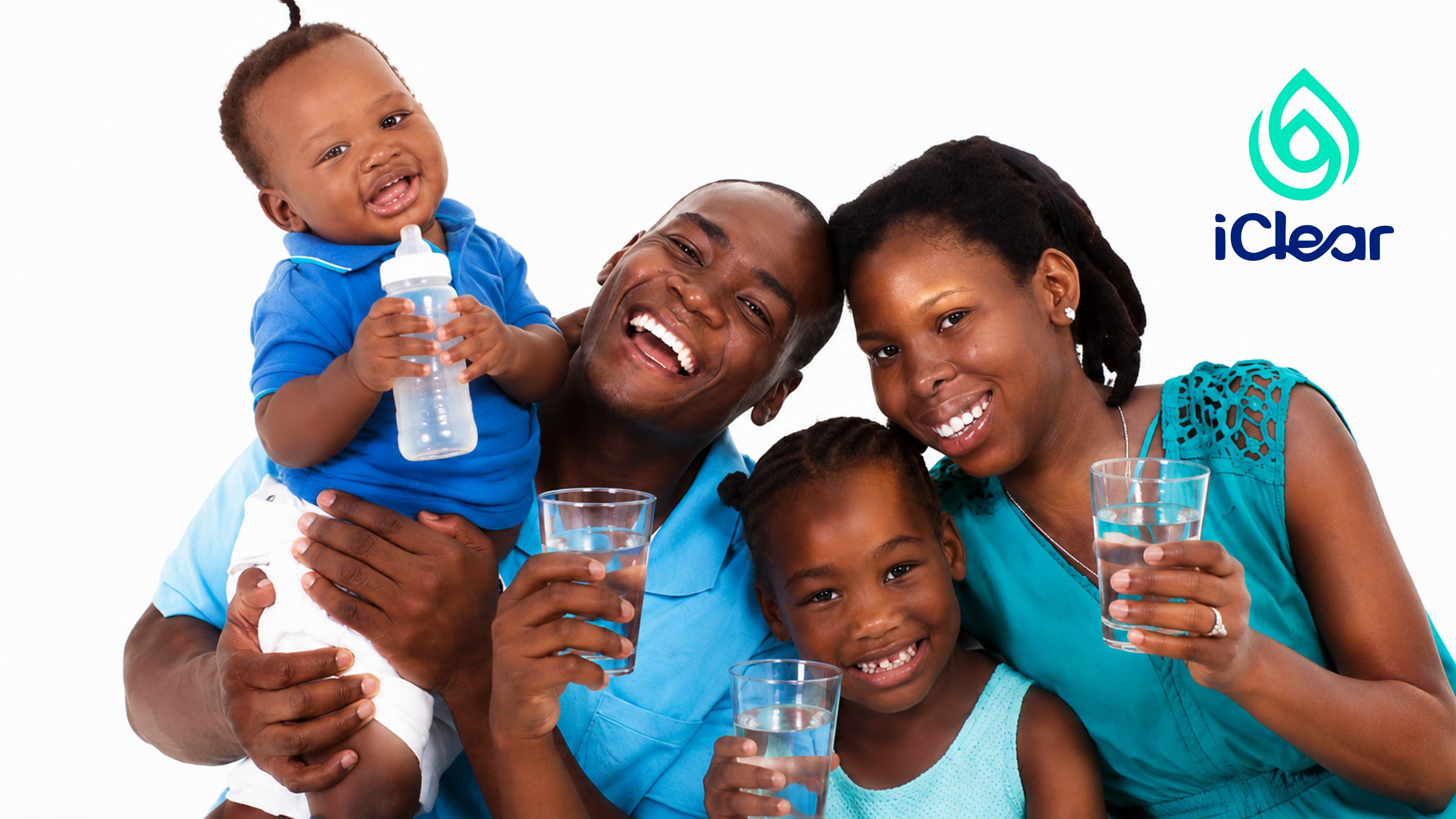
In four years of installing water purifiers across Kenyan homes and offices, the iClear team has collected a quiet archive of moments. Not the kind that show up on a sales report, but the kind that change how the people doing this work think about it. A look on a customer’s face when the first filter comes out. A parent’s relief. A phone call months later just to say thank you. These are the stories that make a fourth anniversary feel like more than a number. The family that finally felt safe One story, in particular, has stayed with the team. A family had been quietly struggling with recurring stomach issues, the kind that kept showing up in their children no matter what they did. They had cycled through the usual suspects, food, hygiene, the change of seasons, without finding a clear answer. The water they were drinking had never made it onto the list. It looked fine. It always had. After an iClear system went in, things began to shift. The doubts that had been part of the family’s rhythm started thinning out. Health improved over the following weeks. What the team remembers most is not the technical success of the installation. It is the parents saying, in their own words, that they finally had peace of mind about the water their children were drinking. “That is when it stops being a product. That is when it becomes wellbeing.” The moment customers see what was actually in their water There is a recurring scene in iClear installations that the team has come to expect. A customer is standing in their kitchen, or their office breakroom, watching the first filter cycle finish. Then they see what came out. Sediment. Rust. Particles that have no business being in a glass of water. The reaction is almost always the same. Most people are genuinely shocked. They had assumed their water was clean because it was clear. The two had felt like the same thing. The most common sentence the team hears in that moment is also the most quietly devastating one. “I didn’t know this is what we’ve been drinking.” Once a customer has seen it, the conversation is over. They are not buying a purifier any more. They are protecting their household. The one regret almost every customer shares Ask iClear customers, four years in, what they wish they had known earlier, and the answer is consistent. They wish they had switched sooner. Many of them say they underestimated the impact of water quality on their health, on their appliances, on their daily life in ways they had never connected. Kettles last longer. Skin and hair feel different. Cooking tastes cleaner. Stomachs settle. Once a household experiences clean water properly, the delay starts to feel like a cost. Not a cost in shillings, but a cost in time. Time spent boiling, buying bottled water, second-guessing what came out of the tap, worrying about the children. The phrase the team hears, again and again, is some version of, “We should have done this years ago.” A message to the family still on the fence For the Kenyan household still drinking unfiltered water today, the iClear team has a straightforward message. Clean water is not something you should have to question every time you fill a glass. Water can look clear and still carry what you don’t want your family to drink. The two are not the same thing, even when your eyes tell you they are. Making the switch is not really about convenience, or status, or following a trend. It is about protecting the people in your home over the long run. It is a small, undramatic decision that quietly changes a hundred small things, every single day. Four years of iClear customers can vouch for that. The team’s hope, going into year five, is simply that more families don’t wait as long as the ones who now wish they hadn’t. iClear Kenya is marking its fourth anniversary in June 2026.
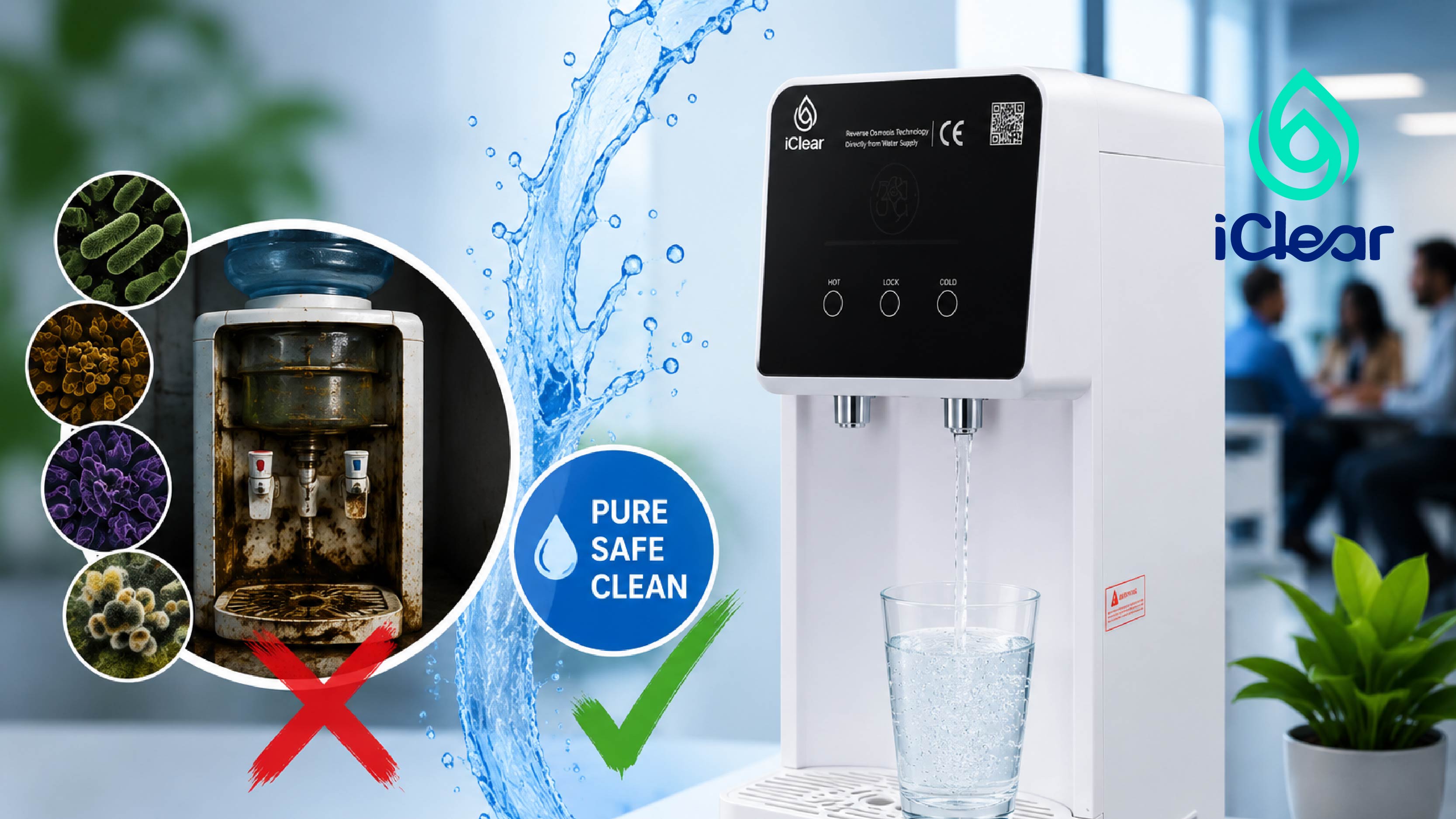
Your office water dispenser looks clean. It dispenses clear water. Your team uses it dozens of times a day without a second thought. But inside the tank, the pipes, the spigots, and the drip tray, something else is happening, and the research on what grows in neglected water dispensers is not comfortable reading. What actually lives inside a water dispenser Water dispensers, both the bottle-fed variety and countertop units, create ideal conditions for microbial growth. The interior surfaces are dark, damp, and rarely exposed to cleaning agents. Water sits in the reservoir for hours or days between uses. And in Kenya's warm climate, that sitting water reaches temperatures that accelerate bacterial proliferation. Studies on office water dispensers have found contamination with coliform bacteria, Pseudomonas aeruginosa, Legionella, Staphylococcus, and various moulds and yeasts. These are not rare or exotic pathogens. They are opportunistic organisms that thrive in exactly the kind of environment a neglected water dispenser provides. Research published in the International Journal of Environmental Research and Public Health found bacterial contamination in a significant proportion of office water dispensers tested, with coliform bacteria, an indicator of faecal contamination, present in samples that had passed visual inspection as clean. The parts of your dispenser that nobody cleans The water reservoir The internal reservoir of a bottled water dispenser is almost never cleaned in practice. It sits permanently enclosed, dark, and moist. Biofilm, a sticky layer of bacteria embedded in a protective matrix, forms on internal surfaces over weeks and months. Once established, biofilm is extremely difficult to remove and acts as a continuous source of bacterial contamination in every glass of water dispensed. The spigots The dispensing spigots, the taps your team touches dozens of times a day, accumulate bacteria from hands, from ambient air, and from water droplets that dry and concentrate contaminants on the surface. Studies have found that dispenser spigots carry some of the highest bacterial loads of any surface in office environments. The drip tray The drip tray collects overflow water that sits, stagnates, and becomes a breeding ground for mould and bacteria. From the tray, airborne contamination can reach the dispensing area and the water itself. Most offices empty the drip tray occasionally. Very few sanitise it. The bottle neck and collar When a 20-litre bottle is inverted and placed on the dispenser, the bottle neck is exposed to ambient air, hands, and the collar of the dispenser unit. This is a contamination point that is essentially impossible to control without a sealed, plumbed system. The recommended cleaning frequency for office water dispensers is every six to twelve weeks. Most Kenyan offices clean theirs once a year, if that. The gap between recommendation and reality is where the contamination happens. The symptoms your team might be attributing to something else Recurring stomach upsets, unexplained nausea, persistent low-grade illness among multiple team members, these are the kinds of symptoms that tend to be attributed to food, stress, or seasonal illness. In offices with contaminated water dispensers, the water is frequently the overlooked source. Pseudomonas infections, while most dangerous in immunocompromised individuals, can cause gastrointestinal symptoms in otherwise healthy adults with sustained low-level exposure. Legionella, in its milder form known as Pontiac fever, causes flu-like symptoms that most people recover from without ever identifying the source. The solution: eliminate the dispenser entirely iClear Kenya offers an office water purification system that removes the dispenser from the equation entirely. The iClear office water purifier connects directly to your water supply, purifying water through multi-stage RO and UV filtration at the point of use. There is no reservoir for bacteria to colonise, no bottles to invert and expose, and no drip tray to stagnate. Water is purified on demand and dispensed immediately. Every glass your team drinks is fresh, clean, and free from the contamination risks that accumulate in bottle-fed dispenser systems over time. The iClear office water filtration system is available under an annual agreement that covers installation, maintenance, and free servicing every four months. Free delivery and professional installation is included in Nairobi, its environs, and Nakuru. The cleanest dispenser in your office is the one that does not exist. A plumbed, point-of-use iClear system gives your team unlimited purified water with no reservoirs, no bottles, and no contamination risk hiding in a unit nobody remembers to clean. Is your office water dispenser putting your team at risk? Contact iClear Kenya today and replace it with a purified, on-demand water solution. Free delivery and professional installation in Nairobi and Nakuru. Tags: office water purifier Kenya, iClear Kenya, water purifier Kenya, water filtration system Kenya, iClear water purifier, office water filtration system, water purification machine
Across Kenya, borehole water is treated as a reliable, even premium, alternative to municipal supply. And in some respects, that reputation is deserved. Boreholes are often cleaner than surface water and free from municipal treatment chemicals. But clean is not the same as safe. Here is what borehole water can hide, and how iClear eliminates the risk. The problem no one warns you about When a borehole is drilled, families often assume that because the water comes from deep underground, it must be pure. This assumption is understandable but dangerous. Underground aquifers absorb whatever is in the surrounding geology. In Kenya, that often includes naturally occurring fluoride, arsenic, and dissolved minerals that no amount of settling, boiling, or basic filtering can remove. The health consequences of long-term exposure to these contaminants are serious and largely irreversible. Dental and skeletal fluorosis, kidney damage from heavy metals, and neurological effects from elevated manganese do not appear overnight. They accumulate silently over years, which is exactly what makes them so dangerous. The communities in Kenya with the highest rates of dental fluorosis are predominantly those relying on untreated borehole water. Children who grow up drinking fluoride-contaminated water suffer permanent tooth and bone damage that no treatment can fully reverse. Five hidden dangers in Kenyan borehole water 1. Fluoride that destroys teeth and bones Kenya's Rift Valley and central highlands sit on volcanic rock that is naturally rich in fluoride. The WHO safe limit for fluoride in drinking water is 1.5mg per litre. Many Kenyan borehole sources exceed this significantly. Chronic exposure causes fluorosis, presenting as brown and pitted teeth in children and progressive bone pain and deformity in adults. Effects of fluoride on teeth. Image Courtesy: https://www.news24.com/citypress 2. Nitrates that threaten infants Agricultural activity, pit latrines, and poorly managed waste sites leach nitrates into groundwater over time. Infants fed with water containing high nitrate levels are at risk of methemoglobinemia, commonly called blue baby syndrome, a potentially fatal condition that prevents blood from carrying adequate oxygen. 3. Arsenic with no safe threshold Arsenic occurs naturally in some Kenyan geological formations and finds its way into borehole water without any visual sign. The WHO classifies arsenic as a Group 1 carcinogen. There is no safe level of long-term arsenic consumption. It is linked to cancers of the skin, bladder, and lung, as well as cardiovascular and neurological damage. Skin lesions are one obvious sign of arsenic poisoning. Image Courtesy: https://news.climate.columbia.edu/2015/07/13/battling-the-largest-mass-poisoning-in-history/ 4. Bacteria from unseen sources Even deep boreholes can become contaminated with coliform bacteria if the casing is cracked, if the borehole head is improperly sealed, or if there are nearby sources of waste. Families who have been drinking from the same borehole for years with no obvious problems can still be consuming low-level bacterial contamination that accumulates in the body over time. 5. Heavy metals that damage organs Lead, manganese, and iron are common in Kenyan groundwater. Lead has no safe exposure level and causes irreversible neurological damage, particularly in children under five. Manganese at elevated levels is associated with cognitive impairment. These metals are entirely undetectable by taste or smell. How iClear eliminates every one of these risks The iClear water purification machine for home use employs multi-stage Reverse Osmosis technology to remove all five categories of borehole water contamination in a single system. The RO membrane operates at the molecular level, blocking fluoride, nitrates, arsenic, heavy metals, and bacteria before they reach your glass. Unlike boiling, which leaves dissolved chemical contaminants behind, and unlike basic carbon or ceramic filters, which cannot penetrate molecular-level contamination, iClear's domestic water purifier delivers genuinely safe water regardless of what the borehole source contains. Every iClear Kenya system is KEBS-certified, ensuring it has been independently verified to meet national water safety standards. And every purchase comes with free delivery and professional installation in Nairobi, its environs, and Nakuru, carried out by trained technicians who understand Kenya's specific water challenges. Protecting your family from borehole water contamination is not about worrying more. It is about doing one thing correctly: installing a water purification system that removes what you cannot see, taste, or smell. iClear makes that simple. Do not wait for the health effects to appear. Contact iClear Kenya today and find the right home water purifier for your borehole source. Free delivery and professional installation in Nairobi and Nakuru. Tags: domestic water purifiers Kenya, water purification machine for home use, iClear Kenya, water filter Kenya, borehole water Kenya, iClear water purifier, Reverse Osmosis, water purification machine
 Health & Wellness
 Water Quality Insights
 Health & Wellness