
Ask the founder of iClear what the single biggest misconception about water in Kenya is, and the answer is immediate: it is the belief that clear water is safe water. Across four years of installations, water tests, and customer conversations, this one assumption has caused more hidden harm to families than any other. "If the water looks clear, it is safe to drink." That is the sentence our technical team hears, in some form, on almost every home visit. It is the reason households across Kenya have been drinking water that is genuinely compromised for years without realizing it. Why Your Eyes Are Misleading You Visible cloudiness, rust particles, or floating sediment are useful warning signs, but they only represent a tiny fraction of the contaminants present in Kenyan water sources. The most dangerous elements cannot be seen, tasted, or smelled. A glass of water can look perfectly crystal clear while carrying severe health risks: Fluoride: Completely invisible and odourless, fluoride has been measured by our team at levels over 5 times the World Health Organization (WHO) safe limit in parts of the Rift Valley. Heavy Metals: Lead, arsenic, iron, and manganese dissolve seamlessly into water without altering its clarity or taste in obvious ways. Dissolved Salts: High concentrations of dissolved minerals in coastal and arid-region boreholes blend completely into the liquid. Microbial Pathogens: Bacteria like coliforms and E. coli from uncleaned storage tanks are microscopic and invisible to the naked eye. Nitrates & Chemicals: Agricultural runoff and chlorine residues leave water looking clean while introducing long-term health hazards. What Our Field Tests Actually Reveal When iClear's field team conducts a professional water test on water that customers describe as "perfectly clear," the digital meters tell a completely different story: Naivasha Boreholes: Measure 300 to 600 ppm TDS, combined with dangerous fluoride concentrations. Kitengela Boreholes: Consistently range between 450 and 600 ppm TDS, frequently carrying elevated fluoride and dissolved salts. Kajiado: Yields TDS readings consistently above 450 ppm, forcing kidneys to work overtime. Karen & Runda: Deep borehole water carries heavy dissolved mineral loads that leave scale on appliances and dry out skin. Syokimau & Eastlands: Municipal supply becomes contaminated inside domestic storage tanks, introducing bacteria and biofilm. In every single one of these tests, the water looked acceptable in a glass. None of it was acceptable on a meter. Why Boiling Does Not Protect You When faced with water concerns, most Kenyan families resort to boiling. While boiling kills bacteria and viruses, it does nothing to remove chemical or dissolved contaminants. In fact, as water evaporates as steam during boiling, dissolved fluoride, heavy metals, and salts become more concentrated in the remaining liquid. The Solution: Molecular-Level Purification Clear water simply means visible floating particles have settled or been strained out; it says nothing about what is dissolved at the molecular level. That distinction, dissolved versus visible, is the exact reason Reverse Osmosis (RO) technology exists. Every system in the iClear range uses multi-stage Reverse Osmosis filtration to strip out contaminants that visual inspection will never reveal: iClear Standard: Designed for everyday household under-sink installation. iClear Premier: High-capacity RO system built for larger families and higher daily consumption. iClear Desktop: Provides portable, no-plumbing RO purification with instant hot water dispensing. All iClear systems are KEBS-certified. Stop trusting your eyes, and start trusting your data. Find out what is actually in your water. Free delivery and professional installation in Nairobi and Nakuru. Explore options at the iClear shop or contact our technical team today. Keywords: water purifier Kenya, clear water safe to drink, invisible water contaminants Kenya, iClear Kenya, water safety Kenya, Reverse Osmosis Kenya
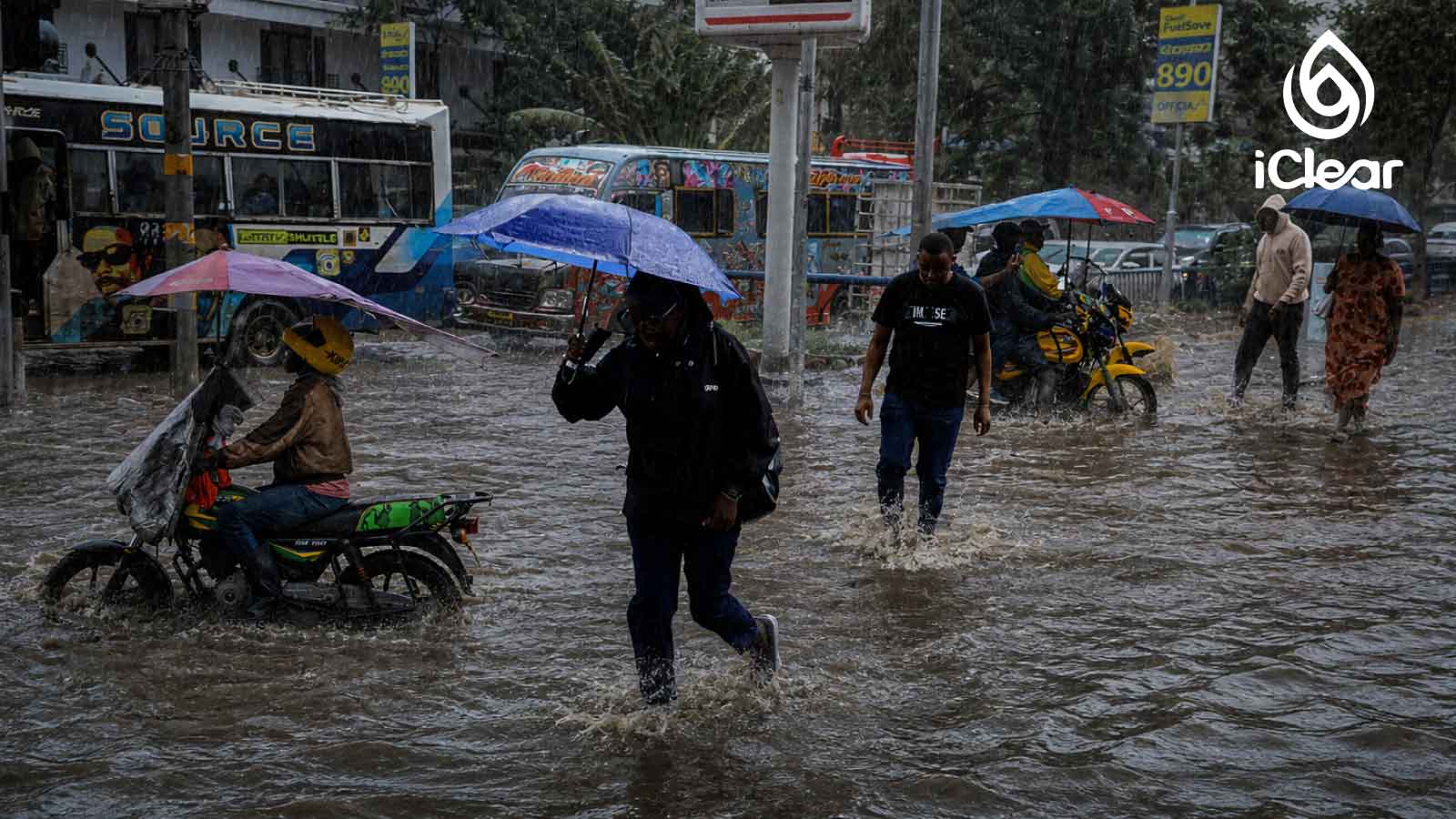
El Nino rains increase the risk of borehole and water-source contamination through flooding, runoff, and sewage overflow. Water that was previously reliable can carry new bacterial and sediment risks during and after heavy rains. Preparing your water treatment before the season starts is safer than reacting after symptoms appear. Why El Niño changes your water risk Heavy and prolonged rainfall does more than cause flooding. It can overwhelm drainage and sewage systems, wash surface contaminants into shallow boreholes and wells, and stir up sediment in water sources that are normally stable. A borehole that has tested clean in the past can see a real, temporary shift in quality during a heavy rain season. What tends to go wrong during heavy rains Surface runoff entering shallow boreholes: contaminants from the surface can seep in faster than usual. Sewage and drainage overflow: in areas with strained infrastructure, this can reach nearby water sources. Increased sediment and turbidity: water can turn cloudier, straining basic filters faster than usual. Municipal supply interruptions: heavy rains can affect treatment plants and distribution, sometimes leading to inconsistent treatment during peak strain. A multi-stage RO system removes sediment, bacteria, and dissolved contaminants, exactly the risks that spike during heavy rains. How to prepare before the rains Test your water now, before the season starts, so you have a clean baseline to compare against. Check that any existing filtration is in good condition; a filter already near the end of its life will struggle more under increased contamination load. Consider a Reverse Osmosis system if you don't already have one. The iClear Standard removes bacteria and sediment more reliably than basic filtration, which matters most exactly when source water quality becomes unpredictable. Have a maintenance check done on existing systems before the season, not after a problem appears. Visit the iClear shop. Keywords: el nino kenya water, prepare water for rainy season kenya, borehole contamination flooding, iClear Kenya
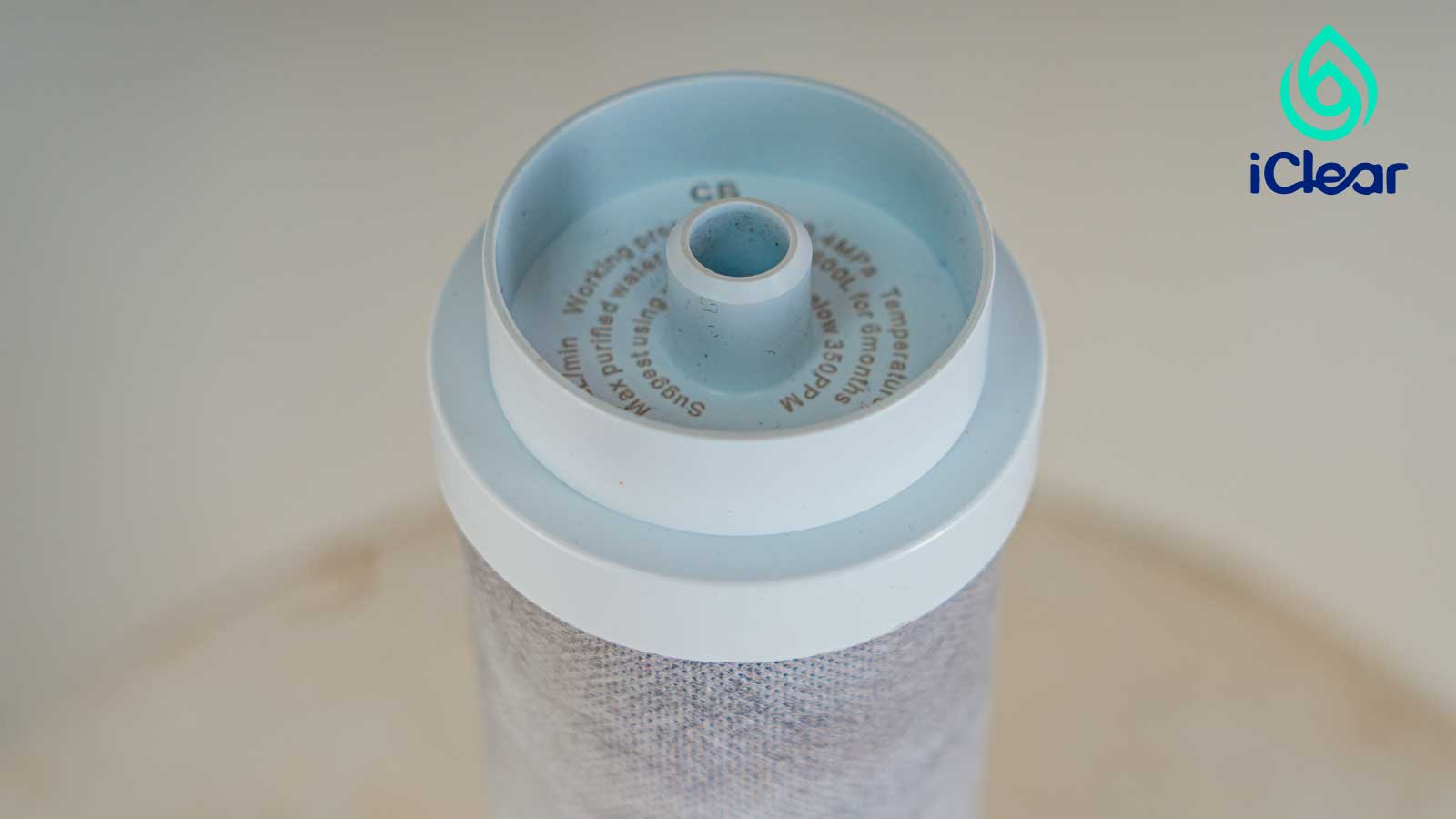
Installing a water purifier is an ongoing commitment to maintenance. As filtration components capture physical debris and absorb dissolved pollutants, they gradually clog and lose operational efficiency. Understanding replacement schedules and budgeting accurately ensures your family continues to receive clean drinking water without unexpected equipment failures. iClear Standard Replacement Schedule & Cost Breakdown Maintaining a home system like the iClear Standard requires adhering to a predictable servicing timeline: Component Function Replacement Frequency Estimated Cost Filter 1 (Sediment) Traps dirt, sand, rust, and suspended solids Every 6 months KSh 1,000 RO Membrane Removes dissolved salts, heavy metals, and minerals Every 12 months KSh 4,000 Filter 3 (Carbon/Post) Eliminates odors, bad taste, and residual chemicals Every 12 months KSh 1,000 Service Fee Comprehensive system check and technical maintenance As required KSh 1,000 Total Estimated Annual Maintenance: ~KSh 10,000 (roughly KSh 833 per month). Key Factors Influencing Filter Lifespan While manufacturers provide baseline schedules, individual replacement intervals vary based on five key variables: Source Water Quality: Heavily contaminated or salty borehole water wears down pre-filters faster than municipal tap water. Household Consumption: Larger families processing higher daily volumes reach filter capacity limits sooner. Pre-Filter Care: Replacing first-stage sediment filters on schedule prevents abrasive particles from destroying the higher-cost RO membrane prematurely. Water Pressure & Usage: Fluctuating supply pressures impact membrane throughput and strain system seals. The Consequences of Neglecting Replacement Delaying filter changes beyond recommended lifespans leads to severe operational problems: Reduced Water Flow: Clogged sediment cartridges restrict output pressure. Foul Odors & Off-Tastes: Saturated carbon filters stop absorbing organic compounds. Membrane Rupture: Unfiltered particles bypass damaged pre-filters, permanently ruining the RO membrane. Higher Overall Repair Bills: Neglected systems experience unnecessary pump strain and component failure. Managing Total Ownership Costs The initial purchase price of a system—such as the iClear Standard at KSh 25,000 (which includes a 1-year warranty and free installation in Nairobi, its environs, and Nakuru)—is only part of the equation. Budgeting for scheduled maintenance and using genuine replacement parts keeps system performance reliable and long-term costs completely predictable. KEYWORDS: water filter replacement Kenya, water purifier filter replacement Kenya, water purifier maintenance Kenya, RO membrane replacement Kenya, water filter cost Kenya, iClear Kenya, Reverse Osmosis filter Kenya, water purifier Kenya
No. A water dispenser does not purify water. It only stores and dispenses water that was filtered or bottled elsewhere, hot or cold, without removing any contaminants. Whatever is in the water going in is still there coming out. The direct answer: no, and why A water dispenser does not purify water. Its job is to store water and serve it at a chosen temperature, hot, cold, or ambient. It has no mechanism to remove contaminants. If the water you load into it contains bacteria, dissolved salts, or fluoride, the water it dispenses contains exactly the same things, just warmer or colder. Purification and dispensing are two entirely different functions, and a standard dispenser performs only the second. What a dispenser is actually designed to do A dispenser is a convenience appliance, and a useful one. It gives you instant hot water for tea or coffee and cold water on a hot day, without a kettle or a fridge. That is genuinely valuable. The mistake is assuming that because it is a dedicated water appliance, it must also be cleaning the water. It is not. It is handling temperature, nothing more. What it does not remove Because it has no filtration, a dispenser leaves untouched everything that matters for water safety: Bacteria and viruses Dissolved salts and high TDS Fluoride, which in parts of Kenya sits well above safe levels Heavy metals Sediment and rust from pipes or tanks The reservoir hygiene issue most people miss There is a further problem specific to dispensers: the machine can make water worse, not better. The internal reservoir, taps, and drip tray accumulate bacteria and biofilm if not regularly sanitised. Studies have found bacterial contamination in dispensers that looked clean from outside. So an unmaintained dispenser is not neutral; it can add contamination to whatever it dispenses. What actually purifies water iClear Desktop is the answer for anyone who wants the convenience of a dispenser and real purification in one machine: it purifies through RO, then dispenses hot or cold. For the whole household, the iClear Standard delivers the same purification from a dedicated tap. See also our full comparison of dispensers versus purifiers. A dispenser handles temperature. A purifier handles safety. If you want both, choose a machine that does both rather than assuming a dispenser is quietly doing the purifier's job. FAQ Q: Does a water dispenser purify water? A: No. A dispenser stores and serves water hot or cold but does not remove any contaminants. Whatever is in the water going in is still there coming out. Only a purifier removes contaminants. Q: Is dispenser water clean? A: Only if the water put into it was already clean and the dispenser is regularly sanitised. The dispenser itself does not clean water, and an unmaintained reservoir can add bacteria to it. Q: What is the difference between a dispenser and a purifier? A: A dispenser changes water temperature; a purifier removes contaminants. A combined unit like the iClear Desktop does both, purifying through Reverse Osmosis and then dispensing hot or cold. Purify and dispense, both in one machine. Free delivery and professional installation in Nairobi and Nakuru. Visit the iClear shop. Keywords: does water dispenser purify water, does dispenser purify water, is dispenser water clean, water dispenser purifier, iClear Kenya
Water quality can change between bottling and delivery. Time in storage, exposure to heat during transport, and how long stock sits in inventory before sale all affect what reaches you, which is why the label date is not the whole story. The journey from source to your glass Water rarely goes straight from treatment to your table. It is bottled or filled, then stored, then loaded, then transported, then stored again at a shop or depot, then finally delivered or bought. Each of those steps takes time, and time under the wrong conditions is exactly what water quality is sensitive to. The sealed bottle protects against some things and not others. How storage time affects quality Water that sits in inventory for weeks or months is not necessarily unsafe, but it is not automatically pristine either. Prolonged storage, particularly in warm conditions, can allow any bacteria present to multiply and can allow interactions between the water and its container over time. The longer water waits before you drink it, the more the conditions of that wait matter. Heat and transport: the invisible variables Transport in a hot country is one of the least controlled parts of the chain. Water sitting in a vehicle, a metal-roofed store, or an outdoor stack can reach high temperatures for hours at a time. Heat accelerates bacterial growth in any water that is not perfectly sterile, and repeated heating and cooling stresses plastic containers. None of this is visible when the bottle finally reaches you looking exactly as it did when sealed. A sealed bottle tells you the water was clean when it was sealed. It does not tell you how many weeks it sat, how hot the store room was, or how long it travelled in a warm vehicle. The seal is a snapshot, not a guarantee of the whole journey. Inventory lag: how long water waits before delivery There is also the simple matter of how long stock waits before it is sold. Water bought in bulk, stored in a warehouse, and distributed over time can reach the customer well after it was bottled. The dispenser bottle delivered to a home or office may have spent a long time in inventory first. This is ordinary supply-chain reality, not misconduct, but it means the freshness a consumer assumes and the freshness they receive are not always the same. Why point-of-use purification removes the uncertainty Every one of these variables, storage time, transport heat, inventory lag, exists because the water is treated somewhere else and then travels to you. Purifying at the point of use removes the entire journey from the equation. The water is treated in your own home, moments before you drink it, so what happened in a warehouse or a delivery vehicle no longer matters. The iClear Standard and the portable iClear Desktop both purify at the point of use, which is the one place in the chain you actually control. Every risk in the storage-and-delivery chain shares one cause: distance between where the water is treated and where you drink it. Point-of-use purification closes that distance to zero. FAQ Q: Does bottled water go bad in storage? A: Water itself does not spoil like food, but prolonged storage, especially in heat, can allow bacterial growth and interaction between the water and its container. Storage conditions and time both affect the quality of what you eventually drink. Q: Does heat affect bottled water during transport? A: Yes. Heat accelerates bacterial growth in water that is not perfectly sterile and stresses plastic containers. Water transported or stored in hot conditions can differ from how it was when first sealed, without any visible sign. Q: How can I avoid storage and delivery risks with my water? A: Purify at the point of use. Treating water in your own home, right before drinking, removes the storage, transport, and inventory variables entirely, because the water no longer has to travel to you after treatment. Remove the journey from your water. Free delivery and professional installation in Nairobi and Nakuru. Visit the iClear shop. Keywords: water storage contamination, water transport quality, bottled water storage, water delivery kenya, point of use purification, iClear Kenya
Borehole water in Syokimau and Athi River often tastes salty because the groundwater in this area carries elevated dissolved minerals and salts. Boiling and basic filters do not remove them; only Reverse Osmosis reduces the dissolved salts that cause the taste. Why the water tastes salty here The saltiness is not imagination and it is not dirt. It is dissolved minerals and salts that the groundwater picks up from the geology of the Athi River basin. These dissolved solids raise what is measured as TDS, Total Dissolved Solids, and above a certain level the water takes on a noticeably salty or mineral taste. Because the salts are dissolved, the water can look perfectly clear while still tasting strongly of them. Why boiling and basic filters do not help This is the frustrating part for many families here. The usual fixes do nothing for salty water: Boiling: removes bacteria but leaves every dissolved salt behind, and by evaporating water can make the taste stronger. Carbon and sediment filters: improve clarity and catch particles but do not touch dissolved salts. Softeners: address certain hardness minerals but are not a complete answer to the dissolved-salt load. The salts are dissolved at the molecular level, so removing them needs a technology that works at that level. What actually removes it Reverse Osmosis is the method that reduces dissolved salts. By forcing water through a fine membrane, RO blocks the salts, minerals, and other dissolved solids that cause the salty taste, typically cutting TDS by 90% or more. The water that comes out tastes clean rather than salty. The iClear Standard is built for exactly this kind of high-TDS borehole water and installs under the sink, while the portable iClear Desktop suits renters in the many Syokimau apartments where plumbing changes are not possible. The salty taste of Syokimau and Athi River borehole water is a dissolved-salt problem, and dissolved salts have one practical household solution: Reverse Osmosis. It is the difference between water you tolerate and water you actually want to drink. FAQ Q: Why does borehole water in Syokimau taste salty? A: Because the groundwater in the Athi River basin carries elevated dissolved minerals and salts, which raise the water's TDS and give it a salty or mineral taste. The salts are dissolved, so the water can look clear while tasting salty. Q: How do I remove the salty taste from borehole water? A: Reverse Osmosis removes the dissolved salts that cause the taste, typically cutting TDS by 90% or more. Boiling, carbon filters, and softeners do not fully remove dissolved salts. An RO system like the iClear Standard is the practical household solution. Q: Is salty borehole water safe to drink? A: High dissolved-salt levels affect taste and, over long-term consumption, can strain the body. It is better treated than tolerated. Reverse Osmosis reduces the dissolved salts and makes the water pleasant and safe to drink. Turn salty borehole water into water you want to drink. Free delivery and professional installation in Nairobi and Nakuru. Visit the iClear shop. Keywords: syokimau borehole water, athi river water salty, salty borehole water kenya, remove salt from water, syokimau water purifier, iClear Kenya
If you rent, a plumbed water purifier is usually not an option, since it needs a permanent connection you cannot make in someone else's property. The iClear Desktop solves this: it is a full Reverse Osmosis purifier that needs no plumbing and no installation, and it moves with you when you move. The renter's problem with most purifiers A standard under-sink purifier is a permanent fixture. It connects to your water line, mounts inside a cabinet, and installs a dedicated tap through your counter. For a homeowner that is ideal. For a tenant it is a non-starter: you cannot modify a landlord's plumbing, you would leave the investment behind when you move, and many leases forbid exactly this kind of alteration. So renters often fall back on bottled water or a dispenser, and pay for it monthly forever. Why the Desktop is built for exactly this The iClear Desktop (KSh 40,000) is a countertop Reverse Osmosis purifier. It needs no plumbing at all. You fill its built-in tank, plug it into a normal socket, and it purifies on demand, removing bacteria, dissolved salts, fluoride, and sediment the same way a plumbed RO system does. There is no installation, no hole in the counter, no connection to the landlord's pipes, and nothing left behind when your lease ends. It simply comes with you. What you actually get Full multi-stage RO purification, the same technology as the under-sink systems, in a portable body. Instant hot water in about 3 seconds at six temperature settings, so it replaces a kettle too. Cold and ambient water on demand. No plumbing, no installation appointment, no permanent fixture. Portability: it moves house as easily as a microwave. For a renter, the Desktop turns clean water from a homeowner privilege into a plug-in appliance. You get the purification of an under-sink system without the one thing you cannot give it: a permanent connection. The cost comparison that matters for renters A renter buying bottled or dispenser water spends KSh 3,000 to 8,000 a month, and keeps spending it in every flat they ever live in. The Desktop is a one-time KSh 40,000 that follows them from flat to flat. Over even two or three tenancies, the machine you carry with you costs a fraction of the water you would otherwise keep buying, and you never arrive in a new place wondering about its water again. Who the Desktop suits best Renters and apartment dwellers who cannot modify plumbing. People who move often and want their clean-water setup to move with them. Smaller households of one to three regular users, matched to the tank size. Anyone who wants instant hot purified water without a separate kettle. FAQ Q: Can I use a water purifier if I rent? A: Yes. A portable Reverse Osmosis purifier like the iClear Desktop needs no plumbing or installation, so it works in a rented flat and moves with you when you leave. Plumbed under-sink systems are the ones that are impractical for tenants. Q: Does the iClear Desktop need installation? A: No. You fill its built-in tank, plug it into a normal socket, and it works. There is no plumbing connection and nothing permanent fitted to the property, which is what makes it suited to renters. Q: Is a portable purifier as good as an under-sink one? A: For purification, yes. The Desktop uses the same multi-stage Reverse Osmosis process, removing bacteria, dissolved salts, and fluoride. The difference is capacity and format, not purifying power, and it adds instant hot water that under-sink units do not have. Take clean water with you, flat to flat. Free delivery in Nairobi and Nakuru, no installation needed. Visit the iClear shop. Keywords: water purifier for renters, portable water purifier nairobi, apartment water purifier, no plumbing water purifier, iClear Desktop, iClear Kenya
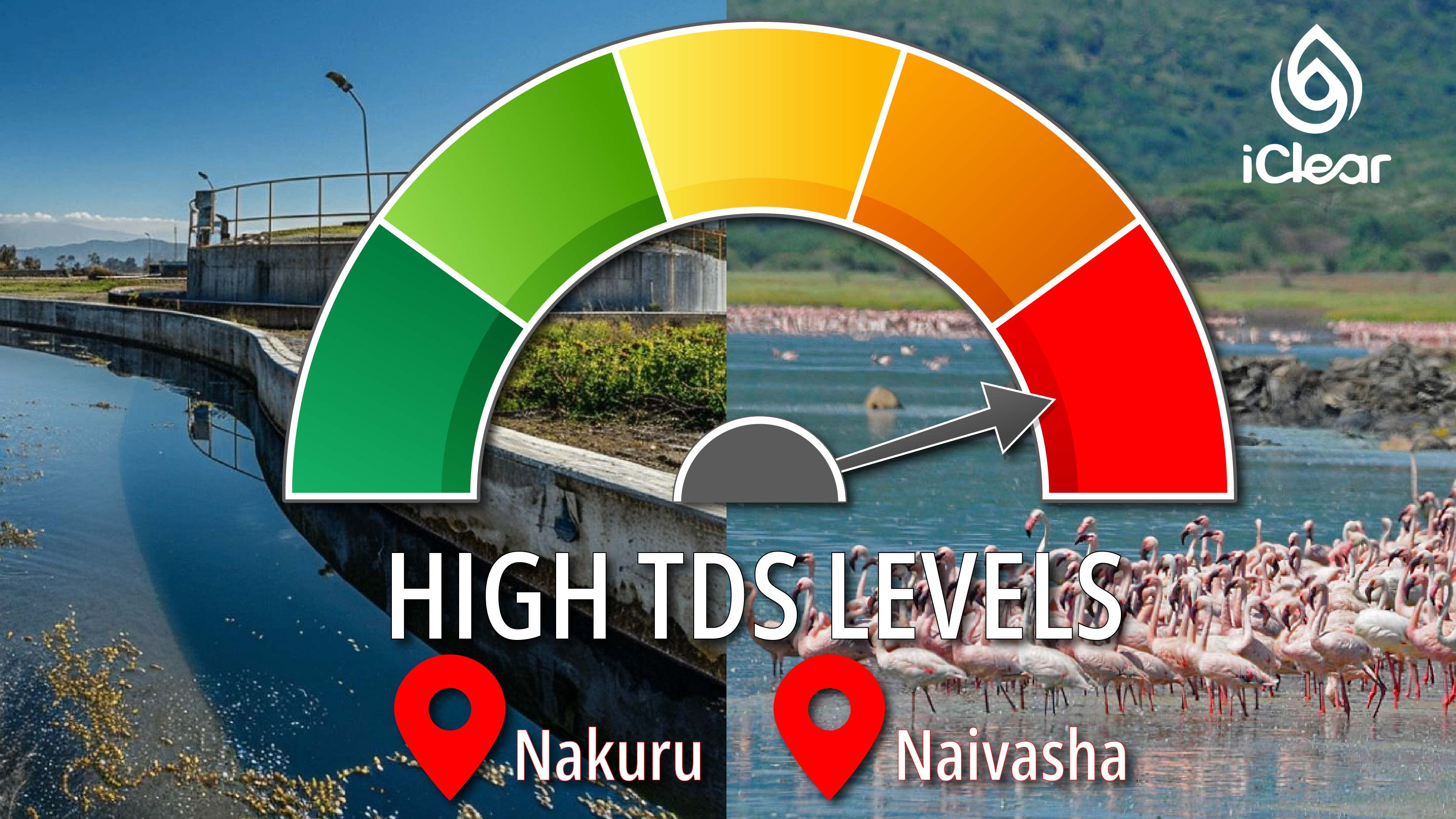
Naivasha and Nakuru sit at the heart of the Kenyan Rift Valley, surrounded by some of the country's most productive farmland and most dramatic landscapes. They also sit on top of geological formations that load groundwater with fluoride and dissolved minerals at levels far higher than most residents realise. If you live in either town and rely on a borehole, the standard filter you may have installed is almost certainly not enough. What the Rift Valley does to your water The Rift Valley's geology is unusually fluoride-rich. As rainwater and groundwater pass through these formations, they pick up fluoride at concentrations that, in parts of the region, are among the highest in the world. iClear's technical team has measured fluoride in Rift Valley boreholes at over 8.75 mg/L. The WHO safe limit for drinking water is 1.5 mg/L. That is not the only issue. The same geological processes contribute to elevated TDS readings, with our field team typically recording Naivasha boreholes between 300 and 600 ppm. Mineral content, including dissolved iron and other elements, is also consistently above what is found in non-Rift Valley boreholes. Both Naivasha and Nakuru appear on iClear's internal list of consistently high-fluoride areas. Both are towns where the standard household assumption, that borehole water is automatically cleaner than municipal water, breaks down completely. Why standard filters cannot solve a Rift Valley problem Most household filters sold in Kenya are designed around sediment, chlorine, and basic carbon filtration. They are adequate for municipal water with relatively low dissolved content. They are not adequate for Rift Valley borehole water. Sediment filters remove visible particles only Carbon filters improve taste but do not remove fluoride or salts Ceramic filters handle bacteria and sediment but not dissolved contaminants UV purifiers kill microbes but leave fluoride and TDS untouched None of these technologies, on their own, will protect a Naivasha or Nakuru household from the dominant water quality problems in the area. They miss exactly the things you most need removed. In the Rift Valley, the question is not whether your filter removes contaminants. The question is whether it removes the contaminants your specific water actually contains. Standard filters miss the ones that matter most here. Why Reverse Osmosis is the only sufficient answer Reverse Osmosis works at the molecular level. The RO membrane has pores small enough to block fluoride ions, dissolved salts, heavy metals, and bacteria, while letting water molecules pass through. This is the only commonly available technology that addresses the full range of contaminants found in Rift Valley borehole water. Across Naivasha and Nakuru installations, post-RO TDS typically drops dramatically below the pre-treatment reading. Fluoride drops to safe levels. The water comes out genuinely pure rather than just filtered. What iClear recommends for Rift Valley boreholes For a typical Naivasha or Nakuru household, the iClear Standard or iClear Premier provides the full Reverse Osmosis purification needed to handle the local water profile. For households with eight or more people or higher daily consumption, the Premier's 100-gallon-per-day capacity is the better fit. For smaller spaces, including offices and shared workspaces, the iClear Desktop provides the same RO purification in a portable form. All systems are KEBS-certified. Every iClear purchase includes free professional installation in Nairobi, its environs, and Nakuru. Naivasha is reachable from our Nairobi service base; Nakuru is directly covered by iClear's installation network. If your home is in the Rift Valley and runs on a borehole, you do not have a generic water filtration problem. You have a fluoride and TDS problem that only Reverse Osmosis solves. The standard filter you may have bought is not enough, and the longer you delay, the more your family is exposed to contaminants that cause real long-term harm. Get the right system for your Rift Valley borehole. Free delivery and professional installation in Nairobi and Nakuru. Visit the iClear shop. Keywords: Naivasha water, Nakuru water, Rift Valley borehole, fluoride Naivasha, water purifier Naivasha, water purifier Nakuru, iClear Kenya, Reverse Osmosis water filter Kenya
Kitengela has grown faster than almost anywhere in Kenya's commuter belt. Estates, schools, clinics, and businesses have arrived with the population. So have boreholes, since municipal supply struggles to keep pace. What most Kitengela residents do not realise is what those boreholes are actually delivering. Here is what iClear's field team measures. The numbers from Kitengela Across iClear installations and field tests in Kitengela this year, the typical borehole TDS reading sits between 450 and 600 ppm. That is at the high end of the acceptable drinking water range, and at the lower end of what professional bodies consider potentially harmful for sustained consumption. Kitengela boreholes routinely measure 450 to 600 ppm TDS, with consistently elevated fluoride. The combination of high TDS and high fluoride is one of the more challenging water profiles iClear's team encounters in Kenya. Kitengela also appears on iClear's internal list of consistently high-fluoride areas, alongside Naivasha, Nakuru, Kajiado, and Gilgil. This is not random. The geology of the area, where Kitengela sits relative to the Rift Valley's fluoride-rich rock formations, makes elevated fluoride in groundwater predictable rather than exceptional. What this means in practice For a Kitengela family relying on borehole water without proper purification, the daily consumption picture looks something like this: Higher-than-recommended dissolved solids, contributing to the salty or mineral taste many residents report Fluoride exposure that, over years, can cause dental fluorosis in children and skeletal fluorosis in adults Possible exposure to other dissolved contaminants common in Kitengela boreholes, including iron and dissolved minerals Children are particularly vulnerable. Their developing teeth and bones absorb fluoride at higher rates than adults. Years of consuming Kitengela borehole water without purification can result in visible dental damage by the time a child reaches school age. Why boiling and basic filters do not solve this Boiling water removes some bacteria but does nothing for fluoride, TDS, or dissolved minerals. In fact, boiling concentrates these dissolved contaminants by reducing water volume, which makes the problem worse over time. Basic carbon filters and sediment filters also leave fluoride and dissolved salts untouched. Most household filter products on the Kenyan market are not designed to handle Kitengela-level borehole water. If you live in Kitengela and your home runs on borehole water, the only widely available technology that comprehensively addresses both your TDS and your fluoride is Reverse Osmosis. Anything less is partial protection. What iClear has installed across Kitengela Across Kitengela installations, iClear's most commonly installed systems are the iClear Standard for typical households and the iClear Premier for larger families and small offices. Both are KEBS-certified Reverse Osmosis systems built to handle borehole water with the TDS and fluoride profiles our team measures across the area. In every installation, the post-RO water comes out dramatically below the pre-RO TDS reading, typically a reduction of 90% or more. Customers consistently report a noticeable difference in taste, and over time, in the appearance of their tea, the absence of scale on kettles, and the wellbeing of their families. Every iClear purchase includes free delivery and professional installation in Nairobi, its environs, and Nakuru. Kitengela is firmly within iClear's installation coverage area. Kitengela is not a borderline water area. It is a known high-TDS, high-fluoride zone where our field data consistently shows water above acceptable limits for long-term consumption. If your home runs on a Kitengela borehole, a Reverse Osmosis system is not a luxury. It is a baseline. Get your Kitengela borehole water tested and purified. Free delivery and professional installation in Nairobi and Nakuru. Visit the iClear shop. Keywords: Kitengela water, Kitengela borehole, water purifier Kitengela, water filter Kitengela, fluoride Kitengela, water purifier Kenya, iClear Kenya, Reverse Osmosis
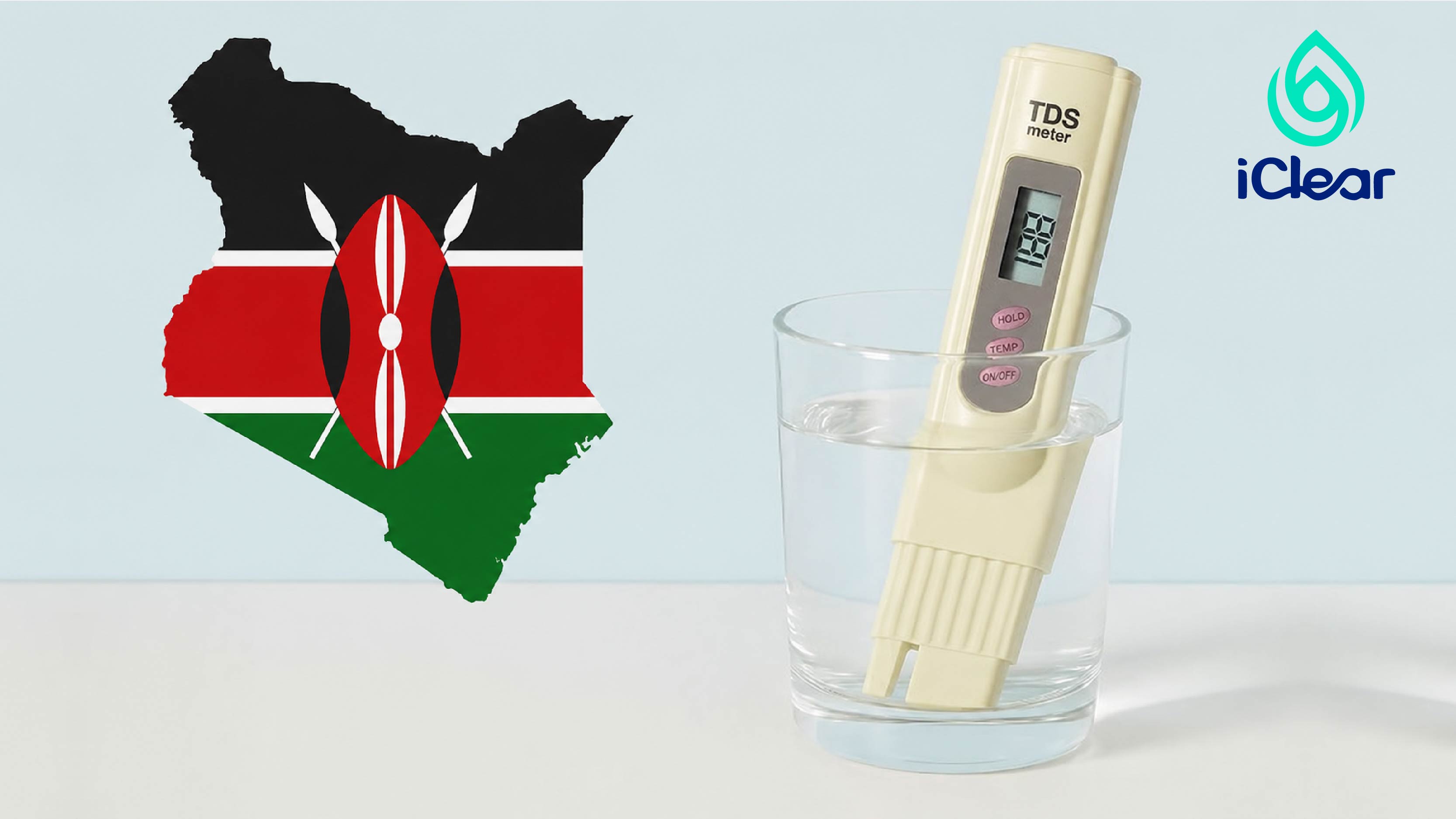
There is no shortage of opinions about Kenyan water quality. What there is a shortage of is data. Across the towns where iClear's technical team has tested water this year, we have collected real Total Dissolved Solids readings from real boreholes, taps, and storage tanks. Here is what those numbers show. What TDS means and why it matters Total Dissolved Solids, or TDS, is a measure of everything dissolved in your water, including salts, minerals, metals, and other substances. It is one of the most useful single indicators of overall water quality, because it captures the contaminants that visual inspection misses entirely. As a general guide: Below 300 ppm is generally considered excellent for drinking water 300 to 600 ppm is acceptable, with rising concerns at the higher end Above 600 ppm typically signals significant dissolved contamination Above 1,000 ppm is generally not recommended for drinking without treatment These are general benchmarks. The specific composition of the TDS, fluoride, salts, metals, also matters significantly for health. What our field team has actually measured Here are the typical TDS readings from iClear's field testing across Kenyan towns this year: Karen: Typical range: 150 to 180 ppm. The lowest TDS in our regular testing. Reflects Karen's mix of newer infrastructure and relatively well-maintained boreholes. Ruiru: Typical range: 220 to 300 ppm. Within acceptable drinking water range but worth filtering, particularly for dissolved minerals. Naivasha: Typical range: 300 to 600 ppm. The upper end is borderline. Naivasha is also a high-fluoride area, which compounds the TDS concern. Kitengela: Typical range: 450 to 600 ppm. Consistently elevated. Boreholes in this area frequently combine high TDS with elevated fluoride. Kajiado: Typical range: 450 to 600 ppm. The highest TDS readings our team has consistently recorded. Kajiado County contains some of the most challenging borehole water in our service area. The numbers vary by source, by season, and by individual borehole. What is consistent is that without testing, most households have no idea where their water sits on this scale. What these numbers tell you If you live in Karen or Lavington on municipal supply, your TDS is probably acceptable, though it does not capture chlorine, bacteria from storage tanks, or other concerns. If you live in Kitengela or Kajiado on a borehole, your TDS is almost certainly elevated, and likely paired with elevated fluoride or other dissolved contaminants. In every case, the only way to know your specific reading is to test your specific water source. The figures here are typical ranges from our field experience. Your individual borehole or tank may sit at the higher or lower end. What an iClear system does to these numbers A Reverse Osmosis system reduces TDS dramatically, typically by 90% or more. A borehole reading of 600 ppm before treatment will commonly come out below 50 ppm after RO. That is the difference between water that is borderline and water that is genuinely pure. The iClear Standard and iClear Premier are designed specifically for the kinds of TDS levels our field team encounters across Kenya, including the high-end Kitengela and Kajiado readings. The honest TDS map of Kenya is not one of clean tap water and dirty rivers. It is one of dramatically different readings town by town, borehole by borehole, with most households having no idea where they sit on the scale. The first step is knowing your number. The second is doing something about it. Find out where your water sits on the TDS map. Free delivery and professional installation in Nairobi and Nakuru. Visit the iClear shop. Tags: TDS Kenya, TDS borehole water, Kitengela water, Kajiado water, Naivasha water, Karen water, Ruiru water, water purifier Kenya, iClear Kenya
 Health & Wellness
 Water Quality Insights
Health & Wellness
Water Quality Insights
Health & Wellness