Mazingira Day 2026: What It Means for the Water Kenyans Drink
10, Oct 2026
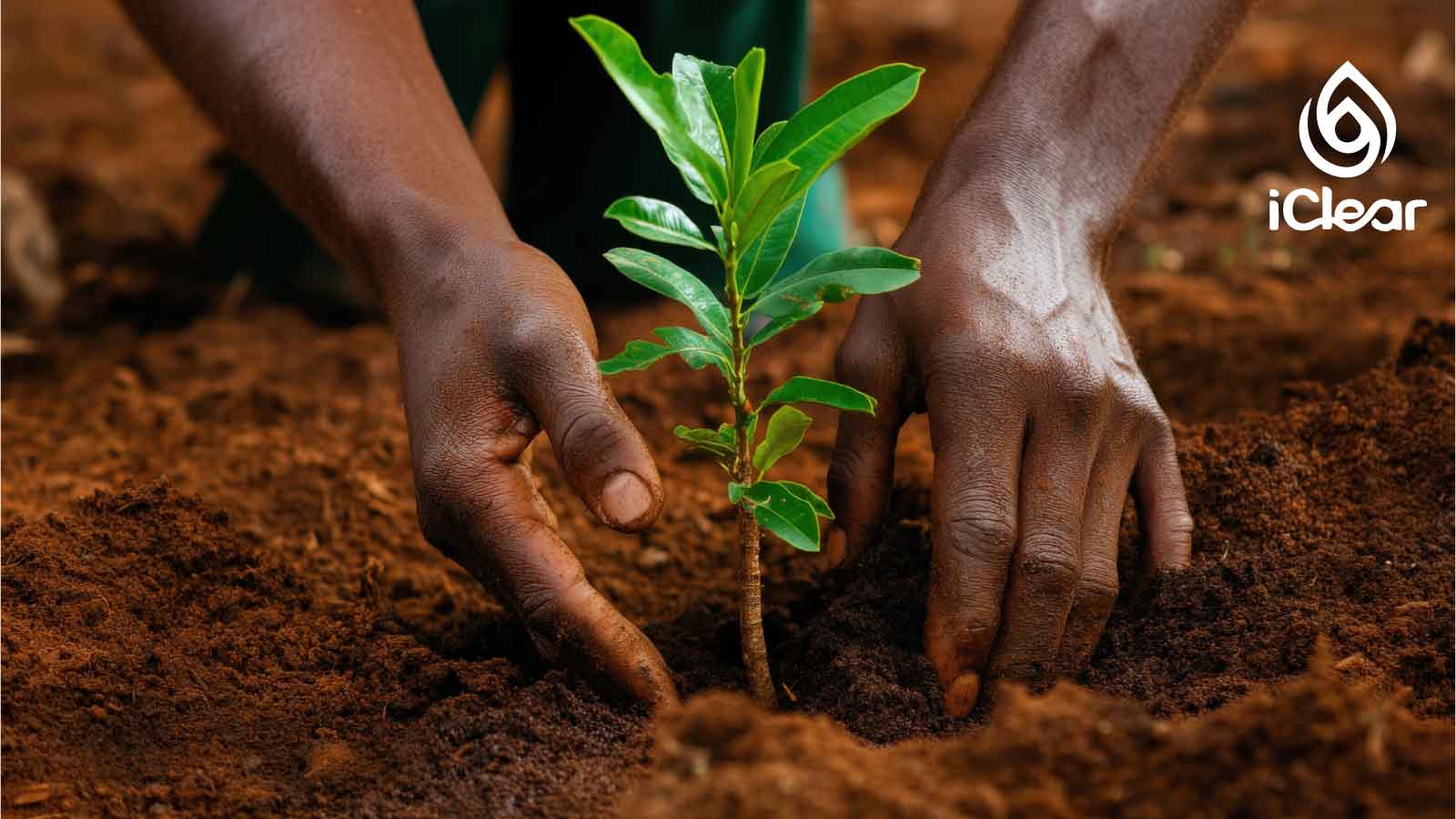
Today is Mazingira Day. Across the country, communities, schools, county officials and the national government are out planting trees and clearing rivers and public spaces, part of a published target of over 17 million trees planted this week alone, against a longer goal of 15 billion trees by 2032. It is a genuinely large national effort, and it is aimed at a real problem: degraded catchments, shrinking forests and rivers that carry more silt, waste and runoff than they used to.
For a company that spends its working days testing the water coming out of boreholes and taps across Kenya, the day is worth pausing on, not as a marketing moment, but because the connection between a protected catchment and a safe glass of water is real, even if it is not immediate.
Mazingira Day falls on 10 October and was made a national day of environmental conservation and tree planting through legislation that replaced the earlier Utamaduni Day. The 2026 edition runs as a week, from 5 to 10 October, under the theme “Our Environment, Our Responsibility: Collective Action for Tree Growing and Environmental Stewardship.” Community planters, village elders, the Kenya Prisons Service, the National Youth Service, and schools are all taking part, with trees geo-tagged and tracked through the government's JazaMiti platform so survival can be counted, not just planting.
A healthy, forested catchment slows runoff, filters sediment, and helps keep rivers and groundwater from carrying as much silt, agricultural chemical residue and waste as a degraded one. Over years, protecting rivers and wetlands is one of the things that keeps a region's water sources from getting worse. That is the long-term, upstream side of water quality, and it is exactly what Mazingira Day is organised around.
It is not, however, a substitute for knowing what is in the water a household is drinking right now. Kenya's groundwater varies enormously by geology as much as by land use. iClear's own field testing across service areas has measured total dissolved solids from around 150 to 180 ppm in parts of Karen up to 450 to 600 ppm in Kitengela and Kajiado, and fluoride levels above 8.75 mg/L in parts of the Rift Valley, against a WHO guideline of 1.5 mg/L. Those minerals come from the rock the water has moved through, not primarily from deforestation or surface pollution, so tree planting upstream will not change a borehole's natural fluoride level. A protected river reduces one category of risk. It does not address the other.
See iClear's own field readings in our fluoride and TDS data by town, gathered from installations across Nairobi, the Rift Valley and surrounding counties.
Mazingira Day's own call to action is aimed at the catchment level: plant a tree, protect a riverbank, clear a public space, stop illegal dumping. Those are worth doing, and they matter over the years it takes a watershed to recover. For the water a family drinks tomorrow morning, the practical step is different.
The two efforts are not in competition. Protecting rivers and forests is what keeps tomorrow's water sources from getting worse. Testing and treating what comes out of the tap is what keeps today's glass of water safe. Kenya needs both, and Mazingira Day is a fair prompt to think about either.

Point-of-use Reverse Osmosis treats the water a household already has, alongside, not instead of, catchment protection.
Know what's in your water.
Book a water test and see what an iClear system would need to remove. Find out more.
FAQ
Q: When is Mazingira Day in 2026?
A: 10 October 2026, observed as a week of tree-planting and environmental activity from 5 to 10 October.
Q: Does planting trees improve the water coming out of my tap?
A: Over time, yes, for surface water and shallow groundwater affected by runoff and erosion. It does not change minerals such as fluoride that are naturally dissolved from rock deep underground, which is a separate issue treated by filtration, not catchment restoration.
Q: What is the difference between catchment protection and water treatment?
A: Catchment protection, such as tree planting and river restoration, protects water sources over the long term. Treatment, such as Reverse Osmosis, deals with whatever is already in the water you draw today. Kenya's water security needs both.
Q: How do I know if my water needs treatment?
A: A water test is the only reliable way to know. iClear's field data shows total dissolved solids and fluoride levels vary widely even between neighbouring towns.
Keywords: Mazingira Day 2026, Mazingira Day Kenya, Kenya tree planting day, water catchment protection Kenya, iClear Kenya

Water Purification & Treatment Specialists
David Ochieng, a water purification specialist at iClear Wellife Services Ltd, has extensive experience delivering safe and reliable water treatment solutions for homes and offices across Kenya.