
Mazingira Day 2026: What It Means for the Water Kenyans Drink
10, Oct 2026
Ask a head teacher where their drinking water comes from and the answer is usually short: a borehole, a storage tank, or a connection to the municipal line that runs when it runs. Ask whether anyone has tested it recently and the answer is often a pause. That pause is the real problem. Water in schools is trusted because it has always been there, not because it has been checked.
A household with a contaminated source exposes a handful of people. A school with the same source exposes hundreds of children, five days a week, for years. Several things make schools more vulnerable than the average home.
The risks depend on where the school is, and they are not only about germs. iClear's field measurements across Kenya show how much the dissolved load varies by area.

iClear field TDS readings by town. A school's borehole can sit anywhere on this range, and the reading cannot be seen in a glass.

iClear's Rift Valley fluoride reading against the WHO guideline value.
Some schools respond by asking parents to send bottled water, or by buying dispenser bottles for the staff room. Neither fixes the problem. Bottled water depends on every family's budget, so the children who most need safe water may be the ones least able to bring it. Dispenser bottles are costly at scale and add storage, handling and reservoir hygiene problems of their own. A shared treated supply treats every child the same.
There is no single product that fits every school, but the plan that works is consistent. It has five parts.

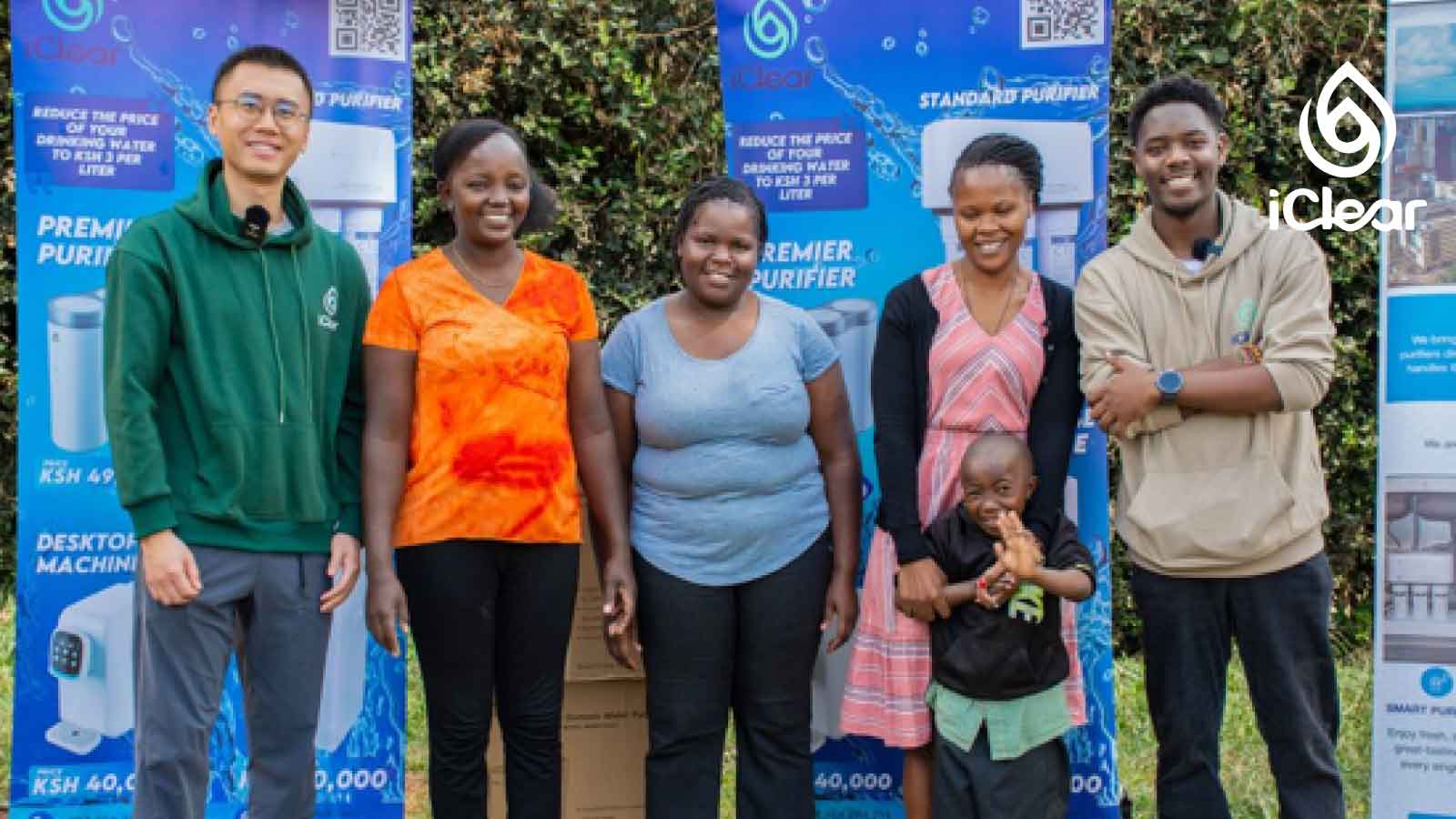
Two iClear systems with storage tanks installed under a sink, from the Baobab school water donation.
Editor note: Add the specific details of the Baobab school donation here (school name, location, date, system installed) once confirmed, so the photo above is tied to a named, verifiable project.
Children are especially vulnerable to fluoride during tooth development, and a school touches every child in its catchment over many years. A school that fixes its water source protects each cohort that passes through it, not just the pupils enrolled this term. It also removes a recurring cost and a recurring worry from the school's operations.
For larger needs, iClear's Office system (annual service subscription, installation and servicing included) is the closest fit to institutional use, and our team can assess a school's enrolment, water source and layout before recommending anything. We would rather size it correctly than sell the biggest unit.
Q: Is borehole water safe for school children to drink?
A: It depends on the borehole. Water can look clear and still carry high dissolved salts or fluoride. In parts of the Rift Valley, iClear has measured fluoride above 8.75 mg/L against a WHO guideline of 1.5 mg/L. Testing is the only way to know.
Q: Why not just buy bottled water for the school?
A: It places the cost on families, adds storage and handling, and relies on dispensers that need regular cleaning. A single treated supply at the drinking points is more consistent and treats every child equally.
Q: How is a school water system sized?
A: By the number of pupils and staff and how much each drinks, plus the layout of drinking points. iClear assesses this on site before recommending a system.
Q: Does the system need servicing?
A: Yes. Filters are replaced on a schedule that depends on the source water, and servicing keeps the system performing. Visits can be timed around the school calendar.
Talk to us about safe water for your school.
Contact our team for an on-site assessment. Find out more.
Keywords: school water purifier kenya, clean water schools kenya, borehole water schools, fluoride school children kenya, iClear Kenya

Water Purification & Treatment Specialists
David Ochieng, a water purification specialist at iClear Wellife Services Ltd, has extensive experience delivering safe and reliable water treatment solutions for homes and offices across Kenya.