Search

Subtotal: KSh 0
Checkout View Cart

Clean Water Solutions

Healthy
Living

Protect your family with clean, purified drinking water
every day and enjoy better health with every glass.

Explore

Water Purification Specialists

Pure
Water

Advanced RO water purifiers for borehole, salty, municipal and
other water sources, delivering clean, safe drinking water.

Explore

Kenya's Leading Water Purifiers & Reverse Osmosis (RO) Filter Systems for Home

Trusted.
Recognized.

Recognized for helping Kenyan families
and businesses enjoy cleaner, safer
drinking water every day.

Explore

Water Purifiers & Water Filters in Kenya - Reliable Solutions for Borehole, Salty & Tap Water

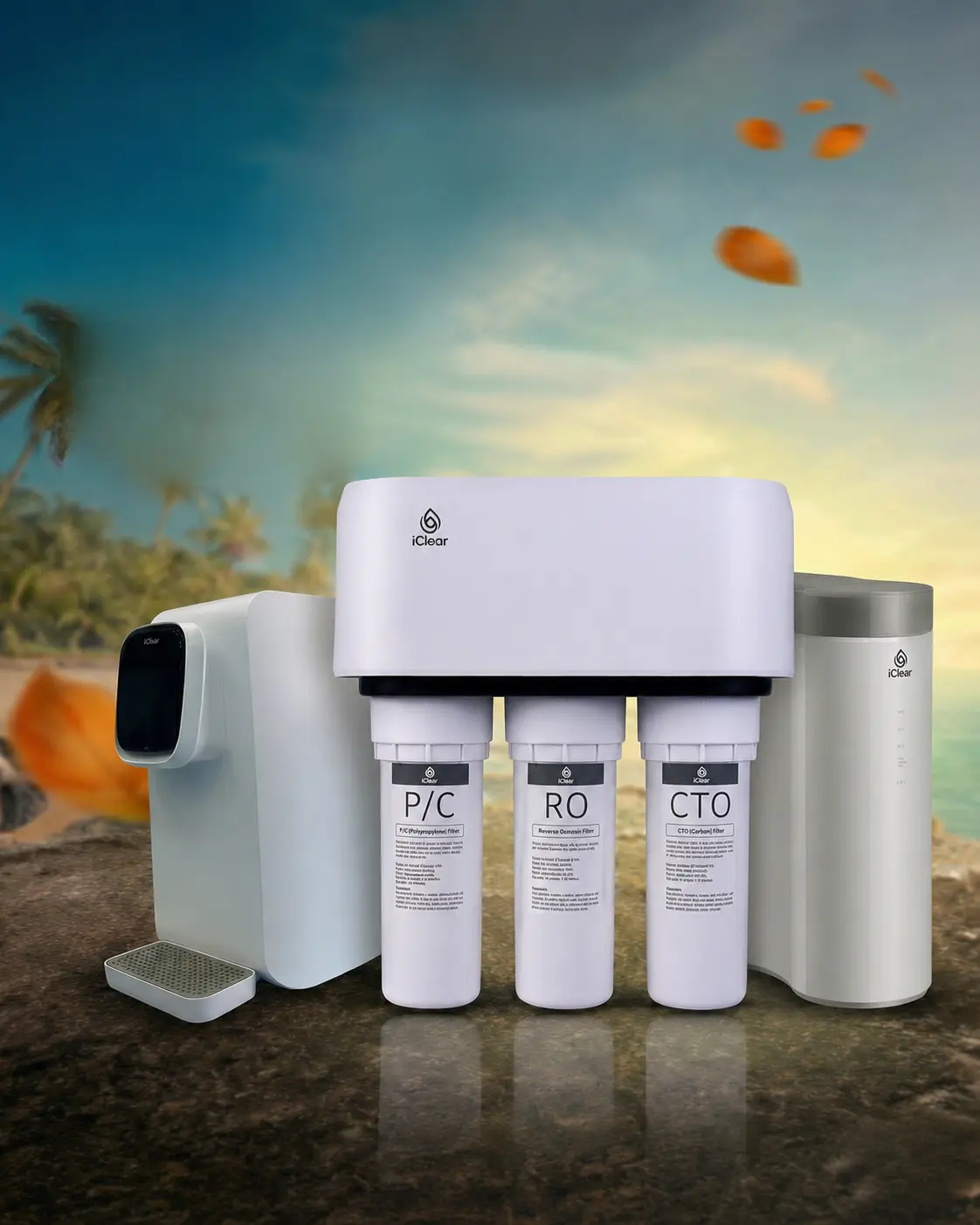
Get the best water purifier prices in Kenya with iClear’s advanced Reverse Osmosis technology. Whether you are dealing with salty borehole water in Syokimau or looking for a clean drinking water solution for your Nairobi office, our systems remove 99% of contaminants. Save up to 80% compared to bottled water costs with our durable, easy-to-maintain RO filters. Free delivery countrywide and Free professional installation available today in Nairobi, Nakuru, and environs.


Feature 1
For You and Your Home

4+ Years RO Champions

Explore Items
Feature 2
With a Greater Mission

5+ Service Countries

Explore Items
Feature 3
Changing Lives One Drop At A Time

12,000+ Families

Explore Items

Best Water Purifiers in Kenya – iClear RO Systems

Shop our most popular RO water purifiers, trusted by Kenyan families and offices. Save up to 80% vs bottled water with free delivery, installation, and a 1‑year warranty on all models.

iclear absa logo iclear equity logo iclear kilimall logo iclear powater logo iclear tecno logo iclear stanbic logo iclear standard chartered logo

Get Your Water Purifier Installed in Nakuru

Free Delivery & Installation

iClear offers trusted water purification systems for homes and offices in Nakuru, with free delivery and professional installation available today.

Celebrate our 4th anniversary with the iClear Standard now at KSh 25,000.

Nakuru Offer purifiers image

What is (RO) Reverse Osmosis?

Reverse Osmosis (RO) is a water purification method that pushes water through a very fine filter. This filter blocks dirt, chemicals, bacteria, and even dissolved salts. It’s one of the few systems that can turn salty water and borehole water into clean, safe drinking water that tastes fresh and sweet.

iclear reverse osmosis image

Why reverse Osmosis


RO removes both visible impurities and invisible contaminants like salts, fluoride, chemicals, and bacteria. It is powerful enough to purify salty water, hard water, borehole water, municipal water — basically any type of water — and make it safe for drinking and cooking in Kenyan homes.

Why iClear?

Save big by using our instant reverse osmosis water solutions. Get off the loop of buying expensive bottled water and get clean water in your home/office. Get 24/7 support.

Reverse Osmosis

This is a process that utilizes a semi-permeable membrane to effectively separate bacteria, ions, undesired molecules, and larger particles from drinking water, making it pure and safe.

Save 80%

iClear purifiers are a one-time investment on water purification thus are cost effective as compared to regularly buying bottled water. Save 20k worth of bottled water by getting a 25k machine.

24/7 Support

Our Customer support team is available to respond to your inquiries promptly all round the clock. Our professional installers will ensure you don't encounter any issues with installation.

Blog Articles

Learn about reverse osmosis and how it has saved money while giving convenience to Kenyans.

Is Refilled Water Safe? What You Can't See at a Refill Station

Refilled water is only as safe as the station's equipment and maintenance, which customers cannot see. Filter condition, storage hygiene, and testing vary widely between stations, so refilled water carries real but invisible variation in quality. Why refill stations are popular in Kenya Refill stations fill a real need. They are cheaper than bottled water, more convenient than boiling at scale, and widely available. For many households they are a sensible, budget-conscious choice, and this article is not an argument against the idea of refilling. It is an argument for knowing what you are actually getting, because the price and the convenience are visible while the quality is not. What you cannot see When you fill a container at a refill station, the quality of the water depends entirely on factors hidden from you: The filters: are they the right type, and have they been replaced on schedule? An exhausted filter looks the same as a fresh one from the customer side. The maintenance: is the equipment cleaned and serviced, or running unattended? The storage: how is the treated water held before it reaches your container, and is that storage clean? The testing: is the output water tested regularly, and are the results available? None of these is visible at the tap. Two refill stations charging the same price, with the same clear water coming out, can be delivering very different quality depending on how well each one is maintained behind the scenes. How refill water quality varies Because quality depends on maintenance, and maintenance varies from operator to operator, refilled water is not a single consistent product. A well-run station with fresh filters, clean storage, and regular testing can deliver genuinely good water. A poorly maintained one, with exhausted filters and neglected storage, can deliver water that is little better than what went in, while looking identical at the tap. The customer has no reliable way to tell them apart by sight. What to ask before trusting a refill station When were the filters last changed, and how often are they changed? Is the output water tested, and can you see recent results? How is the treated water stored before dispensing? Bring a clean container each time, and clean it between uses, since your own container is part of the chain too. The certainty a home system gives The appeal of a home purifier over a refill station is not that refilling is always bad. It is that a home system removes the variability. You control the maintenance, you know when the filters were changed, and the water is purified at the point where you drink it. The iClear Standard and iClear Premier are KEBS-certified Reverse Osmosis systems installed and serviced by iClear, so the quality does not depend on someone else's unseen upkeep. See the honest cost comparison in our guide on bottled water versus an RO system. Refilled water can be good or poor, and the customer cannot see which. A home system replaces that uncertainty with control. FAQ Q: Is refilled water safe to drink in Kenya? A: It can be, but only if the station's filters, storage, and maintenance are properly kept up, none of which is visible to customers. Quality varies widely between stations, so refilled water carries real but invisible variation. Q: How can I tell if a refill station is clean? A: You largely cannot tell by sight, since the filters and storage are behind the dispensing point. Ask when filters were last changed, whether the water is tested, and how it is stored, and bring your own clean container. Q: Is refilled water better than bottled water? A: Neither is automatically better; both depend on unseen handling. A well-run refill station can be good and a poorly run one poor, just as with bottled water. A home purifier removes the guesswork by putting the maintenance in your control. Replace uncertainty with control over your water. Free delivery and professional installation in Nairobi and Nakuru. Visit the iClear shop. Keywords: is refilled water safe kenya, refill station water, water refill kenya, is refill water clean, iClear Kenya, water purifier kenya

Continue Reading

How Long Can Water Sit in a Dispenser? The Honest Answer

Water should not sit in a dispenser for more than a few days. In warm conditions bacteria can multiply within 2 to 3 days in a standing reservoir, so water that has sat longer, or tastes stale, should be replaced and the unit sanitised. How long is too long As a practical guide, water should not sit unused in a dispenser reservoir for more than a few days. In the warm conditions common across much of Kenya, bacteria present in even small numbers can multiply meaningfully within 2 to 3 days in standing water. If a bottle or reservoir is emptying slowly, the water at the bottom may be considerably older, and less fresh, than it appears. Why warm climates shorten the safe window Temperature is the single biggest factor. Bacteria multiply faster as water warms, so a dispenser in a warm room has a much shorter safe window than the same dispenser in a cool one. The generic advice written for temperate climates overstates how long water stays fresh in Kenyan conditions. When in doubt, assume the window is shorter, not longer. The warning signs Standing water that has begun to deteriorate often gives itself away before anything visible appears: Taste: a flat, stale, or slightly off taste is the most common early sign. Smell: any musty or unusual odour is a clear signal to empty and clean. Film: a slippery feel inside the reservoir or around the taps indicates biofilm, a bacterial layer. Standing water and biofilm The deeper issue is biofilm: a thin, sticky layer of bacteria that forms on the inside surfaces of a reservoir that is not regularly sanitised. Once biofilm establishes, it re-seeds each new batch of water with bacteria, so simply refilling does not solve the problem. This is why how long water sits and how often the unit is cleaned are really the same question. Water that has sat too long is not fixed by topping it up. If biofilm has formed in the reservoir, fresh water added on top is contaminated by contact. The reservoir has to be emptied and sanitised, not just refilled. How to avoid the problem entirely The surest way to never drink stale reservoir water is to not rely on a standing reservoir at all. A point-of-use purifier produces water on demand rather than storing it for days. The iClear Desktop purifies each serving through Reverse Osmosis as you draw it, and for the whole household the iClear Standard delivers purified water on demand from a dedicated tap. Fresh water, drawn when you want it, not water aging in a tank. The question "how long can water sit" only exists because the water is being stored. Purify on demand and the question disappears. FAQ Q: How long can water sit in a dispenser? A: No more than a few days. In warm conditions, bacteria can multiply within 2 to 3 days in a standing reservoir. Water that has sat longer, or that tastes or smells stale, should be replaced and the unit sanitised. Q: Is it safe to drink water that has been sitting in a dispenser for a week? A: It is a risk, especially in warm conditions and if the reservoir has not been recently sanitised. Week-old standing water may have developed bacterial growth and biofilm even if it looks clear. Empty and clean the unit. Q: Does topping up a dispenser fix old water? A: No. If biofilm has formed inside the reservoir, fresh water added on top is contaminated by contact. The reservoir must be emptied and sanitised, not just refilled. Get fresh purified water on demand. Free delivery and professional installation in Nairobi and Nakuru. Visit the iClear shop. Keywords: how long can water sit in a dispenser, standing water dispenser, dispenser water stale, water dispenser bacteria, iClear Kenya

Continue Reading

Is It Safe to Reuse Water Bottles? What Bottle Ageing Really Does

Reusing water bottles is safe only with proper cleaning. Bacteria multiply quickly in bottles reused without washing, and single-use plastic bottles degrade with repeated reuse and heat, which is why regular sanitising or a purified source matters. What grows in a reused bottle A water bottle is a warm, moist, enclosed space that your mouth touches many times a day. That is close to ideal for bacteria. Research examining used drinking bottles has found substantial bacterial growth in bottles that were reused without regular, thorough washing, with the mouthpiece and cap among the most affected areas. The bacteria come from your mouth, your hands, and the environment, and they multiply between refills. This does not mean reusing a bottle is dangerous by nature. It means an unwashed reused bottle is very different from a clean one, and the difference is invisible. Bottle ageing: what repeated reuse does to plastic The second issue is the bottle itself. Single-use plastic bottles were designed to be used once. With repeated reuse, washing, refilling, and exposure to heat, the plastic degrades physically: it develops fine scratches and wear that are harder to clean and give bacteria more places to lodge. Reusable bottles made for the purpose hold up far better, but even they age and eventually need replacing. The rule of thumb worth remembering: single-use bottles are for single use, and reusable bottles are only as safe as their last proper wash. Neither is a set-and-forget solution. Single-use vs reusable: the real difference A purpose-built reusable bottle, made from durable materials and cleaned regularly, is a genuinely good choice. A thin single-use bottle refilled for a week is not the same thing, even though both hold water and both look fine. The materials, the durability, and the cleanability are what separate them, not the fact that both can technically be refilled. How to reuse bottles safely Wash reusable bottles daily with warm soapy water, reaching the base and the cap. Sanitise more deeply every few days, and let the bottle dry fully between uses. Replace single-use bottles rather than reusing them for long periods. Replace any bottle that is scratched, cloudy, cracked, or holds a smell after washing. The better question There is a question underneath all of this that matters more than the bottle: is the water you are refilling with actually clean? A perfectly washed bottle filled with water that carries dissolved contaminants still gives you contaminated water. Purifying at the point of use solves the input side of the problem. The portable iClear Desktop gives you genuinely purified water to fill from, and the iClear Standard does the same for the whole household. A clean bottle filled with unclean water is still unclean water. The bottle is only half the question; the water you put in it is the other half. FAQ Q: Is it safe to reuse plastic water bottles? A: Only with proper cleaning, and single-use bottles are not designed for long-term reuse. Bacteria build up quickly in unwashed bottles, and single-use plastic degrades with repeated use and heat. Purpose-made reusable bottles, cleaned daily, are the safer choice. Q: How often should I wash a reusable water bottle? A: Daily, with warm soapy water, reaching the base and cap, plus a deeper sanitising every few days. Let it dry fully between uses, and replace it if it becomes scratched, cloudy, or holds a smell. Q: Do old water bottles become unsafe? A: Ageing plastic develops scratches and wear that harbour bacteria and are harder to clean, so old and degraded bottles are harder to keep safe. Replace bottles that are scratched, cracked, cloudy, or smelly. Fill from genuinely purified water. Free delivery and professional installation in Nairobi and Nakuru. Visit the iClear shop. Keywords: is it safe to reuse water bottles, reusable water bottle bacteria, bottle reuse, water bottle ageing, refill water bottle safe, iClear Kenya

Continue Reading
instagram-img-1
instagram-img-2
instagram-img-3
instagram-img-4
instagram-img-5
instagram-img-6