Buying a water purifier in Kenya can feel overwhelming. With many options on the market, different technologies, price points, and claims, it’s easy to make a decision based on cost alone. Unfortunately, choosing the wrong system can lead to poor water quality, frequent breakdowns, or higher long-term costs. Before you invest, it’s important to ask the right questions. These questions help you match the purifier to your actual water source, household or office needs, and maintenance expectations. 1. What Is My Main Water Source? The first and most important question is where your water comes from. In Kenya, common sources include: Municipal tap water Borehole water Rainwater harvesting systems A mix of multiple sources Each source has different risks. Borehole water often has high salinity and dissolved minerals, while municipal water may pick up contaminants from aging pipes. Your water source determines whether you need basic filtration or advanced purification like Reverse Osmosis. 2. What Problems Am I Trying to Solve? Not all water looks or behaves the same. Ask yourself: Does the water taste salty or metallic? Does it leave white scale on kettles and taps? Does it cause stomach discomfort? Is it safe for children and elderly family members? Identifying the problem helps you avoid overpaying or under-purifying. 3. How Many People Will Use Water Daily? Water consumption increases quickly with more users. A system suitable for a small household may struggle with: Large families Homes with frequent visitors Offices and shared spaces Underestimating usage leads to faster filter exhaustion and inconsistent water quality. 4. How Much Purified Water Do We Actually Need? Think beyond drinking water. Many households also use purified water for: Cooking Making tea and coffee Baby food preparation Choosing a system based only on drinking needs may result in shortages during peak hours. 5. What Maintenance Does the System Require? Every water purifier needs maintenance. Ask: How often do filters need replacement? Are replacements readily available in Kenya? Is professional service recommended? Ignoring maintenance requirements is one of the most common reasons purifiers fail early. 6. Is the Upfront Price the Real Cost? A cheaper purifier can end up costing more overtime due to: Frequent filter changes Repairs Poor performance requiring replacement Consider total cost of ownership, not just the purchase price. 7. Is Installation Included and Free? Proper installation matters. Poor installation can: Reduce system efficiency Cause leaks Lead to contamination Always confirm whether installation is included and handled by trained professionals. 8. Will This System Handle Changes in Water Quality? Water quality in Kenya is not static. Seasonal changes, droughts, and infrastructure issues can alter water composition. A good system should handle fluctuations without compromising safety. 9. Does the Provider Offer Ongoing Support? After-sales support is just as important as the product itself. Reliable providers offer: Customer support Scheduled service Easy access to replacement parts This ensures peace of mind long after purchase. 10. Is This System Right for Long-Term Use? Finally, ask whether the purifier can grow with your needs. Changes such as: Moving homes Family size increase Switching water sources should not require replacing the entire system. Conclusion Buying a water purifier in Kenya is not just about clean water today, it’s about safety, reliability, and cost over many years. By asking the right questions before you choose, you avoid common mistakes and invest in a solution that truly fits your water source, usage, and lifestyle. A well-chosen purifier protects your health, saves money, and gives you confidence in every glass of water.

Across Kenya, more offices are rethinking how they provide drinking water to staff and visitors. What was once solved by bottled water deliveries or basic dispensers is now being replaced by a more reliable and cost-effective option: RO water purifier leasing. From small offices to large corporate spaces, businesses are discovering that leasing a Reverse Osmosis (RO) system offers better water quality, predictable costs, and fewer operational headaches. The Hidden Problems with Traditional Office Water Solutions Many offices still rely on bottled water or water dispensers connected to uncertain sources. While these may seem convenient, they come with hidden challenges: Rising monthly costs from water deliveries Inconsistent water quality Storage and hygiene concerns Plastic waste management Staff downtime when water runs out Over time, these issues impact both productivity and operating budgets. What Is RO Water Purifier Leasing? RO water purifier leasing allows offices to use a professionally installed RO system without purchasing it outright. The leasing provider supplies the system, installs it, and handles maintenance, filter replacements, and servicing, usually for a fixed monthly fee. This model shifts water purification from a capital expense to a predictable operational cost. Why Kenyan Offices Are Making the Switch 1. Predictable Monthly Costs Leasing eliminates large upfront purchases and fluctuating water delivery bills. Offices can budget accurately without worrying about sudden repairs. 2. Professional Maintenance Included RO systems require proper care to remain effective. Leasing ensures: Scheduled filter changes System checks Prompt service if issues arise This removes responsibility from office managers and facilities teams. 3. Consistent Water Quality for Staff RO systems remove bacteria, dissolved salts, heavy metals, and other contaminants. This ensures staff always have access to clean, safe drinking water - regardless of whether the source is municipal water or borehole water. Health and Productivity Benefits Clean drinking water directly affects: Staff hydration Concentration and energy levels Reduced sick days Workplace morale Providing high-quality water shows employees that their well-being is valued. Ideal Offices for RO Water Purifier Leasing RO leasing is especially beneficial for: SMEs and growing businesses Co-working spaces Clinics and healthcare offices Schools and training centers Corporate offices with shared kitchens Any workplace with multiple daily users benefits from a managed purification solution. Environmental Advantages By switching from bottled water to RO systems, offices significantly reduce: Plastic bottle usage Storage waste Carbon footprint from deliveries This supports sustainability goals and aligns with responsible business practices. Conclusion As operating costs rise and water quality concerns grow, Kenyan offices are choosing smarter solutions. RO water purifier leasing offers reliable water quality, predictable costs, and professional support, all without the burden of ownership. For shared work environments, leasing isn’t just convenient; it’s a strategic decision that supports health, productivity, and long-term savings.

Despite growing awareness about water quality in Kenya, many misconceptions about Reverse Osmosis (RO) water purifiers persist. These myths often prevent people from investing in the right solution, or worse, lead them to use unsuitable systems for their water source. Understanding the truth behind these myths helps households and offices make informed decisions and avoid unnecessary risks. Let’s break down some of the most common RO purifier myths Kenyan consumers still believe. Myth 1: “If Water Looks Clear, It’s Safe to Drink” This is one of the most dangerous misconceptions. Clear water can still contain: Dissolved salts Heavy metals Bacteria Chemical contaminants Many harmful substances are invisible to the naked eye. RO purification is effective precisely because it removes contaminants you cannot see, taste, or smell. Myth 2: “RO Purifiers Remove All Useful Minerals” RO systems remove dissolved substances, including some minerals. However: Most essential minerals come from food, not water Contaminants such as excess salts and heavy metals are far more harmful Clean, balanced water supports better hydration For most people, the benefits of removing harmful substances far outweigh concerns about mineral loss. Myth 3: “RO Is Only Needed for Salty or Borehole Water” While RO is highly effective for salty and borehole water, it is also useful for: Municipal tap water with inconsistent quality Areas with aging pipelines Mixed water sources RO provides an extra layer of safety when water quality changes unexpectedly. Myth 4: “All RO Purifiers Are Basically the Same” Not all RO systems are built for the same conditions. Differences include: Membrane quality Filter lifespan Capacity Suitability for high TDS or salinity Choosing the wrong system can lead to poor performance and higher maintenance costs. Myth 5: “Filters Can Be Used Until the Water Tastes Bad” Waiting for taste changes is risky. By the time taste changes: Filters may already be exhausted Contaminants may be passing through The RO membrane may be under strain Filter replacement should be based on time, water quality, and usage, not taste alone. Myth 6: “RO Systems Are Too Expensive to Maintain” When compared to: Bottled water costs Medical expenses from water-related illness Appliance damage from poor water quality RO systems are often more affordable in the long run. Proper maintenance reduces unexpected expenses and extends system life. Myth 7: “Once Installed, an RO System Works Forever” RO systems are not set-and-forget devices. They require: Regular filter changes Periodic servicing Monitoring of performance Neglecting maintenance leads to declining water quality and system failure. Why These Myths Persist Many myths come from: Incomplete information One-size-fits-all advice Short-term thinking focused only on price Reliable guidance and proper education help consumers make better decisions. The Importance of Correct Information Understanding how RO systems work allows users to: Choose the right purifier Maintain it properly Get consistent water quality Protect long-term health Myth-free decisions lead to better outcomes. Conclusion RO water purifiers are powerful tools, but only when understood and used correctly. Myths about clear water, maintenance, cost, and suitability often stand in the way of safer drinking water in Kenya. By separating fact from fiction, consumers can confidently choose solutions that match their water quality, usage, and long-term needs, ensuring safe water every day.
The market for water purifiers in Kenya has exploded in the last three years. While this gives you more choices it also opens the door for counterfeit products and misleading sellers. We often receive calls from frustrated residents in estates like Kilimani or Highridge who bought a "bargain" system only to find it leaking or failing to clean the water after just two months. You are likely asking yourself how to distinguish between a genuine investment and a cheap knockoff. Here is the direct answer on how to spot a water purifier scam in Kenya: To identify a fake or low quality system you must look for five specific red flags. These include sellers with no physical service centre or office, systems lacking a verifiable warranty card, generic branding with no manufacturer details, pumps that are undersized for the stated capacity, and vendors who refuse to test your water before selling the unit. If a seller cannot prove the machine reduces Total Dissolved Solids (TDS) specifically for your water source then walk away. Let us break down the five most common traps we see Nairobi buyers fall into and how you can protect your money. 1. The "Car Boot" Vendor with No Service Centre This is the most common issue we see on social media marketplaces and platforms like Jiji. You find a seller offering a Reverse Osmosis (RO) system at a price that seems too good to be true. They offer to meet you in town or deliver it to your doorstep immediately. The problem arises when the machine stops working. Water purifiers are not toasters. They require filter changes, membrane checks, and occasional servicing. When you buy from a "briefcase vendor" who imports a few units and sells them from a car you have zero after sales support. How to verify: Always ask to visit their physical showroom or service centre before you pay. A legitimate company will have a workshop where they stock spare parts. If they insist on meeting at a petrol station or only offer delivery without a physical location it is a major risk. You need a partner who will be there in six months when you need a sediment filter replacement. 2. The Counterfeit "Universal" Filter Scam In downtown Nairobi, particularly around River Road, you will see rows of filters labeled "Universal Fit." While some are legitimate generic brands many are low quality counterfeits wrapped in stickers that mimic premium American or German brands. These fake filters often use low grade carbon that does not effectively remove chlorine or organic compounds. Worse still are the fake RO membranes. A genuine RO membrane has layers of microscopic pores sized at 0.0001 microns. Counterfeit membranes often have much larger pores which allow bacteria, viruses, and heavy metals to pass right through. You end up drinking dirty water thinking it is safe. Comparison: Genuine vs. Counterfeit Filters Feature Genuine iClear/Certified Filter Counterfeit Market Filter Weight Heavy due to dense carbon block Light due to loose carbon dust Membrane Tightly wound multiple layers Loose layers with gaps Labeling Sharp text with batch numbers Blurred text or spelling errors Performance Reduces TDS by 90% to 95% Reduces TDS by less than 40% 3. The Undersized Pump Trap Nairobi water pressure is notoriously unreliable. In some areas like Lang'ata the council water pressure is low. In others you might be relying on a borehole pump. A Reverse Osmosis system needs high pressure to force water through the membrane. To cut costs many cheap importers use undersized booster pumps. They might label the machine as a "100 GPD" (Gallons Per Day) system but install a weak pump meant for a 50 GPD system. The result: The pump works too hard and burns out within three to six months. Additionally the system produces a massive amount of waste water because there is not enough pressure to push clean water through the filter. You will notice your water bill spiking because for every one litre of clean water you might be throwing away six or seven litres due to the weak pump. 4. The "Alkaline" Upsell Without Science Health trends are popular in Kenya right now and scammers take advantage of this by marketing "Miracle Alkaline Filters." They claim these filters cure everything from diabetes to high blood pressure. While alkaline water has a higher pH it is not a magic cure. The scam happens when vendors add a cheap "mineral cartridge" that dissolves uncontrolled amounts of calcium or magnesium into the water to artificially spike the pH reading. Why this is dangerous: If the mineralization is uncontrolled it can raise the Total Dissolved Solids (TDS) to levels that strain your kidneys. According to KEBS and WHO guidelines drinking water should be balanced. At iClear we use calibrated mineralisers that add precise, healthy amounts of minerals back into the water rather than simply dumping chalk into your glass to get a high pH reading. 5. Hidden Installation and "Accessories" Costs You see an advertisement for a purifier for KES 15,000. It looks like a steal. You order it. Then the technician arrives and the hidden costs begin. "Oh, you need a different tap connection. That is KES 2,500." "Your pressure is low so you need a pre-filter. That is KES 5,000." "Installation labor is separate. That is KES 3,000." By the time the unit is running you have spent more than you would have on a premium all inclusive unit. The iClear Standard: We believe in transparency. When you get a quote from a reputable supplier it should be the "Landed Cost." This includes the unit, the standard installation kit, the faucet, and the labor. Never pay a deposit until you have a written quote detailing exactly what is included. How to Protect Yourself: The 3-Step Checklist If you are about to buy a purifier in Nairobi perform these three checks to ensure you are safe. Request a TDS Test: Ask the seller to test your water before installation and immediately after. For an RO system you should see a reduction of at least 90% in the TDS reading. If the reading barely changes the machine is fake or not an RO system. Check for Spare Parts Availability: Ask the seller to show you a replacement membrane and filter set for that specific model. If they say "we will order it when you need it" that is a warning sign. Look for Local Social Proof: Do not just look at the star rating. Read the text of the reviews. Look for reviews that mention "service," "maintenance," or "tech support" over the last year. This proves the company supports their clients long term. Frequently Asked Questions 1. How can I tell if a water purifier is original in Kenya? To verify authenticity you should check the build quality and weight of the filters. Original carbon filters are heavy and dense. You should also demand a water quality test before and after installation. A genuine Reverse Osmosis system will lower the TDS (Total Dissolved Solids) count significantly. 2. Are cheap water purifiers on Jiji effective? Most cheap purifiers found on open marketplaces lack proper certification and often use weak pumps or fake membranes. While they may remove visible dirt they often fail to remove invisible threats like fluoride, heavy metals, and viruses. It is safer to buy from an established company with a physical service centre. 3. What is the price of a genuine RO system in Kenya? A high quality domestic Reverse Osmosis system in Kenya generally costs between KES 25,000 and KES 45,000 depending on the capacity and stages of filtration. Be very cautious of systems claiming to be RO that are sold for under KES 18,000 as they likely cut corners on the pump or membrane quality. 4. Does iClear Kenya offer a warranty on water purifiers? Yes. All iClear systems come with a comprehensive warranty. Next Step: Are you unsure if your current water is safe or if a quote you received is legitimate? Contact iClear Kenya today to book a free water consultation or visit our showroom to see the difference between a generic filter and a certified purification system.

Yes. Leasing the iClear Office Water Purifier at Ksh 80,000 per year is cheaper and more reliable than bottled water for offices with 20 to 30 staff. Why Offices Ask This Question Office managers often ask: “How much can we really save on water?” “Is bottled water safer than purified tap water?” Realistic Office Consumption Assumptions • 20 to 30 staff • Two 20 litre bottles per day • Average cost Ksh 200 per bottle • 260 working days Annual Cost Comparison Item Bottled Water iClear Office Purifier Lease Water cost per year Ksh 104,000 Included Lease cost N A Ksh 80,000 Installation Included Ksh 10,000 one time Filter replacement N A Included Servicing N A Included Plastic waste High Minimal Why Offices Choose iClear • Four free services per year • Free filter replacement • No delivery delays • Unlimited purified water FAQs 1. Is leasing an office water purifier worth it? Yes. For offices with 20 to 30 staff, leasing an iClear Office Water Purifier is cheaper annually than bottled water and removes delivery dependency. 2. How much does the iClear Office Water Purifier cost? Leasing costs Ksh 80,000 per year. Ownership costs Ksh 120,000. Installation is a one time Ksh 10,000 fee. 3. Are filter replacements included in the lease? Yes. Filter replacements and servicing are included in the lease at no additional cost. 4. How many people can the iClear Office Purifier serve? It comfortably supports offices with 20 to 30 staff and continuous daily use. 5. Does office water purification reduce plastic waste? Yes. It eliminates the need for hundreds of plastic bottles annually. 6. Where can I find iClear, and can I visit your office for a product demonstration? iClear has offices where customers can visit and view live demonstrations of our water purification systems before making a purchase. Our main locations are Ecobank Towers, 7th Floor, Muindi Mbingu Street, Nairobi and Baraka Plaza, Kenyatta Avenue, 3rd Floor, Room T5, Nakuru. Office visits are available by appointment to ensure personalised assistance. Please contact us in advance to schedule a demo.
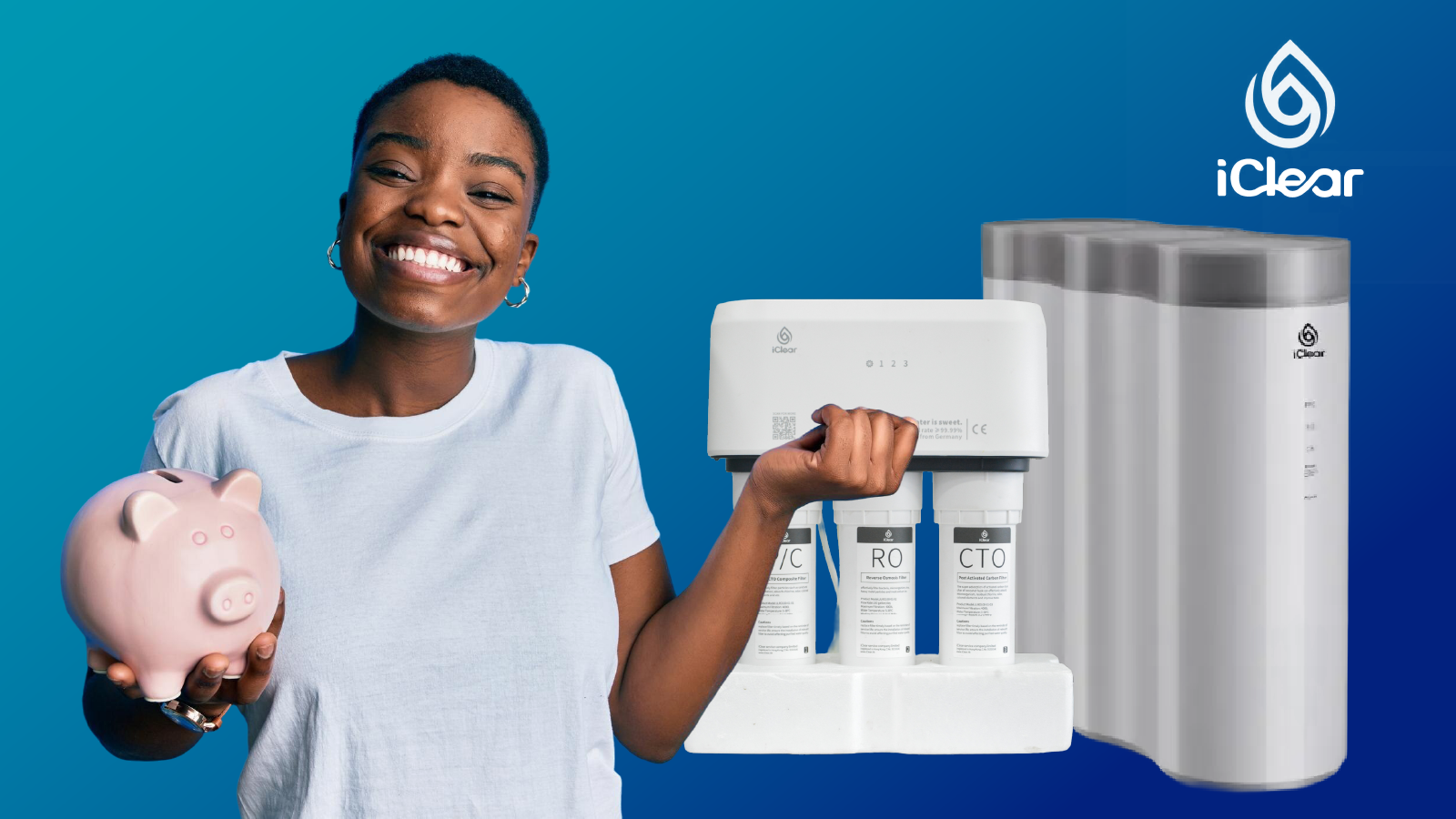
Clean, safe drinking water should be accessible to every home. That is why we design iClear water purifiers with affordability, reliability, and convenience at the center of our mission. As one of the most affordable domestic water purifiers in Kenya, iClear Kenya focuses on reducing cost barriers while maintaining strong purification performance. When customers search for a water purifier or compare water purifier prices in Kenya, they often discover that many brands are out of reach. Our goal is to change that permanently. Our price anchored model for Kenyan households We offer a range of RO water purifiers at price points designed to fit real household budgets. iClear Standard RO System Price KSh 25,000 This is our most affordable RO water purifier in Kenya. It delivers full reverse osmosis performance suitable for borehole and municipal water and includes free delivery and professional installation in Nairobi and Nakuru. iClear Desktop RO Price around KSh 40,000 Perfect for compact spaces while still delivering strong RO purification. iClear Premier RO Price KSh 49,000 A higher capacity purifier for families, offices, and small businesses. These prices position iClear among the most affordable RO water purifiers in Kenya, while still offering high-performance filtration and long-term support. Why our pricing matters The cost of bottled drinking water adds up quickly. Many families spend more on bottled water in six to twelve months than the price of an iClear water purifier machine. With affordable replacement filters and easy maintenance, the long-term cost per litre becomes significantly lower. We created this structure because most households need a reliable RO purification machine that can handle borehole water, high TDS levels, fluoride, and inconsistent municipal water quality. What makes our RO systems effective at low cost Our RO systems use multi-stage filtration, including sediment filters, carbon filters, and a reverse osmosis water filter to remove dissolved solids, bacteria, salts, and heavy metals. The technology is engineered for Kenyan water conditions and supported by a steady supply of replacement filters at transparent prices. What we include to keep ownership affordable We provide: • Free delivery nationwide • Free installation in Nairobi and Nakuru • Warranty coverage • Accessible filter replacement options • Customer support for all iClear Kenya buyers This reduces unexpected costs and ensures that owning an iClear water purifier remains economical for years. Who benefits most from the iClear Standard Families relying on borehole water Households buying bottled water regularly Tenants moving into new estates Anyone seeking a modern yet affordable water purification machine How to order You can order directly on our website: iclear.co.ke or through our e-commerce partners, including Jumia Kenya and Kilimall. We offer customer support and delivery services to ensure a smooth experience.
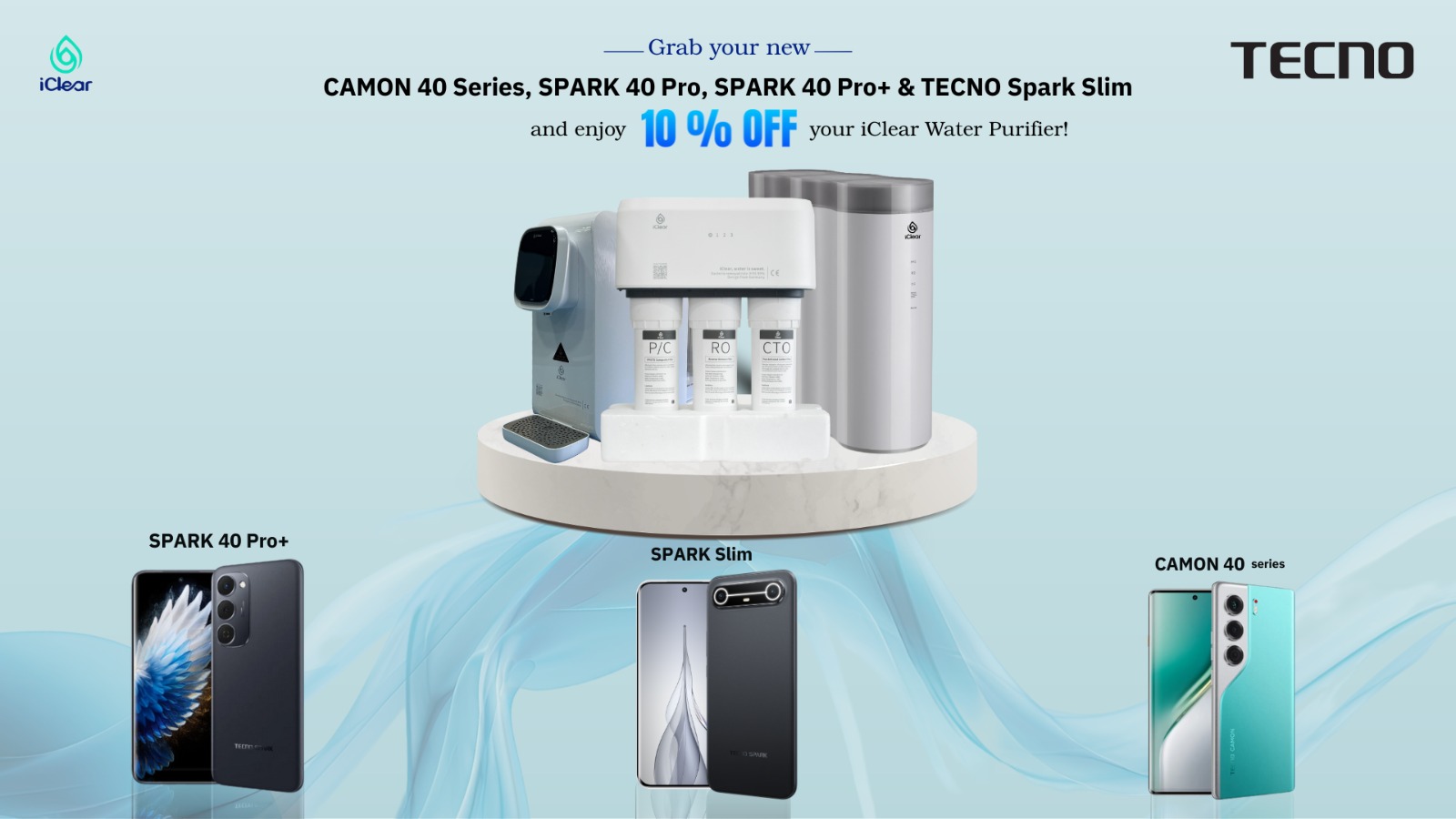
Innovation goes beyond new devices. Today, it blends everyday technology with home health solutions to improve overall lifestyle. This is exactly what the partnership between TECNO Kenya and iClear represents. By combining smartphone upgrades with discounted access to advanced water purification, customers enjoy more convenience and more value in a single purchase. Who is TECNO Kenya TECNO is one of Africa’s leading smartphone brands. Known for high quality devices at accessible prices, TECNO focuses on cameras, battery life, storage, design and performance. In Kenya, TECNO products such as the SPARK Series and CAMON Series are among the most widely used phones for both personal and business needs. TECNO’s mission is to deliver meaningful innovation to everyday users, and this aligns perfectly with iClear’s goal of improving home health through safe water access. Inside the TECNO x iClear Bundle A promotional campaign by TECNO Kenya offered a ten percent discount on iClear water purifiers when customers purchased selected TECNO smartphones including: - SPARK Slim - SPARK 40 Series - CAMON 40 Series This bundle allows customers to upgrade their digital lifestyle while upgrading their home water protection at the same time. It is a simple yet powerful value addition that turns one purchase into two life improvements. Why This Partnership Matters This collaboration shows how tech and home wellness can blend to improve modern living. - Customers enjoy more value during phone purchases - More households get access to safe purified water - iClear reaches more Kenyan families through trusted tech channels - TECNO enhances customer loyalty with meaningful added benefits A Path for Future Opportunities The success of this partnership signals the potential for more collaborations between iClear and major lifestyle brands. Future bundle opportunities could include device financing, loyalty programs, cross promotions and community campaigns that bring safe water solutions closer to even more households. Conclusion The partnership between TECNO and iClear shows that smart collaborations create smarter living. It connects digital convenience with home safety to offer unmatched value. As iClear continues to grow its partnerships, customers can expect more opportunities that make clean water an integrated part of everyday life.

Whether you prefer to try a water purifier in person or buy it online with home delivery, iClear’s partnerships with retail and e-commerce channels give you options. Retail showrooms let you experience the product, ask questions and see the build. Online platforms allow convenient purchase and often include seasonal promotions and delivery. Retail Showroom Option – HiHome Partnership with HiHome Appliances offers walk-in locations where you can see iClear units on display. For example, HiHome celebrated their new store opening with iClear as a feature Visiting a showroom allows you to: Physically inspect the unit’s build and design Ask technical questions about undersink / borehole setups Book installation at the same time Online Channel – Kilimall The e-commerce platform Kilimall lists iClear systems and runs large seasonal promotions. Online advantages include: Price comparisons across models Promo codes, flash sales and free delivery options Quick checkout and installation booking after purchase Clear specs visible before purchase Online Channel – Jumia Jumia also provides an official iClear storefront, offering a convenient place to compare available purifier models, review specifications and place orders with nationwide delivery. Through the iClear page on Jumia, buyers can: Browse verified iClear listings View model details, capacities and listed features Check ongoing promotions and platform-wide campaigns Complete purchase with secure checkout and select delivery options Choosing Jumia adds another layer of convenience, especially for customers already familiar with the platform’s shopping experience and buyer protection systems. How to choose your channel Prefer to test? Go showroom. Want convenience and compare deals? Go online. Either way, ensure installation and warranty are included and note payment options (bank card, instalment). FAQ Q: Does showroom purchase include installation? A: Yes, if you purchase through an approved dealer in the designated region, free installation in Nairobi/environs & Nakuru still applies. Confirm this at point of sale. Q: Is online purchase eligible for the same warranty and installation? A: Yes, purchase from official iClear listings, register your system and schedule installation. Q: Can I use a bank discount and buy via online or showroom? A: Yes, if you use the bank card connected to the offer and the sale is processed through a participating merchant. As long as the purchase is made via your bank cards from the selected banks. Conclusion Retail showrooms and online platforms give you flexible routes to buy an iClear purifier. Whether you want to feel the unit in person or click and schedule installation from home, just verify installation, warranty registration and payment terms before purchasing.

Most employers in Kenya invest in fancy coffee machines, ergonomic chairs, and team lunches, but overlook something far simpler that quietly shapes productivity: the water everyone drinks. Whether it’s from the dispenser in your office corner or a shared tap in the kitchenette, the quality of that water could be affecting energy, focus, and even morale more than you think. The Science of Hydration and Productivity Your brain is 75% water. Even mild dehydration, losing as little as 2% of body water can cause fatigue, headaches, and reduced concentration. In an office setting, that means slower responses, poor decision-making, and increased mistakes. A 2023 workplace wellness survey found that employees who drank purified water throughout the day reported 25% higher concentration levels than those relying on unfiltered or bottled dispenser water. The takeaway? Hydration isn’t just about drinking any water, it’s about drinking safe, clean water. Many offices assume their dispenser provides clean water, but most dispensers store, not purify. The Hidden Office Problem: Stale or Unsafe Water Office dispensers are often refilled from large plastic bottles that stay open or half-used for days. In humid office environments, that water can become a breeding ground for bacteria, especially if the dispenser nozzles aren’t regularly cleaned. Common issues include: Biofilm buildup inside taps and tanks Plastic leaching when bottles sit in sunlight Dust and microbial contamination from open-top designs And when employees unknowingly drink from those systems, they risk mild stomach discomfort, reduced focus, and energy dips that feel like “afternoon slumps.” Learn more about the hidden risks of stored and bottled water in our post: Hidden Water Quality Threats from Storage Tanks & Roof Systems in Kenyan Homes. How Water Quality Impacts Office Performance Bad water doesn’t just affect health it impacts the bottom line. Every time an employee takes a sick day or loses focus due to poor hydration, productivity drops. Unclean water also affects taste, discouraging people from drinking enough throughout the day. A well-hydrated team is: More alert and creative Less prone to headaches or fatigue More engaged and efficient That’s why many forward-thinking businesses in Kenya are switching to iClear Reverse Osmosis Purifiers, giving their teams clean, safe, and great-tasting water right from the tap. Why iClear Is the Smart Choice for Offices Our advanced purification systems: Remove bacteria, fluoride, chlorine, and micro-particles Deliver on-demand pure water, no more refilling bottles or waiting for deliveries Reduce plastic waste and office costs long-term With iClear, you don’t just get water, you get a wellness upgrade for your entire team. Discover why more offices are replacing dispensers with iClear systems in our post: The Real Cost of ‘Convenience’: How Dispensers Keep You Spending Every Month. Final Thought The next time you refill your office cup, ask yourself: Is your water keeping you productive, or draining you? Because when your team drinks better, they work better. And that’s where productivity truly begins.

They look modern, sleek, and easy to use. Walk into any Kenyan home or office, and chances are you’ll spot a water dispenser humming quietly in a corner. It feels like the simplest way to get “clean” water on demand. But here’s the truth most people never calculate, that convenience is costing you more than you think. What if the monthly refill you pay for could have already bought you your own source of pure water? The Convenience Trap When you first buy a dispenser, it seems affordable. You spend maybe KSh 8,000 -15,000 for the machine, then grab a few 20-litre bottles of water for around KSh 300 -400 each. It feels like a small cost, until you do the math. A family using 2–3 bottles a week ends up spending KSh 45,000 - 60,000 every year just on water refills. That’s enough to purchase and maintain a reverse osmosis (RO) purifier that delivers unlimited safe drinking water, straight from your tap. And even then, the costs don’t stop there: Electricity for heating and cooling Delivery or transport fees for bottle refills Replacement bottles when old one’s crack or leak By the time you realize it, your “budget-friendly” dispenser is draining your pocket every single month. To see how much a modern purifier can save you, read: Why Every Kenyan Home Needs an RO Purifier in 2025 What You’re Really Paying For Let’s break it down. Expense Type Dispenser Water Purifier Initial Cost = KSh 10,000 = KSh 25,000 Refills (per year) = KSh 50,000 — Electricity (hot/cold use) = KSh 2,400 = KSh 800 Annual Maintenance — = KSh 3,000 Total First Year = KSh 62,400 = KSh 28,800 Owning a purifier isn’t just cheaper, it’s freedom. No waiting for deliveries. No worrying about where your next refill comes from. Just press the tap and pour safe, fresh water instantly. The Hidden Hygiene Problem Most dispenser users assume bottled water is always safe, yet that’s rarely verified. Many refilling stations across Kenya reuse bottles dozens of times. After a while, these bottles develop fine cracks that trap bacteria, even after rinsing. If you’ve ever noticed a strange smell, film, or taste from your dispenser bottle, that’s a sign of bacterial buildup. Worse still, bottled water isn’t regulated as tightly as many assume. Some refill points use untreated tap or borehole water, simply running it through basic filters. That means you’re still drinking unpurified water at a premium price. For a deeper look the most common waterborne diseases in Kenya, read our related article: Do you know the most common waterborne diseases in Kenya? The Environmental Price of Bottled Dispensers Beyond cost, there’s the impact. Every time you order a refill, another plastic container is used, transported, and eventually discarded. Plastic gallon bottles take hundreds of years to break down, and Kenya’s waste systems can’t recycle them fast enough. With an iClear Water Purifier, you cut out all that plastic waste. No bottles, no deliveries, no emissions from transport, just pure water from your own supply. Real convenience isn’t buying plastic; it’s breaking free from it. The Smarter Alternative: Purify Once, Drink Forever With iClear Reverse Osmosis Water Purifiers, you don’t just save money; you gain confidence in every glass. Our systems: Remove fluoride, chlorine, and bacteria from tap or borehole water Restore natural taste with mineral balancing Deliver consistent purity year after year, with easy, low-cost maintenance And because you control the source, you never have to wonder what’s inside your bottle again. Final Takeaway Dispenser convenience is an illusion. You’re not paying for water, you’re paying for repetition. Every refill, every delivery, every week adds up. Switch to an iClear Water Purifier and enjoy pure, unlimited water that costs less, tastes better, and protects your family’s health and environment. Explore our full range of iClear Purifiers today and discover convenience that pays you back, not one that drains your wallet.
 Sustainability & Environment
 Product Guides
 Media & Press