Is Your New Borehole Actually Safe to Drink From?
21, Oct 2026
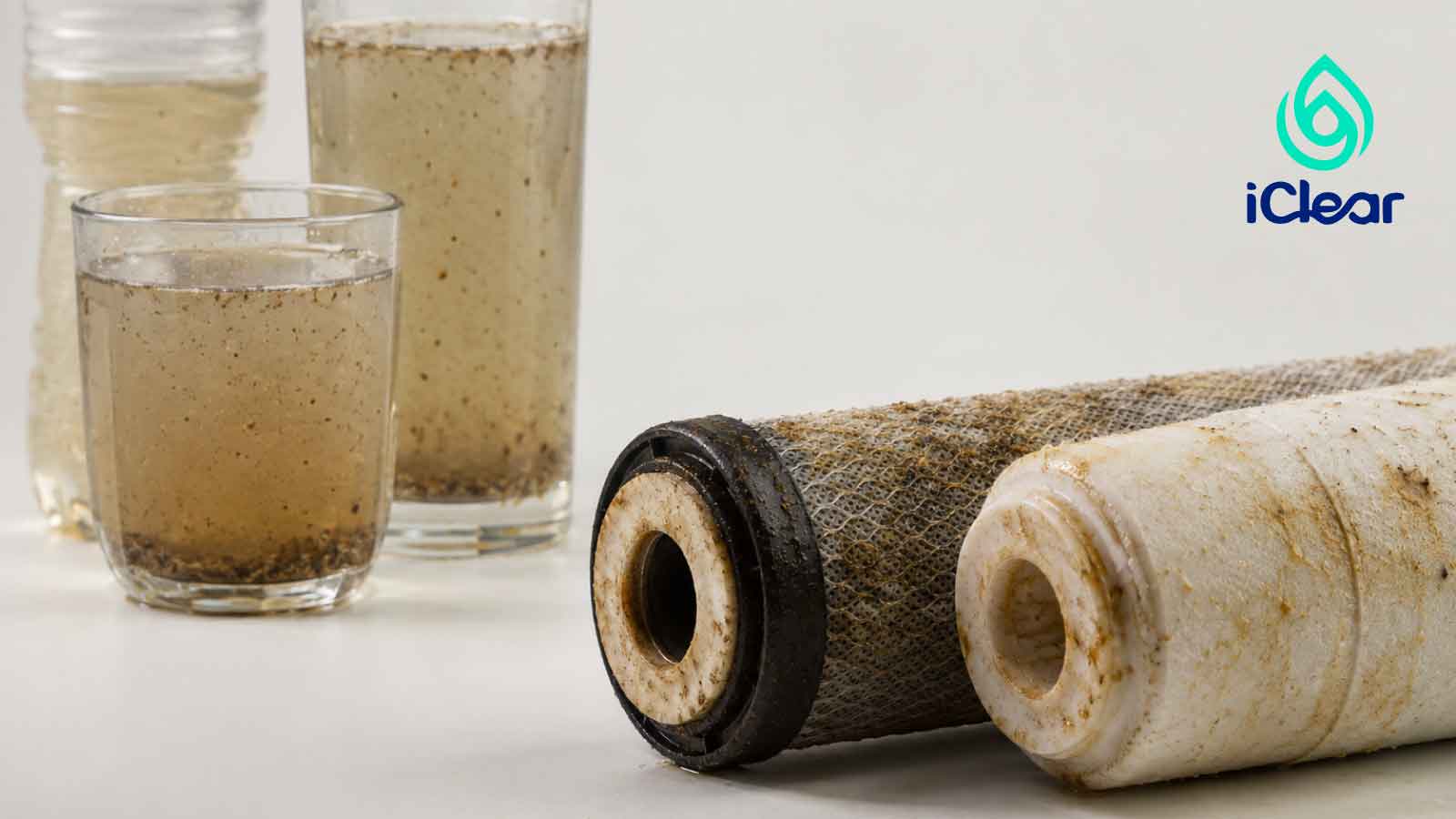
A clogged filter reduces flow rate and pressure, but a saturated carbon filter can release previously captured contaminants back into your water, a phenomenon known as - dumping. Replace on schedule, not just when pressure drops.
Water filters don't simply stop working when they reach the end of their service life. Depending on the filter type, expiry manifests in three distinct and increasingly serious ways:
As a sediment pre-filter loads with particles, flow restriction increases. You may notice slower fill times, reduced pressure at the tap, or the RO storage tank taking longer to refill. This is the most visible sign of a spent filter and the one most homeowners act on.
RO membranes have a finite capacity to reject dissolved solids. A membrane that has exceeded its service life shows declining rejection rates. A new membrane rejects >97% of total dissolved solids; a degraded one may only reject 80–85%, allowing fluoride, nitrates and heavy metals through at levels approaching the untreated source water.
Activated carbon filters work by adsorption: contaminants bind to the carbon surface. That surface area is finite. Once fully saturated, a carbon filter cannot adsorb any further contaminants, but temperature fluctuations, pH shifts or simply continued water flow can cause previously captured contaminants to desorb and re-enter the water stream. This means a severely overdue carbon filter can produce water with higher contamination than the unfiltered source.
|
Component |
Typical Lifespan |
Primary Failure Mode if Overdue |
|
PP sediment pre-filter |
3–6 months |
Restriction, bacterial growth in filter media |
|
Granular activated carbon |
6–12 months |
Contaminant dumping |
|
Carbon block post-filter |
6–12 months |
Taste degradation, chloramine breakthrough |
|
RO membrane |
18–36 months |
TDS rejection decline, membrane fouling |
|
Mineralisation / alkaline filter |
12 months |
Mineral depletion, acidic output |
Q: Can I just clean and reuse my RO membrane?
A: RO membranes are not designed to be cleaned and reused by end users. Chemical cleaning by trained technicians can extend membrane life in some commercial contexts, but household membranes should be replaced on schedule.
Q: How do I know what stage my system is at in its service life?
A: The best practice is to log the installation date of each filter stage. A TDS meter measured before and after the membrane gives a real-time indication of membrane health between service dates.
Never miss a filter replacement
iClear's service schedule ensures every filter stage is replaced at the right time, every time. Find out more.
Keywords: water filter replacement Kenya, expired water filter, RO membrane lifespan, filter replacement schedule

Water Purification & Treatment Specialists
David Ochieng, a water purification specialist at iClear Wellife Services Ltd, has extensive experience delivering safe and reliable water treatment solutions for homes and offices across Kenya.