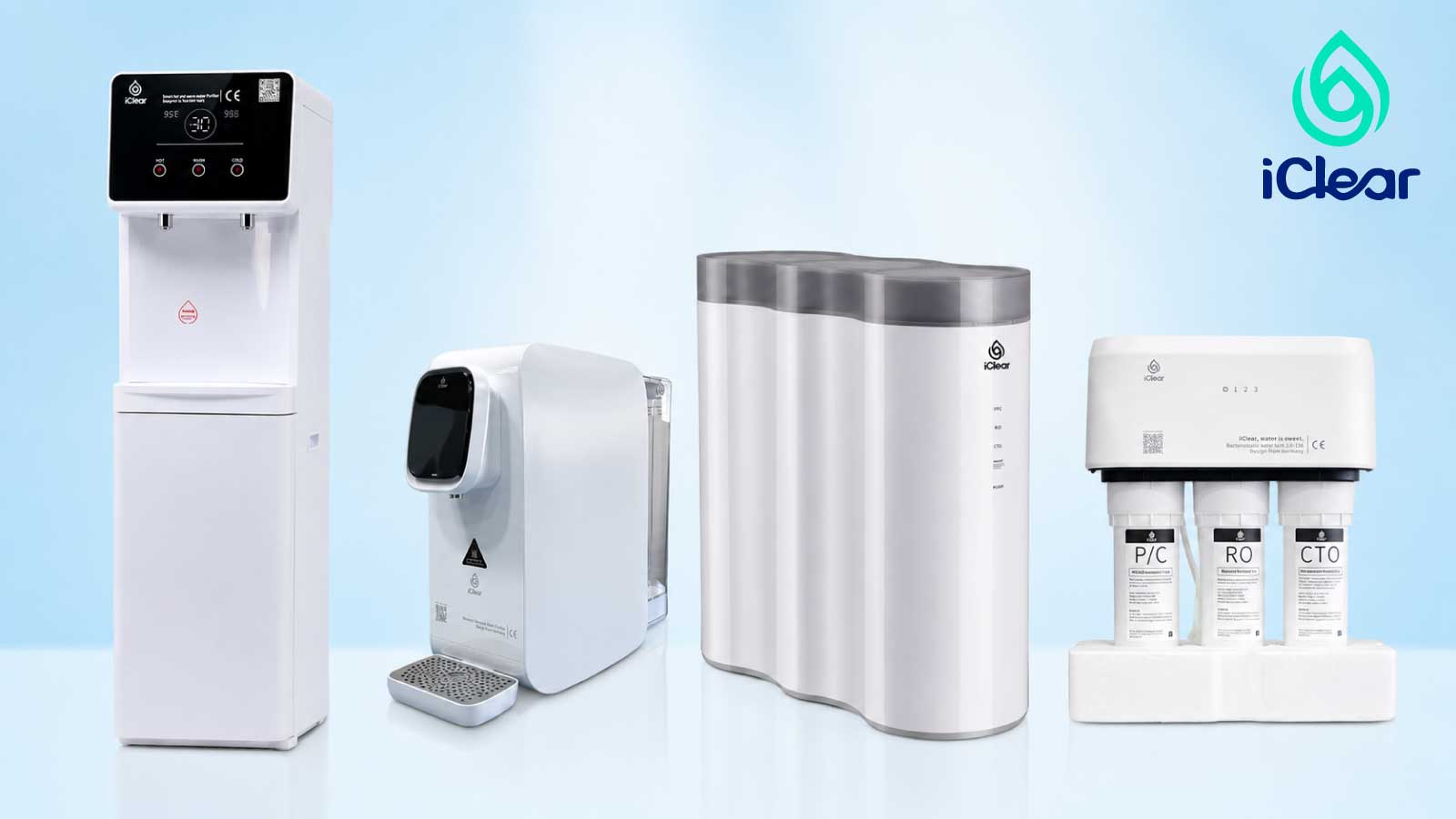

Naivasha and Nakuru sit at the heart of the Kenyan Rift Valley, surrounded by some of the country's most productive farmland and most dramatic landscapes. They also sit on top of geological formations that load groundwater with fluoride and dissolved minerals at levels far higher than most residents realise. If you live in either town and rely on a borehole, the standard filter you may have installed is almost certainly not enough. What the Rift Valley does to your water The Rift Valley's geology is unusually fluoride-rich. As rainwater and groundwater pass through these formations, they pick up fluoride at concentrations that, in parts of the region, are among the highest in the world. iClear's technical team has measured fluoride in Rift Valley boreholes at over 8.75 mg/L. The WHO safe limit for drinking water is 1.5 mg/L. That is not the only issue. The same geological processes contribute to elevated TDS readings, with our field team typically recording Naivasha boreholes between 300 and 600 ppm. Mineral content, including dissolved iron and other elements, is also consistently above what is found in non-Rift Valley boreholes. Both Naivasha and Nakuru appear on iClear's internal list of consistently high-fluoride areas. Both are towns where the standard household assumption, that borehole water is automatically cleaner than municipal water, breaks down completely. Why standard filters cannot solve a Rift Valley problem Most household filters sold in Kenya are designed around sediment, chlorine, and basic carbon filtration. They are adequate for municipal water with relatively low dissolved content. They are not adequate for Rift Valley borehole water. Sediment filters remove visible particles only Carbon filters improve taste but do not remove fluoride or salts Ceramic filters handle bacteria and sediment but not dissolved contaminants UV purifiers kill microbes but leave fluoride and TDS untouched None of these technologies, on their own, will protect a Naivasha or Nakuru household from the dominant water quality problems in the area. They miss exactly the things you most need removed. In the Rift Valley, the question is not whether your filter removes contaminants. The question is whether it removes the contaminants your specific water actually contains. Standard filters miss the ones that matter most here. Why Reverse Osmosis is the only sufficient answer Reverse Osmosis works at the molecular level. The RO membrane has pores small enough to block fluoride ions, dissolved salts, heavy metals, and bacteria, while letting water molecules pass through. This is the only commonly available technology that addresses the full range of contaminants found in Rift Valley borehole water. Across Naivasha and Nakuru installations, post-RO TDS typically drops dramatically below the pre-treatment reading. Fluoride drops to safe levels. The water comes out genuinely pure rather than just filtered. What iClear recommends for Rift Valley boreholes For a typical Naivasha or Nakuru household, the iClear Standard or iClear Premier provides the full Reverse Osmosis purification needed to handle the local water profile. For households with eight or more people or higher daily consumption, the Premier's 100-gallon-per-day capacity is the better fit. For smaller spaces, including offices and shared workspaces, the iClear Desktop provides the same RO purification in a portable form. All systems are KEBS-certified. Every iClear purchase includes free professional installation in Nairobi, its environs, and Nakuru. Naivasha is reachable from our Nairobi service base; Nakuru is directly covered by iClear's installation network. If your home is in the Rift Valley and runs on a borehole, you do not have a generic water filtration problem. You have a fluoride and TDS problem that only Reverse Osmosis solves. The standard filter you may have bought is not enough, and the longer you delay, the more your family is exposed to contaminants that cause real long-term harm. Get the right system for your Rift Valley borehole. Free delivery and professional installation in Nairobi and Nakuru. Visit the iClear shop. Keywords: Naivasha water, Nakuru water, Rift Valley borehole, fluoride Naivasha, water purifier Naivasha, water purifier Nakuru, iClear Kenya, Reverse Osmosis water filter Kenya
Bottled water has become a routine household expense for many Nairobi families. It feels manageable. A few hundred shillings here, a case there. The water is sealed, the brand is familiar, and it gets the family through the week. Until you actually add it up. The real annual cost Take a typical Nairobi family of four. Conservative estimate: two 20-litre dispensers per week, refilled at around 250 to 350 shillings each depending on the brand. Add in occasional smaller bottles for trips, lunch boxes, and visitors. Most families end up spending between 600 and 1,200 shillings per week on water. Annualise that. The low end is roughly 31,000 shillings a year. The high end is closer to 62,000. The average Nairobi family on bottled water is spending somewhere between 35,000 and 50,000 shillings every year just to drink water that should have been clean from the tap in the first place. Over five years, that is between 175,000 and 250,000 shillings. For a temporary solution. The other costs nobody adds up Beyond the cash, bottled water carries hidden costs. The time spent ordering, picking up, and storing it. The plastic waste, which Kenya banned at scale years ago and is still trying to clean up. The reliance on suppliers whose quality can vary. The inconvenience of running out at the wrong moment and scrambling for backup. There is also the false security. Many families assume bottled water means safe water. The reality is that the quality of bottled water depends entirely on the source and the producer. KEBS-certified brands are reliable. Unregulated refill stations less so. Yet the same family is often mixing both without realising it. What an alternative actually costs A KEBS-certified Reverse Osmosis system installed in your home is a one-time purchase. Prices range from around 25,000 shillings for the smaller home unit up to 49,000 for a larger system suitable for bigger households. Add periodic filter changes, which run a few thousand shillings a year. Compare that to 35,000 to 50,000 a year on bottled water, every year, indefinitely. The RO system pays for itself within twelve to eighteen months. Everything after that is pure savings, plus the benefit of cleaner water than most bottled brands actually deliver. Why the shift is happening now Kenyan families have done the math, and the conclusion is becoming hard to ignore. As the Daily Nation recently reported, more households are walking away from bottled water and refill dispensers in favour of permanent household purification systems. The decision is partly about cost. It is also about not wanting to depend on someone else's quality control for something as basic as drinking water. How to decide for your family Run the numbers. Track your bottled water spending for one month. Multiply by twelve. Compare against the upfront cost of a certified RO system plus filter changes. If your bottled water spend is over 25,000 shillings a year, the math will almost certainly favour the switch. If you are not sure where to start, request a home consultation from a certified provider. They will assess your water source, recommend the right system size for your household, and give you a transparent breakdown of total cost over five years. CALL TO ACTION Calculate what your family actually spends on bottled water each year. Then WhatsApp the iClear team and find out what a permanent solution would cost.
Kitengela has grown faster than almost anywhere in Kenya's commuter belt. Estates, schools, clinics, and businesses have arrived with the population. So have boreholes, since municipal supply struggles to keep pace. What most Kitengela residents do not realise is what those boreholes are actually delivering. Here is what iClear's field team measures. The numbers from Kitengela Across iClear installations and field tests in Kitengela this year, the typical borehole TDS reading sits between 450 and 600 ppm. That is at the high end of the acceptable drinking water range, and at the lower end of what professional bodies consider potentially harmful for sustained consumption. Kitengela boreholes routinely measure 450 to 600 ppm TDS, with consistently elevated fluoride. The combination of high TDS and high fluoride is one of the more challenging water profiles iClear's team encounters in Kenya. Kitengela also appears on iClear's internal list of consistently high-fluoride areas, alongside Naivasha, Nakuru, Kajiado, and Gilgil. This is not random. The geology of the area, where Kitengela sits relative to the Rift Valley's fluoride-rich rock formations, makes elevated fluoride in groundwater predictable rather than exceptional. What this means in practice For a Kitengela family relying on borehole water without proper purification, the daily consumption picture looks something like this: Higher-than-recommended dissolved solids, contributing to the salty or mineral taste many residents report Fluoride exposure that, over years, can cause dental fluorosis in children and skeletal fluorosis in adults Possible exposure to other dissolved contaminants common in Kitengela boreholes, including iron and dissolved minerals Children are particularly vulnerable. Their developing teeth and bones absorb fluoride at higher rates than adults. Years of consuming Kitengela borehole water without purification can result in visible dental damage by the time a child reaches school age. Why boiling and basic filters do not solve this Boiling water removes some bacteria but does nothing for fluoride, TDS, or dissolved minerals. In fact, boiling concentrates these dissolved contaminants by reducing water volume, which makes the problem worse over time. Basic carbon filters and sediment filters also leave fluoride and dissolved salts untouched. Most household filter products on the Kenyan market are not designed to handle Kitengela-level borehole water. If you live in Kitengela and your home runs on borehole water, the only widely available technology that comprehensively addresses both your TDS and your fluoride is Reverse Osmosis. Anything less is partial protection. What iClear has installed across Kitengela Across Kitengela installations, iClear's most commonly installed systems are the iClear Standard for typical households and the iClear Premier for larger families and small offices. Both are KEBS-certified Reverse Osmosis systems built to handle borehole water with the TDS and fluoride profiles our team measures across the area. In every installation, the post-RO water comes out dramatically below the pre-RO TDS reading, typically a reduction of 90% or more. Customers consistently report a noticeable difference in taste, and over time, in the appearance of their tea, the absence of scale on kettles, and the wellbeing of their families. Every iClear purchase includes free delivery and professional installation in Nairobi, its environs, and Nakuru. Kitengela is firmly within iClear's installation coverage area. Kitengela is not a borderline water area. It is a known high-TDS, high-fluoride zone where our field data consistently shows water above acceptable limits for long-term consumption. If your home runs on a Kitengela borehole, a Reverse Osmosis system is not a luxury. It is a baseline. Get your Kitengela borehole water tested and purified. Free delivery and professional installation in Nairobi and Nakuru. Visit the iClear shop. Keywords: Kitengela water, Kitengela borehole, water purifier Kitengela, water filter Kitengela, fluoride Kitengela, water purifier Kenya, iClear Kenya, Reverse Osmosis
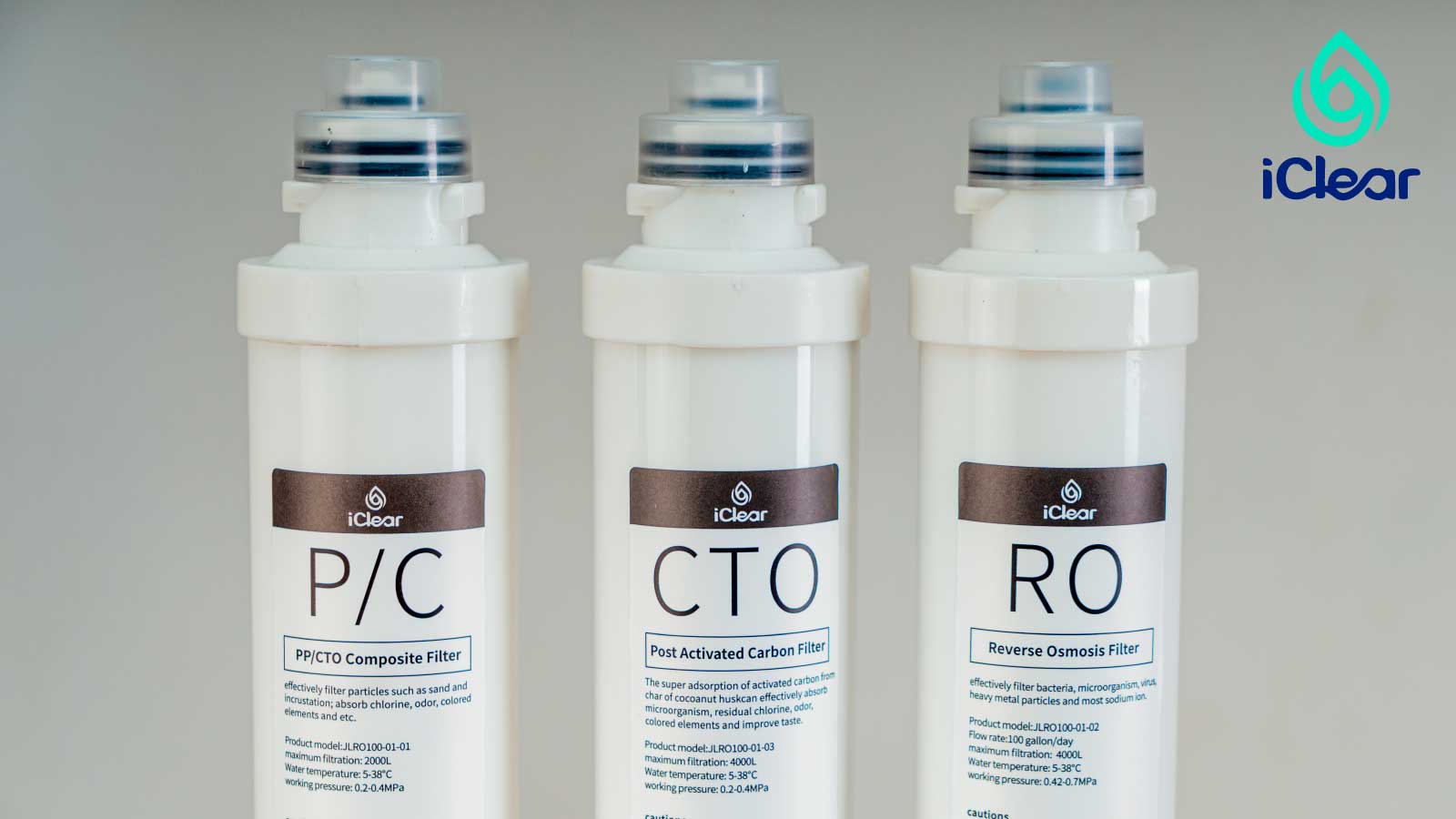
The term Reverse Osmosis sounds technical. The technology behind it is genuinely sophisticated. But the basic idea is simple enough that any family considering an RO system can understand exactly what they are buying and why it works. Reverse Osmosis, or RO, is a water purification process that forces water through an extremely fine membrane. The membrane has pores so small that water molecules can pass through, but almost everything else cannot. That includes fluoride, heavy metals, salts, bacteria, viruses, and the dissolved contaminants that boiling and standard filters fail to remove. The basic process, in plain terms A typical RO system in a Kenyan home runs water through several stages. First, a sediment filter catches visible debris like sand and rust. Second, an activated carbon filter removes chlorine and improves taste. Third, the water hits the RO membrane itself, which is where the real purification happens. Fourth, a post-filter polishes the water before it reaches your glass. Each stage handles something different. Together, they produce water that is genuinely clean: no fluoride, no heavy metals, no salts, no harmful microorganisms. The water that comes out is pure enough that it tastes noticeably different. Many first-time RO users describe it as the way water is supposed to taste. Why it matters for Kenyan water specifically Kenyan water carries a specific set of challenges. The fluoride in Rift Valley groundwater. The heavy metals from ageing Nairobi pipes. The salinity from Nairobi's eastern boreholes. The unpredictability of municipal supply quality. Most purification technologies handle one or two of these. RO handles all of them in a single process. That is why it has become the default for Kenyan households that want a permanent solution rather than a partial one. What RO does not do Worth being honest about the limits. RO produces some wastewater during the purification process. Older systems wasted a lot. Modern RO systems used by serious manufacturers have improved efficiency significantly, but there is still some waste. This is the trade-off for producing genuinely clean water. RO systems also need maintenance. Filters need replacing on a regular schedule. The membrane lasts longer but eventually needs servicing. A good supplier handles all of this with you as part of the package, so the homeowner does not have to think about it. How Kenyan households are using it RO is now the most widely installed certified household purification technology in Kenya. As featured in a recent Daily Nation article, more than 12,000 Kenyan homes, offices, schools, and clinics have already installed RO-based systems through iClear alone. The shift reflects a broader change in how Kenyan families think about water: not as something you boil and hope for the best, but as something you treat properly with the right technology. Choosing the right system for your home Three things matter when choosing an RO system. First, certification. KEBS certification confirms the system has been tested and meets Kenyan safety standards. Avoid uncertified units, no matter how cheap. Second, capacity. A small household needs a different size from a larger family or an office. Third, service. The system itself is only as good as the after-sales support behind it. Filters need changing. Membranes need attention. Pick a supplier who will be there for the long run. CALL TO ACTION Curious whether RO is right for your home? iClear's team will walk you through your options based on your water source and household size. WhatsApp to book a free consultation.
Across Nairobi, more households are relying on boreholes than ever before. In areas like Kahawa, Ruai, Embakasi, parts of Kiambu, Kitengela, and Athi River, boreholes are not a backup. They are the main source of household water. Municipal supply is unreliable, expensive, or simply unavailable, so the borehole has become the default. The problem is that not all borehole water is the same. Many Nairobi boreholes pull water with high dissolved mineral content, especially salts. This is what gives the water its slightly salty taste, its tendency to leave white stains on dishes and surfaces, and its short-term destruction of kettles, washing machines, and water heaters. What causes salty borehole water Salinity in borehole water comes from the geology underneath Nairobi. As rainwater filters down through soil and rock over years, it dissolves naturally occurring minerals. In Nairobi's eastern suburbs and the surrounding satellite towns, the rock formations are particularly mineral-rich, which is why boreholes in these areas often produce water with elevated total dissolved solids (TDS). High TDS is the technical measure of how much dissolved material is in the water. Drinking water is generally considered safe up to about 500 to 600 milligrams per litre of TDS. Many Nairobi boreholes test at well over 1,000, and some exceed 2,000. That is the threshold where water moves from inconveniently mineral-heavy to genuinely unhealthy. The real cost of salty water The financial damage adds up fast. A kettle ruined every six months costs three to five thousand shillings each time. A washing machine that fails two years early costs tens of thousands. Water heaters in particular suffer badly, with mineral scale building up on heating elements and forcing replacements long before the appliance should have failed. Then there is the health side. Sodium-heavy water is bad news for anyone managing blood pressure. High mineral content over years strains the kidneys. And the taste alone often pushes families to buy bottled water for drinking, which means paying twice: once for the borehole water, again for the bottled water you actually consume. What can actually fix it Standard filtration will not address salinity. Boiling makes it worse, not better. Water softeners that use ion exchange can reduce some hardness but do not remove the underlying salt content meaningfully. Reverse Osmosis is the only household technology that removes dissolved salts effectively. As the Daily Nation recently highlighted, more Nairobi households dealing with borehole water are turning to RO systems that strip out salts, fluoride, heavy metals, and other dissolved contaminants in one process. The investment pays for itself within a couple of years just from saved appliance replacements, never mind the health benefits. Before you call the technician Two simple checks tell you whether your borehole is salt-heavy. First, taste. Pure water has no taste. If yours has any saltiness, even faintly, you have a problem. Second, look at your appliances. Persistent white scale, glass surfaces that never quite come clean, and kettles that fail within months all point to high TDS. Get a TDS test. It costs almost nothing, takes seconds, and gives you a concrete number to work with. From there, you can make an informed decision about the right purification approach for your home. CALL TO ACTION Live in Kahawa, Ruai, Embakasi, Kitengela, or anywhere with a borehole? iClear runs free water tests across Nairobi. WhatsApp the iClear team and book a visit this week.
There is no shortage of opinions about Kenyan water quality. What there is a shortage of is data. Across the towns where iClear's technical team has tested water this year, we have collected real Total Dissolved Solids readings from real boreholes, taps, and storage tanks. Here is what those numbers show. What TDS means and why it matters Total Dissolved Solids, or TDS, is a measure of everything dissolved in your water, including salts, minerals, metals, and other substances. It is one of the most useful single indicators of overall water quality, because it captures the contaminants that visual inspection misses entirely. As a general guide: Below 300 ppm is generally considered excellent for drinking water 300 to 600 ppm is acceptable, with rising concerns at the higher end Above 600 ppm typically signals significant dissolved contamination Above 1,000 ppm is generally not recommended for drinking without treatment These are general benchmarks. The specific composition of the TDS, fluoride, salts, metals, also matters significantly for health. What our field team has actually measured Here are the typical TDS readings from iClear's field testing across Kenyan towns this year: Karen: Typical range: 150 to 180 ppm. The lowest TDS in our regular testing. Reflects Karen's mix of newer infrastructure and relatively well-maintained boreholes. Ruiru: Typical range: 220 to 300 ppm. Within acceptable drinking water range but worth filtering, particularly for dissolved minerals. Naivasha: Typical range: 300 to 600 ppm. The upper end is borderline. Naivasha is also a high-fluoride area, which compounds the TDS concern. Kitengela: Typical range: 450 to 600 ppm. Consistently elevated. Boreholes in this area frequently combine high TDS with elevated fluoride. Kajiado: Typical range: 450 to 600 ppm. The highest TDS readings our team has consistently recorded. Kajiado County contains some of the most challenging borehole water in our service area. The numbers vary by source, by season, and by individual borehole. What is consistent is that without testing, most households have no idea where their water sits on this scale. What these numbers tell you If you live in Karen or Lavington on municipal supply, your TDS is probably acceptable, though it does not capture chlorine, bacteria from storage tanks, or other concerns. If you live in Kitengela or Kajiado on a borehole, your TDS is almost certainly elevated, and likely paired with elevated fluoride or other dissolved contaminants. In every case, the only way to know your specific reading is to test your specific water source. The figures here are typical ranges from our field experience. Your individual borehole or tank may sit at the higher or lower end. What an iClear system does to these numbers A Reverse Osmosis system reduces TDS dramatically, typically by 90% or more. A borehole reading of 600 ppm before treatment will commonly come out below 50 ppm after RO. That is the difference between water that is borderline and water that is genuinely pure. The iClear Standard and iClear Premier are designed specifically for the kinds of TDS levels our field team encounters across Kenya, including the high-end Kitengela and Kajiado readings. The honest TDS map of Kenya is not one of clean tap water and dirty rivers. It is one of dramatically different readings town by town, borehole by borehole, with most households having no idea where they sit on the scale. The first step is knowing your number. The second is doing something about it. Find out where your water sits on the TDS map. Free delivery and professional installation in Nairobi and Nakuru. Visit the iClear shop. Tags: TDS Kenya, TDS borehole water, Kitengela water, Kajiado water, Naivasha water, Karen water, Ruiru water, water purifier Kenya, iClear Kenya
Drive through Nakuru, Naivasha, or Eldoret, and you will see something many Kenyan children grow up assuming is normal. Stained teeth. Mottled enamel. Adults whose smiles carry permanent brown marks from childhood. The cause is often the same: fluoride. Fluoride occurs naturally in groundwater across the Rift Valley. It is part of the geology, leaching into water as it passes through volcanic rock formations. The World Health Organization sets a safe limit of 1.5 milligrams per litre. In parts of Kenya, groundwater fluoride levels exceed that figure several times over. What fluoride does to the body over time Low levels of fluoride are actually beneficial. They strengthen tooth enamel and prevent decay, which is why fluoride is added to toothpaste. The problem is dose. At elevated levels, fluoride causes dental fluorosis. The visible staining of teeth is the most obvious sign, but it reflects deeper damage to enamel structure. In more severe cases, prolonged exposure leads to skeletal fluorosis, where bones become dense but brittle, joints stiffen painfully, and movement becomes restricted. Children are especially vulnerable because their teeth and bones are still developing. There is also a growing body of research linking high fluoride exposure to thyroid dysfunction and hormonal interference. Kenyan families in affected areas are dealing with health issues whose root cause has been sitting in their drinking water for generations. Which areas are most affected Fluoride contamination is most concentrated in the Rift Valley belt, including Nakuru, Naivasha, Baringo, Eldoret, and surrounding regions. Boreholes drilled in these areas often pull water with fluoride levels well above safe limits. Municipal supply in some of these towns is also affected because it sources from the same groundwater. Even outside the Rift Valley, fluoride is worth checking for. Some boreholes in parts of Kiambu, Machakos, and surrounding counties also carry elevated levels. Why boiling will not help This is the part many families miss. Fluoride is a dissolved mineral. Boiling does not remove it. If anything, boiling slightly concentrates fluoride in the remaining water as some of it evaporates. The same applies to standard filter jugs and ceramic candle filters. They are not designed to address dissolved contaminants like fluoride. The only household-level technology that reliably removes fluoride is Reverse Osmosis. As featured in a recent Daily Nation article on Kenya's growing demand for safe water, RO systems are now being installed in households across the Rift Valley and beyond, precisely because they address fluoride at the source: the glass on the kitchen counter. What every Rift Valley household should do If you live anywhere in the Rift Valley fluoride belt, get your water tested. Most municipal water authorities can provide a basic test, or a private lab can do a full breakdown for a reasonable fee. Knowing your fluoride level is the first step. If the test shows elevated levels, do not wait. The damage from fluoride is cumulative, which means every year of exposure adds up. Investing in an RO system early saves a generation of dental and skeletal health. CALL TO ACTION If you live in Nakuru, Naivasha, Eldoret, or anywhere in the Rift Valley, iClear can help. KEBS-certified RO systems remove fluoride completely. WhatsApp the iClear team to book a water test.
Most Kenyan households have a water safety routine. Some boil every morning. Others have a filter jug on the counter or a ceramic candle filter on the sink. Many buy bottled water by the case or send someone to refill twenty-litre dispensers from the local water shop. These habits feel responsible. They take time, effort, and money. The uncomfortable truth is that each one only solves part of the problem. What boiling actually does Boiling is excellent at one thing: killing biological contaminants. Bacteria, viruses, and parasites cannot survive a rolling boil. That is genuinely important, especially in areas where sewage contamination is a risk. Boiling does not remove fluoride. It does not remove lead, mercury, or other heavy metals. It does not remove salts, nitrates from agricultural runoff, or industrial chemicals. In fact, by evaporating some of the water, boiling can slightly concentrate these contaminants in what is left behind. Boiling is necessary in some contexts. It is just not sufficient on its own. What filter jugs and candle filters do The popular jug filters and ceramic candle filters found in many Kenyan kitchens work by passing water through a carbon-based filter that removes chlorine taste, some sediment, and certain organic compounds. They are better than nothing, but they are not designed to remove dissolved contaminants like fluoride, heavy metals, or salts. There is also the maintenance problem. Filter cartridges have a lifespan, and once expired, they can actually become a breeding ground for bacteria. A jug filter that has not been changed in months may be doing more harm than good. What bottled and refilled water really means Bottled water is the catch-all solution for many Kenyan families. It feels safe because it is sealed and branded. The reality is more variable. The quality of bottled water in Kenya depends on the source, the processing, and the regulation of the specific producer. KEBS-certified brands are reliable. Unregulated refill stations are not always. There is also the cost. A family of four spending two hundred to four hundred shillings a week on bottled water is spending ten to twenty thousand shillings a year, year after year, on a temporary solution. That money does not buy clean water. It rents it. The shift toward something more permanent More Kenyan households are catching on. As the Daily Nation recently reported, families across the country are moving away from these temporary fixes and toward installed, certified water purification systems that address the contaminants boiling and filter jugs cannot reach. Reverse Osmosis (RO) technology, in particular, has become the standard for households serious about long-term water safety. The shift is not about luxury. It is about recognising that the routines families have relied on for years were never designed to handle the contaminants Kenyan water actually carries. CALL TO ACTION Stop renting clean water. iClear's KEBS-certified RO systems remove what boiling, filtering, and bottled water cannot. WhatsApp the iClear team to book a consultation.
Within the growing customer base of iClear, one customer segment stands out for a particular reason: dental clinics. The dentists installing iClear systems are not making a casual decision. They see the consequences of Kenya's water problem every day in their patients' mouths. When the people whose job is to treat dental damage choose iClear, it is worth paying attention to why. Who understands Kenya's water problem better than dentists? Dental fluorosis, the brown staining, mottling, and weakening of tooth enamel caused by long-term fluoride exposure, is one of the most visible consequences of Kenya's borehole water problem. In fluoride-affected parts of the country, dentists see it across patients of every age. Children with permanently discoloured teeth before they have lost their first set. Adults with weakened enamel that no amount of treatment can fully restore. Dentists know what fluoride does. They also know what the WHO safe limit is, 1.5 mg/L, and how routinely Kenyan borehole water exceeds it. Our field team has measured fluoride above 8.75 mg/L in parts of the Rift Valley, more than five times the safe limit. For a dental professional, that number is not abstract. Dentists are the people who see Kenya's fluoride problem written into the bodies of their patients. When they install water purifiers in their own clinics and homes, they are acting on knowledge most Kenyans never see. Why a dental clinic specifically needs purified water Beyond the personal awareness, dental clinics have practical reasons to install water purification. Dentistry involves water in nearly every procedure: rinsing, cleaning, cooling instruments, irrigating treatment sites. The quality of that water matters clinically. Contaminated water exposes patients during procedures Dental equipment is sensitive to mineral buildup and sediment Patient confidence depends on visible cleanliness and trust Staff drinking water throughout the day is a workplace health issue A clinic that takes water seriously is signalling something to its patients about the standard of care it provides. Many of the dental clinics installing iClear systems do so as much for the visible commitment to hygiene as for the technical benefit. What dental professionals know that most Kenyans do not Talk to a dentist in Naivasha, Nakuru, or Kajiado, and they will tell you the same thing iClear's technical team has been measuring. Fluoride in local boreholes is consistently high. Patients arrive with visible fluorosis. The damage is permanent. And the only way to prevent it for future generations is to stop drinking water with elevated fluoride levels. Most household filters do not remove fluoride. Boiling does not remove fluoride. The only reliable technology for fluoride removal in domestic and clinical settings is Reverse Osmosis. This is one of the reasons dental clinics are choosing iClear specifically. How iClear serves dental clinics and similar settings For dental clinics, the iClear Office Water Purifier provides continuous high-quality purified water suitable for both patient-facing work and staff use. The bottleless RO and UV system connects directly to the supply, eliminates bottled water logistics, and includes free professional servicing every four months as part of an annual agreement. For smaller practices, the iClear Standard and iClear Desktop provide the same KEBS-certified RO purification at a scale suited to lower daily volumes. Every iClear installation includes free delivery and professional installation in Nairobi, its environs, and Nakuru. When the people who treat the consequences of bad water choose to install water purifiers, it is not a coincidence. It is a signal. Dental clinics in Kenya are not buying iClear systems because of clever marketing. They are buying them because they see, every day, what happens to people who do not have one. Bring clinical-grade purified water to your practice. Free delivery and professional installation in Nairobi and Nakuru. Visit the iClear shop. Tags: dental clinic water purifier Kenya, fluoride teeth Kenya, dental fluorosis, water purifier Kenya, office water purifier Kenya, iClear Kenya, Rift Valley water
Across all iClear installations in Nairobi and beyond, one issue keeps appearing in the field reports: water that arrives at the property reasonably clean and becomes contaminated inside the customer's own storage tank. It is one of the most overlooked water safety problems in Kenya, and it is happening in homes across the country right now. The problem nobody warns you about Most Kenyan households depend on water storage tanks, either roof-mounted or ground-level, to manage intermittent municipal supply. The assumption is that if you fill your tank with reasonably clean water, what comes out of your tap will be reasonably clean too. Our field data tells a different story. When iClear's team tests water before installation, the difference between what enters a home and what reaches the kitchen tap can be significant. Tanks that have not been properly cleaned and maintained for months or years act as breeding grounds for sediment, biofilm, bacteria, and rust. In Syokimau, our team finds that water quality is often more compromised by storage tank contamination than by the municipal supply itself. The water arriving at the property may be acceptable. The water reaching the tap is not. What our team actually finds in old storage tanks Across installations where the existing tank has not been recently cleaned, the contents typically include some combination of: Sediment accumulation at the base of the tank Rust particles from older tanks or aged plumbing connections Biofilm, a layer of bacteria embedded in a protective matrix on internal surfaces Algae growth, particularly in tanks exposed to sunlight Insects, dust, and debris from unsealed or poorly sealed tank lids Stagnant water in tanks that drain slowly or unevenly None of this is visible from the outside of the tank. The water can look completely clear when poured into a glass and still carry the bacterial and chemical contamination accumulated in the tank. Why this matters more in Kenya than people think Kenya's water supply patterns make storage tanks more central to daily life than in many other countries. With intermittent municipal supply, most households rely on tank storage for days at a time. That means the water sitting in your tank has more opportunity to deteriorate than water that flows directly from supply to tap. And in Kenya's warm climate, bacterial growth accelerates. Water that might stay reasonably clean for a few days in a cooler climate can become a microbial concern in significantly less time inside a sun-warmed roof tank. Storage tank contamination is one of the most invisible water safety problems in Kenyan homes. The supply pipe is not the only point of contamination. Your own tank often is. How iClear addresses this An iClear water purifier is installed downstream of your storage tank, treating water at the point of use rather than at the point of supply. This means it removes contamination introduced inside your tank, not just contamination that arrived from outside. Whether your home uses the iClear Standard, the iClear Premier, or the iClear Desktop, the purification happens after the water has passed through your tank and your pipework. That is the only point where you can be certain of removing what your tank has added. Every iClear installation also begins with a check of your existing setup. Our field team frequently flags storage tank issues that customers were unaware of, and recommends tank cleaning or treatment alongside the new system where needed. Filtering the water that arrives at your property is only useful if your own tank is not the contamination source. Point-of-use purification, after the tank and right before you drink, is the only way to be certain. That is exactly what an iClear system delivers. Make sure your tank is not contaminating your water. Free delivery and professional installation in Nairobi and Nakuru. Visit the iClear shop. Tags: storage tank water contamination Kenya, water tank contamination Nairobi, point of use water purification, iClear Kenya, water purifier Kenya, Syokimau water, water tank cleaning Kenya
Health & Wellness
Health & Wellness
Water Quality Insights
Health & Wellness
Product Guides
Water Quality Insights
Health & Wellness
Water Quality Insights