
Why Doctors in Kenya Are Starting to Ask About Your Water
17, Sep 2026
Ask a Kenyan how they get their drinking water, and the answer will usually involve some combination of tap, borehole, bottled, or refilled twenty-litre dispensers. Ask them whether they trust it, and the answer becomes hesitant. Most people boil. Some filter. A growing number buy bottled water by the case. The shared instinct is that something is not quite right, even if nobody can say exactly what.
That instinct is correct. Across Nairobi, Nakuru, and many other parts of the country, the water that arrives at the tap can carry contaminants that no amount of boiling will fix. Understanding what those contaminants are, and where they come from, is the first step to actually doing something about them.
The contaminants nobody talks about
Three issues stand out in the Kenyan context. The first is fluoride. In parts of the Rift Valley, naturally occurring fluoride in groundwater sits well above the safe limits set by the World Health Organization. Long-term exposure has been linked to dental fluorosis, where teeth stain and weaken, and skeletal fluorosis, where bones become brittle and painful.
The second is heavy metals. Older pipes across Nairobi, especially in established estates with infrastructure dating back decades, can leach lead and other metals into water that was perfectly clean when it left the treatment plant. Lead is particularly dangerous for children, where even small amounts can affect brain development.
The third is salinity and hardness. Borehole water across Nairobi, Kiambu, and surrounding areas often carries high dissolved mineral content. The water tastes off, leaves white stains on dishes, ruins kettles and washing machines, and over time damages the household appliances families spend good money on.
Why this matters now
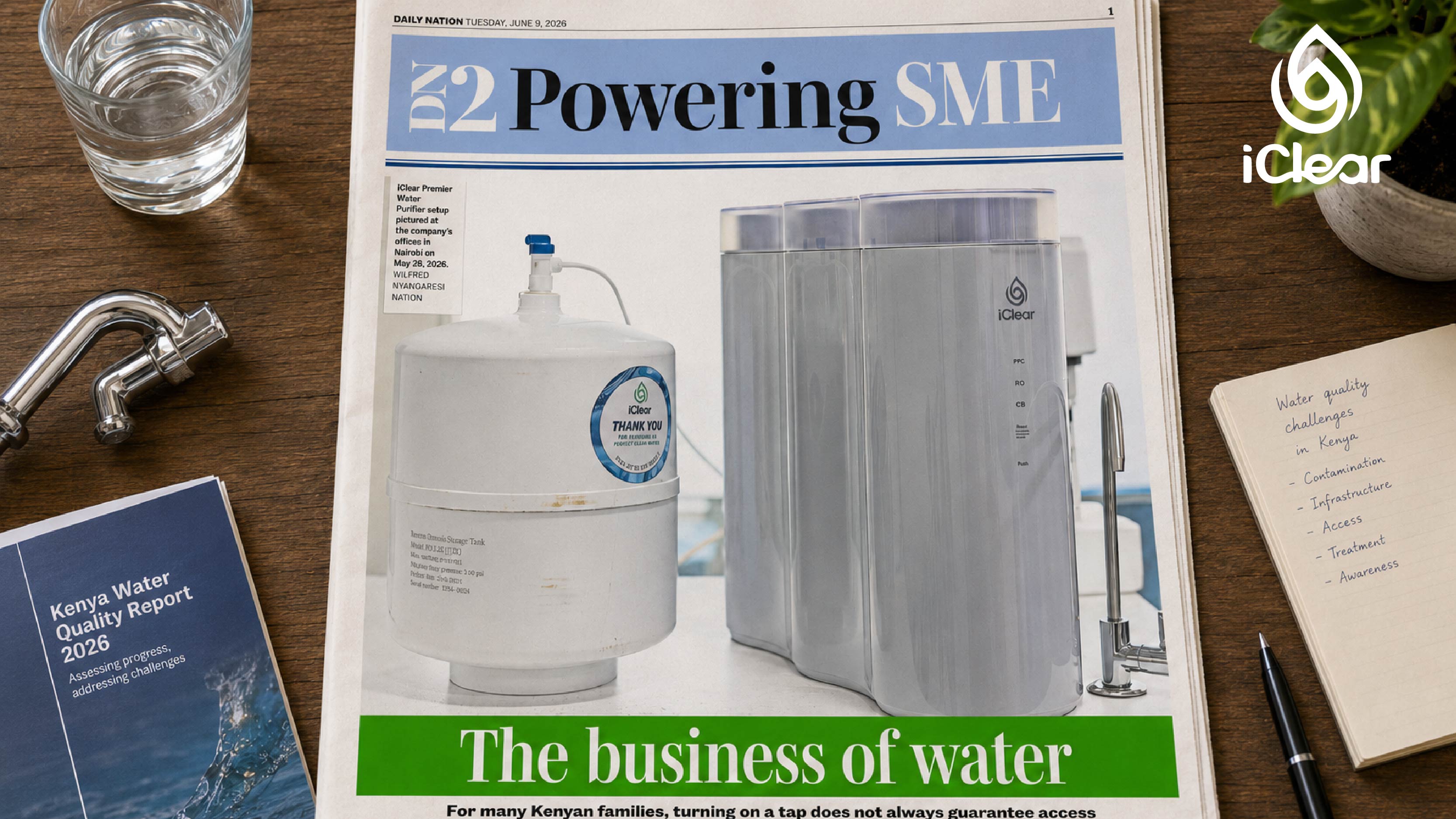
Kenyan households are starting to take this seriously, and the conversation is becoming public. A recent Daily Nation feature on the growing demand for safe water documented how families across the country are moving away from temporary solutions like bottled water and toward long-term household purification systems. The shift is not driven by fashion. It is driven by parents watching their children get sick, couples worried about fertility, and ordinary Kenyans tired of paying for refills that never solve the underlying problem.
What is changing is awareness. For decades, the assumption was that treated water meant safe water. That assumption no longer holds, and the families who have figured this out are quietly doing something about it.
What you can do this week
Three small actions make a real difference. First, find out where your water actually comes from. Is it municipal, borehole, or a tanker delivery? Each source carries different risks. Second, look at your kettle and your appliances. White scale, persistent staining, or appliances that fail faster than expected often point to hard water that needs addressing. Third, ask yourself the harder question. If your water carried a contaminant boiling cannot remove, would you know?
Most Kenyan families have never been given the information to answer that last question. That is what needs to change.
Find out what is actually in your water.
Free delivery and professional installation in Nairobi and Nakuru. Visit the iClear shop.

Water Purification & Treatment Specialists
David Ochieng, a water purification specialist at iClear Wellife Services Ltd, has extensive experience delivering safe and reliable water treatment solutions for homes and offices across Kenya.