
Why Doctors in Kenya Are Starting to Ask About Your Water
17, Sep 2026
Quick Answer:
The 10 Points: 1. Know your water source. 2. Match the technology to the source. 3. Verify KEBS certification. 4. Confirm what the price includes. 5. Check installation terms. 6. Match capacity to household size. 7. Confirm filter replacement costs and schedule. 8. Check the warranty in writing. 9. Verify after-sales support exists. 10. Fit the machine to your living situation. Details on each below.
Borehole, municipal, rainwater, or a mix: every buying decision follows from this. Our field data shows Kenyan borehole water routinely carries 450 to 600 ppm TDS in towns like Kitengela and Kajiado, and Rift Valley fluoride above 8.75 mg/L against a 1.5 mg/L WHO limit. Municipal water carries different risks: pipes, chlorine, and storage tank contamination.
Carbon and ceramic handle taste and sediment. UV handles microbes. Only Reverse Osmosis removes fluoride, dissolved salts, and heavy metals. If your water includes any borehole component, RO is the requirement, not the upgrade.
Ask for the certification paperwork, not a verbal assurance. KEBS certification means the Kenya Bureau of Standards has independently tested the product. Every iClear product carries it; any credible provider can show theirs.
The single biggest hidden cost in the Kenyan market is installation quoted separately from the machine. Get the total installed price in writing before comparing anything. iClear's 2026 prices (Standard KSh 25,000, Desktop KSh 40,000, Premier KSh 49,000, Office KSh 90,000 per year) all include delivery and professional installation in Nairobi, its environs, and Nakuru.
An incorrectly installed RO system leaks, underperforms, or fails early. Confirm the installer is trained on the specific system, not a general plumber seeing it for the first time. A standard iClear home installation takes 30 to 45 minutes and is done by iClear's own technicians.
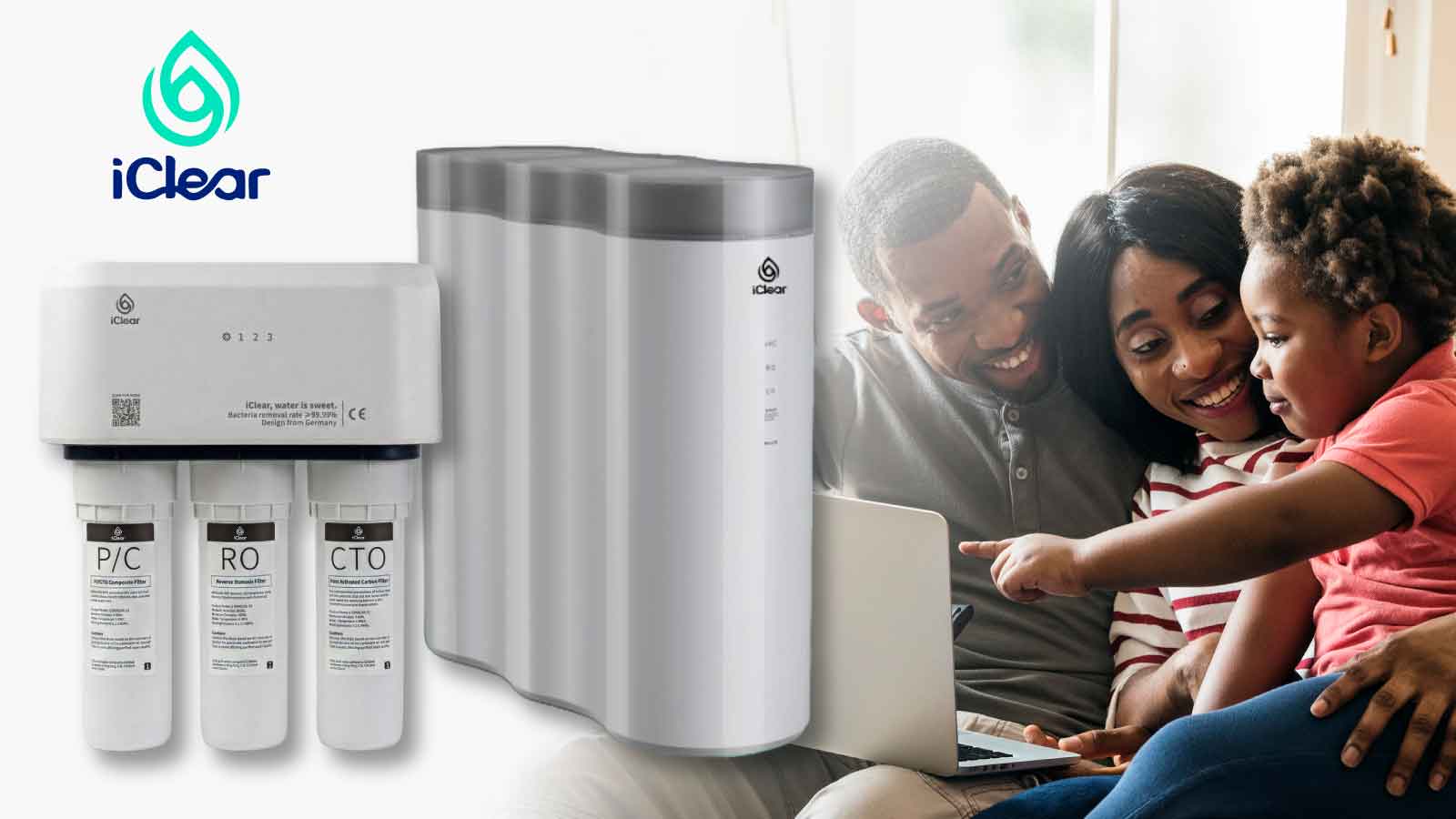
Undersized systems bottleneck; oversized ones waste money. As a guide: 1 to 3 people suit a 4-litre portable unit, typical families a standard plumbed system, households of 8 to 15 need high-capacity output like the Premier's 7,200 litres per day, and offices of 20 to 30 need continuous-flow systems.
Every purifier needs scheduled filter changes. Ask for the replacement schedule and prices upfront. When iClear technicians open filters that were never serviced, they find years of accumulated sediment, rust, and expired cartridges: the machine kept dispensing while the protection quietly ended.
iClear home systems carry a 1-year warranty. Whatever brand you buy, confirm the warranty terms in writing and be sceptical of any provider that cannot produce clear documentation.
Call the support line before you buy, not after. A provider you cannot reach as a prospect will not be easier to reach as a customer. iClear provides ongoing maintenance support across its range, with servicing every four months built into the office agreement.
Homeowners: plumbed under sink systems (Standard or Premier) give the best capacity and cost per litre. Renters: the no-plumbing Desktop moves with you. Offices: the bottleless Office system replaces the cooler and its costs entirely.
Key Finding: Nine of these ten points can be verified before you spend a shilling: the source test, the certification papers, the installed price, the installer, the capacity spec, the filter schedule, the warranty, the support line, and the fit. The only point that requires trust is the technology working as claimed, and that is exactly what KEBS certification exists to verify for you.
Q: What should I check before buying a water purifier?
A: Ten things: your water source, the matching technology, KEBS certification, the all-inclusive price, installation terms, capacity fit, filter replacement schedule and cost, written warranty, reachable after-sales support, and fit to your living situation (owned home, rental, or office).
Q: What is the most common mistake buyers make?
A: Comparing machine prices without confirming what they include. A cheaper machine with paid installation, unpriced filters, and no support routinely costs more within a year than a complete offer like iClear's, where delivery, installation, and warranty are inside the listed price.
Q: Which purifier should a first-time buyer in Kenya choose?
A: For a typical owned home, the iClear Standard (KSh 25,000, installed free in Nairobi and Nakuru) covers borehole, salty, and municipal water with full RO and a 1-year warranty. Renters should start with the portable iClear Desktop instead.
Buy once, buy right.
Free delivery and professional installation in Nairobi and Nakuru. Visit the iClear shop.
Keywords: points to be considered while buying water purifier, buying water purifier Kenya, water purifier buying guide, how to choose water purifier, iClear Kenya, water purifier Kenya

Water Purification & Treatment Specialists
David Ochieng, a water purification specialist at iClear Wellife Services Ltd, has extensive experience delivering safe and reliable water treatment solutions for homes and offices across Kenya.