Why Is My RO Purifier Producing Less Water Than It Used To?
22, Oct 2026
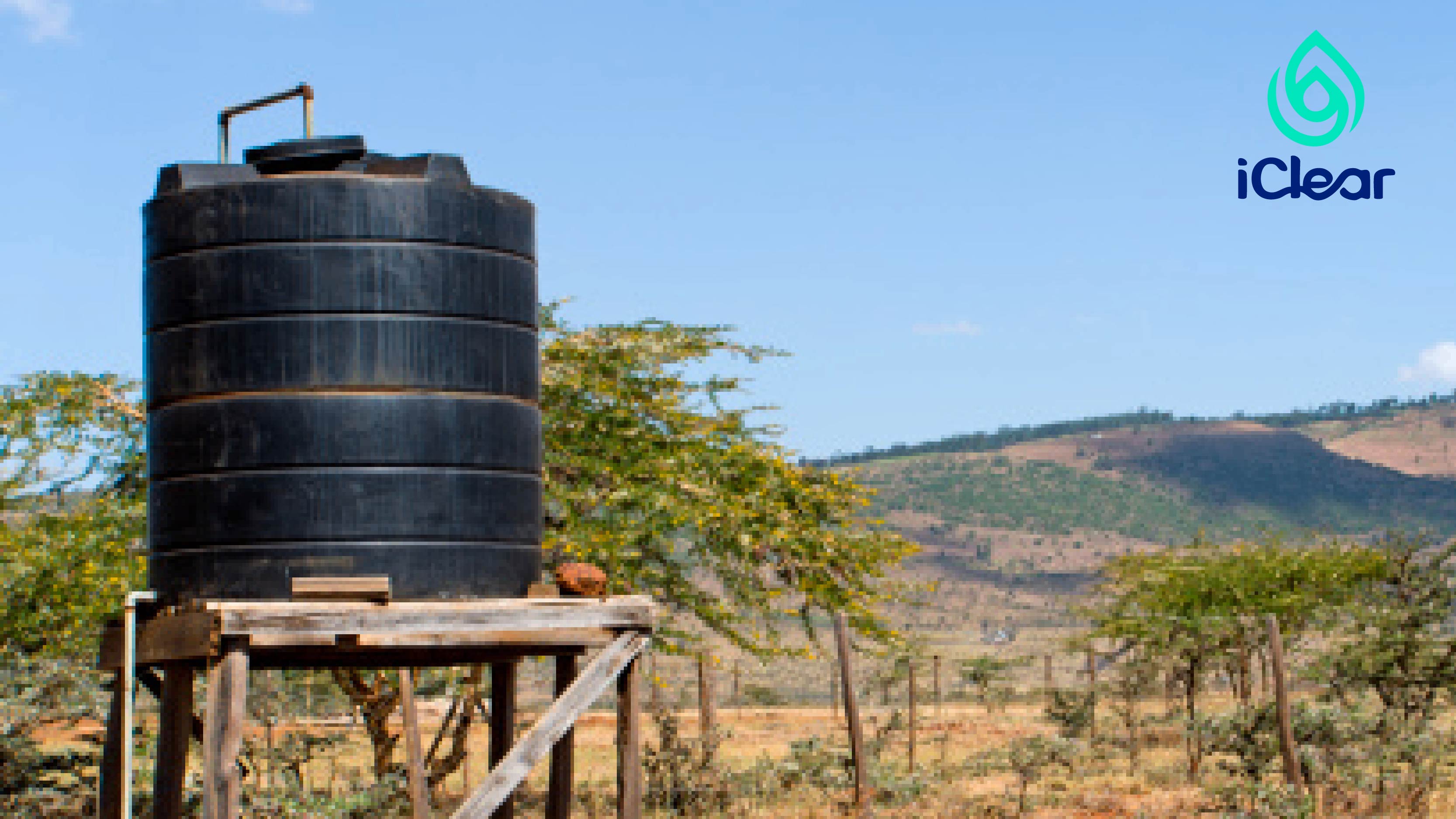
Across all iClear installations in Nairobi and beyond, one issue keeps appearing in the field reports: water that arrives at the property reasonably clean and becomes contaminated inside the customer's own storage tank. It is one of the most overlooked water safety problems in Kenya, and it is happening in homes across the country right now.
Most Kenyan households depend on water storage tanks, either roof-mounted or ground-level, to manage intermittent municipal supply. The assumption is that if you fill your tank with reasonably clean water, what comes out of your tap will be reasonably clean too. Our field data tells a different story.
When iClear's team tests water before installation, the difference between what enters a home and what reaches the kitchen tap can be significant. Tanks that have not been properly cleaned and maintained for months or years act as breeding grounds for sediment, biofilm, bacteria, and rust.
In Syokimau, our team finds that water quality is often more compromised by storage tank contamination than by the municipal supply itself. The water arriving at the property may be acceptable. The water reaching the tap is not.
Across installations where the existing tank has not been recently cleaned, the contents typically include some combination of:
None of this is visible from the outside of the tank. The water can look completely clear when poured into a glass and still carry the bacterial and chemical contamination accumulated in the tank.
Kenya's water supply patterns make storage tanks more central to daily life than in many other countries. With intermittent municipal supply, most households rely on tank storage for days at a time. That means the water sitting in your tank has more opportunity to deteriorate than water that flows directly from supply to tap.
And in Kenya's warm climate, bacterial growth accelerates. Water that might stay reasonably clean for a few days in a cooler climate can become a microbial concern in significantly less time inside a sun-warmed roof tank.
Storage tank contamination is one of the most invisible water safety problems in Kenyan homes. The supply pipe is not the only point of contamination. Your own tank often is.
An iClear water purifier is installed downstream of your storage tank, treating water at the point of use rather than at the point of supply. This means it removes contamination introduced inside your tank, not just contamination that arrived from outside.
Whether your home uses the iClear Standard, the iClear Premier, or the iClear Desktop, the purification happens after the water has passed through your tank and your pipework. That is the only point where you can be certain of removing what your tank has added.
Every iClear installation also begins with a check of your existing setup. Our field team frequently flags storage tank issues that customers were unaware of, and recommends tank cleaning or treatment alongside the new system where needed.
Filtering the water that arrives at your property is only useful if your own tank is not the contamination source. Point-of-use purification, after the tank and right before you drink, is the only way to be certain. That is exactly what an iClear system delivers.
Make sure your tank is not contaminating your water.
Free delivery and professional installation in Nairobi and Nakuru. Visit the iClear shop.
Tags: storage tank water contamination Kenya, water tank contamination Nairobi, point of use water purification, iClear Kenya, water purifier Kenya, Syokimau water, water tank cleaning Kenya

Water Purification & Treatment Specialists
David Ochieng, a water purification specialist at iClear Wellife Services Ltd, has extensive experience delivering safe and reliable water treatment solutions for homes and offices across Kenya.