How to Read Your Water Test Results: TDS, pH & Fluoride Explained
02, Oct 2026
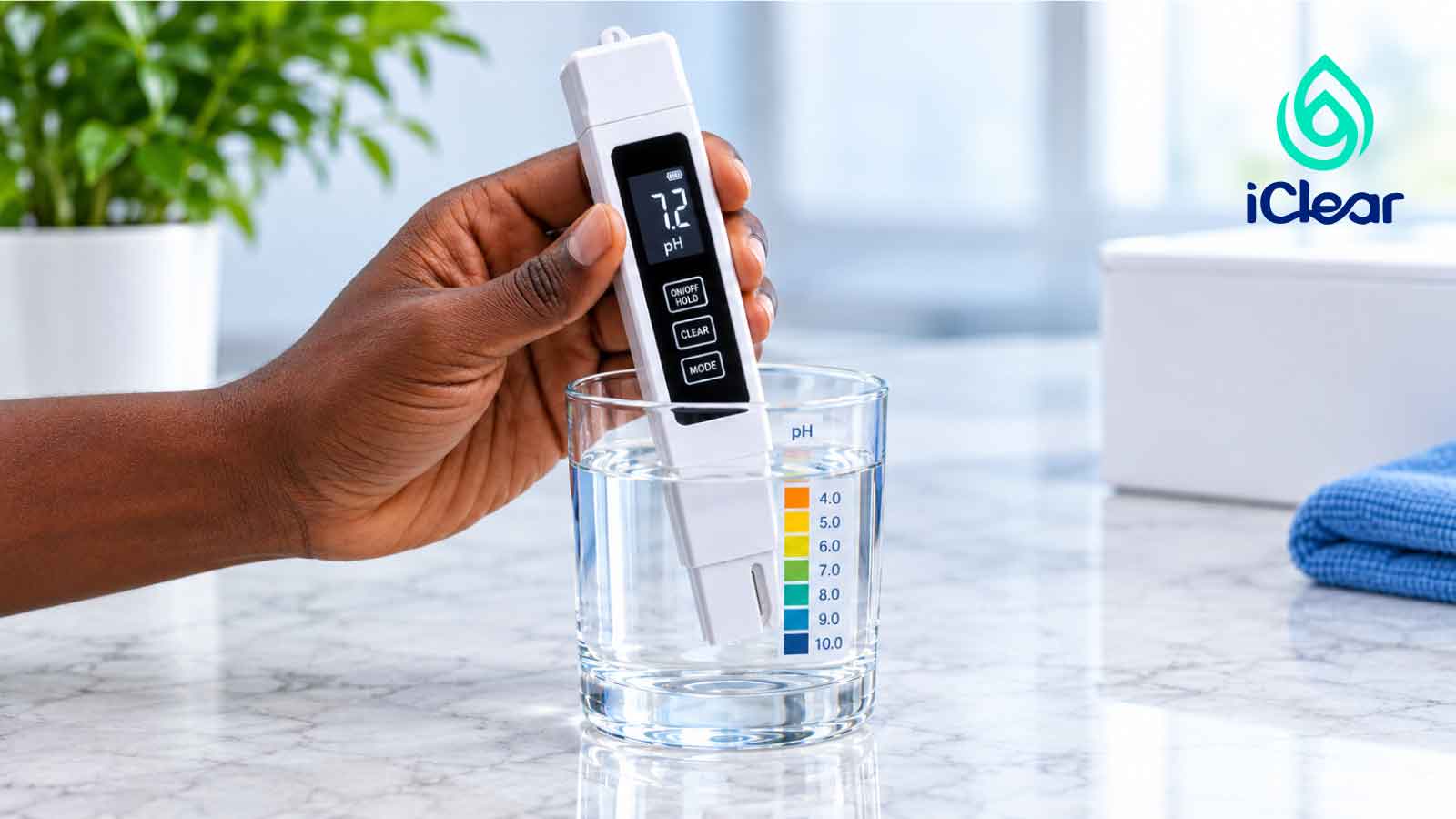
A water test reports TDS, pH, and fluoride as numbers, but few explain what those numbers mean. Below 300 ppm TDS is excellent, pH between 6.5 and 8.5 is safe, and fluoride should stay under 1.5 mg/L per WHO guidance.
TDS measures everything dissolved in your water, salts, minerals, metals. Below 300 ppm is generally excellent. 300 to 600 ppm is acceptable with rising concern toward the top. Above 600 ppm signals significant dissolved contamination worth treating.
pH measures how acidic or alkaline water is, on a scale where 7 is neutral. Safe drinking water typically falls between 6.5 and 8.5. Water far outside this range can affect taste and, at the extremes, corrode plumbing or irritate the gut.
The WHO guideline value for fluoride is 1.5 mg/L. iClear's field team has measured Rift Valley borehole readings above 8.75 mg/L, over five times that limit. Fluoride is invisible and tasteless, so a test is the only way to know your actual exposure.

The same gap a home test can reveal: iClear's field reading against the WHO guideline.
Boiling and basic filters do not remove dissolved salts or fluoride. Reverse Osmosis does. If your test shows elevated TDS or fluoride, an RO system like the iClear Standard is the practical household fix.
Q: What is a good TDS reading for drinking water?
A: Below 300 ppm is generally excellent. Above 600 ppm signals significant dissolved contamination worth treating.
Q: What fluoride level is unsafe?
A: The WHO guideline is 1.5 mg/L. Readings meaningfully above this, common in parts of Kenya's Rift Valley, warrant treatment.
Get your water tested and understand the numbers.
Free delivery and professional installation in Nairobi, Nakuru, and Mombasa. Visit the iClear shop.
Keywords: water test results explained, TDS meaning, fluoride water test kenya, iClear Kenya

Water Purification & Treatment Specialists
David Ochieng, a water purification specialist at iClear Wellife Services Ltd, has extensive experience delivering safe and reliable water treatment solutions for homes and offices across Kenya.