Why Is My RO Purifier Producing Less Water Than It Used To?
22, Oct 2026
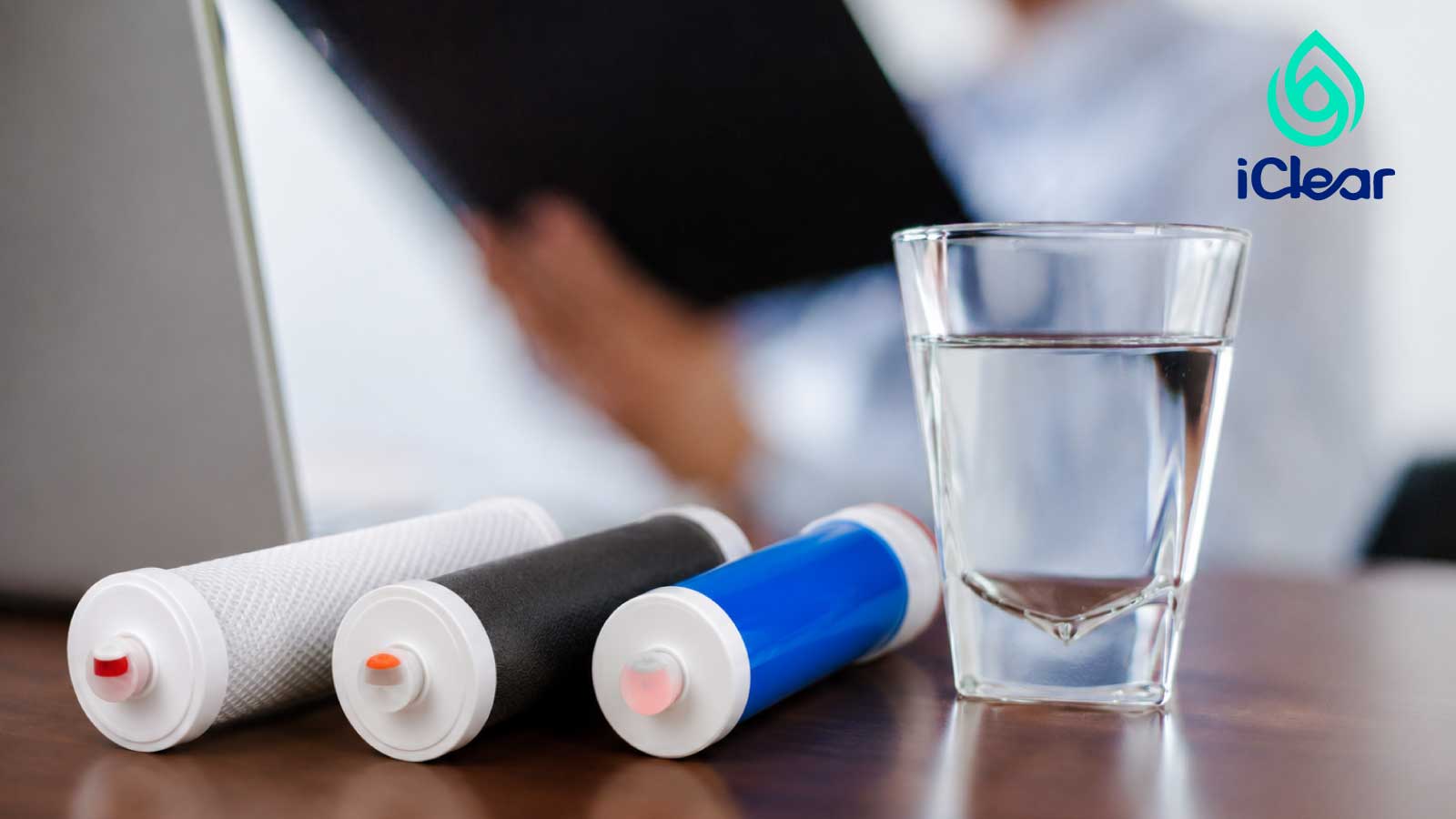
Every RO system does the same core job in stages:

The stages made visible: the iClear Standard's labelled P/C composite pre-filter, RO membrane, and CTO post-carbon filter.
The critical distinction from every other filter type is that RO works at the molecular level. Carbon, ceramic, and UV all operate above it, which is why they cannot remove anything dissolved.
The case for RO in Kenya is not theoretical. It is in the measurements iClear's field team takes every week:
Key Finding: Our highest fluoride reading in Rift Valley borehole water exceeded 8.75 mg/L, more than 5 times the WHO safe limit of 1.5 mg/L. Naivasha, Nakuru, Kajiado, Gilgil, and Kitengela all show consistently elevated fluoride. No amount of boiling, carbon filtering, or UV treatment reduces it. Only RO does.

Figure 1: iClear's highest field fluoride measurement against the WHO safe limit.
The same is true of dissolved salts. Borehole TDS in our field tests runs from 150 ppm in Karen to 600 ppm in Kitengela and Kajiado. Boiling concentrates these contaminants rather than removing them, because the water evaporates and the dissolved load stays behind.
Boiling kills bacteria but makes dissolved contamination worse: as water boils off, fluoride and salts become more concentrated in what remains. For borehole households, boiling is not a safety strategy. It is a false comfort.
|
Contaminant |
Typical Kenyan source |
Boiling |
Carbon |
UV |
Reverse Osmosis |
|
Bacteria & viruses |
Storage tanks, supply |
Yes |
Partial |
Yes |
Yes |
|
Fluoride |
Rift Valley geology |
No |
No |
No |
Yes |
|
Dissolved salts (TDS) |
Boreholes, coastal water |
No |
No |
No |
Yes |
|
Heavy metals |
Ageing pipes, geology |
No |
No |
No |
Yes |
|
Sediment & rust |
Tanks, old plumbing |
No |
Partial |
No |
Yes |
A well-installed RO system typically reduces TDS by 90% or more. A Kitengela borehole reading 600 ppm before treatment will commonly come out below 50 ppm after RO, which is the difference between water that strains the body over time and water that is genuinely pure.
You need RO if: your water comes from a borehole anywhere in Kenya; your water tastes salty or mineral-heavy; you live in or near a known high-fluoride area (Naivasha, Nakuru, Kajiado, Gilgil, Kitengela); or your household includes children, whose developing teeth and bones absorb fluoride fastest.
You may not need RO if: your municipal supply tests consistently low-TDS, your storage tank is professionally maintained, and your only complaint is chlorine taste. In that narrow case, a quality carbon filter improves taste for less. Most Kenyan homes are not in that case.
Every iClear system is a full multi-stage RO purifier, KEBS-certified, with free delivery and professional installation in Nairobi, its environs, and Nakuru. The Standard (KSh 25,000) suits everyday households, the Premier (KSh 49,000) delivers 7,200 litres per day for households of 8 to 15, the Desktop (KSh 40,000) provides portable RO with instant hot water for renters, and the Office system (KSh 90,000 per year) serves 20 to 30 staff with servicing included every four months. A standard home installation takes 30 to 45 minutes.
Q: What does reverse osmosis remove from water?
A: Dissolved salts, fluoride, heavy metals (including lead and arsenic), nitrates, bacteria, viruses, and sediment. In iClear installations, RO typically reduces TDS by 90% or more, taking a 600 ppm borehole reading below 50 ppm.
Q: Does reverse osmosis remove fluoride?
A: Yes, and it is the only common household technology that does. Fluoride ions cannot pass the RO membrane. This matters acutely in Kenya, where iClear has measured borehole fluoride above 8.75 mg/L against a WHO limit of 1.5 mg/L.
Q: Is RO water safe to drink every day?
A: Yes. RO water is purified water. It contains dramatically fewer dissolved minerals than untreated water, and a normal diet supplies the minerals the body needs. For high-fluoride and high-TDS areas of Kenya, daily RO water is not just safe but protective.
Q: How much does a reverse osmosis machine cost in Kenya?
A: iClear's 2026 RO range runs from KSh 25,000 (Standard) to KSh 49,000 (Premier) for homes, KSh 40,000 for the portable Desktop, and KSh 90,000 per year for the Office system, all including free delivery and professional installation in Nairobi and Nakuru.
Get Reverse Osmosis built for Kenyan water.
Free delivery and professional installation in Nairobi and Nakuru. Visit the iClear shop.
Keywords: reverse osmosis water treatment, reverse osmosis Kenya, ro water purifier, reverse osmosis water filter, RO system Kenya, iClear Kenya, fluoride removal Kenya

Water Purification & Treatment Specialists
David Ochieng, a water purification specialist at iClear Wellife Services Ltd, has extensive experience delivering safe and reliable water treatment solutions for homes and offices across Kenya.