Why Is My RO Purifier Producing Less Water Than It Used To?
22, Oct 2026
Walk into any hardware shop or search online and you will find water filters ranging from a few hundred shillings to tens of thousands. The price gap is enormous, and for most buyers, it is not obvious what accounts for it. Here is what actually drives the cost of a water purification system in Kenya, and how to make sure you are paying for the right things.
The first thing to understand is that the term "water filter" covers an extremely wide range of products. A basic sediment filter that catches visible particles costs a fraction of what a full Reverse Osmosis system costs, and the gap in what they actually do is just as large. When comparing prices, you need to know which category of product you are looking at.
The main categories available in Kenya are:
A cheap filter and a quality RO water purification system are not competing for the same job. Comparing their prices without understanding what each one does leads to a purchase you will regret.
1. The filtration technology
Technology is the single biggest price driver. A Reverse Osmosis membrane costs significantly more to manufacture than a carbon block or ceramic disc, and it removes significantly more contaminants. If you are buying on the Kenyan market and wondering why two products look similar but have very different prices, the membrane technology inside them is almost always the explanation.
2. The number of filtration stages
A quality RO system uses between 5 and 7 filtration stages, each targeting different contaminant types at different points in the purification process. More stages mean more thorough purification and longer membrane life. Cheaper systems cut stages to reduce cost, which shows up in both water quality and how quickly the system degrades.
3. Capacity and daily output
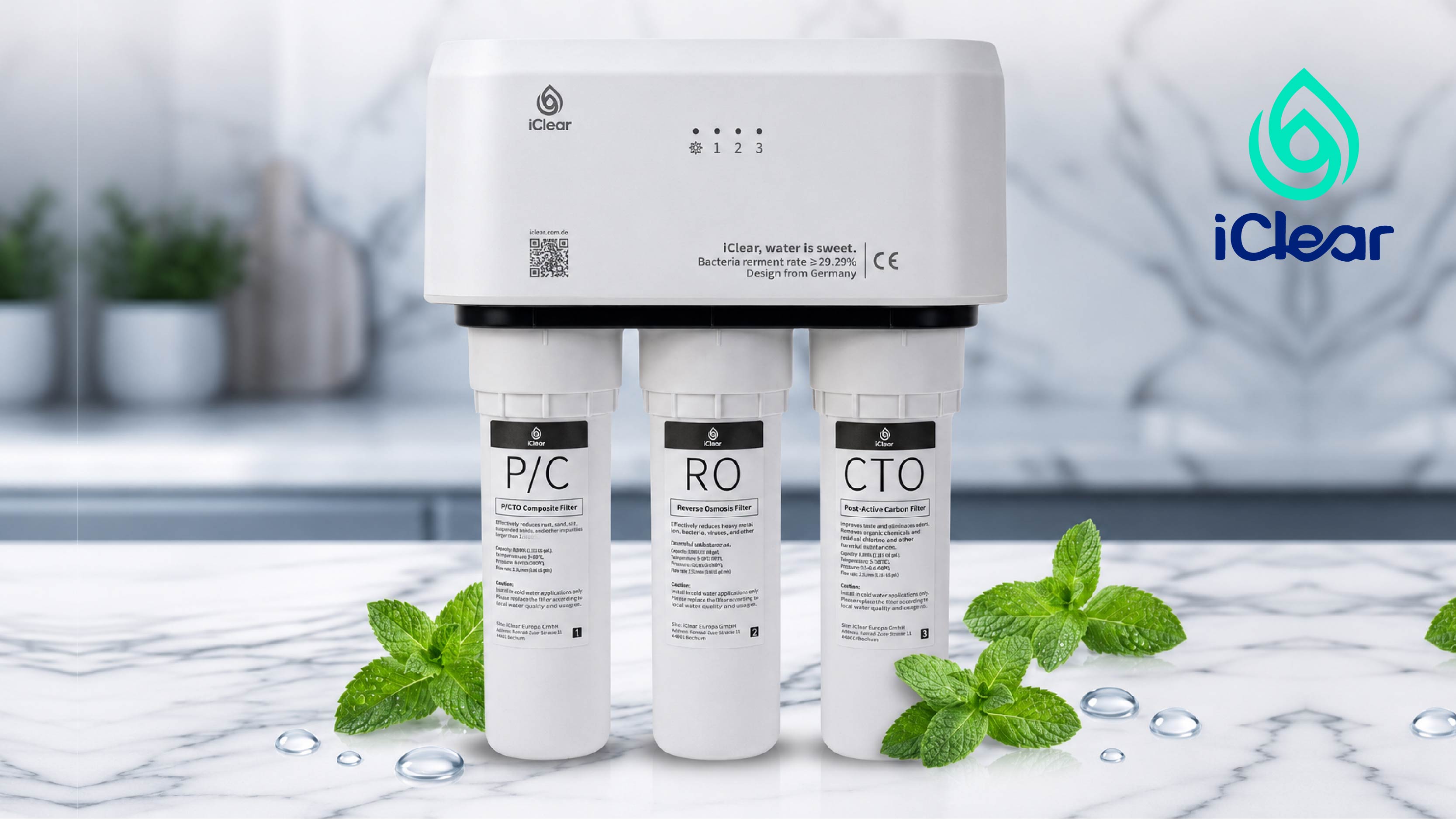
How much purified water a system can produce per day is directly tied to price. A compact desktop unit designed for one or two people has a smaller output than a high-capacity household or office system. The iClear Premier, for example, is designed for households of 8 to 15 people with a capacity of 100 gallons per day. The iClear Desktop is a compact unit designed for smaller spaces. Both use RO technology but serve different scales of need.
4. Installation and after-sales service
This is where many Kenyan buyers are caught off guard. A low headline price often excludes installation, which then costs extra. And without proper after-sales support, filter replacements and maintenance become the buyer's problem to solve independently.
iClear Kenya includes free professional installation in Nairobi, its environs, and Nakuru with every purchase. No other water purifier brand in Kenya currently offers this as standard. It is a meaningful part of the total value and should be factored into any price comparison.
5. Certification and quality verification
A KEBS-certified water purifier has been independently tested to meet Kenya's national safety standards. An uncertified product has not. The price difference between a certified and an uncertified system often reflects this gap in verified performance. Every iClear product carries KEBS certification.
A low upfront price on a water filter can look attractive until you factor in what it does not remove. A filter that leaves fluoride, nitrates, or heavy metals in your water is not saving you money. It is transferring the cost to your health, your appliances, and eventually your medical bills.
The correct question is not which water filter is cheapest. It is which system delivers the best total value across technology, installation, support, and long-term performance. Framed that way, the calculation looks very different.
When comparing water filter prices in Kenya, compare what is included: the filtration technology, the number of stages, the daily output capacity, installation, after-sales support, and whether the product carries KEBS certification. Price without these details is not a meaningful comparison.
iClear Kenya offers four products designed to match different household and office needs, all built on the same Reverse Osmosis technology and backed by the same free installation and after-sales service:
Ready to find the right water purifier for your budget?
Free delivery and professional installation in Nairobi and Nakuru. Visit the iClear shop.
Tags: water filter prices Kenya, water purifier Kenya, water purification machine, iClear Kenya, Reverse Osmosis water filter Kenya, KEBS certification, iClear water purifier

Water Purification & Treatment Specialists
David Ochieng, a water purification specialist at iClear Wellife Services Ltd, has extensive experience delivering safe and reliable water treatment solutions for homes and offices across Kenya.