
Why Doctors in Kenya Are Starting to Ask About Your Water
17, Sep 2026
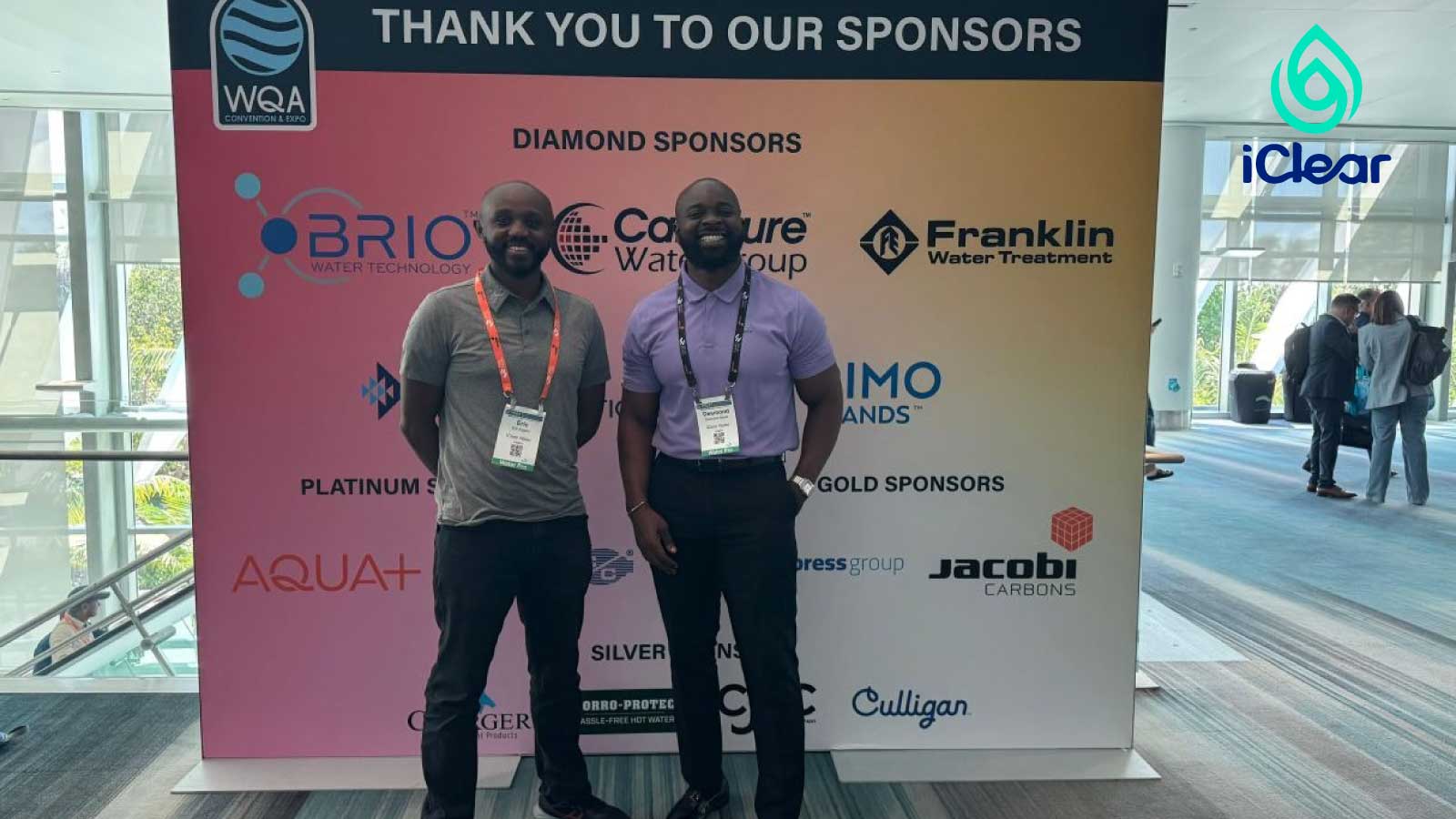
The WQA Convention & Expo 2026 in Miami brought together some of the most advanced companies and professionals in the global water treatment industry. For companies operating in emerging markets like Africa, events like WQA are more than just exhibitions. They are an opportunity to understand where the industry is heading and how those innovations can be adapted locally. At iClear, as we continue building clean water solutions across Kenya and expanding into West Africa, these insights are critical in shaping a long-term, scalable service model.

Desmond Okpei, iClear Water Lagos, attending WQA 2026 in Miami Beach as a Water Pro member.
One of the most visible trends at WQA 2026 is the increasing adoption of tankless reverse osmosis (RO) systems, a category the Water Quality Association has highlighted as a defining shift in modern residential and commercial water treatment.
Compared to traditional tank-based systems, tankless units offer:
The African Reality
While tankless systems are gaining traction globally, their adoption in African markets requires careful consideration:
In many cases, a hybrid approach, balancing performance, durability, and affordability, is more suitable for local households.
"The Evolution of the Tankless RO" was a headline session at WQA 2026, reflecting how central this shift has become to the global industry conversation.

"The Evolution of the Tankless RO" session at WQA 2026, Miami Beach.
Another clear trend is the integration of smart features into modern water purification systems:
Applying This in Kenya and Nigeria
In markets like Kenya and Nigeria, smart features can add value, but must be applied selectively:
The opportunity lies in bringing the right level of technology, not the most advanced one.
Globally, leading water companies are shifting from selling equipment to providing ongoing water services. This includes:
Why This Matters Most for Emerging Markets
This is one of the most important directions for emerging markets, where three realities converge:
A service-driven model can improve water safety, reduce long-term cost, and build recurring revenue and trust. This directly informs how iClear structures its office water purification agreements in Kenya, which include free servicing every four months as part of the annual arrangement.
Service models were a recurring theme across the WQA 2026 keynote sessions, reinforcing what iClear has already built into its business model for the Kenyan market.

The WQA 2026 keynote hall in Miami Beach, where service models and global water trends took centre stage.
Global conversations at WQA increasingly emphasise themes that align closely with the WHO Guidelines for Drinking-Water Quality:
The Local Picture
Awareness is rising across Kenya and West Africa, but still uneven across regions. This creates both challenges and opportunities. Companies that invest in educating users, not just selling products, will have a long-term advantage.
In Kenya, that also means anchoring product claims in recognised standards such as KEBS certification, so customers can trust what they are buying. iClear's KEBS-certified systems speak directly to this need.
The WQA 2026 exhibition also highlighted significant advancements in the underlying components that power water purification systems:
For iClear, staying current with these developments ensures that as we scale across Africa, our systems continue to meet global performance standards adapted for local operating conditions.
At iClear, our focus is not just on introducing new products, but on building a system that works in real local conditions. The WQA 2026 insights reinforce three pillars already central to our strategy:
The gap between global innovation and African adoption is not a technology gap. It is an adaptation gap. iClear's role is to close it.
The future of water solutions will not be defined by technology alone, but by how well that technology is adapted to local environments. WQA 2026 reinforced three principles that guide everything iClear does:
As the global water treatment industry accelerates, Africa's water challenge remains both urgent and significant. The companies that will lead are those that understand the continent, serve it directly, and build for the long term.
iClear is one of them.
Want to learn more about iClear's approach to clean water in Africa?
Contact iClear Kenya today. Free delivery and professional installation in Nairobi and Nakuru.
Tags: water filtration trends 2026, water purification Africa, RO water system Africa, clean water solutions Kenya Nigeria, tankless RO vs tank system, iClear Kenya, KEBS certification

Water Purification & Treatment Specialists
David Ochieng, a water purification specialist at iClear Wellife Services Ltd, has extensive experience delivering safe and reliable water treatment solutions for homes and offices across Kenya.