

What TDS Means for Kitengela Homes
25, Nov 2026
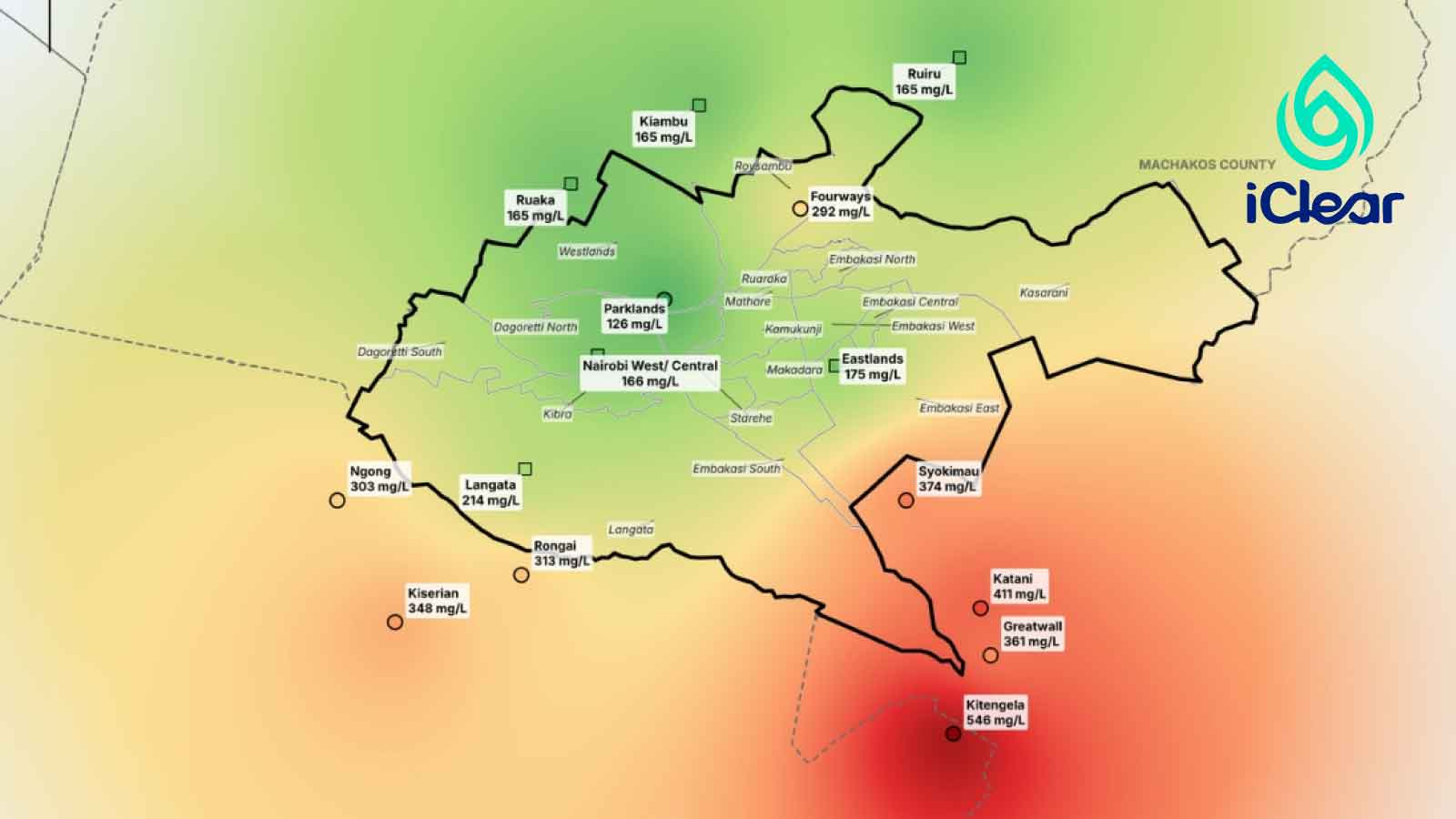
Kitengela recorded the highest mineral load in our 13 month field data. Here is what those numbers mean for homes in the area, and what to do next.
|
|
Figure 3 from the Q3 2026 Water Quality Report: average source-water TDS by zone.
What we measured
Between October 2025 and October 2026, our field technicians took 37 source-water readings in Kitengela, using handheld TDS meters at customer homes. The average was 546 mg/L. Of those readings, 62% were above 500 mg/L, the analytical threshold used in our report. The highest was 983 mg/L.
Nearby areas show the same pattern. Katani averaged 411 mg/L across 29 readings, Syokimau 374 mg/L across 20, and Greatwall 361 mg/L across 36.
So what is TDS?
Total dissolved solids (TDS) measures all the dissolved substances in water, in milligrams per litre (mg/L). In peri-urban areas these often include minerals such as calcium and magnesium, which cause hardness. A high reading usually means more dissolved minerals, and it can affect taste.
What the purifier did
In Kitengela, purified output had a median of 31 mg/L across the same 37 readings, so the system cut a high mineral load substantially.
What to do if you live in Kitengela, Athi River, Katani or Greatwall
Frequently asked questions
Is a TDS reading above 500 mg/L unsafe?
Not on its own. It indicates more dissolved minerals and may affect taste.
|
Test before you decide Book a full laboratory test from a KENAS-accredited laboratory, and contact iClear for a system check on +254 768 488274. |
Keywords: TDS Kitengela, Kitengela water quality, Kitengela borehole water test, TDS Nairobi peri-urban

Water Purification & Treatment Specialists
David Ochieng, a water purification specialist at iClear Wellife Services Ltd, has extensive experience delivering safe and reliable water treatment solutions for homes and offices across Kenya.