
Water is life but only if it is clean. Across Kenya, many households rely on rooftop storage tanks and rainwater collection systems to ensure consistent water supply. Yet, behind that convenience lies a quiet risk most homeowners never consider, what happens inside those tanks and roof systems between the rains and the taps. While you may be confident about the quality of your municipal or borehole source, contamination often happens after the water enters your storage system. Where the Real Contamination Begins In Kenya, most households depend on rooftop tanks, plastic reservoirs, or underground storage units. These are convenient, but over time, they become silent breeding grounds for bacteria, rust, and algae, especially when cleaning is irregular. Even when your municipal or borehole water is relatively clean, it can pick up harmful contaminants as it travels through aging pipes, roof gutters, and storage tanks. Roof systems also collect more than rainwater. Dust, bird droppings, decomposed leaves, and airborne pollutants settle on rooftops daily. When it rains, all that washes directly into your tank, contaminating every litre stored inside. Common Contaminants You Don’t See Algae & Biofilm – thrive in tanks exposed to sunlight or with stagnant water. Heavy Metals – from rusting metallic roofs and old plumbing connections. Bacteria & Microorganisms – including E. coli, often introduced through organic debris. Sediment & Turbidity – fine particles from dust or roof materials that affect taste and clog filters. Fluoride & Hardness Salts – especially in borehole-fed tanks; they can accumulate and make water unpalatable. These invisible pollutants mean even “clear” water may not be safe to drink, unless it’s properly filtered and purified. See how Reverse Osmosis filters compare to other methods in our post: Why RO filters are the best for Kenyan homes Why Routine Tank Cleaning Isn’t Enough Regular tank cleaning helps, but it doesn’t solve contamination introduced every time it rains or water flows in from untreated sources. Manual cleaning also misses microbial biofilms that cling to tank walls and regrow within days. That’s where water purification steps in, not as a luxury, but as a second layer of protection. At iClear, we recommend pairing well-maintained storage systems with Reverse Osmosis (RO) purification to eliminate the last traces of impurities before consumption. Discover how Reverse Osmosis purifiers restore nature’s original purity in our article: The Water You Drink Is Billions of Years Old, Here’s Why It Needs Purifying Smart Prevention Tips for Kenyan Homes Inspect tanks quarterly for leaks, rust, and discolouration. Use opaque tanks to minimize sunlight and algae growth. Disinfect tanks annually with safe chlorine solutions or professional services. From Roof to Glass, Closing the Safety Gap A well-maintained tank keeps your water supply steady, but only a reliable purifier guarantees its safety. That’s why iClear designs purifiers that handle diverse Kenyan sources, from boreholes and taps to rooftop rainwater ensuring every drop meets the highest purity standard. Whether your home uses the iClear Standard or iClear Premier, you get multi-stage protection that removes bacteria, heavy metals, and chemical residues before they reach your glass. Explore our full range of purifiers and protect your family from hidden water threats, because clean water doesn’t start at the tap, it starts with iClear.
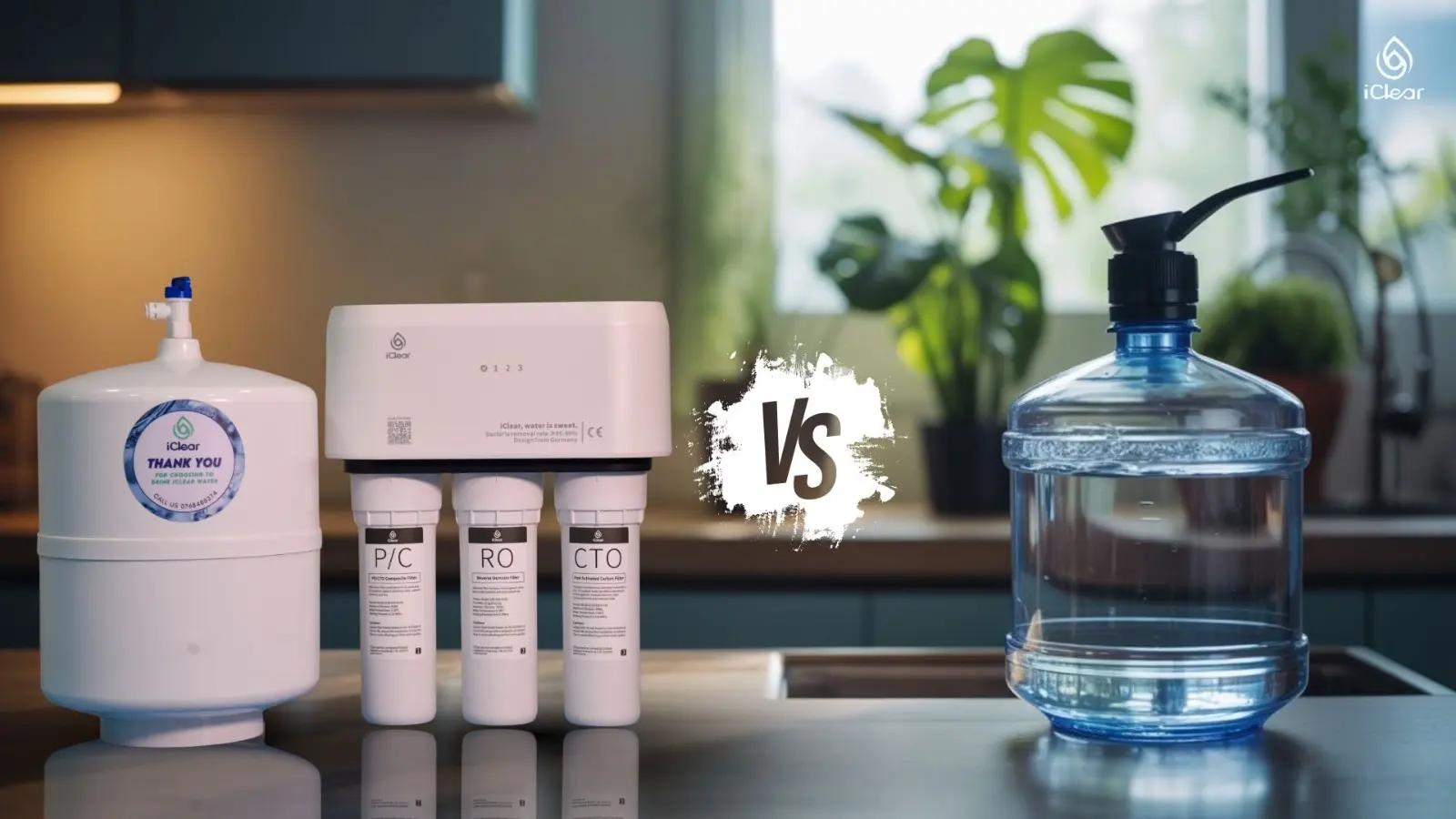
They look modern, sleek, and easy to use. Walk into any Kenyan home or office, and chances are you’ll spot a water dispenser humming quietly in a corner. It feels like the simplest way to get “clean” water on demand. But here’s the truth most people never calculate, that convenience is costing you more than you think. What if the monthly refill you pay for could have already bought you your own source of pure water? The Convenience Trap When you first buy a dispenser, it seems affordable. You spend maybe KSh 8,000 -15,000 for the machine, then grab a few 20-litre bottles of water for around KSh 300 -400 each. It feels like a small cost, until you do the math. A family using 2–3 bottles a week ends up spending KSh 45,000 - 60,000 every year just on water refills. That’s enough to purchase and maintain a reverse osmosis (RO) purifier that delivers unlimited safe drinking water, straight from your tap. And even then, the costs don’t stop there: Electricity for heating and cooling Delivery or transport fees for bottle refills Replacement bottles when old one’s crack or leak By the time you realize it, your “budget-friendly” dispenser is draining your pocket every single month. To see how much a modern purifier can save you, read: Why Every Kenyan Home Needs an RO Purifier in 2025 What You’re Really Paying For Let’s break it down. Expense Type Dispenser Water Purifier Initial Cost = KSh 10,000 = KSh 25,000 Refills (per year) = KSh 50,000 — Electricity (hot/cold use) = KSh 2,400 = KSh 800 Annual Maintenance — = KSh 3,000 Total First Year = KSh 62,400 = KSh 28,800 Owning a purifier isn’t just cheaper, it’s freedom. No waiting for deliveries. No worrying about where your next refill comes from. Just press the tap and pour safe, fresh water instantly. The Hidden Hygiene Problem Most dispenser users assume bottled water is always safe, yet that’s rarely verified. Many refilling stations across Kenya reuse bottles dozens of times. After a while, these bottles develop fine cracks that trap bacteria, even after rinsing. If you’ve ever noticed a strange smell, film, or taste from your dispenser bottle, that’s a sign of bacterial buildup. Worse still, bottled water isn’t regulated as tightly as many assume. Some refill points use untreated tap or borehole water, simply running it through basic filters. That means you’re still drinking unpurified water at a premium price. For a deeper look the most common waterborne diseases in Kenya, read our related article: Do you know the most common waterborne diseases in Kenya? The Environmental Price of Bottled Dispensers Beyond cost, there’s the impact. Every time you order a refill, another plastic container is used, transported, and eventually discarded. Plastic gallon bottles take hundreds of years to break down, and Kenya’s waste systems can’t recycle them fast enough. With an iClear Water Purifier, you cut out all that plastic waste. No bottles, no deliveries, no emissions from transport, just pure water from your own supply. Real convenience isn’t buying plastic; it’s breaking free from it. The Smarter Alternative: Purify Once, Drink Forever With iClear Reverse Osmosis Water Purifiers, you don’t just save money; you gain confidence in every glass. Our systems: Remove fluoride, chlorine, and bacteria from tap or borehole water Restore natural taste with mineral balancing Deliver consistent purity year after year, with easy, low-cost maintenance And because you control the source, you never have to wonder what’s inside your bottle again. Final Takeaway Dispenser convenience is an illusion. You’re not paying for water, you’re paying for repetition. Every refill, every delivery, every week adds up. Switch to an iClear Water Purifier and enjoy pure, unlimited water that costs less, tastes better, and protects your family’s health and environment. Explore our full range of iClear Purifiers today and discover convenience that pays you back, not one that drains your wallet.
They say beauty starts from within and that includes what you drink. While most people invest in skincare products, very few realize that the quality of your drinking water plays a huge role in the health and appearance of your skin. If your skin often feels dry, itchy, or prone to breakouts, the problem might not be your moisturizer it could be your water. The Hidden Connection Between Water and Skin Health Your body is nearly 60% water, and your skin the largest organ depends on it to stay hydrated and healthy. But not all water is the same. In many parts of Kenya, tap and borehole water contain high levels of salts, chlorine, and heavy metals. These substances strip your skin’s natural oils, leading to dryness, irritation, and premature aging. Hard water can even worsen conditions like eczema or acne. That’s where a Reverse Osmosis water purifier makes all the difference. It removes impurities like fluoride, chlorine, lead, and bacteria, ensuring the water you drink (and cook with) is clean, gentle, and skin-friendly. Learn more about why RO filters are the best choice in Kenya. How Clean Water Helps Your Skin Glow Switching to purified water transforms your skin from within: Hydration that counts – Pure water helps flush toxins and keeps skin cells moisturized. Reduced breakouts – No more harsh minerals clogging pores. Smoother texture – Clean water supports faster cell repair and elasticity. At iClear, our RO water purifiers ensure every drop is free from impurities that can harm your body and skin. Why Choose iClear RO Purifiers We design Reverse Osmosis purifiers specifically for Kenyan homes, where water sources vary widely. Whether your supply is borehole, tap, or rainwater, our models like the iClear Standard and iClear Premier provide consistent, safe, and skin-friendly water for your daily use. Read about how our RO technology works. Healthy, glowing skin doesn’t start with expensive creams it starts with what’s in your glass. By choosing an iClear Reverse Osmosis water purifier, you’re not just investing in your health, but also in naturally radiant skin. Explore our range of purifiers today and let your glow start from the inside out.
The water you drink today is as old as planet Earth itself! Every glass of water whether from your tap, borehole, or bottled has been part of a never-ending cycle for billions of years. The same molecules that once flowed through ancient rivers are now in your kitchen. So, if water has been around forever, why do we still need purifiers today? The answer lies in what happens between those cycles. Ancient Water, Modern Pollution While the water molecules themselves are ancient, the environment they pass through has changed dramatically. Modern life introduces pollutants that nature can’t fully filter out industrial waste, agricultural runoff, chlorine, fluoride, and heavy metals. In Kenya, borehole and well water often contain high levels of fluoride and salts, while urban tap water can carry chlorine, rust, or bacteria from aging pipes. These invisible contaminants are why a Reverse Osmosis (RO) purifier has become essential in 2025. See how RO compares to other methods in our post: Why RO filters are the best for Kenyan homes. How iClear Purifiers Restore Nature’s Original Purity At iClear, we’ve taken inspiration from nature’s own purification cycle evaporation, condensation, and rainfall and refined it using science. Our Reverse Osmosis purifiers use semi-permeable membranes to remove up to 99% of contaminants, ensuring every drop is as pure as it was meant to be. Whether your source is borehole, tap, or rainwater, our models like the iClear Standard and iClear Premier guarantee clean, safe water for your family. A Drop of Wisdom for Every Home Purifying water is about protecting ourselves from what we’ve added to it. Even the oldest, most natural water can carry modern risks. That’s why owning a trusted iClear Reverse Osmosis purifier is a health investment. Explore our full range of water purifiers and experience what truly pure water tastes like fresh, clean, and safe, just as nature intended.
In 2025, access to safe drinking water is no longer a privilege, it’s a necessity every Kenyan household should secure. With rising cases of water contamination, climate change affecting supply, and growing health concerns, families are searching for reliable solutions. At iClear, we believe the answer lies in one powerful technology: the Reverse Osmosis (RO) purifier. The Changing Water Landscape in Kenya Over the past decade, water quality issues in Kenya have become more visible. From borehole water laced with fluoride and salts, to municipal supplies sometimes carrying bacteria or chlorine, the risks are hard to ignore. In urban centers like Nairobi and Mombasa, rapid population growth has only increased the strain on safe water supply. That’s why investing in a purifier isn’t just about convenience anymore , it’s about health protection and peace of mind. Learn more about why RO filters outperform other systems. Why RO Purification Stands Out in 2025 While there are many types of filters on the market, Reverse Osmosis purification remains unmatched. Here’s why it’s becoming essential for Kenyan homes this year: Removes Hidden Contaminants – Reverse Osmosis eliminates up to 99% of fluoride, arsenic, lead, and dissolved salts that most basic filters miss. Safe for All Water Sources – Whether you rely on borehole, municipal, or rainwater, Reverse Osmosis adapts to all. Future-Proof Health Investment – With lifestyle diseases and waterborne illnesses on the rise, a purifier is no longer optional. See our detailed guide on how RO technology works. Choosing the Right iClear RO Purifier Every home has unique needs, and at iClear we’ve designed solutions for all: iClear Standard – Perfect for small families, compact and budget-friendly. iClear Premier – Higher capacity, ideal for larger families . Office & Desktop Purifiers – For shared spaces, offices, and apartments. All our purifiers come with free delivery and installation in Nairobi, plus after-sales support across Kenya. Final Thoughts In 2025, owning an Reverse Osmosis purifier is about survival in a changing environment. By choosing iClear, you’re choosing health, safety, and long-term savings. Explore our full range of RO water purifiers today and take the first step toward safe drinking water for your family.
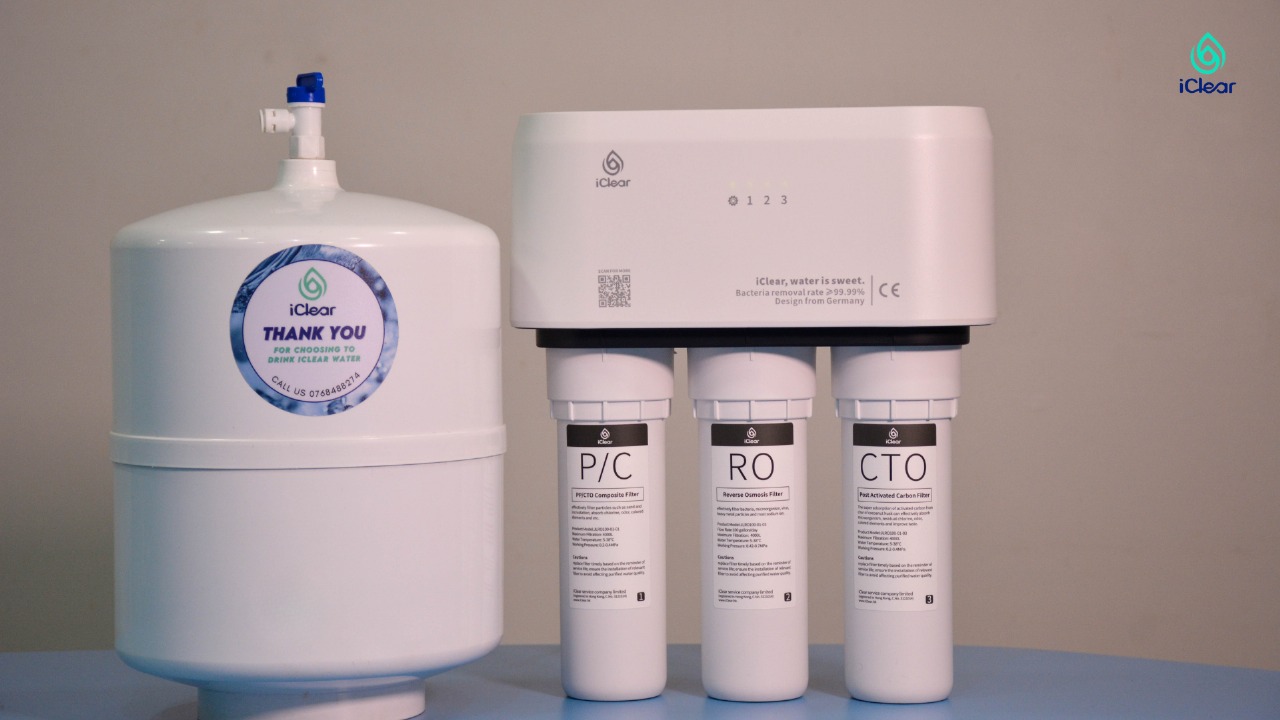
Access to clean and safe drinking water is essential for every household. In Kenya, however, many families depend on borehole water, wells, and even municipal supplies that may contain high levels of salts, heavy metals, and microorganisms. That’s why we at iClear are dedicated to offering one solution that works across all these challenges Reverse Osmosis (RO) water purifiers. Why Choose an RO Purifier? Unlike basic dispensers and filters that only remove visible dirt or chlorine, Reverse Osmosis systems go further. They eliminate dissolved salts, fluoride, heavy metals, and harmful microbes, ensuring that the water you drink is not just clean, but also safe. All our purifiers are certified by SGS, CE, and KEBS, giving you peace of mind about their quality and reliability. Learn more about why RO filters are the best purifiers for Kenya. Our Range of iClear RO Purifiers We understand that every home and office has unique needs. That’s why we offer a variety of options: iClear Standard – Ideal for families of 3–5 people. It purifies up to 4,000 liters of water and costs about KSh 25,000. iClear Premier – Perfect for larger households. With a capacity of 7,200 liters, it offers superior performance at around KSh 49,000. Office & Desktop Purifiers – Compact solutions for offices, apartments, or shared spaces. Every purchase includes free delivery and installation within Nairobi, plus full after-sales support . Choosing the Right Purifier Here’s how to decide which model works best for you: Test Your Water – Borehole and salty water often require a stronger system like the Premier. Consider Family Size – The Standard model works well for smaller households, while bigger families benefit from the Premier. Budget Wisely – Our purifiers range from KSh 25,000 to 100,000, depending on features and capacity. Plan Maintenance – Changing filters regularly ensures long-term efficiency and clean water every day. For more details, see our comparison of RO vs bottled water. Why iClear? At iClear, we focus solely on Reverse Osmosis purification systems. This allows us to perfect our technology, ensuring energy efficiency and easy filter replacements. Whether your water source is borehole, municipal, or rainwater, our purifiers deliver consistently clean results. Read more about how our RO systems work. Final Word Investing in an iClear purifier means choosing long-term health and convenience for your family. Explore our full range of purifiers and let us help you find the perfect fit for your home or office. With iClear, you don’t just get clean water you get peace of mind in every drop.
When it comes to choosing between a water purifier and a dispenser, it’s easy to get confused. At first glance, both seem to provide clean drinking water, but the truth is that they serve very different purposes. Understanding the Role of a Water Dispenser A water dispenser is built mainly for convenience. It stores water and delivers it at the temperature you prefer, whether hot, cold, or at room temperature. Many dispensers today are fitted with basic filtration systems, often using a simple sediment or activated carbon filter. This helps to trap visible particles such as rust or sand. If your household or office already uses treated bottled water or has access to pre-filtered water, then a dispenser can be a practical solution that makes hydration quick and easy. The Limitations of Basic Dispenser Filtration While dispensers do provide some level of filtration, their ability to protect you from harmful contaminants is limited. They cannot remove invisible threats such as bacteria, viruses, dissolved salts, heavy metals, or pesticide residues. This means that if your water source is not already safe, relying on a dispenser alone may not guarantee healthy drinking water. How a Water Purifier Works Differently This is where a water purifier steps in. A purifier, like the RO water purifiers from iClear, goes far beyond improving taste. It is designed to make your water genuinely safe for consumption. Using multi-stage purification processes such as Reverse Osmosis (RO), ultraviolet treatment, and advanced carbon filtering, a purifier can eliminate microorganisms, heavy metals like lead and mercury, as well as industrial chemicals and other harmful substances that often find their way into the water supply. The result is pure, safe, and healthy water that protects your family every time they take a sip. Dispenser vs. Purifier: The Key Difference The key difference between the two lies in their primary function. A dispenser provides convenience, allowing you to enjoy water at different temperatures with light filtration, but it assumes that the water source is already safe. A purifier, on the other hand, acts as a complete water filtration system for home use, ensuring that no matter where your water comes from, it is thoroughly cleaned at the molecular level before it reaches your glass. Why Choose iClear Water Purifiers At iClear, we understand that health cannot be compromised. That’s why our Reverse Osmosis water purifiers are designed to give you more than just convenience; they give you peace of mind. While dispensers play their role in offices and homes where bottled water is the norm, a purifier provides an added layer of security that ensures the water your family drinks is free from contaminants that basic filters cannot remove. Final Thoughts In the end, the choice comes down to what matters most to you. If it’s convenience and you already rely on pre-treated water, then a dispenser will serve you well. But if it’s health, safety, and long-term protection that you value, the answer is clear you need an iClear RO water purifier.
Clean drinking water is essential for every household, but the choice between a water purifier and a water dispenser often leaves people unsure. At first, both seem to serve the same purpose, but when you look closely, the differences become clear. Choosing the right system depends on what your family needs most — convenience, safety, or both. What a Water Dispenser Offers A water dispenser is built to make daily hydration more convenient. It allows you to enjoy water at the temperature you prefer, whether hot for tea, cold on a sunny afternoon, or at room temperature. Many modern dispensers include basic filters such as sediment or carbon filters. These helps reduce chlorine, improve taste, and trap visible impurities. For homes and offices that already rely on bottled water or have access to treated water, a dispenser works well by keeping water accessible and enjoyable. The Limitations of a Dispenser While dispensers provide some filtration, their systems are basic. They cannot eliminate harmful microorganisms, heavy metals, or dissolved chemicals that might be present in the water supply. This means dispensers are best suited for situations where water is already pre-treated and safe. If your goal is protection against hidden contaminants, a dispenser alone will not be enough. Why a Water Purifier Stands Out A water purifier, such as the iClear RO water purifiers, takes water safety to a completely different level. Unlike dispensers, purifiers use advanced technology like Reverse Osmosis (RO), UV treatment, and multi-stage filters to remove bacteria, viruses, dissolved salts, pesticide residues, and even heavy metals like lead and mercury. This ensures that every drop of water you drink is clean, pure, and safe for your family. In short, a dispenser gives you temperature control and convenience, but a purifier guarantees your health. Which One Should You Choose? The decision depends on your household’s needs. If you have a trusted water supply, then a dispenser may be sufficient for its convenience and accessibility. But if you want a complete water filtration system for home use that removes harmful contaminants, then a purifier is the smarter investment. For families in Kenya who want peace of mind, an iClear RO water filtration system ensures safety with every sip. Conclusion While both devices play important roles, the difference lies in their function. A dispenser offers convenience with some filtration, but a purifier delivers health protection and purity at the molecular level. If your top priority is safe and healthy drinking water, then the choice is clear an iClear RO water purifier is the right solution for your home.
Parents in Kenya often ask, “Is tap water safe for babies?” The truth is that while water may look clean, it can contain hidden contaminants that pose risks to infants and young children. Babies are more vulnerable to unsafe water because their immune systems are still developing, and their small bodies absorb harmful substances more quickly. That’s why choosing the best water purifier in Kenya isn’t just a convenience it’s a necessity for your family’s health. Why Babies Need Safer Drinking Water High fluoride levels, common in parts of Rift Valley, can lead to dental and skeletal problems. Nitrates from agricultural runoff may cause “blue baby syndrome,” a serious condition that reduces oxygen in the blood. Infants are especially sensitive to bacterial infections that can cause diarrhea, dehydration, and long-term gut issues. Heavy Metals, such as, Lead, arsenic, and other metals can affect brain development and growth. Boiling Water Isn’t Enough Many Kenyan households rely on boiling water for safety. While boiling kills bacteria and viruses, it does not remove fluoride, nitrates, pesticides, or heavy metals. This means boiled water may still pose risks to babies when used in formula preparation or daily drinking. The Best Water Purifier for Babies in Kenya The safest option for infants is a reverse osmosis (RO) water purifier, which removes up to 99% of harmful contaminants. At iClear, our Standard Water Purifier , Premier Water Purifier and Desktop Purifier are ideal for families with young children. They are designed to purify borehole, salty, and municipal water in Kenya making them versatile solutions for any household. Give Your Child a Healthier Start Water safety is not just about avoiding illness it’s about supporting your child’s growth, brain development, and long-term health. With an iClear purifier, you can prepare formula, cook, and hydrate your little ones with complete peace of mind. Explore our full range of water purifiers for families in Kenya and give your baby the safe start they deserve.
If you’re searching for “what is the water quality like in Kenya” or wondering whether your tap or borehole water is safe to drink, you’re not alone. Across Nairobi, Mombasa, Nakuru, and rural towns, water quality varies greatly. Some areas struggle with fluoride, others with hardness, and many with contamination from bacteria and chemicals. Understanding these issues is the first step toward choosing the best water purifier in Kenya for your home or office. Fluoride in Kenya’s Water Fluoride is a major concern in regions such as the Rift Valley. While small amounts protect teeth, high fluoride levels in Kenyan water can cause dental and skeletal fluorosis. The problem? Boiling water or using basic filters does not remove fluoride. The most effective solution is a reverse osmosis (RO) water purifier, which eliminates excess fluoride and makes your water safe. Learn more about how RO water purifiers work in Kenya. Hard Water Challenges Many households in Nairobi rely on borehole water, which often contains high levels of calcium and magnesium. This leads to hard water in Kenya, causing limescale buildup in kettles and affecting the taste of tea, coffee, and even cooked meals. While not a direct health risk, hard water makes preparing food and drinks less enjoyable. A high-quality purifier like the iClear Standard Water Purifier is designed to handle borehole and hard water effectively. Contamination from Bacteria and Heavy Metals Kenya’s water sources especially shallow wells, rivers, and municipal supplies during rainy seasons may contain bacteria, pesticides, and heavy metals such as lead. These contaminants are invisible but dangerous. Boiling water in Kenya only kills bacteria; it does not remove chemicals or heavy metals. For complete protection, you need a multi-stage Reverse Osmosis water purifier. See our guide on boiling water vs. water purifiers in Kenya. Choosing the Best Water Purifier in Kenya At iClear, we specialize in water purifiers for borehole water, salty water, and municipal supplies in Kenya. Whether you’re in Nairobi, Mombasa, or upcountry, we’ll help you find the right solution for your family. Explore our full range of water purifiers in Kenya today.
Water Purification
Water Quality Insights
Water Purification
Product Guides
Product Guides
Water Quality Insights
Health & Wellness
Buying Guides & Tips
Water Quality Insights