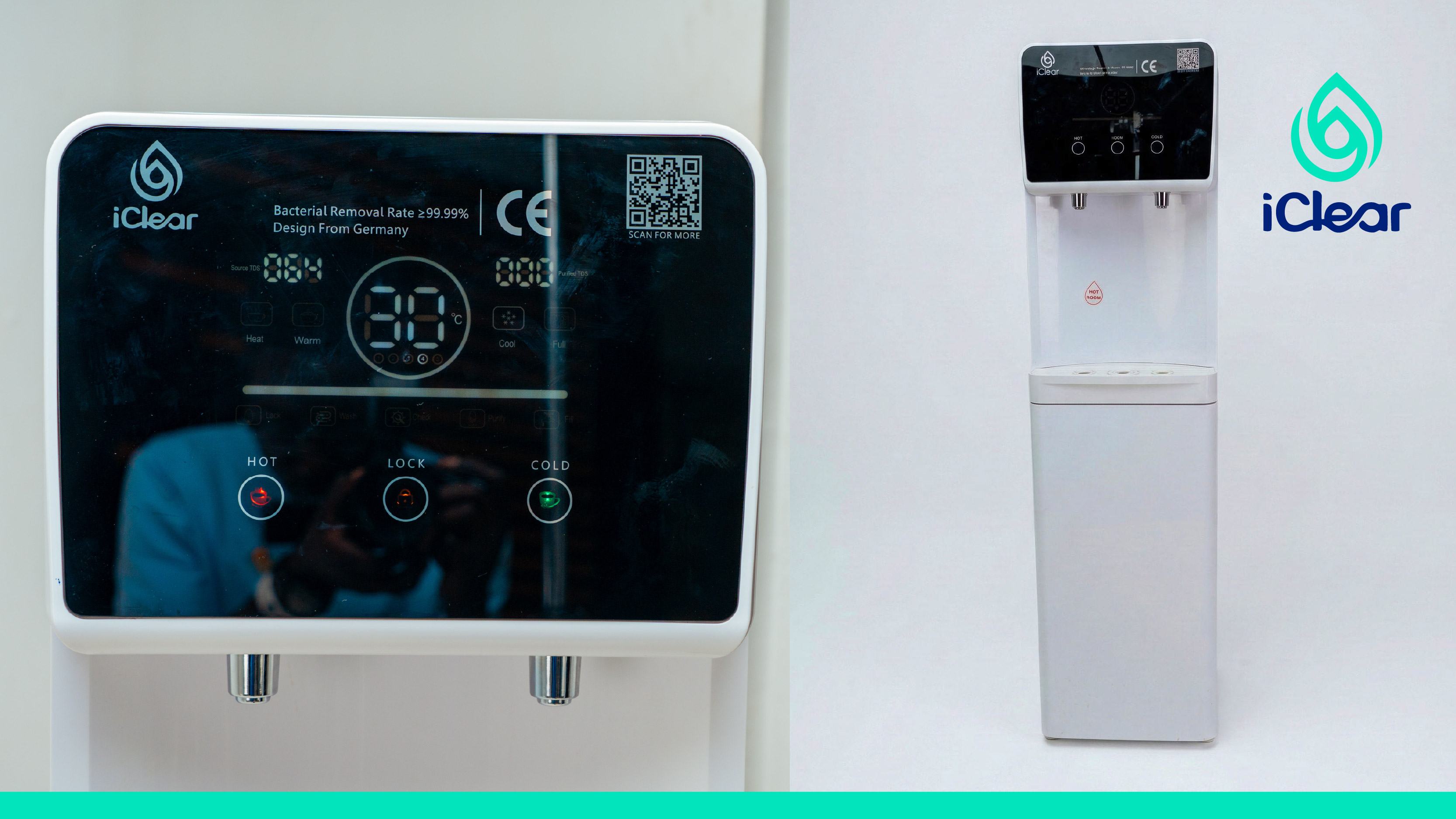
Clean drinking water is not just a home concern. In offices across Kenya, employees spend eight or more hours a day in a workspace where the quality of their drinking water directly affects their health, focus, and productivity. Yet water purification remains one of the most overlooked investments in Kenyan office management. The hidden water problem in Kenyan offices Most Kenyan offices rely on one of three water sources: municipal supply, bottled water coolers, or borehole systems. Each comes with its own set of challenges. Municipal water, while treated, travels through ageing infrastructure before reaching office taps. By the time it arrives, it may carry bacteria, heavy metals, and chemical residues that treatment plants did not fully remove. Bottled water coolers seem convenient, but the costs add up quickly at scale, plastic waste is a growing concern, and bottle hygiene is rarely as reliable as it appears. Borehole water offers independence but introduces the risk of fluoride, iron, and microbial contamination without proper treatment. A single employee drinking contaminated water does not just face a personal health risk. Waterborne illness spreads quickly in shared office environments, leading to absenteeism, reduced productivity, and reputational risks for the organisation. What an office water purifier actually delivers An office water purifier powered by Reverse Osmosis technology eliminates all of these concerns at once. Rather than managing bottled water logistics or hoping that tap water is safe, an RO-based water purification machine provides a continuous, reliable supply of genuinely pure drinking water directly at the point of use. The benefits for office environments are significant: Consistent water quality regardless of municipal supply fluctuations Elimination of bottled water costs and plastic waste Reduced sick days linked to waterborne illness A visible demonstration of the organisation's commitment to employee wellbeing Compliance with workplace health and safety best practices iClear's two office water purification options iClear Wellife Service Limited offers two dedicated office purifiers, each designed for a different workspace size and use case. iClear Office Water Purifier (Lease) - for offices of 20 to 30 staff This is iClear's flagship commercial system, a bottleless RO and UV purifier connected directly to your water supply. It delivers unlimited hot and cold purified water on demand, with no bottles, no deliveries, and no storage required. Multi-stage RO and UV purification, removing sand, rust, chlorine, bacteria, heavy metals, and harmful microorganisms Hot and cold water dispensing with separate outlets and a safety lock on the hot water tap Compact, space-saving design connected directly to your tap water source Modern sensory touch technology for effortless daily operation Quiet operation suitable for professional office environments Designed for offices of 20 to 30 people Pricing: KES 10,000 one-time installation fee + KES 90,000 for Year 1. From Year 2 onwards, the annual cost reduces to KES 80,000. Free maintenance and servicing is included every four months. Most offices spending KES 12,000 to 20,000 per month on bottled water recover the full first-year cost within months and save over KES 100,000 every year after. iClear Desktop Water Purifier - for smaller offices and shared workspaces The iClear Desktop is a portable RO purifier with instant heating, designed for smaller offices, home offices, apartments, and shared workspaces. It requires no plumbing and includes a built-in 4-litre water storage tank, making installation and filter replacement straightforward. Advanced RO purification removing contaminants from borehole, salty, rainwater, and municipal supply Instant hot water in 3 seconds with six precise temperature settings via digital touch screen Temperature options suited for tea, coffee, baby formula, and cold drinking water Safety lock on the hot water function No plumbing required - built-in 4-litre storage tank Low power consumption, compact countertop design Priced at KES 40,000 as a one-time purchase Free delivery and professional installation in Nairobi and Nakuru Every iClear office system comes with free delivery and professional installation in Nairobi, its environs, and Nakuru. iClear's trained technicians handle the entire setup process, from assessing your office's water source and infrastructure to configuring the system for optimal performance in your specific environment. No other water purifier brand in Kenya offers free professional installation for office systems as standard. For businesses, this is not just a convenience. It is a guarantee that the system will perform as intended from the moment it is switched on. Investing in your team starts with what they drink The best Kenyan organisations understand that employee wellbeing is not a perk. It is a performance strategy. Access to clean, safe drinking water throughout the working day is one of the simplest and most impactful investments an employer can make. With iClear's office water filtration system, it is also one of the most affordable. Ready to provide your team with genuinely clean water? Contact iClear Kenya today to explore our office water purification solutions. Free delivery and professional installation included in Nairobi and Nakuru. Tags: office water purifier Kenya, water purifier Kenya, iClear Kenya, iClear Wellife Service Limited, water purification machine, water filtration system, Reverse Osmosis, water filter Kenya
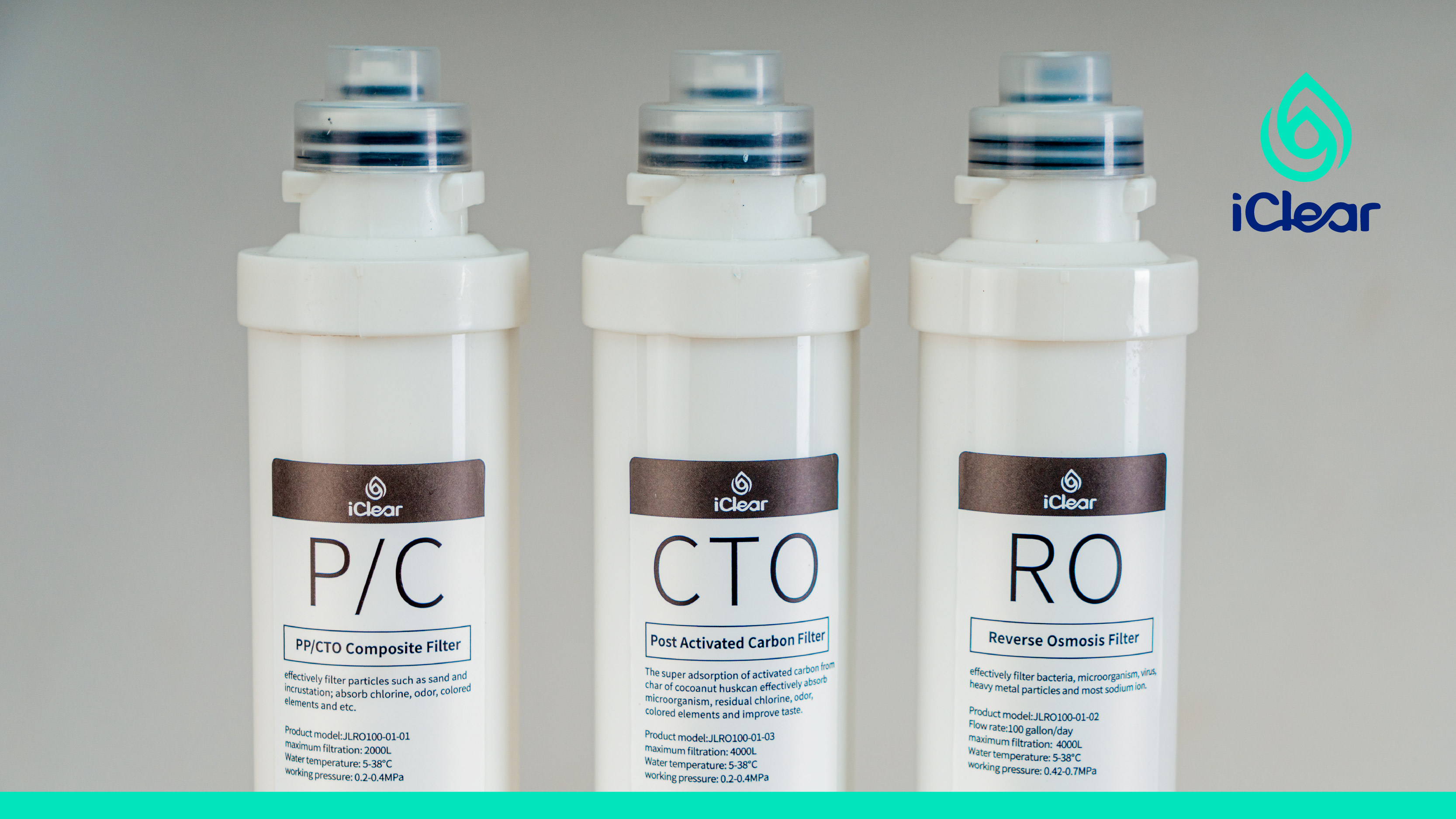
There are many ways to treat water. But when it comes to producing genuinely pure, safe drinking water in Kenya's challenging water environment, one technology stands above the rest: Reverse Osmosis. Here is how it works and why it is at the heart of every iClear water purification system. What is Reverse Osmosis? Reverse Osmosis, commonly known as RO, is a water purification process that forces water through an extremely fine semi-permeable membrane. The pores in this membrane are so small, measuring approximately 0.0001 microns, that only water molecules are small enough to pass through. Everything else, including bacteria, viruses, dissolved heavy metals, chemicals, and sediment, is left behind and flushed away. To put that in perspective, a human hair is approximately 75 microns in diameter. The Reverse Osmosis membrane filters contaminants that are thousands of times smaller than that. Reverse Osmosis removes up to 99% of dissolved contaminants from water, including lead, arsenic, fluoride, nitrates, bacteria, viruses, and chlorine byproducts. It is the most comprehensive water purification technology available for home and commercial use. The Reverse Osmosis process, step by step A standard Reverse Osmosis water filtration system works through multiple stages before water reaches your glass: 1. Pre-filtration: Water first passes through sediment and carbon pre-filters that remove larger particles, chlorine, and organic compounds. This protects the RO membrane from damage and extends its lifespan. 2. RO membrane filtration: Water is pushed under pressure through the semi-permeable membrane, which blocks dissolved contaminants including heavy metals, bacteria, viruses, and chemical residues. 3. Post-filtration: A final carbon filter polishes the water, removing any remaining taste or odour impurities before it reaches your tap. 4. Storage and delivery: Purified water is stored in a dedicated tank and delivered on demand through a dedicated faucet, ready to drink at any time. Why Reverse Osmosis is ideal for Kenya's water conditions Kenya's water supply presents a unique set of challenges that make Reverse Osmosis the most appropriate solution for the majority of households and businesses. Municipal water in Nairobi and other urban centres is treated, but ageing distribution infrastructure means contamination can occur between the treatment plant and your tap. Borehole water in many regions, particularly the Rift Valley, contains naturally high levels of fluoride, iron, and nitrates that simpler filters cannot remove. Surface water sources carry microbial risks that require thorough treatment. Reverse Osmosis addresses all of these challenges in a single system, making it the technology of choice for homes, offices, schools, and businesses across Kenya. Why iClear chose Reverse Osmosis as its core technology iClear Wellife Service Limited has built its entire product range around Reverse Osmosis technology because it is simply the most reliable way to guarantee safe water, regardless of the source. Every iClear water purifier is engineered to deliver laboratory-grade water quality consistently, day after day. iClear's systems are KEBS-certified, meaning they have been independently verified by the Kenya Bureau of Standards to meet Kenya's highest water safety benchmarks. This is not just a quality standard. It is a guarantee. Free delivery and professional installation included Getting the technology right is only part of the equation. Correct installation is just as important. An improperly installed Reverse Osmosis water filter can underperform or even introduce contamination risks. This is why iClear Kenya includes free delivery and professional installation with every purchase, covering Nairobi, its environs, and Nakuru. Every iClear system is installed by trained technicians who understand both the technology and Kenya's local water infrastructure. No other water purifier brand in Kenya offers this level of service as standard. It is part of what makes iClear the smarter choice. Ready to experience the power of Reverse Osmosis? Contact iClear Kenya today. Our team will help you find the right RO system for your home or office, with free delivery and professional installation in Nairobi and Nakuru. Tags: Reverse Osmosis water filtration, Reverse Osmosis water filter Kenya, water purifier Kenya, iClear water purifier, iClear Wellife Service Limited, iClear Kenya, water purification machine, water filter Kenya
At iClear Kenya, clean water is not just a product. It is a promise. And the best measure of that promise is not what we say about ourselves, but what our customers experience every day. Here is a look at the real stories behind the iClear community. Why customer experience matters in water purification Choosing a water purifier in Kenya is a decision that affects the health of everyone in your household. It is not a purchase to make lightly, and it should not be made based on marketing alone. Real customer experiences give you something far more valuable: honest, lived proof that a product works. At iClear Wellife Service Limited, we hear from our customers regularly. Across Kenya and Africa, families, businesses, and institutions have shared what switching to an iClear water purifier has meant for them. What customers consistently tell us “The water tastes noticeably different…” One of the first things new iClear users notice is the taste. Water that once tasted of chlorine, metal, or earth becomes clean, neutral, and genuinely refreshing. For many families, this is the moment they realise how much their previous water quality was affecting them. “Fewer stomach problems in the household…” Across our customer base, a recurring theme is the reduction in stomach upsets, particularly in children, after installing an iClear water purification machine. What was once assumed to be a food or environmental issue often turns out to have been a water quality issue all along. “The cost savings are real…” Many of our customers previously spent thousands of shillings every month on bottled water. After switching to iClear, that cost disappears. The savings compound month after month, year after year, making the initial purchase one of the smartest financial decisions a household can make. “Installation was seamless and professionally done…” A theme that comes up repeatedly in customer feedback is how smooth the installation experience was. Many customers had previously dealt with general plumbers who caused unintended damage to their water systems when installing other fixtures. With iClear, that concern is eliminated entirely. iClear provides free delivery and professional installation in Nairobi, its environs, and Nakuru, carried out by technicians who know exactly what they are doing. Customers consistently tell us that this is something they did not expect and something no other brand offered them. It is a detail that makes a significant difference. “The service makes the difference…” Customers frequently highlight the quality of iClear's after-sales support. From the initial consultation to ongoing maintenance, the iClear team is responsive, professional, and genuinely invested in making sure the system performs. For many customers, this service relationship is what keeps them with iClear Kenya long-term. "We stopped buying bottled water entirely after getting the iClear standard purifier. The water quality is excellent, and the installation was done so professionally. The team has been very supportive whenever we needed help." iClear customer, Nairobi Why iClear customers stay Customer retention is one of the strongest signals of product quality. At iClear Wellife, the overwhelming majority of our customers remain with us long after the initial installation, not because they are locked in, but because the results speak for themselves. A KEBS-certified water filtration system powered by Reverse Osmosis technology does not just purify water once. It does so consistently, day after day, for years. That reliability is what builds trust, and trust is what builds loyalty. iClear across Kenya and Africa iClear water is not just a Nairobi story. Our domestic water purifiers are installed in homes, schools, offices, and businesses across Kenya and Nigeria. Every installation represents a household that no longer has to worry about what is in their water, and that is exactly what drives us. Join the iClear community If you have been on the fence about investing in a water purifier machine for your home, the experiences of thousands of iClear customers across Africa are a powerful endorsement. Clean water is not a luxury, and with iClear, it has never been more accessible or more professionally delivered. Experience the iClear difference for yourself. Contact iClear Kenya today. Join a growing community of households and businesses that have made the switch to genuinely clean water, with free delivery countrywide and free professional installation in Nairobi and Nakuru. Tags: iClear water, iClear Kenya, iClear Wellife Service Limited, iClear water purifier, water purifier Kenya, water purification machine, water filtration system, Reverse Osmosis, domestic water purifiers Kenya, iClear Wellife
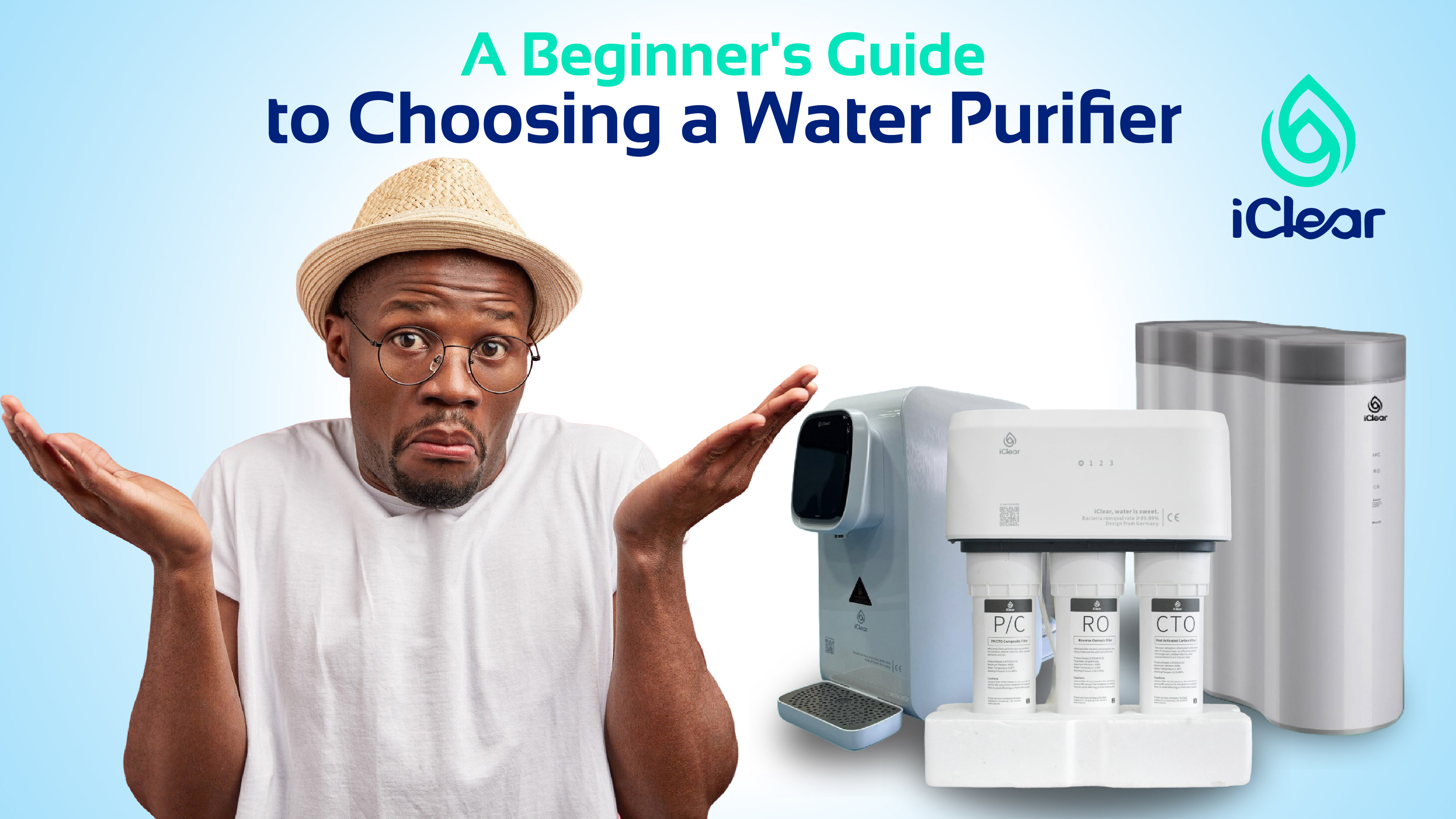
The water purifier market in Kenya has grown rapidly, and with so many options available, choosing the right one can feel overwhelming. This guide breaks it down simply, so you can make a confident, informed decision for your home or business. Step 1: Know your water source The first question to ask is where your water comes from. Different sources carry different risks, and the right water purification machine depends on what you are dealing with: Municipal/tap water, typically treated but may contain chlorine byproducts, heavy metals from old pipes, and bacteria from distribution Borehole water, with risk of fluoride, nitrates, iron, and microbial contamination Rainwater, relatively clean at source but can pick up contaminants from roofs, gutters, and storage tanks Surface water from rivers and dams, the highest contamination risk, requiring the most comprehensive treatment Step 2: Understand the technology Not all water filters are created equal. Here is a quick overview of the main technologies available: Activated carbon filters, good for taste and odour but limited against bacteria and heavy metals Ceramic filters, effective against bacteria and sediment but slow and not suitable for chemical contaminants UV purifiers, kills bacteria and viruses but does not remove dissolved chemicals or heavy metals Reverse Osmosis (RO), the most comprehensive solution, removing up to 99% of all contaminants including bacteria, viruses, heavy metals, and chemicals For Kenya's water conditions, Reverse Osmosis is the recommended standard. It is the technology at the heart of every iClear water purifier, and it is why iClear systems are trusted across Kenya and Africa. Step 3: Look for certification In Kenya, the Kenya Bureau of Standards (KEBS) is the benchmark for water purification equipment. Always look for a water purifier that carries KEBS certification. It means the product has been independently tested and verified to meet national safety standards. Every iClear water purifier is KEBS-certified, giving you the confidence that what you are installing in your home has been validated by an independent authority. Step 4: Consider capacity and usage How much water does your household use daily? A single person needs roughly 2 to 3 litres of drinking water per day. A family of five needs at least 10 to 15 litres. Make sure the water purification machine for home use you choose has the capacity to meet your daily needs without running dry. Step 5: Factor in the total cost, including installation When evaluating the water purifier price in Kenya, most buyers look at the machine price and stop there. But installation is a cost that catches many people off guard. Hiring a general plumber who is unfamiliar with water purification systems is a risk. Incorrect installation can disrupt your home's entire water supply, and the cost of fixing it can exceed what you paid for the machine. This is one of the most overlooked advantages of choosing iClear Wellife. Every iClear purchase includes free delivery and professional installation in Nairobi, its environs, and Nakuru, carried out by technicians who are trained specifically in water purification systems. No other water purifier brand in Kenya offers this as standard. With iClear, what you see is what you pay. Free delivery, free professional installation, and a KEBS-certified system set up correctly from day one. No hidden costs, no risk to your plumbing. Why iClear is Kenya's smartest choice With years of experience serving homes and businesses across Kenya and Africa, iClear Kenya combines cutting-edge Reverse Osmosis water filtration technology with unmatched local expertise and a service offering that no competitor matches. Whether you are a first-time buyer or upgrading an existing system, iClear has the knowledge and the product range to match your needs. Ready to choose the right water purifier for your home? Contact iClear Kenya today for a free consultation. We will identify the perfect solution for your water source and budget, and deliver and install it for free in Nairobi and Nakuru. Tags: water purifier Kenya, water purification machine, water filter, Reverse Osmosis, iClear water purifier, water purification machine for home use, water purifier price Kenya, iClear Wellife, iClear Kenya, water filtration system Kenya
Most people only think about their water quality after something goes wrong, a stomach illness, a strange smell, or a warning from a neighbour. But the signs that your home needs a water filtration system are usually there long before a crisis hits. Here are 10 you should never ignore. 1. Your water has an unusual smell A rotten egg smell often signals hydrogen sulphide, a gas produced by certain bacteria in groundwater. A chlorine smell suggests heavy chemical treatment. Either way, something in your water needs addressing. 2. Your water tastes metallic or bitter A metallic taste is one of the most common signs of heavy metal contamination, including iron, copper, zinc, or lead. These are not just unpleasant. They are a genuine health risk with long-term exposure. 3. Your water looks cloudy or discoloured Turbid or discoloured water is a visible sign of suspended particles, sediment, or microbial activity. If your water is not crystal clear, it is not clean enough. 4. You or your family experience frequent stomach upsets Recurring diarrhoea, nausea, or stomach cramps, particularly in children, can be a sign of waterborne bacteria or parasites. Many Kenyans attribute these symptoms to food without investigating their water source. 5. You rely on a borehole or surface water source Boreholes and surface water sources are among the most vulnerable to contamination from agricultural runoff, industrial waste, and naturally occurring minerals. Without a certified water purification machine, the risk is ongoing. 6. Your pipes or appliances show scale build-up White or yellowish scale deposits on kettles, taps, and water heaters are a sign of hard water, water with high mineral content. Over time, hard water damages appliances, clogs pipes, and is linked to skin and digestive issues. 7. Your skin feels dry or itchy after bathing Chlorine and hard water minerals strip moisture from the skin. If you notice persistent dryness or irritation, your water quality, not your soap, could be the culprit. 8. Your laundry looks faded or feels stiff Hard water and certain chemical contaminants react with detergents to reduce their effectiveness. If your clothes are coming out of the wash looking worse than they went in, your water quality deserves attention. 9. You spend a lot of money on bottled water If your household relies heavily on bottled water because you do not trust the tap, you are already paying a premium for clean water, just inefficiently. A domestic water purifier is a smarter, more sustainable, and more cost-effective long-term solution. 10. You have never tested or treated your water This one is simple: if you do not know what is in your water, you cannot know whether it is safe. Many contaminants, including arsenic, nitrates, and certain bacteria, are completely odourless and tasteless. The only way to know for certain is to test and treat. If any of these signs sound familiar, it is time to take action. A water filtration system for your home is not a luxury. In Kenya's water landscape, it is a necessity. One more thing most buyers overlook: Installation Once you decide to get a water purification machine, the next question is who installs it. This is where many Kenyan households make a costly mistake. A general plumber who is unfamiliar with water purification systems can inadvertently damage your existing water infrastructure, creating a problem far bigger than the one you set out to solve. iClear Kenya offers free delivery and professional installation in Nairobi, its environs, and Nakuru, handled by trained technicians who specialise in water purification systems. No other water purifier brand in Kenya provides this. It is one less thing to worry about, at no extra cost. The iClear solution iClear Kenya offers KEBS-certified water purification machines powered by Reverse Osmosis technology, designed specifically for Kenyan homes and businesses. Whether you are on municipal water, borehole, or a community supply, iClear has a solution that fits your needs and your budget. Recognised any of these signs in your home? Contact iClear Kenya today for a free consultation. We will recommend the right solution and deliver country wide for free and install it for free in Nairobi and Nakuru. Tags: water filtration system, water filtration system for home, water purification machine, domestic water purifiers Kenya, iClear Kenya, water filter Kenya, water purifier Kenya
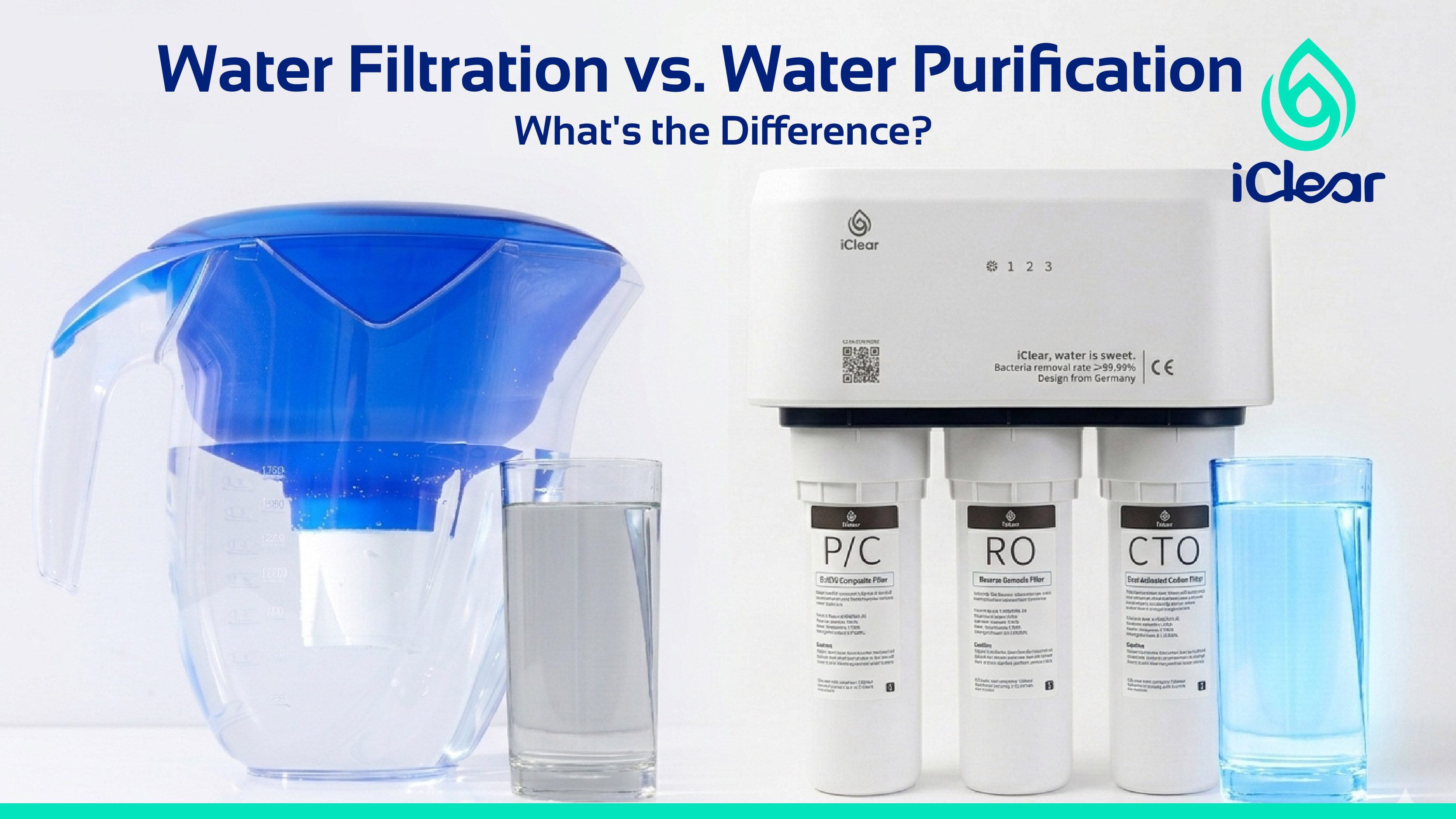
If you have been shopping for a water treatment solution, you have probably come across both the terms "water filter" and "water purifier," sometimes used interchangeably. But they are not the same thing. Understanding the difference could be the most important decision you make for your family's health. What is water filtration? A water filtration system works by passing water through one or more physical barriers, typically activated carbon, ceramic, or sand, to remove particles, sediment, chlorine, and some bacteria. Filtration is excellent for improving the taste and odour of water, and for removing visible impurities. However, standard filtration has limits. Most basic water filters cannot remove dissolved heavy metals, viruses, or microscopic chemical contaminants. This is an important distinction, especially in a country like Kenya where water sources are exposed to a wide range of pollutants. What is water purification? Water purification goes several steps further. A true water purification machine uses advanced processes such as Reverse Osmosis (RO), ultraviolet (UV) disinfection, or a combination of both, to remove not just particles, but also dissolved contaminants, heavy metals, bacteria, viruses, and chemical residues. The result is water that is not just cleaner. It is genuinely pure. This is the standard that iClear water purifiers are built to deliver. Think of it this way: a filter is like a sieve. It catches what it can see. A purifier is like a complete cleaning system. It eliminates what the sieve misses entirely. Reverse Osmosis: the gold standard in purification Reverse Osmosis water filtration works by forcing water through a semi-permeable membrane with pores so tiny that only water molecules can pass through. Everything else, including heavy metals, bacteria, viruses, fluoride, and nitrates, is left behind and flushed away. This technology is widely regarded as the most effective method for producing safe drinking water, and it is at the core of every iClear water purifier. iClear's systems are KEBS-certified, meaning they have been independently verified to meet Kenya's highest water safety standards. Which one do you need in Kenya? For most Kenyan households, whether on municipal supply, borehole water, or a community source, water purification is the safer, smarter choice. Kenya's water supply faces challenges that go beyond what a basic water filter can address, including fluoride contamination in the Rift Valley, industrial runoff in urban areas, and microbial risks in rural communities. A domestic water purifier in Kenya equipped with Reverse Osmosis technology is built precisely for these conditions. It does not just make your water look clean. It makes it genuinely safe to drink. Installation matters more than most people think Buying the right water filter in Kenya is only half the equation. How it is installed determines whether it actually works. Many buyers make the mistake of hiring a general plumber to install their system, only to find that incorrect installation compromises the entire water setup in their home. iClear Kenya provides free delivery and professional installation in Nairobi, its environs, and Nakuru. Every iClear system is set up by trained technicians who know the product and your water infrastructure. No guesswork, no risk to your existing plumbing, and no additional cost. This is something no other water purifier brand in Kenya currently offers. iClear: built for Kenya's water reality iClear Wellife designs its water purification systems with Kenya's specific water challenges in mind. From the source to your glass, every iClear machine is engineered to deliver consistent, laboratory-grade water quality at a price point that makes sense for Kenyan families and businesses. Not sure whether you need a filter or a purifier? Talk to the iClear Kenya team. We will assess your water source, recommend the right solution, and deliver country wide for free and install it for free in Nairobi and Nakuru. Tags: water filtration system, water filter, water purifier, water purification machine, Reverse Osmosis water filter Kenya, iClear water purifier, domestic water purifiers Kenya, iClear Wellife
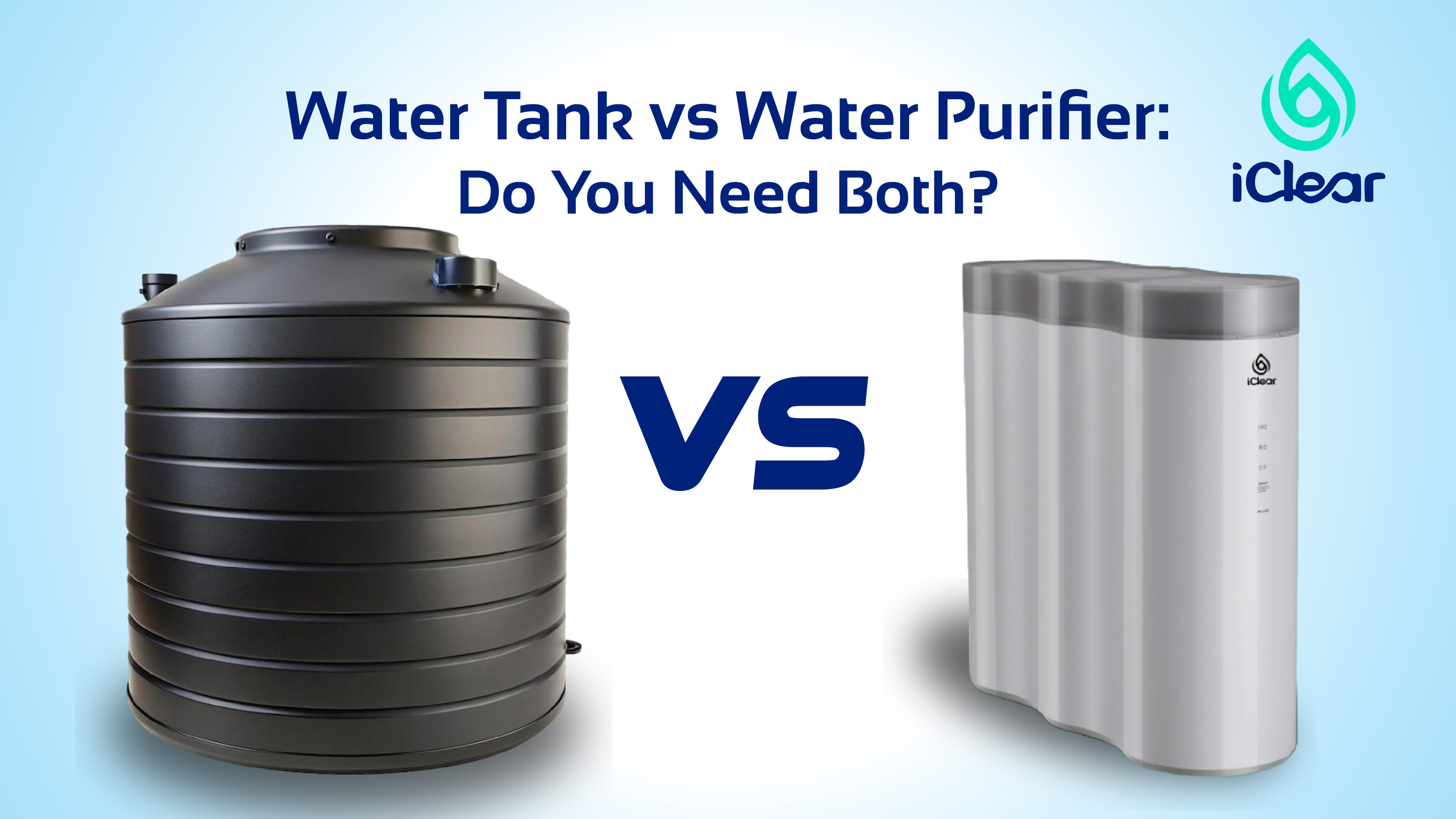
Many homes in Kenya have water tanks, but fewer invest in water purification. The two are often confused, yet they serve completely different purposes. A water tank stores water, while a water purifier treats water. What a Water Tank Does Water tanks are essential for: Storing water during supply interruptions Maintaining pressure in homes and apartments Providing backup during shortages However, tanks do not improve water quality. In fact, they can sometimes make it worse if not maintained. What a Water Purifier Does A water purifier removes: Bacteria and viruses Sediments and turbidity Dissolved contaminants like fluoride or heavy metals This ensures water is safe for drinking, not just available. Key Differences Feature Water Tank Water Purifier Purpose Storage Treatment Improves quality No Yes Removes bacteria No Yes Removes chemicals No Yes The Hidden Risk Water stored in tanks can become contaminated over time due to: Dust and debris Poor cleaning Heat exposure This means even clean water can become unsafe before use. Do You Need Both? In most Kenyan homes, the answer is yes. The tank ensures availability The purifier ensures safety Final Thoughts A water tank solves a supply problem. A purifier solves a health problem. Treating them as interchangeable can lead to serious water safety risks.

Borehole water is widely used across Kenyan homes, schools, and commercial properties. While boreholes are convenient and reliable, the water can contain various contaminants, including: Bacteria and viruses Nitrates and fluoride Sediments and turbidity Heavy metals Choosing the right purification system is critical for ensuring safe drinking water. Two of the most popular technologies for boreholes are Reverse Osmosis (RO) and Ceramic filters. How RO Filters Work Reverse Osmosis uses a semi-permeable membrane to remove a wide range of contaminants. Water is forced through the membrane under pressure, leaving impurities behind. RO systems typically remove: Bacteria and viruses Nitrates and fluoride Heavy metals (lead, arsenic, iron) Dissolved salts and minerals Advantages of RO: Comprehensive contaminant removal Produces very pure water Suitable for boreholes with high dissolved solids Limitations of RO: Requires electricity or pressure pump Wastes some water during purification Can remove beneficial minerals unless re-mineralization is included How Ceramic Filters Work Ceramic filters purify water using a porous ceramic material that blocks bacteria, sediments, and some larger microorganisms. Ceramic filters typically remove: Bacteria Sediments and turbidity Some parasites Advantages of Ceramic Filters: Simple to use, no electricity needed Long-lasting and easy to clean Low maintenance costs Limitations of Ceramic Filters: Cannot remove dissolved chemicals such as nitrates, fluoride, or heavy metals Water may need additional treatment if contamination is chemical in nature Comparison Table: RO vs Ceramic Filters for Boreholes Feature RO Filters Ceramic Filters Bacteria & Viruses Yes Yes Nitrates Yes No Fluoride Yes No Heavy Metals Yes No Sediment/Turbidity Yes Yes Electricity Required Yes No Maintenance Moderate Low Water Wastage Some None Which Is Better for Kenyan Boreholes? The answer depends on the quality of your borehole water: High dissolved solids, nitrates, or heavy metals: RO is the better choice. It ensures chemical contaminants are removed, producing safe water for families and infants. Learn more about the risks of contaminants in Kenyan water in Is Lead in Kenyan Water a Hidden Risk?. Low chemical contamination, mostly biological or sediment issues: Ceramic filters are sufficient. They are cost-effective, low-maintenance, and ideal for communities with reliable water testing and moderate contamination levels. For tips on managing seasonal water quality, see Kenya Tap & Borehole Water Quality. Seasonal Considerations During rainy seasons, borehole water can experience increased turbidity and runoff contamination, introducing sediments and microorganisms. Even a ceramic filter may require extra care during this period. Checking seasonal water risks helps ensure continuous safe water. Practical Tips for Borehole Owners Test your borehole water regularly to determine contaminants. Choose RO if chemical contaminants (nitrates, fluoride, heavy metals) are present. Choose ceramic filters for primarily sediment or bacterial contamination in low-risk areas. Combine filtration with UV or chlorine treatment for added safety in rainy seasons. Maintain and clean filters according to manufacturer instructions. Conclusion Both RO and ceramic filters play important roles in ensuring safe drinking water from Kenyan boreholes. RO is ideal for chemical and microbial contaminants, while ceramic filters are suitable for biological and sediment removal. Understanding the water quality of your borehole, seasonal changes, and family needs will guide the best choice. Testing your water and selecting the appropriate system ensures safe, clean drinking water year-round.

When choosing a water purifier, many people encounter three common technologies: UV, RO, and UF. Each system works differently and removes different types of contaminants from water. For households, landlords, and offices trying to choose the right purification system, understanding what each technology removes is important. The effectiveness of a purifier depends largely on the type of contaminants present in the water. This is especially relevant in Kenya where many homes rely on borehole water, which can contain dissolved salts, fluoride, nitrates, and other minerals that basic filters cannot remove. Before choosing a purification method, water testing is recommended so that treatment is based on actual water quality rather than assumptions. What Is UV Water Purification? Ultraviolet purification uses ultraviolet light to disinfect water. UV light damages the DNA of microorganisms, preventing them from reproducing. UV systems are commonly used to remove biological contaminants. What UV systems remove: • Bacteria • Viruses • Some parasites However, UV purification does not remove dissolved substances from water. This means contaminants such as fluoride, heavy metals, and salts remain in the water even after UV treatment. UV systems also require relatively clear water to function effectively because high turbidity can block the light. What Is UF Water Filtration? Ultrafiltration, commonly referred to as UF, uses a physical membrane that filters water through microscopic pores. These pores block certain microorganisms and particles. UF filtration typically removes: • Bacteria • Some parasites • Suspended particles However, UF membranes cannot remove dissolved chemicals or minerals. Contaminants such as fluoride, nitrates, and heavy metals pass through the membrane. UF systems are often used in areas where the main concern is microbial contamination rather than chemical contamination. What Is Reverse Osmosis? Reverse osmosis, often abbreviated as RO, is a filtration technology that uses a semi permeable membrane to remove dissolved substances from water. Pressure forces water through the membrane, leaving many contaminants behind. RO systems can remove: • Bacteria • Viruses • Dissolved salts • Fluoride • Nitrates • Heavy metals • Many chemical contaminants Because of this broad removal capability, RO systems are often used where water contains a mix of biological and chemical contaminants. This is particularly relevant for borehole water, which can contain high levels of dissolved minerals depending on local geology. Comparison of UV, RO, and UF Technologies The following table summarizes what each purification technology can remove. Contaminant UV UF RO Bacteria Yes Yes Yes Viruses Yes No Yes Parasites Yes Yes Yes Sediment No Yes Yes Fluoride No No Yes Heavy metals No No Yes Nitrates No No Yes Dissolved salts No No Yes This comparison shows that while UV and UF address biological contamination, reverse osmosis addresses both biological and chemical contaminants. Which System Is Best for Borehole Water? Many homes in Kenya rely on borehole water. While boreholes provide a reliable supply, the water often contains dissolved minerals such as fluoride or nitrates. Basic filtration technologies may not be sufficient in these situations. Reverse osmosis is commonly used for borehole water because it can remove dissolved contaminants that UV and UF systems cannot address. For example, high nitrate levels in groundwater can be dangerous for infants. This is discussed in detail in our article Nitrates in Borehole Water: A Silent Danger for Babies. Understanding the specific contaminants present in your water supply helps determine which purification system is most appropriate. Why Water Testing Matters Before Choosing a System Different areas in Kenya may experience different water quality challenges. Municipal tap water may primarily require microbial disinfection, while borehole water may contain higher levels of dissolved minerals. Testing can reveal contaminants such as: • Fluoride • Nitrates • Heavy metals • Bacterial contamination • Total dissolved solids Choosing a purification system based on test results ensures that the selected technology addresses the actual risks present in the water. Final Thoughts UV, UF, and reverse osmosis technologies each play an important role in water purification. However, they remove different types of contaminants. UV and UF systems are primarily designed to address biological contamination. Reverse osmosis is capable of removing both biological and chemical contaminants. For households using borehole water or facing multiple water quality challenges, understanding these differences is essential when selecting the right purification system. Testing water quality and choosing appropriate treatment technologies can help ensure safe and reliable drinking water for families and workplaces. Frequently Asked Questions What is the difference between UV, RO, and UF water purifiers? UV purifiers disinfect water by killing microorganisms. UF filters remove certain particles and bacteria through a membrane. RO systems remove both microorganisms and dissolved contaminants such as salts, fluoride, and heavy metals. Which purifier is best for borehole water? Reverse osmosis systems are commonly used for borehole water because they can remove dissolved minerals and contaminants that other technologies cannot.

One of the most common mistakes people make when buying a water purifier is choosing a system that doesn’t match their household size. A purifier that’s too small struggles to keep up with demand, while an oversized system can be unnecessarily expensive to maintain. In regions across Kenya such as Nairobi, Nakuru, Mombasa, and Kisumu, differences in water quality, consumption habits, and household sizes mean that choosing the right water purifier requires more than guesswork. Homes using municipal tap water, borehole water, or mixed sources all have different purification needs. At iClear, our water purifiers are designed in different capacities to match these realities, from compact systems for small households to higher-capacity RO purifiers for larger families and shared spaces. This article breaks down a simple, practical formula to help you choose a water purifier that fits your household’s real needs. Why Household Size Matters More Than You Think Water purifiers are designed to handle a specific volume of water over time. When household size is underestimated, several problems follow. What Happens When Capacity Is Too Small Issue Impact Filters wear out faster Higher replacement costs Increased maintenance More servicing required User frustration Loss of trust in the system Matching purifier capacity to household size ensures consistent water quality and predictable maintenance. Step 1: Estimate Daily Water Consumption Per Person Purified water is commonly used for: Drinking Cooking In Kenyan households, average daily consumption per person falls within this range. Daily Water Use Estimate Usage Level Liters per Person per Day Low usage 3 liters Average usage 4 liters (recommended for planning) High usage 5 liters For most households, 4 liters per person per day is a safe planning figure. Step 2: Multiply by Household Size Once you know the per-person estimate, multiply it by the number of people in your home. Daily Household Water Requirement Household Size Estimated Daily Need 3 people 12 liters 5 people 20 liters 8 people 32 liters Now factor in peak usage, such as mornings, weekends, or when guests are present. Step 3: Factor in Children, Elderly, and Guests Some households require more purified water due to lifestyle and family structure. When to Add Extra Capacity Situation Why It Increases Usage Children in the home Frequent drinking throughout the day Elderly family members Water for medication and hydration Regular guests Higher peak demand Recommended adjustment: Add 20 to 30 percent extra capacity to your daily estimate if any of the above apply. Step 4: Understand Purifier Capacity and Filter Lifespan Water purifiers are typically rated using two key metrics. Key Purifier Capacity Ratings Rating Type What It Means Consumption rate How much water can be consumed each day Water quality The different contaminant content in water Why Higher Capacity Matters for Larger Homes Benefit Result Longer filter life Fewer replacements Stable water quality Consistent performance Lower servicing frequency Reduced long-term costs Practical Household Size Guide Recommended System Approach by Household Size Household Size Key Characteristics Recommended Focus Small (1 to 3 people) Low daily consumption Compact, efficient systems Medium (4 to 6 people) Moderate to high usage Higher output, longer filter life Large (7 or more people) High daily demand Robust systems with planned maintenance Why Water Source Still Matters Household size alone is not enough. Water quality plays a major role. Household Size vs Water Source Scenario What Matters More Small home using borehole or salty water Strong purification Large home using municipal tap water Higher capacity Mixed water sources Both capacity and purification strength Tip: Always match capacity with water quality. Long-Term Benefits of Choosing Correctly When household size and purifier capacity are aligned, you benefit from: Benefits of the Right Match Benefit Long-Term Impact Consistent water quality Better health Longer filter life Lower costs Reduced maintenance Less downtime Better return on investment Smarter investment Most importantly, your purifier works quietly, reliably, and efficiently. Conclusion Choosing a water purifier based on household size doesn’t need to be complicated. By estimating daily consumption, accounting for real-life usage, and avoiding common assumptions, you can select a system that fits your household perfectly. The right purifier isn’t just about clean water. It’s about convenience, efficiency, and long-term peace of mind.
 Health & Wellness
 Water Quality Insights
 Health & Wellness