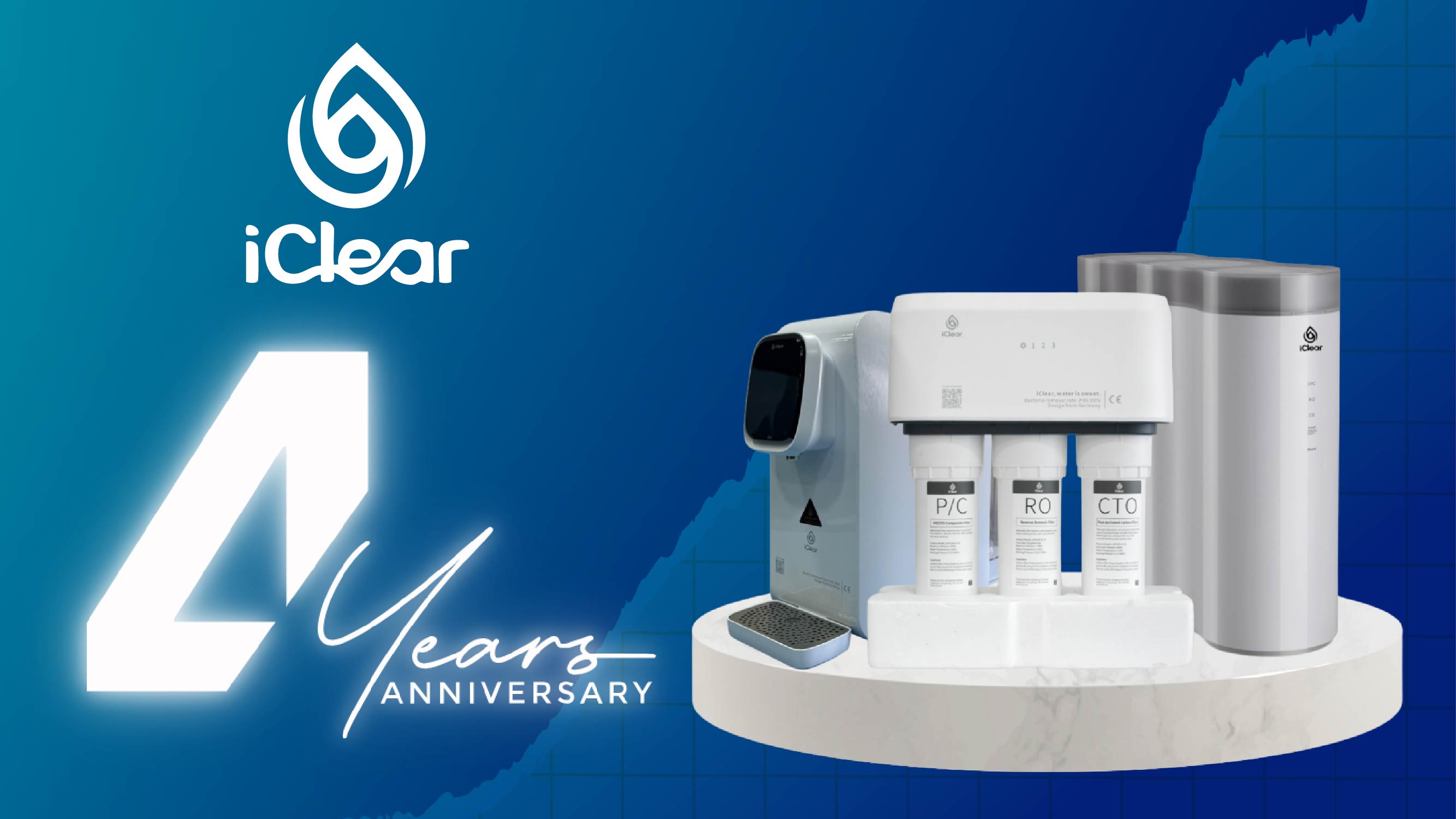

When iClear Kenya opened its doors four years ago, it walked into a market that didn’t quite believe it had a problem. Clean water, for most Kenyan households, was something you boiled, bought in a twenty-litre dispenser, or simply trusted because it looked clear coming out of the tap. The idea that the water in your home, even when it looked fine, might still be doing quiet damage to your health was not yet part of the everyday conversation. That gap between what people knew and what was actually flowing through their pipes is where iClear chose to plant itself. Today, four years later, the company operates from Ecobank Towers in Nairobi and a branch in Nakuru, with a product range spanning the iClear Standard, the iClear Desktop, the iClear Premier, and an Office-Use leasing model built for workplaces. But getting here was not a straight line. The hardest part was not the product. It was the belief. Ask the team about the toughest stretch of those first two years and the answer is not about logistics, pricing, or competition. It was about trust. The market either didn’t believe it needed water filtration in the first place, or it had already been burned by low-quality systems that promised much and delivered little. Convincing a customer that clean water was a necessity, not a luxury, took time. So iClear leaned into something more patient than marketing. It leaned into education. Instead of pitching, the team started showing. Customers were walked through the actual condition of their water, what was in it, what came out of the filter, and what it meant for the people drinking it every day. That demonstration, paired with reliable installation and after-sales service, started doing the work that no advert could. “Word-of-mouth started working in our favour.” What actually moved the needle Looking back over four years, the single biggest engine of growth has not been a campaign, a discount, or a clever channel. It has been customer referrals and reviews. When a household experienced the difference, the kind of difference you can see, taste, and feel within days, they told their friends, their family, their neighbours, sometimes their entire WhatsApp group. Behind those referrals sat one quiet, deliberate decision. iClear chose, early on, to prioritise long-term customer satisfaction over the short-term sale. That meant investing in proper installation rather than rushing the job, building support that customers could actually reach, and making sure every buyer genuinely understood what their system was doing for them. The pay-off arrived slowly, then all at once, in the form of repeat business, organic referrals, and a reputation the team didn’t have to buy. A different customer than the one we started with Four years has also changed who walks through iClear’s door. In year one, the typical customer was an early adopter. Someone who was already health-conscious, or someone whose water had given them a visible problem they could no longer ignore, discolouration, sediment, the kind of issues you cannot un-see once you’ve seen them. Today the picture looks different. Families, offices, and even landlords are arriving proactively, before there is a visible problem. They ask sharper questions. They compare options. They make decisions faster, because the awareness around water quality has finally caught up with the reality. The conversation iClear was trying to start four years ago is now a conversation Kenyan households are starting on their own. Where the next chapter goes If the first four years were about building trust in a sceptical market, the next chapter is about reach. The goal is to make clean, safe water available to more households across Kenya, not only in the major cities but in the towns and suburbs where filtration is still treated as an afterthought. That means expanding distribution, sharpening service efficiency, and continuing the patient work of educating the market. The ambition is simple to state and harder to deliver. Make water filtration a standard in the Kenyan home, not a niche purchase. Four years in, iClear is closer to that than it was when it started, and the conversation has moved with it. iClear Kenya is marking its fourth anniversary in June 2026.
Borehole water it’s one of the most common drinking water sources in Kenya, relied upon by millions of households in both rural and urban areas. It feels clean. It looks clear. And many Kenyans have been drinking it for years without obvious ill effects. But the real question is not whether it tastes fine. It is whether it is actually safe. Why borehole water feels safe but often is not The most dangerous contaminants in borehole water are invisible. They have no colour, no smell, and no taste. This is what makes borehole water particularly deceptive: it can look and taste perfectly fine while carrying contaminants that cause serious harm over time. Unlike surface water, which shows visible signs of contamination, borehole water draws from underground aquifers. These aquifers absorb minerals, chemicals, and in some cases biological contaminants from the surrounding geology and soil, a process that takes place out of sight, deep underground, long before the water ever reaches your tap. Borehole water in Kenya has been found to contain elevated levels of fluoride, nitrates, iron, arsenic, coliform bacteria, and in coastal regions, high salinity. Many of these contaminants are odourless and tasteless. You will not know they are there until the health effects appear. The specific risks of borehole water in Kenya Fluoride The Rift Valley and large parts of central Kenya sit on geological formations naturally high in fluoride. Long-term consumption of fluoride above safe levels causes dental fluorosis, visible as brown staining and pitting on teeth, and in more severe cases, skeletal fluorosis, a painful and debilitating bone condition. Children are particularly vulnerable. Nitrates Nitrate contamination in borehole water typically comes from agricultural runoff, pit latrines, and septic systems. High nitrate levels are especially dangerous for infants, causing a condition known as blue baby syndrome, where the blood's ability to carry oxygen is severely reduced. In adults, long-term exposure is linked to increased cancer risk. Iron and manganese Elevated iron levels are extremely common in Kenyan borehole water. While not immediately dangerous in small quantities, high iron content stains plumbing and laundry, damages appliances, and can cause liver damage with sustained long-term consumption. Manganese at elevated levels is linked to neurological effects, particularly in young children. Bacteria and pathogens Borehole water is not automatically sterile. Coliform bacteria, including E. coli, can infiltrate aquifers through poorly constructed boreholes, cracked casings, or proximity to latrines and waste sites. These bacteria cause gastroenteritis, diarrhoea, and in severe cases, life-threatening illness. Salinity and total dissolved solids In parts of Kenya, particularly coastal and semi-arid regions, borehole water can carry extremely high levels of dissolved salts and minerals. Long-term consumption of high-TDS water puts strain on the kidneys and cardiovascular system. What boiling does and does not fix Many Kenyan households boil their borehole water believing this makes it safe. Boiling is effective at killing bacteria and viruses. But it does nothing to remove fluoride, nitrates, heavy metals, or dissolved salts. In fact, boiling concentrates these dissolved contaminants by reducing water volume. Boiling contaminated borehole water does not make it safer from a chemical standpoint. It can actually make it worse. Boiling kills biological threats but leaves chemical ones behind. For borehole water in Kenya, only Reverse Osmosis filtration removes both categories of contamination reliably and completely. The only solution that covers all borehole water risks Reverse Osmosis is the only technology capable of removing the full spectrum of borehole water contaminants in a single system. The iClear water purifier uses multi-stage RO filtration to strip out fluoride, nitrates, heavy metals, bacteria, viruses, dissolved salts, and sediment, delivering water that is genuinely safe regardless of what the borehole source contains. iClear Kenya provides free delivery and professional installation in Nairobi, its environs, and Nakuru. Their systems are KEBS-certified and designed specifically for Kenya's diverse and often challenging water conditions. If your home relies on borehole water, the question is not whether to treat it. The question is whether you are treating it thoroughly enough. A basic filter is not enough. An iClear Reverse Osmosis system is. Is your borehole water actually safe? Contact iClear Kenya today. Our team will help you choose the right RO purifier for your water source, with free delivery and installation in Nairobi and Nakuru. Tags: borehole water Kenya, water purifier Kenya, water purification machine, water filter Kenya, iClear water purifier, iClear Kenya, Reverse Osmosis water filter Kenya, domestic water purifiers Kenya
Reverse Osmosis water filters are widely regarded as the most effective water purification solution available today. But how do you know if one is right for you? This guide covers everything Kenyan households and businesses need to know before making a decision. What does a Reverse Osmosis water filter actually do? A Reverse Osmosis water filter in Kenya does something that most conventional filters cannot: it removes contaminants at the molecular level. Using a pressurised semi-permeable membrane, an RO system strips out dissolved impurities that are invisible to the eye but potentially harmful to your health. This includes heavy metals like lead and arsenic, fluoride, nitrates, chlorine byproducts, bacteria, viruses, and agricultural chemical residues. The result is water that is not just filtered but genuinely purified, meeting or exceeding bottled water quality standards at a fraction of the cost. Is a Reverse Osmosis filter suitable for Kenya's water? Yes, and arguably more so than in many other countries. Kenya's water supply faces a range of challenges that make RO technology particularly well-suited: High fluoride levels in borehole water across the Rift Valley and parts of central Kenya Iron and manganese contamination common in groundwater sources Microbial risks from surface water and inadequately maintained distribution systems Chlorine and chemical treatment residues in municipal water Sediment and turbidity from unfiltered community supplies A Reverse Osmosis water filter addresses all of these in one system, which is why it has become the standard of choice for Kenyan households, offices, schools, and commercial facilities serious about water safety. Unlike basic carbon filters or UV systems, Reverse Osmosis does not just target one type of contaminant. It removes virtually everything that should not be in your water, making it the most complete solution available in the Kenyan market. What to look for in a Reverse Osmosis system in Kenya Not all RO systems are equal. When evaluating a water purification machine for your home or office, here is what matters: KEBS certification The Kenya Bureau of Standards (KEBS) certification is the most important quality signal in the Kenyan market. It confirms the system has been independently tested and meets national safety standards. Every iClear water purifier carries this certification. Number of filtration stages A quality RO system typically uses between 5 and 7 filtration stages, combining sediment pre-filters, carbon filters, the RO membrane, and post-filtration polishing. More stages generally mean more thorough purification and longer membrane life. Daily output capacity Consider how much purified water your household or office needs per day. An undersized system will struggle to keep up with demand. iClear's product range includes systems designed for different usage levels, from individual household use to high-capacity office environments. Maintenance and after-sales support RO membranes and filters require periodic replacement to maintain performance. Choose a supplier who offers reliable maintenance support rather than leaving you to source replacement parts independently. Why iClear is Kenya's leading Reverse Osmosis provider iClear Wellife has built its reputation on one principle: delivering genuinely pure water to Kenyan homes and businesses through technology that works and service that supports. Every iClear RO system is KEBS-certified, engineered for Kenya's specific water conditions, and backed by a team of trained technicians. Critically, iClear Kenya includes free delivery and professional installation with every purchase in Nairobi, its environs, and Nakuru. Incorrect installation is one of the most common causes of RO system underperformance. iClear eliminates that risk entirely by ensuring every system is set up correctly from day one. No other water purifier brand in Kenya provides free professional installation as standard. It is a detail that protects your investment and ensures your system delivers the water quality it was designed to produce. Looking for a Reverse Osmosis water filter in Kenya? Talk to iClear Kenya today. We will recommend the right system for your water source, household size, or office needs, and install it for free in Nairobi and Nakuru. Tags: Reverse Osmosis water filter Kenya, water purification machine, iClear water purifier, iClear Wellife, iClear Kenya, water filter Kenya, water purifier Kenya, water filtration system Kenya
Nitrates are naturally occurring compounds found in soil and water. They are commonly linked to agricultural fertilizers, septic systems, animal waste, and natural organic matter breakdown. In Kenya, borehole water is widely used in residential estates, rental properties, and rural homes. While boreholes provide independence from municipal supply, they can also carry dissolved contaminants such as nitrates. For adults, low to moderate nitrate exposure may not cause immediate symptoms. For babies, however, high nitrate levels can be dangerous. According to the World Health Organization, the safe limit for nitrates in drinking water is 50 mg/L (WHO Guidelines for Drinking-water Quality: https://www.who.int/publications/i/item/9789241549950). When levels exceed this threshold, infants are at risk of a condition known as methemoglobinemia, commonly called blue baby syndrome. What Is Blue Baby Syndrome? Blue baby syndrome occurs when nitrates interfere with the blood’s ability to carry oxygen. This condition is most common in infants under six months old. The Centers for Disease Control and Prevention explains that high nitrate exposure can convert hemoglobin into methemoglobin, reducing oxygen delivery in the body (CDC: https://www.cdc.gov/nceh/). Symptoms may include: • Bluish skin tone, especially around lips and fingers • Difficulty breathing • Fatigue • Irritability • Vomiting In severe cases, it can become life threatening. Because infants drink more water relative to their body weight than adults, they are especially vulnerable. How Do Nitrates Enter Borehole Water? Nitrates can seep into groundwater through: • Fertilizer runoff from farms • Leaking septic tanks • Animal waste • Poorly managed drainage systems • Heavy rainfall increasing soil leaching Areas near agricultural activity or densely populated developments with septic systems are at higher risk. Rainy seasons may temporarily increase nitrate levels due to surface runoff. Safe Nitrate Levels Explained Understanding lab results is critical. Below is a simple interpretation guide. Nitrate Level (mg/L) Risk Level Action Required 0 to 10 Safe Monitor 10 to 50 Moderate Test regularly 50+ Dangerous Immediate treatment If levels exceed 50 mg/L, water should not be used for infant formula preparation. Can Boiling Remove Nitrates? No. Boiling does not remove nitrates. In fact, boiling can increase nitrate concentration because water evaporates while dissolved compounds remain. This is a common misconception among families using borehole water. How to Test Borehole Water for Nitrates There are two primary methods: Laboratory testing. This is the most accurate method. Certified laboratories provide detailed reports showing nitrate concentration in mg/L. Home testing kits. These are available in some markets but are less precise than laboratory analysis. For families with infants, annual borehole testing is highly recommended. Properties using septic systems should test more frequently. Landlords operating rental units supplied by boreholes should also maintain documented test reports for compliance and tenant assurance. What Removes Nitrates from Water? Not all filters remove nitrates effectively. Below is a comparison of common treatment options. Treatment Method Removes Nitrates Effectiveness Suitable for Boreholes Boiling No Ineffective No Basic carbon filter No Ineffective No Reverse osmosis system Yes High Yes Ion exchange system Yes High Yes Reverse osmosis systems are widely recognized for reducing dissolved nitrates effectively. Multi stage systems are particularly effective for borehole water where multiple contaminants may be present. When selecting treatment systems, professional water testing should guide the decision rather than assumptions. Why This Matters for Kenyan Families Many parents focus on visible cleanliness. However, dissolved contaminants such as nitrates cannot be detected by sight or taste. Families in peri-urban areas, new housing developments, and rural regions relying on boreholes should take nitrate risks seriously, especially if there are infants in the home. Testing is affordable compared to the medical and emotional cost of preventable health complications. Final Thoughts Nitrates in borehole water are a silent risk that many families overlook. The WHO safe limit of 50 mg/L provides a clear benchmark. If levels exceed that threshold, immediate action is required, particularly where babies are concerned. Routine testing, proper treatment selection, and awareness can significantly reduce risk. Clean water for infants is not optional. It is foundational to safe early development.
If you live in Nairobi or Nakuru, chances are you’ve experienced water interruptions, changing water taste, or concerns about water safety. As these cities continue to grow rapidly, the pressure on water supply systems has increased, making water purification more important than ever for homes and workplaces alike. While municipal water is treated before distribution, what reaches your tap can be very different from what left the treatment plant. This is why more households and offices in urban Kenya are turning to reliable water purification solutions. Urban Growth and Its Impact on Water Quality Nairobi and Nakuru are among Kenya’s fastest-growing urban centers. This growth affects water quality in several ways: Aging pipelines that allow contamination Increased reliance on boreholes and supplementary sources Infrastructure strain during dry seasons Inconsistent water pressure causing backflow risks As cities expand, water systems struggle to keep up, increasing the likelihood of compromised drinking water. Why Treated Water Isn’t Always Fully Safe Many people assume municipal water is always safe to drink. While it is treated, several factors can affect its quality before it reaches your home: Old or corroded pipes Intermittent supply allowing contaminants to enter lines Storage tanks that are not regularly cleaned Mixing of sources such as borehole and surface water This means water may look clear but still contains dissolved salts, bacteria, or heavy metals. The Borehole Factor in Urban Estates In both Nairobi and Nakuru, boreholes are widely used in apartments, gated communities, and commercial buildings. Borehole water often contains: High Total Dissolved Solids (TDS) Salinity Hardness-causing minerals Naturally occurring metals Without proper purification, long-term consumption of such water can affect health and damage household appliances. Seasonal Changes Make Water Quality Unpredictable Water quality is not constant throughout the year. During rainy seasons: Runoff can introduce contaminants into water sources Sediment levels increase Storage systems are stressed During dry seasons: Borehole dependence increases Salinity and mineral concentration rise A purification system provides consistency despite these fluctuations. Why Water Purification Is No Longer Optional For urban households and offices, water purification is no longer a luxury. It is essential for: Safe daily drinking water Cooking and food preparation Protecting children and elderly family members Reducing long-term health risks Reverse Osmosis (RO) systems are particularly effective because they remove both biological contaminants and dissolved substances common in urban water supplies. Health Benefits of Purified Drinking Water Consistent access to clean water helps: Improve digestion and hydration Reduce waterborne illnesses Support immunity Enhance overall wellbeing For families with young children or elderly members, these benefits are especially important. Urban Living Requires Smarter Water Choices As Nairobi and Nakuru continue to expand, water challenges will likely increase, not decrease. Taking control of your drinking water at the point of use ensures safety regardless of source changes or infrastructure limitations. Conclusion Living in a major Kenyan city brings convenience, opportunity, and growth, but also new challenges, including water quality. With changing sources, aging infrastructure, and seasonal variations, water purification matters more than ever. Investing in a reliable purification system is one of the most practical steps urban households and offices can take to protect health and ensure peace of mind.
Across Kenya, more offices are rethinking how they provide drinking water to staff and visitors. What was once solved by bottled water deliveries or basic dispensers is now being replaced by a more reliable and cost-effective option: RO water purifier leasing. From small offices to large corporate spaces, businesses are discovering that leasing a Reverse Osmosis (RO) system offers better water quality, predictable costs, and fewer operational headaches. The Hidden Problems with Traditional Office Water Solutions Many offices still rely on bottled water or water dispensers connected to uncertain sources. While these may seem convenient, they come with hidden challenges: Rising monthly costs from water deliveries Inconsistent water quality Storage and hygiene concerns Plastic waste management Staff downtime when water runs out Over time, these issues impact both productivity and operating budgets. What Is RO Water Purifier Leasing? RO water purifier leasing allows offices to use a professionally installed RO system without purchasing it outright. The leasing provider supplies the system, installs it, and handles maintenance, filter replacements, and servicing, usually for a fixed monthly fee. This model shifts water purification from a capital expense to a predictable operational cost. Why Kenyan Offices Are Making the Switch 1. Predictable Monthly Costs Leasing eliminates large upfront purchases and fluctuating water delivery bills. Offices can budget accurately without worrying about sudden repairs. 2. Professional Maintenance Included RO systems require proper care to remain effective. Leasing ensures: Scheduled filter changes System checks Prompt service if issues arise This removes responsibility from office managers and facilities teams. 3. Consistent Water Quality for Staff RO systems remove bacteria, dissolved salts, heavy metals, and other contaminants. This ensures staff always have access to clean, safe drinking water - regardless of whether the source is municipal water or borehole water. Health and Productivity Benefits Clean drinking water directly affects: Staff hydration Concentration and energy levels Reduced sick days Workplace morale Providing high-quality water shows employees that their well-being is valued. Ideal Offices for RO Water Purifier Leasing RO leasing is especially beneficial for: SMEs and growing businesses Co-working spaces Clinics and healthcare offices Schools and training centers Corporate offices with shared kitchens Any workplace with multiple daily users benefits from a managed purification solution. Environmental Advantages By switching from bottled water to RO systems, offices significantly reduce: Plastic bottle usage Storage waste Carbon footprint from deliveries This supports sustainability goals and aligns with responsible business practices. Conclusion As operating costs rise and water quality concerns grow, Kenyan offices are choosing smarter solutions. RO water purifier leasing offers reliable water quality, predictable costs, and professional support, all without the burden of ownership. For shared work environments, leasing isn’t just convenient; it’s a strategic decision that supports health, productivity, and long-term savings.
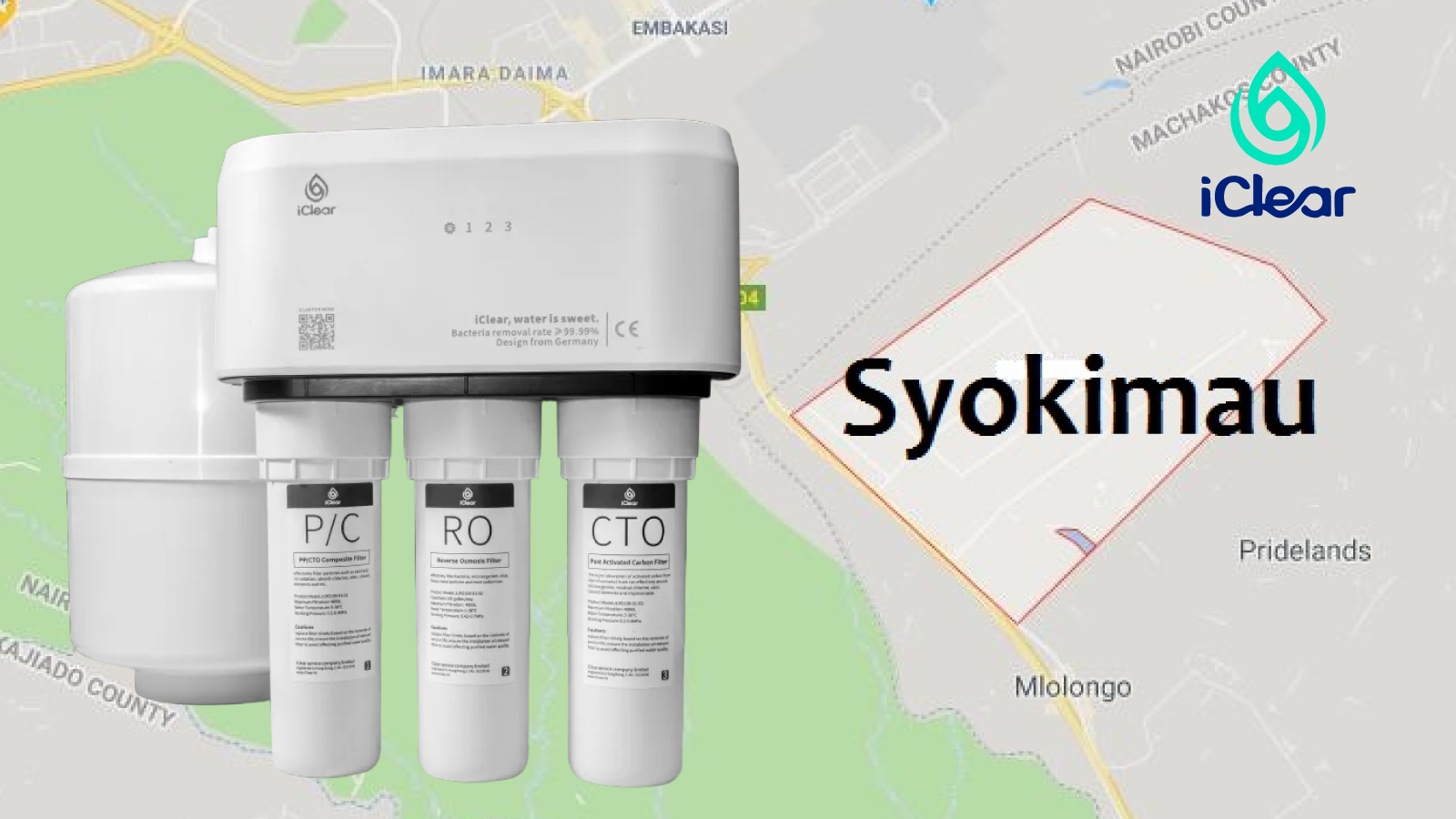
Only Reverse Osmosis systems can effectively treat salty borehole water in Syokimau. For Syokimau residents dealing with salty borehole water (high salinity), the best solution is a Reverse Osmosis (RO) system with a high-rejection membrane. Standard UV or carbon filters cannot remove dissolved salts; only RO can lower the TDS to safe, sweet-tasting levels. Why is Syokimau Water So Salty? If you live in Syokimau, Mlolongo, or Kitengela, you know the taste. The water here is sourced from aquifers that are naturally high in salinity and fluoride. The Science: The volcanic rocks in this region release fluoride and salts into the groundwater. The Risk: Drinking high-salinity water long-term can strain kidneys and cause dental fluorosis (browning of teeth), especially in children. The Fix: iClear RO Technology We recommend the iClear 400GPD RO System for Syokimau homes. Here is why: Desalination: It acts as a mini-desalination plant under your sink, removing up to 98% of salt. Fluoride Removal: It specifically targets fluoride, reducing it from dangerous levels (>1.5mg/L) to safe trace amounts. FAQs 1. Why is Syokimau borehole water salty? Natural volcanic geology causes high mineral and fluoride levels in groundwater. 2. Can boiling remove salt from water? No. Boiling concentrates salts and makes the problem worse. 3. Is RO the only solution for salty water? Yes. Only Reverse Osmosis removes dissolved salts and fluoride effectively. 4. Does iClear reduce fluoride levels? Yes. iClear RO systems reduce fluoride to below KEBS recommended limits. 5. Will salty water damage appliances? Yes. High salinity causes scaling and corrosion in kettles, heaters, and pipes.
Access to safe drinking water is a daily challenge in many African communities. Water from boreholes, wells, or municipal taps can contain heavy metals, minerals, sediments, or microbial contaminants. How iClear addresses this is through water purification systems designed for local conditions, backed by trained installers, retail and e-commerce channels, and ongoing customer support. Understanding Water Challenges Across Africa Kenya and East Africa Borehole water often contains fluoride, hardness, high minerals, sediments, iron, or rust from old pipes. iClear RO purifiers are designed to handle these conditions, ensuring safe drinking water for households. Nigeria and West Africa Water challenges include sediment-heavy wells, low-pressure municipal supply, microbial contamination, and metallic taste. iClear systems have RO filtration to adapt to these regional conditions. Distribution, Retail, and Online Presence We make our products accessible through verified partners and channels: Kenya: Direct ordering via iClear Kenya website with free delivery nationwide and free installation in Nairobi and Nakuru Retail showroom partner: HiHome Appliances Online platforms: Kilimall Kenya and Jumia Kenya Nigeria: Online ordering via iClear website: www.geticlear.com, with free delivery nationwide. Service Partnerships: PowWater Kenya provides complementary water delivery, tank cleaning, and water hygiene services alongside iClear purification solutions. Installation and After-Sales Support Certified installers guarantee correct setup, pressure testing, leak management, filter replacement, and customer education. Installations in Nairobi and Nakuru are completed free of charge, usually within 24 hours, ensuring households receive safe drinking water reliably. Why African Consumers Trust iClear Adoption in Kenya and Nigeria is driven by: Purifiers designed for local water conditions Easy access to replacement filters Affordable pricing Strong after-sales support Local availability, online ordering, free delivery, and free installation services Expanding Across Africa iClear has successfully launched in Kenya and Nigeria and is preparing to enter a third African market. The expansion emphasizes local presence, service, and adaptation to water challenges, ensuring consistent performance and consumer confidence. Our Commitment How we at iClear continue to serve African households is simple: combining advanced purification technology with accessible delivery, trained installers, retail and e-commerce partners, free installation in Nairobi and Nakuru, and ongoing after-sales support. This approach helps families access safe drinking water conveniently and confidently.
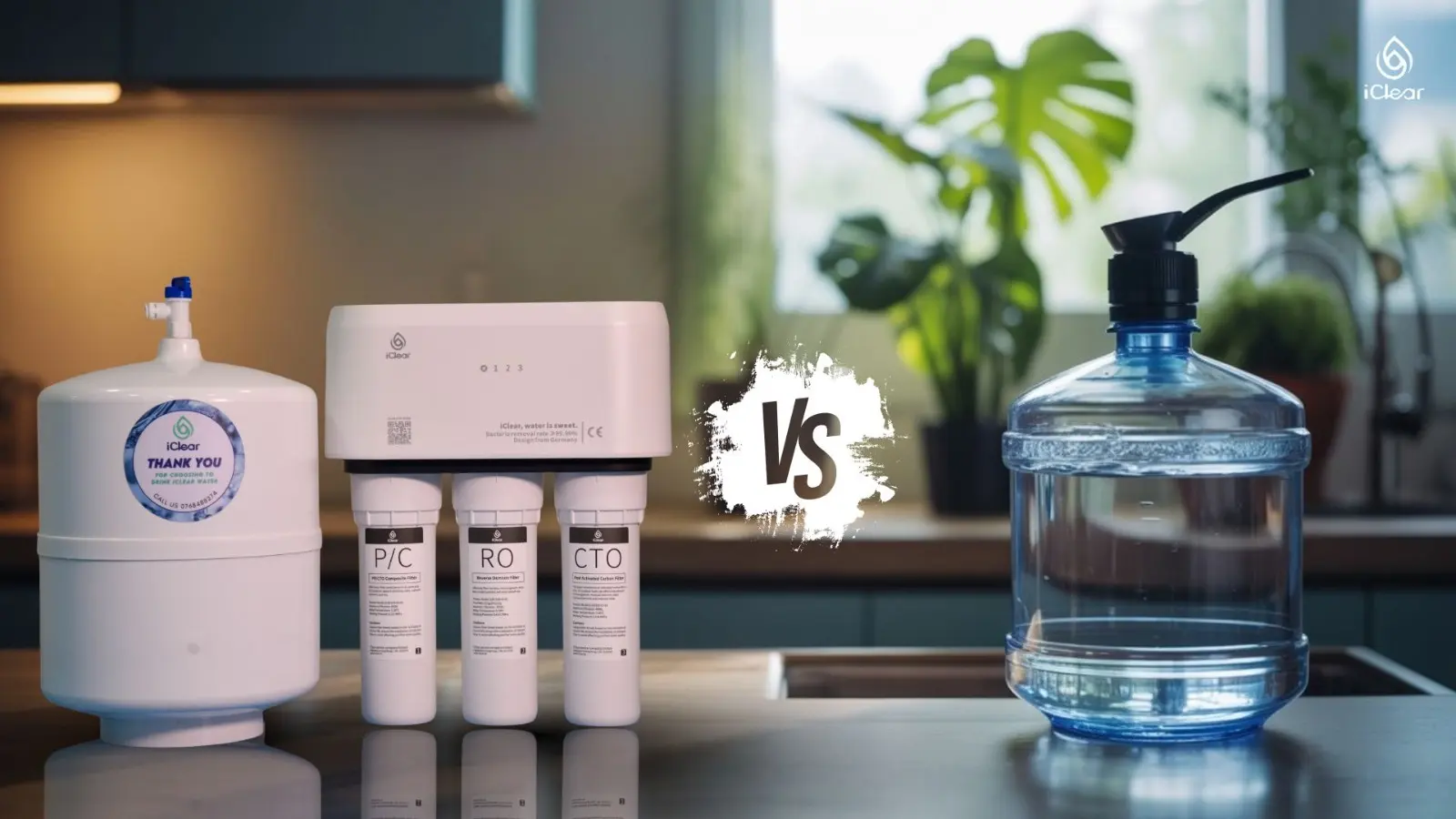
Clean drinking water is essential for every household, but the choice between a water purifier and a water dispenser often leaves people unsure. At first, both seem to serve the same purpose, but when you look closely, the differences become clear. Choosing the right system depends on what your family needs most — convenience, safety, or both. What a Water Dispenser Offers A water dispenser is built to make daily hydration more convenient. It allows you to enjoy water at the temperature you prefer, whether hot for tea, cold on a sunny afternoon, or at room temperature. Many modern dispensers include basic filters such as sediment or carbon filters. These helps reduce chlorine, improve taste, and trap visible impurities. For homes and offices that already rely on bottled water or have access to treated water, a dispenser works well by keeping water accessible and enjoyable. The Limitations of a Dispenser While dispensers provide some filtration, their systems are basic. They cannot eliminate harmful microorganisms, heavy metals, or dissolved chemicals that might be present in the water supply. This means dispensers are best suited for situations where water is already pre-treated and safe. If your goal is protection against hidden contaminants, a dispenser alone will not be enough. Why a Water Purifier Stands Out A water purifier, such as the iClear RO water purifiers, takes water safety to a completely different level. Unlike dispensers, purifiers use advanced technology like Reverse Osmosis (RO), UV treatment, and multi-stage filters to remove bacteria, viruses, dissolved salts, pesticide residues, and even heavy metals like lead and mercury. This ensures that every drop of water you drink is clean, pure, and safe for your family. In short, a dispenser gives you temperature control and convenience, but a purifier guarantees your health. Which One Should You Choose? The decision depends on your household’s needs. If you have a trusted water supply, then a dispenser may be sufficient for its convenience and accessibility. But if you want a complete water filtration system for home use that removes harmful contaminants, then a purifier is the smarter investment. For families in Kenya who want peace of mind, an iClear RO water filtration system ensures safety with every sip. Conclusion While both devices play important roles, the difference lies in their function. A dispenser offers convenience with some filtration, but a purifier delivers health protection and purity at the molecular level. If your top priority is safe and healthy drinking water, then the choice is clear an iClear RO water purifier is the right solution for your home.
If you’re searching for “what is the water quality like in Kenya” or wondering whether your tap or borehole water is safe to drink, you’re not alone. Across Nairobi, Mombasa, Nakuru, and rural towns, water quality varies greatly. Some areas struggle with fluoride, others with hardness, and many with contamination from bacteria and chemicals. Understanding these issues is the first step toward choosing the best water purifier in Kenya for your home or office. Fluoride in Kenya’s Water Fluoride is a major concern in regions such as the Rift Valley. While small amounts protect teeth, high fluoride levels in Kenyan water can cause dental and skeletal fluorosis. The problem? Boiling water or using basic filters does not remove fluoride. The most effective solution is a reverse osmosis (RO) water purifier, which eliminates excess fluoride and makes your water safe. Learn more about how RO water purifiers work in Kenya. Hard Water Challenges Many households in Nairobi rely on borehole water, which often contains high levels of calcium and magnesium. This leads to hard water in Kenya, causing limescale buildup in kettles and affecting the taste of tea, coffee, and even cooked meals. While not a direct health risk, hard water makes preparing food and drinks less enjoyable. A high-quality purifier like the iClear Standard Water Purifier is designed to handle borehole and hard water effectively. Contamination from Bacteria and Heavy Metals Kenya’s water sources especially shallow wells, rivers, and municipal supplies during rainy seasons may contain bacteria, pesticides, and heavy metals such as lead. These contaminants are invisible but dangerous. Boiling water in Kenya only kills bacteria; it does not remove chemicals or heavy metals. For complete protection, you need a multi-stage Reverse Osmosis water purifier. See our guide on boiling water vs. water purifiers in Kenya. Choosing the Best Water Purifier in Kenya At iClear, we specialize in water purifiers for borehole water, salty water, and municipal supplies in Kenya. Whether you’re in Nairobi, Mombasa, or upcountry, we’ll help you find the right solution for your family. Explore our full range of water purifiers in Kenya today.
Health & Wellness
Water Quality Insights
Health & Wellness