
Not always. While municipal water leaves the treatment plant compliant, contamination often occurs in transit. Our testing shows that many Nairobi households receive water with Fluoride and TDS levels exceeding KEBS KS EAS 12:2018 limits. An iClear RO system corrects these levels to meet international safety standards. Understanding the Numbers You see the "KEBS Quality Mark" on bottled water, but what does it actually mean? And how does your tap water compare? We pulled data from the Kenya Bureau of Standards (KEBS) KS EAS 12:2018 guidelines to show you what safe water looks like. The Comparison: KEBS Limits vs. Common Nairobi Water Sources Parameter KEBS Standard (Limit) Typical Borehole (Nairobi) iClear RO Purified Water pH Level 6.5 – 8.5 8.5 – 9.5 (Too Alkaline) 7.0 – 7.5 (Neutral/Perfect) TDS (Solids) Max 1000 mg/L 600 – 1500 mg/L 20 – 100 mg/L Fluoride Max 1.5 mg/L 2.0 – 5.0 mg/L < 0.5 mg/L E. Coli Nil (0/100ml) Often Detected Nil (100% Removed) Sources: Data Sources: KEBS KS EAS 12:2018 Potable Water Specification; WHO Guidelines for Drinking-water Quality. Why Compliance Matters Health: Excess fluoride causes bone issues. High nitrates (common in agricultural runoff) affect oxygen levels in blood. Trust: You shouldn't have to guess if your water is safe. With iClear, you can test your water with a TDS meter instantly and verify it meets international standards. FAQs 1. What are KEBS standards for drinking water? KEBS KS EAS 12:2018 defines safe limits for fluoride, TDS, pH, and contaminants. 2. Does Nairobi water meet these standards? In many areas, borehole and mixed supply water exceeds KEBS limits for fluoride and TDS. 3. Is high fluoride dangerous? Yes. Long term exposure can cause dental and skeletal fluorosis. 4. How does iClear ensure KEBS compliance? By using RO purification that reduces fluoride, salts, and contaminants to safe levels. 5. Should I test my water before buying a purifier? Yes. Water testing helps match the correct purification system to your specific water source.
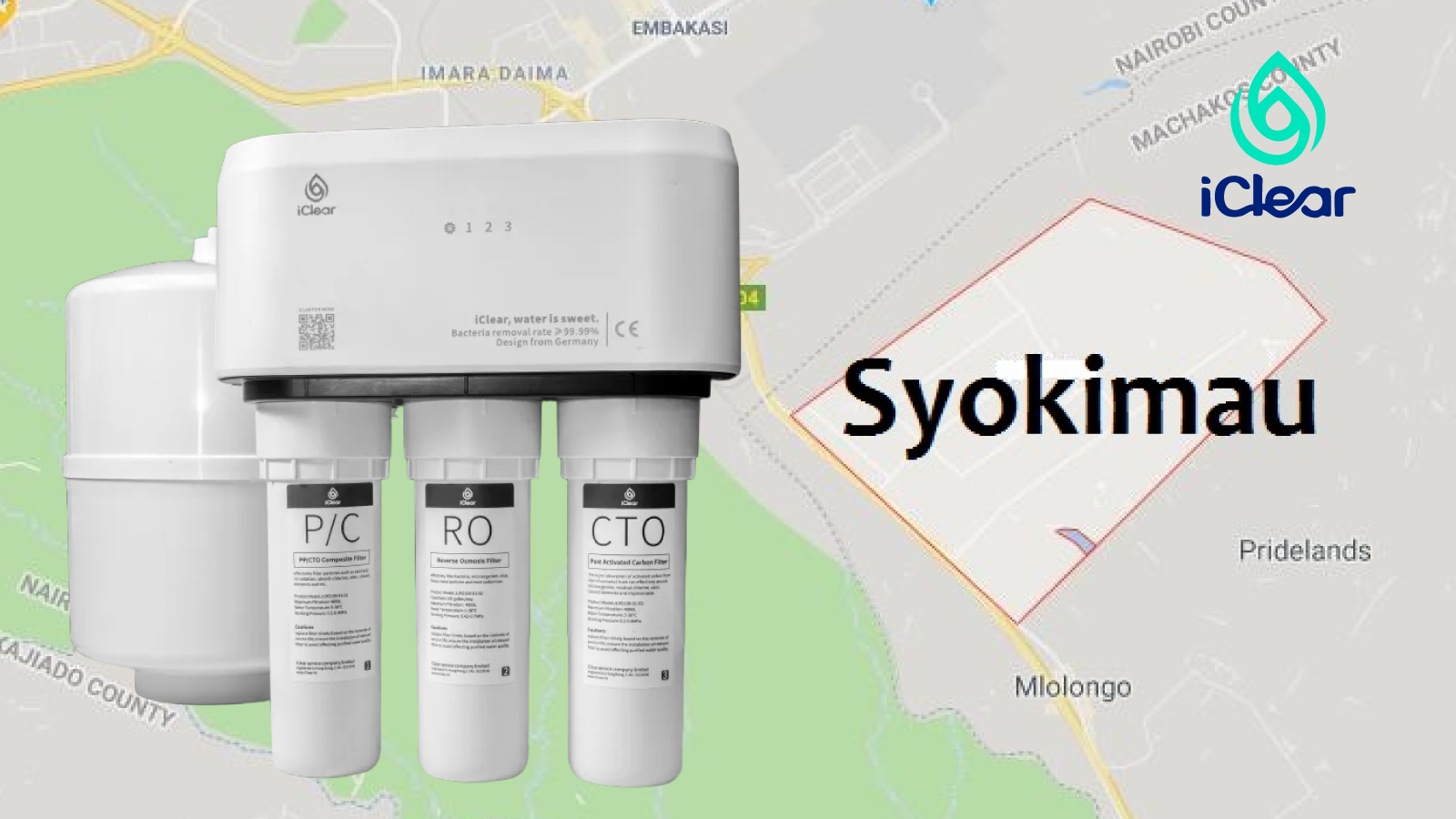
Only Reverse Osmosis systems can effectively treat salty borehole water in Syokimau. For Syokimau residents dealing with salty borehole water (high salinity), the best solution is a Reverse Osmosis (RO) system with a high-rejection membrane. Standard UV or carbon filters cannot remove dissolved salts; only RO can lower the TDS to safe, sweet-tasting levels. Why is Syokimau Water So Salty? If you live in Syokimau, Mlolongo, or Kitengela, you know the taste. The water here is sourced from aquifers that are naturally high in salinity and fluoride. The Science: The volcanic rocks in this region release fluoride and salts into the groundwater. The Risk: Drinking high-salinity water long-term can strain kidneys and cause dental fluorosis (browning of teeth), especially in children. The Fix: iClear RO Technology We recommend the iClear 400GPD RO System for Syokimau homes. Here is why: Desalination: It acts as a mini-desalination plant under your sink, removing up to 98% of salt. Fluoride Removal: It specifically targets fluoride, reducing it from dangerous levels (>1.5mg/L) to safe trace amounts. FAQs 1. Why is Syokimau borehole water salty? Natural volcanic geology causes high mineral and fluoride levels in groundwater. 2. Can boiling remove salt from water? No. Boiling concentrates salts and makes the problem worse. 3. Is RO the only solution for salty water? Yes. Only Reverse Osmosis removes dissolved salts and fluoride effectively. 4. Does iClear reduce fluoride levels? Yes. iClear RO systems reduce fluoride to below KEBS recommended limits. 5. Will salty water damage appliances? Yes. High salinity causes scaling and corrosion in kettles, heaters, and pipes.
Not always. Residents in Kilimani and Westlands often face water with TDS levels exceeding 500ppm and fluctuating pH levels due to mixed supply sources (city council vs. borehole). An RO purifier is essential to remove hardness and potential bacterial contamination from aging pipes. The "Hard" Truth About Upscale Neighborhoods Living in Westlands or Kilimani comes with perks, but water quality often isn't one of them. While these areas are connected to the city supply, shortages frequently force buildings to rely on borehole water. What Is Actually in the Water High TDS (Total Dissolved Solids): Borehole water in these areas often registers TDS levels between 500ppm and 1200ppm. The World Health Organization considers water below 300 ppm TDS more palatable, (https://www.who.int/docs/default-source/wash-documents/wash-chemicals/total-dissolved-solids-background-document.pdf). Bacterial Contamination: Aging infrastructure and illegal connections can introduce E. coli and coliforms into the supply. Salinity & pH: Residents report "hard" water that doesn't lather soap and leaves white scale on kettles. This indicates high calcium and magnesium levels, which can affect your skin and hair health. Why Basic Filters Aren't Enough Standard "pitcher" filters or boiling won't remove dissolved salts (TDS) or chemicals. You need Reverse Osmosis (RO) technology. iClear systems use a semi-permeable membrane (0.0001 microns) that strips these invisible contaminants, ensuring the water in your penthouse is as premium as the location. Why iClear Technology Works Here • RO membrane removes dissolved salts. • Carbon filtration improves taste and odour. • Multi stage purification ensures safety. FAQs 1. Can you drink tap water directly in Westlands or Kilimani? It is not recommended. TDS levels and contamination risks are often too high without purification. 2. Why is water hard in Westlands and Kilimani? Because borehole water is frequently mixed into municipal supply, increasing mineral content and salinity. 3. What TDS level is safe for drinking water? Below 300 ppm is considered palatable. Many homes in these areas exceed 500 ppm. 4. Will a normal filter fix hard water? No. Only Reverse Osmosis systems remove dissolved salts and hardness effectively. 5. Is iClear suitable for apartments? Yes. iClear systems are designed for apartment and estate installations.
Freedom for the Nation, Freedom from Water Problems at Home Jamhuri Day is a celebration of freedom and the responsibility that comes with it. Kenyans reflect on the journey of independence, the courage it demanded and the commitment to build a better nation. At iClear, this moment carries deep meaning because our mission is rooted in giving households a very real form of freedom: freedom from unsafe water and freedom from the daily stress of worrying about what your family consumes. Millions of Kenyans still rely on water sources with fluoride, high dissolved solids or contamination that affects taste, health and long-term wellbeing. In our article What Is the Water Quality Like in Kenya A Guide to Fluoride Hardness and Contamination, we explain the scale of these challenges and why many homes still struggle with basic water safety. Our work at iClear is simple. Help families reclaim control over their water. Freedom at home often starts with water Freedom is not always dramatic. Sometimes it is the quiet comfort of knowing that the water in your glass is clean. When a parent no longer needs to boil water every day. When a family stops carrying heavy bottled water from supermarkets. When children can drink from the kitchen without hesitation. These are small but powerful victories. This is why many households install RO systems. They protect families from dissolved salts, fluoride and hidden impurities. Our blog The Water You Drink Is Billions of Years Old Here Is Why It Needs Purifying reveals how easily contamination enters the water cycle and why RO purification gives households control that taps alone cannot guarantee. Jamhuri Day celebrates national liberation. iClear celebrates the liberation that happens inside Kenyan homes. Progress and independence share the same spirit Jamhuri Day is not only about the past. It is about the vision for a healthier, more empowered nation. Clean water strengthens communities, reduces illness and improves economic freedom. It is one of the simplest ways to elevate the standard of living. Our RO systems reflect that mindset. They are engineered for Kenya’s real water conditions and supported by installation teams, filter availability, free delivery and after sales service that keeps families protected year after year. Clean water also influences more than hydration. It affects skin health, digestion and overall wellness. In our popular article How the Quality of Your Drinking Water Impacts Your Skin, we highlight how purified water contributes to better daily comfort. This is why we see a direct connection between Jamhuri Day and what we do. We empower households to live better. If Jamhuri Day had a water chapter Before • Unpredictable borehole and tap water • Daily boiling • Spending heavily on bottled water • Unpleasant tastes and odours After • An RO system providing clean water every day • Lower long-term cost • Fewer plastic bottles • Peace of mind in every glass That is what freedom from water problems looks like. A Jamhuri Day message from the iClear team Independence is about dignity. Clean water is part of that dignity. This Jamhuri Day, we honour the Kenyan spirit of progress and commit to helping every household access water that is safe, affordable and reliable. Happy Jamhuri Day from all of us at iClear.
For many Kenyan homes, borehole water is the primary source of drinking and cooking water. Yet in many regions, this water contains extremely high fluoride levels, high salinity, or both. These issues are especially common in Rift Valley counties, parts of Nairobi, Machakos, and coastal regions. High fluoride can lead to fluorosis, while salty water affects taste, corrodes plumbing, and damages appliances. Reverse osmosis technology offers the most reliable household solution for removing fluoride, salts, and dissolved solids. In this guide we explore how RO tackles these problems, what defluoridation and desalination actually mean, and how iClear systems are designed for Kenyan conditions. Understanding Borehole Water Problems in Kenya Borehole water often contains dissolved minerals that are invisible but harmful. Two of the most common issues are: 1. Fluoride Contamination Fluoride occurs naturally in underground rocks. Depending on the region, fluoride levels can rise far above the safe limit of 1.5 mg/L. Some areas record 10 to even 20 mg/L. Long term consumption may lead to dental or skeletal fluorosis. For more background on fluoride in Kenya, see the iClear article: What Is the Water Quality Like in Kenya? 2. High Salinity or TDS In coastal and semi arid regions, borehole water contains excessive salts. High TDS makes water taste bitter, metallic, or salty. It also affects cooking and washing. How RO Provides Defluoridation and Desalination Reverse osmosis works by pushing water through a semi permeable membrane that blocks over 99% of contaminants. Defluoridation The RO membrane removes fluoride ions, producing safe water even when raw water fluoride is extremely high. Many RO systems include a pre filter to ensure membrane longevity when fluoride is excessive. Desalination Salts, minerals, metals, and dissolved solids are too large to pass through the membrane. RO therefore reduces TDS and produces softer, better tasting water. Why RO Works Better Than Other Methods Methods like chlorine, boiling, or carbon filters cannot remove fluoride or salts. RO remains the only proven household solution. What an RO System Includes for Borehole Water An iClear borehole ready unit typically includes: • Sediment filtration • Carbon pre filtration • Reverse osmosis membrane • Optional fluoride removal cartridges • Optional mineral balancing • Storage tank and pressure components This configuration ensures that even challenging borehole water becomes safe for long term use. Installation Process and Expectations Free installation is available in Nairobi, surrounding suburbs, and Nakuru. Technicians perform: • Water source assessment • Plumbing inspection • System placement • Full connection and flushing • Demonstration and user training Maintenance Requirements To keep fluoride and salts under control, customers should: • Replace pre filters every 3 to 6 months • Replace RO membranes every 2 to 3 years depending on water quality • Monitor TDS • Schedule service when taste changes In areas with extremely high fluoride or salinity, additional cartridges may be required yearly. Who Needs a Reverse Osmosis System the Most? RO is particularly essential for: • Homes using borehole water • Households with children at risk of fluorosis • Areas with salty or bitter tasting water • Homes seeking high quality drinking and cooking water FAQ Q: Can boiling remove fluoride or salt? A: No. Boiling increases concentration because water evaporates. Q: Will the water taste different after RO treatment? A: Yes, it becomes much softer, smoother, and neutral. Q: How long does installation take? A: Between one and two hours depending on plumbing. Conclusion Defluoridation and desalination through reverse osmosis offer the most reliable long term solution for households relying on borehole water. With proper installation and maintenance you can expect safe, pure, great tasting water for your family.
Water is life but only if it is clean. Across Kenya, many households rely on rooftop storage tanks and rainwater collection systems to ensure consistent water supply. Yet, behind that convenience lies a quiet risk most homeowners never consider, what happens inside those tanks and roof systems between the rains and the taps. While you may be confident about the quality of your municipal or borehole source, contamination often happens after the water enters your storage system. Where the Real Contamination Begins In Kenya, most households depend on rooftop tanks, plastic reservoirs, or underground storage units. These are convenient, but over time, they become silent breeding grounds for bacteria, rust, and algae, especially when cleaning is irregular. Even when your municipal or borehole water is relatively clean, it can pick up harmful contaminants as it travels through aging pipes, roof gutters, and storage tanks. Roof systems also collect more than rainwater. Dust, bird droppings, decomposed leaves, and airborne pollutants settle on rooftops daily. When it rains, all that washes directly into your tank, contaminating every litre stored inside. Common Contaminants You Don’t See Algae & Biofilm – thrive in tanks exposed to sunlight or with stagnant water. Heavy Metals – from rusting metallic roofs and old plumbing connections. Bacteria & Microorganisms – including E. coli, often introduced through organic debris. Sediment & Turbidity – fine particles from dust or roof materials that affect taste and clog filters. Fluoride & Hardness Salts – especially in borehole-fed tanks; they can accumulate and make water unpalatable. These invisible pollutants mean even “clear” water may not be safe to drink, unless it’s properly filtered and purified. See how Reverse Osmosis filters compare to other methods in our post: Why RO filters are the best for Kenyan homes Why Routine Tank Cleaning Isn’t Enough Regular tank cleaning helps, but it doesn’t solve contamination introduced every time it rains or water flows in from untreated sources. Manual cleaning also misses microbial biofilms that cling to tank walls and regrow within days. That’s where water purification steps in, not as a luxury, but as a second layer of protection. At iClear, we recommend pairing well-maintained storage systems with Reverse Osmosis (RO) purification to eliminate the last traces of impurities before consumption. Discover how Reverse Osmosis purifiers restore nature’s original purity in our article: The Water You Drink Is Billions of Years Old, Here’s Why It Needs Purifying Smart Prevention Tips for Kenyan Homes Inspect tanks quarterly for leaks, rust, and discolouration. Use opaque tanks to minimize sunlight and algae growth. Disinfect tanks annually with safe chlorine solutions or professional services. From Roof to Glass, Closing the Safety Gap A well-maintained tank keeps your water supply steady, but only a reliable purifier guarantees its safety. That’s why iClear designs purifiers that handle diverse Kenyan sources, from boreholes and taps to rooftop rainwater ensuring every drop meets the highest purity standard. Whether your home uses the iClear Standard or iClear Premier, you get multi-stage protection that removes bacteria, heavy metals, and chemical residues before they reach your glass. Explore our full range of purifiers and protect your family from hidden water threats, because clean water doesn’t start at the tap, it starts with iClear.
They say beauty starts from within and that includes what you drink. While most people invest in skincare products, very few realize that the quality of your drinking water plays a huge role in the health and appearance of your skin. If your skin often feels dry, itchy, or prone to breakouts, the problem might not be your moisturizer it could be your water. The Hidden Connection Between Water and Skin Health Your body is nearly 60% water, and your skin the largest organ depends on it to stay hydrated and healthy. But not all water is the same. In many parts of Kenya, tap and borehole water contain high levels of salts, chlorine, and heavy metals. These substances strip your skin’s natural oils, leading to dryness, irritation, and premature aging. Hard water can even worsen conditions like eczema or acne. That’s where a Reverse Osmosis water purifier makes all the difference. It removes impurities like fluoride, chlorine, lead, and bacteria, ensuring the water you drink (and cook with) is clean, gentle, and skin-friendly. Learn more about why RO filters are the best choice in Kenya. How Clean Water Helps Your Skin Glow Switching to purified water transforms your skin from within: Hydration that counts – Pure water helps flush toxins and keeps skin cells moisturized. Reduced breakouts – No more harsh minerals clogging pores. Smoother texture – Clean water supports faster cell repair and elasticity. At iClear, our RO water purifiers ensure every drop is free from impurities that can harm your body and skin. Why Choose iClear RO Purifiers We design Reverse Osmosis purifiers specifically for Kenyan homes, where water sources vary widely. Whether your supply is borehole, tap, or rainwater, our models like the iClear Standard and iClear Premier provide consistent, safe, and skin-friendly water for your daily use. Read about how our RO technology works. Healthy, glowing skin doesn’t start with expensive creams it starts with what’s in your glass. By choosing an iClear Reverse Osmosis water purifier, you’re not just investing in your health, but also in naturally radiant skin. Explore our range of purifiers today and let your glow start from the inside out.
The water you drink today is as old as planet Earth itself! Every glass of water whether from your tap, borehole, or bottled has been part of a never-ending cycle for billions of years. The same molecules that once flowed through ancient rivers are now in your kitchen. So, if water has been around forever, why do we still need purifiers today? The answer lies in what happens between those cycles. Ancient Water, Modern Pollution While the water molecules themselves are ancient, the environment they pass through has changed dramatically. Modern life introduces pollutants that nature can’t fully filter out industrial waste, agricultural runoff, chlorine, fluoride, and heavy metals. In Kenya, borehole and well water often contain high levels of fluoride and salts, while urban tap water can carry chlorine, rust, or bacteria from aging pipes. These invisible contaminants are why a Reverse Osmosis (RO) purifier has become essential in 2025. See how RO compares to other methods in our post: Why RO filters are the best for Kenyan homes. How iClear Purifiers Restore Nature’s Original Purity At iClear, we’ve taken inspiration from nature’s own purification cycle evaporation, condensation, and rainfall and refined it using science. Our Reverse Osmosis purifiers use semi-permeable membranes to remove up to 99% of contaminants, ensuring every drop is as pure as it was meant to be. Whether your source is borehole, tap, or rainwater, our models like the iClear Standard and iClear Premier guarantee clean, safe water for your family. A Drop of Wisdom for Every Home Purifying water is about protecting ourselves from what we’ve added to it. Even the oldest, most natural water can carry modern risks. That’s why owning a trusted iClear Reverse Osmosis purifier is a health investment. Explore our full range of water purifiers and experience what truly pure water tastes like fresh, clean, and safe, just as nature intended.
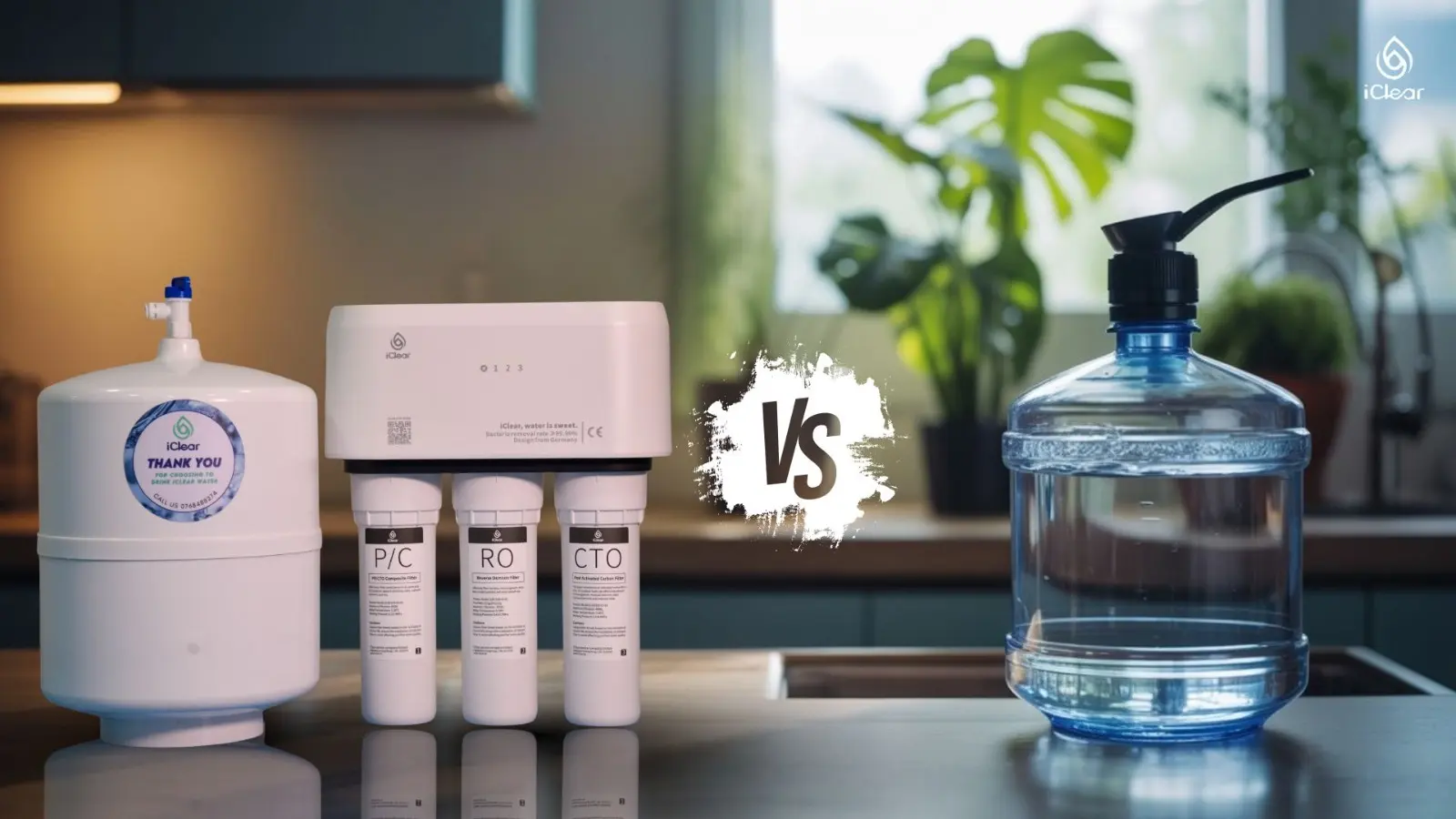
Clean drinking water is essential for every household, but the choice between a water purifier and a water dispenser often leaves people unsure. At first, both seem to serve the same purpose, but when you look closely, the differences become clear. Choosing the right system depends on what your family needs most — convenience, safety, or both. What a Water Dispenser Offers A water dispenser is built to make daily hydration more convenient. It allows you to enjoy water at the temperature you prefer, whether hot for tea, cold on a sunny afternoon, or at room temperature. Many modern dispensers include basic filters such as sediment or carbon filters. These helps reduce chlorine, improve taste, and trap visible impurities. For homes and offices that already rely on bottled water or have access to treated water, a dispenser works well by keeping water accessible and enjoyable. The Limitations of a Dispenser While dispensers provide some filtration, their systems are basic. They cannot eliminate harmful microorganisms, heavy metals, or dissolved chemicals that might be present in the water supply. This means dispensers are best suited for situations where water is already pre-treated and safe. If your goal is protection against hidden contaminants, a dispenser alone will not be enough. Why a Water Purifier Stands Out A water purifier, such as the iClear RO water purifiers, takes water safety to a completely different level. Unlike dispensers, purifiers use advanced technology like Reverse Osmosis (RO), UV treatment, and multi-stage filters to remove bacteria, viruses, dissolved salts, pesticide residues, and even heavy metals like lead and mercury. This ensures that every drop of water you drink is clean, pure, and safe for your family. In short, a dispenser gives you temperature control and convenience, but a purifier guarantees your health. Which One Should You Choose? The decision depends on your household’s needs. If you have a trusted water supply, then a dispenser may be sufficient for its convenience and accessibility. But if you want a complete water filtration system for home use that removes harmful contaminants, then a purifier is the smarter investment. For families in Kenya who want peace of mind, an iClear RO water filtration system ensures safety with every sip. Conclusion While both devices play important roles, the difference lies in their function. A dispenser offers convenience with some filtration, but a purifier delivers health protection and purity at the molecular level. If your top priority is safe and healthy drinking water, then the choice is clear an iClear RO water purifier is the right solution for your home.
Parents in Kenya often ask, “Is tap water safe for babies?” The truth is that while water may look clean, it can contain hidden contaminants that pose risks to infants and young children. Babies are more vulnerable to unsafe water because their immune systems are still developing, and their small bodies absorb harmful substances more quickly. That’s why choosing the best water purifier in Kenya isn’t just a convenience it’s a necessity for your family’s health. Why Babies Need Safer Drinking Water High fluoride levels, common in parts of Rift Valley, can lead to dental and skeletal problems. Nitrates from agricultural runoff may cause “blue baby syndrome,” a serious condition that reduces oxygen in the blood. Infants are especially sensitive to bacterial infections that can cause diarrhea, dehydration, and long-term gut issues. Heavy Metals, such as, Lead, arsenic, and other metals can affect brain development and growth. Boiling Water Isn’t Enough Many Kenyan households rely on boiling water for safety. While boiling kills bacteria and viruses, it does not remove fluoride, nitrates, pesticides, or heavy metals. This means boiled water may still pose risks to babies when used in formula preparation or daily drinking. The Best Water Purifier for Babies in Kenya The safest option for infants is a reverse osmosis (RO) water purifier, which removes up to 99% of harmful contaminants. At iClear, our Standard Water Purifier , Premier Water Purifier and Desktop Purifier are ideal for families with young children. They are designed to purify borehole, salty, and municipal water in Kenya making them versatile solutions for any household. Give Your Child a Healthier Start Water safety is not just about avoiding illness it’s about supporting your child’s growth, brain development, and long-term health. With an iClear purifier, you can prepare formula, cook, and hydrate your little ones with complete peace of mind. Explore our full range of water purifiers for families in Kenya and give your baby the safe start they deserve.
Health & Wellness
Water Quality Insights
Health & Wellness